Folk-rock extraordinaries Fleet Foxes will release Helplessness Blues to the public on May 3, but because of the wonders of the Internet, and the kindness of Rolling Stone Magazine, eager listeners (like myself) can stream the entire album from Rolling Stone. That’s right.
Today is an admittedly short version of Music News, because of this writer’s busy day. For those that are still reading this post (most have probably entered the sylvan realm of Fleet Foxes), I will now provide you with the video aspect of this special Music News. Today holds two truths. First, the NFL Draft is on tonightat 8 p.m. Secondly, hard-rock guitar instrumentals of “Eleanor Rigby” can be awesome. Here are two videos displaying these truths.
Psychedelic music inspired many talented performers to explore rock n’ roll’s endless possibilities. At its root, psychedelic music is experimental, and like any pioneering scientific discoveries, it engenders more research and, well, experimenting. While psychedelic music has numerous sub-genres, even more striking is the amount of genre manipulation that happened after the wave of psychedelia came to a near-end in the late 1960’s. I say near-end because psychedelic music never truly ended. But since it experienced a wave of popularity in the mid-late 60’s, it naturally became less popular. I know that I called this section the 60’s psychedelic experiment, but it is equally important to describe music that was created directly after the initial boom. I’m talking about the early 1970’s, which saw the rise of progressive rock and art rock, two genres that owe their creation to the success of psychedelic music. In a sense, art and progressive rock are both the complex expansion of psychedelic experimentation featuring music that concentrates on intricate and lengthy melodies combined with either a classical musical approach or more modern representation.
How did that paragraph go down? Smoothly, I hope. Seriously, the progression of Rock music is sometimes bulky, and this time period saw several changes to how rock would evolve. Art and progressive rock evolved from psychedelic music. Emerson, Lake & Palmer (ELP) was composed for Keith Emerson, from the psychedelic rock band The Nice, Greg Lake, from the late 60’s prog-rock band King Crimson, and drummer Carl Palmer who played in the Crazy World of Arthur Brown and Atomic Rooster. These three musicians composed one of the first Art Rock supergroups and their music reached for the classical portion of Art rock.
In my opinion, art and progressive rock are practically the same term. But, one of the key differences is progressive rock tends to focus more on guitars. As evidenced by the piece I am including, ELP swayed more towards piano and keyboards.
“The Three Fates” is the first song off of side two of their debut eponymous album. It is split up into three parts, each named for a mythical figure (Clotho, Lachesis, and Atropos). The piano playing is extraordinary. Keith Emerson is skillful beyond words. The ode to classical music is clear and this classifies the music as 1970 Art rock. So, you may be thinking, how does this apply to psychedelic music? Travel to around 5:30 in the song. Okay, this is Jazz-rock. But, wait, what are all of the background sounds and the musical layering and strange notation. Yes, this is psychedelic music of the 1960’s kicked up a notch to fit into the genres of Jazz and Classical. It is Art rock, and a perfect example of the evolution of psychedelic music.
A good film is composed of a solid combination of actors playing roles successfully. A band is not very different, and an album created by a collaboration of artists working towards a goal is practically the same thing. The band Rome sees four artists joining forces on a “different” project inspired by the film soundtrack work of Ennio Morricone, an Italian composer most famous for his film scores of spaghetti westerns.
Brian Burton (a.k.a Danger Mouse), Jack White, Norah Jones, and composer Daniele Luppi recorded their soundtrack-inspired album in Rome’s Forum Studios, a facility Morricone helped establish, with the help of musicians that have worked with Morricone. Rome takes from the rich musical tradition of Italy. It is no surprise that Danger Mouse considers the album to be about love.
Yes, I know what you are saying, Danger Mouse is today’s version of Bob Dylan. But let’s put the prolific producer/musician’s appearance in most modern music aside. I am very much looking forward to Rome’s debut album which is set to be released on May 17 (US). Rome is, in all sense of the term, a Supergroup. We know that the release is going to be good, but how different will it be. Can Rome fuel a new spaghetti western inspired genre, like an Italian classical folk rock extravaganza. A few songs have been released. Here is “Black.”
Danger Mouse’s influence is heard best in the chorus. The verse is folk combined with Norah Jones’ dreamy voice. “Black” is melancholic and, perhaps intentionally, the evanescent keyboard riff in the chorus is rather unsettling. The entire piece emits a frightening buried melody and, since this album is inspired by film scores, it fits perfectly.
Lollapalooza is celebrating its 20th anniversary this year and the line-up for this three-day festival at Chicago’s Grant Park has been released. This year’s headliners do not include Lady Gaga’s crowd-surfing star-boob act that took last summer’s crowd by storm. But, who knows, if Cee Lo Green gets angry at the festival he may do something even crazier.
The festival, which runs from August 5-7, will be headlined by Eminem, Coldplay, Foo Fighters, Muse and My Morning Jacket. Some other highlight acts include Bright Eyes, The Cars, Cee Lo Green, Kid Cudi, Girl Talk (will be performing in a new 15,000 person dance tent).
Greg Dember is a professional musician. Many times you come across a band composed of musicians that stick to the script and play music that is conventional and unexciting. It’s not that they don’t take risks because they want to be mundane. They don’t take risks because they do not have the musical ability to do so. Dember, a technical piano player from Seattle, has been punching out creative melodies since the 90’s, and his March release of his second solo album Water Makes Waves is proof that he does not like to settle for boring rhythm and melody. Instead, Dember creates an album that I coin an Indie Grab Bag, jam-packed with horns, strings, synths and intriguing harmonies. The album is imbued with innovative sounds, and part of the excitement of listening is that you just don’t know what will come next.
“How We Met” is just one example of Dember’s music. It begins with a comfortable piano riff that stays neatly in the background when Dember’s soothing folk voice joins the piece. The soft string section adds scene to the song and creates an almost Ben Folds-like indie sound. At around two minutes listeners are treated to a hint of horns that come and go quickly, replaced by the impressive piano melody that transforms into the base of an instrumental that features violin plucks and drawn-out, but contained, horn appearances. It is a full-bodied song and, like a good ale, goes down smoothly. It is also a solid preview of the rest of the album which, while being different and creative, never loses its flavor.
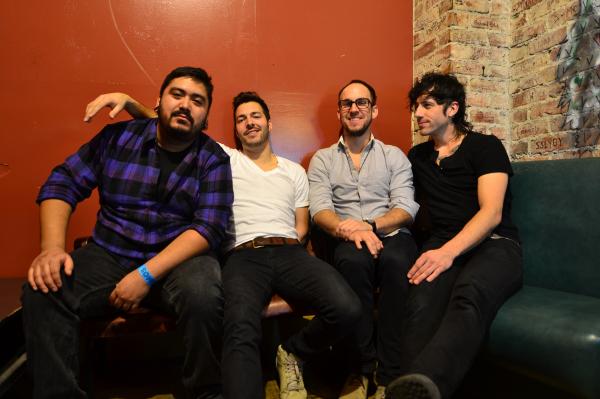
Today was an uplifting day in New York. My Dad and I took advantage of a perfect Sunday sunny afternoon and went to a New York Mets game. We sat in incredible seats and, while we were both scorched by the unexpected sun, we enjoyed a Mets victory. A beautiful day results in some brand spankin’ new pop music, and part two of The Music Court’s “Three in Three” section. The band is an Indie Pop foursome named The Royal Bear from Seattle that recorded their debut full-length album Attack at Bear Creek Studios, the well-known farm studio that housed Fleet Foxes. The Royal Bear actually entered Bear Creek right after Fleet Foxes left, so they recorded their debut album when the vibes were flowing in the studio.
What came of their 10-day session? A fresh take on indie pop that moves skillfully with head-bopping rhythms, punky guitar tablature and light melodies. The Royal Bear wants their music to be fun and because of the bubbly and driving rhythm it maintains it’s fluffy pop characteristics even with its post-punk sentiments. And, this results in exciting music that is enjoyable and catchy. Listen to “Keeping Secrets” on the band’s website.
The song fulfills its pop test in the first few notes. Some of looked at the band as 80’s because of its focus on “heavy pop,” but the rhythm suggests indie pop with a hint of punk. This genre combination allows The Royal Bear to effortlessly mix the airy simplicity of pop with easy-going punk elements. The result is fun music which is the exact intention of The Royal Bear.
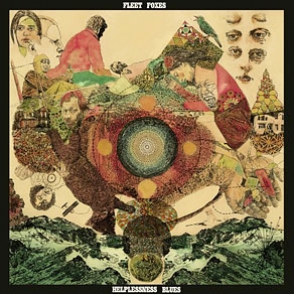 Folk-rock extraordinaries Fleet Foxes will release Helplessness Blues to the public on May 3, but because of the wonders of the Internet, and the kindness of Rolling Stone Magazine, eager listeners (like myself) can stream the entire album from Rolling Stone. That’s right.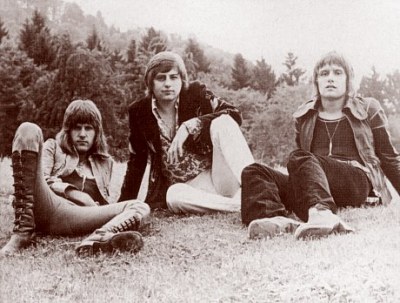




 The Music Court