Archive | January, 2012

There Are Many Girls from the North Country

23 Jan

Do you ever happen to catch yourself traveling to the North Country fair? Happens to me all the time. It is a lyrical sojourn though, one that only lasts for the three minutes of Bob Dylan’s eloquent portrayal of love and loss. “Girl from the North Country” is one of Dylan’s most masterful songs – and this man is the master of songs. So that must mean that this song is masterful on top of masterful. I’m going to stop writing master. You catch my drift, though, right? Dylan sang of the North Country fair, released it in 1963 as the second track on his second album The Freewheelin’ Bob Dylan, and boy have people remembered him!

There is a special canorous draw to Dylan’s odes to English folk. His authenticity and skill for folk music is evident in all of his folky endeavors, but he approaches English folk with such immaculate melodic splendor that it is tough to listen and not be moved. His vocal is tender and understated and I love that. His lightly plucked guitar tells the story that he effortlessly sings. While Dylan is not English, he is pretty much a musical chameleon and he does English folk well. In a way, it reminds me of how Nick Drake approached his hometown genre. Drake played some of the most beautiful English folk and if you have never heard of him please check out his music because he is wonderful.

There is Dylan singing his song if you needed any proof.

I am posting about “Girl from the North Country” today because I wanted to highlight some covers of Dylan’s classic that evoke the same emotion in me. Both examples are soft, almost subtle, versions that wash over listeners with warmth and feeling. The first comes from the grand harmonizers – Crosby Stills & Nash.

It is ethereal, atmospheric, and, well, classic CSN. No one takes a song and creates harmonies like CSN. It is just a pleasure to listen to them at work. And I’m sure you are enjoying it right now.

Eddie Vedder’s version is true to Dylan’s classic. And I am a bit surprised with how much I love this version. I believe it is because Vedder contains himself. He keeps his voice authentic and almost timid. We know he can be grungy, but, instead he teases us with a vocal sincerity that is much respected. Excellent version by Vedder.

And, before I let you all go today, I have to give you the best version of this song. Bob Dylan. Johnny Cash. The Girl From The North Country. Magic.
A Sad Week in Music – The Death of Etta James and Johnny Otis

20 Jan

Etta James, 73, and Johnny Otis, 90, both passed away this week – Johnny on Tuesday and Etta today – capping off what was a sad week in historical R&B. But while other sources of music news are eulogizing the Matriarch of R&B today – just like they did with the Godfather of the same genre on Tuesday – I want to talk about a time when both musicians were rocking and rolling back in the 1950s. The interconnected histories of each musician make any attempt at commendation unnecessary. Let’s let their talent, influence, and music, shine through music instead.
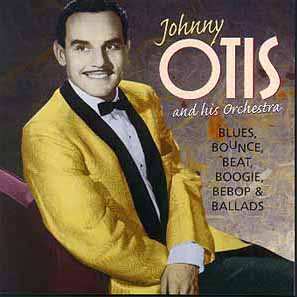
Etta James didn’t only know Johnny Otis because they were two musicians in the business. She may not have been in the business if it wasn’t for Otis’ keen ear for incredible talent. She also may have never been Etta James. At 14 years old, James formed a doo-wop band called the Creolettes with some friends. Somehow – and stories conflict on how – James met Otis and Otis liked what he heard from James. He changed the name of the band to the Peaches and he changed the name of the lead singer from Jamesetta Hawkins to Etta James. In 1955 she released a song called “Roll With Me, Henry” (“Dance with Me, Henry” was the changed name in fear of censorship). The song was released under the name of “The Wallflower” and it became a huge hit.

In a way it is weird that two musicians with such a close connection died within days of each other, but life is capricious.  Enjoy the music and RIP Etta and Johnny

Flying Lotus – Pattern + Grid World

19 Jan

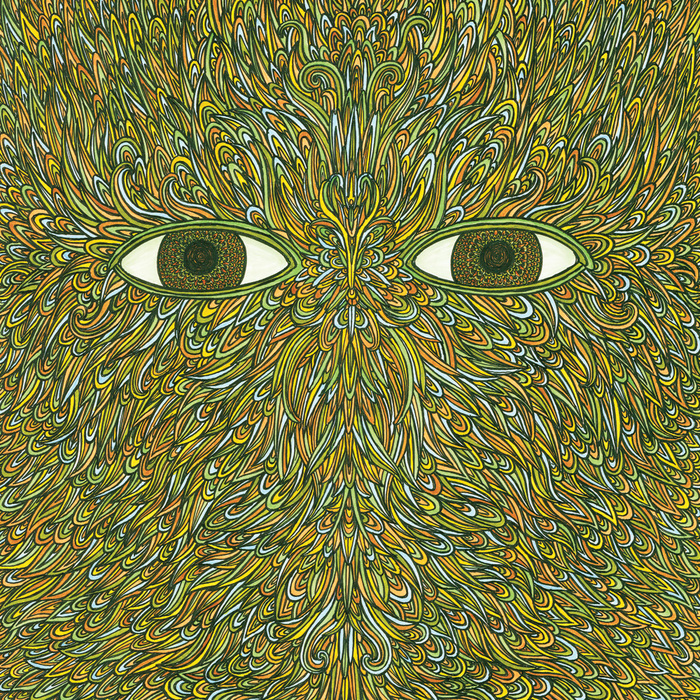
Hey everyone. I have a quick little post about a strange little Flying Lotus EP named Pattern + Grid World. First and foremost, this EP has probably one of the best album covers out there and needs some words about it.

The picture above is the said cover art. Is it a man hiding in bushes or a strange space monster? The level of detail is astounding up close, but as you move further away the pictures seems to change. The leaves fade away like an illusion and only the eyes are left staring at you from a blur. Pretty trippy is you ask me.

Released in 2010, Pattern + Grid World is considerably different from his previous release, Cosmogramma. Whereas Cosmogramma was out there and focused more around inflections of jazz,  Pattern + Grid World is simply out there. Take the first song for example:

“Clay” is only the spacey introduction to some cosmic drama. Once Flylo’s signature tribal sounding beat drops in it becomes a completely revolutionary experience. It hovers right there on the edge of being completely out there and bizarre, but just relaxing enough to listen to in any situation. The different melodies are interchanged frequently and partially drowned out by random sounds that really it just is an airy blur, sort of like the front cover art. It all makes sense!

The next song is the single. I put down below because musically it is much different from the rest, but it has a really cool and music video. Don’t forget to watch it, but now listen to this:

As aside from its completely cool name “Time Vampires” is in every way similar the first song yet bizarrely different. It begins with strange voices and again a nice beat. But this whistle begins to play that makes you begin to question your current situation. Like telephone hold music from hell, it mocks you by being pretty yet infuriating. Only a man like Flylo can pull something like this off.

“Jurassic Notion/M Theory” is definitely the weirdest song on the album. This song is the quintessential modern tribal experience. Rollercoaster noises, strange people cheering, and a bass line which gives up way too easily. Nothing more can really be said. You just have to let this one sink it on its own.

Flying Lotus is releasing his brand new album at Coachella this year. I won’t be there since I’m poor and in need of a job, but I’ll be watching the stream. Sort of like the album art.

&)

-oko

P.S. As promised:

The Return of The Original – American Idol Season 1, 2, 3…11

18 Jan

It's Back!

“American Idol” is the song that never ends, yes it  goes on and on my friends. And it keeps going and going like the Energizer bunny. And, heck, I can make many more pop culture references in regards to the granddaddy of American modern reality talent competitions, but I am going to stop there and conclude with this. “American Idol” has become a staple of American culture – it is the apple pie of talent competitions – if not for it we would not currently be experiencing shows like “America’s Got Talent”, “The Voice”, “The X Factor,” “Dancing With The Stars,” – need I go on? (Okay, I’m sure another show would have come around and sparked this new millennium talent competition craze – but let’s focus on the show that just keeps on breathing.)

Season 11 of “American Idol” begins tonight and it has become a habit of mine to ponder on the day of the season premiere whether or not I am really going to watch the show again. Like many, I have been watching this show since season one and have come back like a bug attracted to light every season even with the knowledge that despite the change of judges,  contestants, songs (not always), and rules; the show will remain ostensibly the same.

So why do you keep watching it Matt? Great question, myself. It is that fateful day again when I perpend my viewership. I come to a similar conclusion prior to episode one each year. I may be watching this out of pure habit – man is a creature of habit – but I believe I watch it because the formula works. “American Idol” has mastered inward rock star “dreams.” If you watch any episode of the show (especially during the auditions) you are bound to hear the word “dream” said by somebody – good or bad singer. Any music lover has at one time in their lives dreamed of being a “rock star.” Think about it. Do you ever sing in the shower and make sure you are in key? Have you ever picked up an instrument (the guitar for example), taught yourself the basics, and started strumming out basic chord progressions and painful vocals? Admit it. We all have a little “rock star” in us and while the dream of being a musician may have died after listening back to the recording of your best James Taylor impression, that doesn’t mean that we cannot live vicariously through those who are exceptionally talented and relatable to us.

That is the purpose of “American Idol.” Some contestants go from everyday Joes or Janes to performing in front of live crowds and it is exciting to watch their rise to success – or cheer against those who annoy you terribly (and there are many). Plus, there are many audacious individuals who try out and are totally worse than you are and they tend to be humorously bad.

So with only a few hours left to go before American Idol Season 11 kicks off I submit this statement. I was in 7th grade when I started watching and I am now commuting into work every morning – I’m not stopping now!

For those who take the annual plight, I commend you. Enjoy Season 11.

That’s One Fuzzy Duck – Having Some Fun With Early 70s Prog Rock

17 Jan
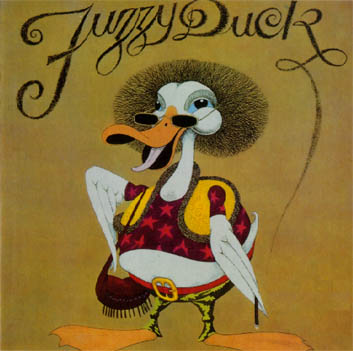
More like Funky Duck – Look at it’s Fro and subtle pimp cane!
Progressive rock is not easily definable. This sounds like a cop out, yes, but I do think that part of the intrigue of this genre is its obscurity. For the sake of continuing this post, I will attempt to define this genre that peaked in popularity during the 70s. Progressive rock (similarly to psychedelic rock) took classic rock and expanded it. It manipulated compositions, added instrumentation, and made music unpredictable. I do think that one of the reasons why bands like the Mothers of Invention, The Beatles, The Beach Boys, Jethro Tull, The Moody Blues (the list goes on) started experimenting with different music was because they were bored.
 
As the progressive rock movement spread (prior to the genre being termed), more and more bands sprouted up – many that are underappreciated (i.e. The United States of America, Gentle Giant, Amon Duul), but even many of those bands became cult sensations.
 
Today we are going to talk about a band that missed the boat entirely, never gaining much fame with their unique brand of progressive rock (I’ll save a more in depth analysis of my love for progressive rock later – the genre does house my favorite band of all time Pink Floyd). So may I introduce to you the one and only hairy fowl and introduce them to the obscure classic rock section of our humble castle.
 
Fuzzy Duck – yes that is the cover of the band’s eponymous first album (and what an album cover it is) – was formed in London in 1970 and it featured a few train-hopping musicians who experienced progressive rock from the perspective of a few oddly named bands. The original line-up consisted of guitarist/vocalist Grahame White, bassist Mick Hawksworth (formerly of Andromeda), keyboardist Roy Sharland, and drummer Paul Francis (formerly of Tucky Buzzard). Just before the band’s first and only album was released White left and was replaced by guitarist/vocalist Garth Watt Roy who was featured on the bands two 1971 singles before they all parted ways by the end of 1971.
 
In a way the short life of Fuzzy Duck feels like the relationship between Brenda and Eddie from Billy Joel’s “Scenes From an Italian Restaurant” – where the couple gets married during the summer of ’75 and has had it already during the same summer (and get a divorce as a matter of course). But before the band parted the closest of friends (okay, I’ll stop with the Joel references), they did release some music and I want to highlight two of their songs (tracks 1 and 2 on their album) in this post.
 
 
The song begins with a groovy 70’s riff over drums and harmony. As the song progressed we are introduced to a few elements that are identifiable as progressive rock. The tremendous organ solo at around the 1:40 mark is a classic signifier. Sharland kills it during this intense solo. The song (4:10 mark) also uses production techniques like displacing sound – another element that progressive rocks played with. A fuzzy guitar solo follows and leads into the choral harmonies that persist throughout the song. One of my favorite parts of this song is the skilled bass of  Hawksworth. A solid bass can do more than simply carry rhythm and in “Time Will Be Your Doctor” it makes the song. Many view etheriality and airiness as two elements necessary in progressive rock, but this is simply not true. Progressive rock extended way beyond that realm – as proven by Fuzzy Duck and many other bands.
 
 
“Mrs Prout” immediately hits listeners with a wavy guitar that oscillates through different speakers and a strong rhythmic bass. It feels like early Progressive/Hard rock that did go on to inspire future hard rock/metal bands. An eerie alien keyboard leads into the beginning of a fine vocal by Grahame White. The song continues in this vein for a good amount of time – a constant, complacent beat. At around three minutes bass and drums begin to take the song over and a guitar quickly decides to join in on the impromptu jam that is funky and excellent. An organ rises and begins to drown out the small jam – and this continues until the end. I love the instrumental portion of the song. I feel that Fuzzy Duck’s true strength is there as well.