Archive | Obscure Classic Rock RSS feed for this section

The Five Americans – Fifteen Cents a Word to Read

13 Jul

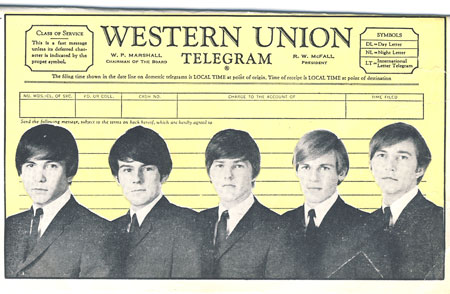
When The Five American’s released “Western Union” in the latter half of the 1960′s no one threw the record on the floor (to partially quote the song’s lyric). Much on the contrary, listeners scratched the infectious single on the record player. It received that many plays. The catchy tune about the delivery of some bad news by way of a Western Union telegram rocked the charts, reaching the sixth spot on Billboard (three in Cashbox) and selling in excess of one million records. It was the band’s biggest hit, and the product of some years of hard work.

The band formed in Durant, Oklahoma at Southeastern Oklahoma State University in 1962. The five musicians founded the Mutineers and played some bars and frat dances. Boy has frat music changed over the years! Honestly, as a member of a college fraternity for three out of my four years at school, I can confidently say that I would have enjoyed the Mutineers more than the majority of the junk that spewed out from the thumping speaker system with the jacked subwoofer. Anywho, after a move to Texas to try to make tuition money, the band became quite popular in a Dallas bar called The Pirate’s Nook, and they were discovered there by John Abdnor, the president of a local record label called Abnak Records. It was Abnak that gave the band the initial opportunity to work on their craft. At this time, they also changed their name to something a little more American (in response to the burgeoning British invasion). There was absolutely no question that The Five Americans were, well, American. So, who were the Five Americans? Well, here is a convenient list taken from the band’s current website:

Jimmy Wright – drummer extraordinaire (1947-2012)
John Durrill – organ, vocals, and co-writer
Mike Rabon – vocals, lead guitar and co-writer of all the groups songs
Norman Ezell – rhythm guitar, vocals, and co-writer (1941 – 2010)
Jim Grant – bass guitarist (1943 – 2003)

As you can see, unfortunately three members of the band have passed away recently. The band split in 1969, and the members went on to other professions (teacher, minister, photographer). Jim Grant actually became a logo designer and one of his designs is the Chili’s restaurant logo. Who knew? Well, now you do! John Durrill was hired as the organ player for The Ventures and he became a songwriter. Mike Rabon initially continued with music and had a succesful touring band, Michael Rabon And Choctaw, in the 70s.

The Five Americans did release other material before “Western Union”. In fact, their 1965 song, “I See The Light” hit 26th spot on the Billboard charts. However, the band will be most known for their ode to Western Union, a song that is still played today (5,000 times per month in the US and Canada, according to the band’s website), and I know it is played almost daily on the Sirius 60s on Six radio station. It’s not like anyone will complain. It is an excellent song.

It is just so damn catchy. The small guitar hook and sticky harmonies. The brief falsetto followed by the repetition of “dit, dit, dit,” just flies around your head. You must give the Five Americans some credit for creating a pop smash with such staying power. I think its important, though, to also look into the piece. When you get deeper into the song you can hear some neat keyboard riffs and a very capable rhythm section holding the song together. It’s a great song and will always be associated with big hits of the 1960s.

Mike Rabon released a memoir entitled “High Strung” which is available on the band’s website. With purchase of the book, you can receive a copy of the CD.

The Rationals Deserve Some of Your Respect

20 Jun

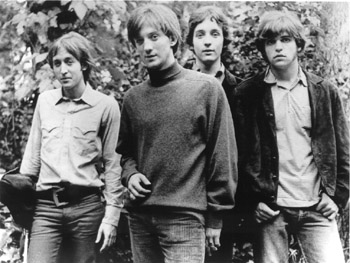
 In 2010, 60′s garage-rock band  The Rationals finally got some respect when they were voted into the Michigan Rock and Roll Legends online Hall of Fame. Coincidentally, The Rationals’ cover of “Respect,” by Otis Redding is what initially launched them onto the charts for the only time in their six-year existence. But despite the lack of success, their brand of Beatles-influenced garage rock was certainly an influence for later Michigan musicians like The Stooges and MC5.

The Rationals were formed in 1964 and immediately found success in the local market. This prompted some attention by record companies, and the band was signed by A² records in 1965. In 1966, the band covered “Respect” which was picked up by Cameo and released to the country. It found the charts at #92 and earned them some notoriety. Unfortunately for the Rationals, the music didn’t latch on everywhere and the band remained a Michigan favorite but not a national success. After some more singles they fell victim to in-fighting and bad management and broke up in 1970.

It took until 2009 for a collection to be put together called Think Rational which featured a good sampling of the band’s work. And, proving that hindsight is always 20/20, the band was (and still is) heralded as a seminal garage rock act and a true unappreciated treasure. Better late than never I guess. It is well deserved. The music is fresh and lively. It is catchy and twangy, raw but organized, British-inspired but genuinely American branded. Lead Singer Scott Morgan, who is battling liver disease and currently awaiting a liver transplant, had a smooth and almost effortless voice. He also could blow the heck out of the harmonica. The band also featured Steve Correll on lead guitar and vocals, Bill Figg on drums, and Terry Trabandt on bass and vocals.

Here is a video of The Rationals performing “Respect.”  It is a tame cover, well constructed and a true head-bopper. I am a big fan of Scott Morgan’s voice. I also love the Brit-esque harmonies and the harmonica trill. When I listened to this cover I was a reminded of Bob Seger’s early work as a garage rock musician in Michigan with his band the Last Heard. Recorded around the same time as The Rationals’ “Respect” you can certainly spot several similarities (the song also shares a similar chorus with “Gloria” which was recorded by Van Morrison and Them two years earlier)

Listen to Seger’s “East Side Story”

Let me also show you the B-side of the “Respect” single that hit the charts. It is “Feelin’ Lost,” and pays even more tribute to the invasion sound that was pervasive in rock music at the time.


The song is short and repetitive. It features choral harmonies, a short recognizable riff, and a constant drum beat. These are all distinguishable factors of the British Invasion and Garage Rock. The band does it quite well though and it is a shame they did not hit more success. But, alas, we can enjoy it now!

How About the Electrical Signs?

10 Apr

Get Electrical

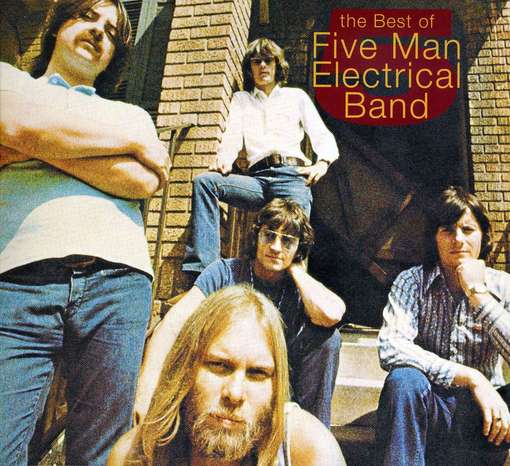
And the sign said long-haired freaky people need not apply. If you were of cognition in 1971 you knew this line pretty damn well. Five Man Electrical Band’s “Signs” propelled the band into the national spotlight and engendered a youth protest against signs. Okay, not really, but it certainly did hold a message of inherent earthy freedoms and a sharp criticism of discrimination. While the hippie culture “died” in 1969, some elements did carry over in the 70s and this Canadian band’s symbolic piece’s success proved that protest against unjustifiable treatment was still ripe.

But let’s back up a little bit. “Signs” is widely viewed as a one hit wonder, and a gigantic one at that (one that reached #3 on Billboard Top 100, #1 in Australia for nearly two months, and went gold). The Five Man Electrical Band had been around for a while though and while they may never escape the one hit wonder crown, their history is still worth delving into.

The band formed in Ottawa in 1964 as the Staccatos and first gained recognition in 1967 when they recorded an album with The Guess Who. In 1968 the band was vocalist/guitarist Les Emmerson, bassist Brian Rading, keyboardist Ted Gerow, and drummers Rick “Bell” Belanger and Mike “Bell” Belanger. They released another album to no fanfare and attempted reviving their career in Los Angeles with a flop, “It Never Rains on Maple Lane.” The band changed their name and style, was dropped, was picked up – credit to the influential Dallas Smith here, and then finally released “Signs,” but originally as an unsuccesful B-Side. It was remarketed and then hit major success. 

Let’s listen to the flop prior to the hit.

Okay it is not awful. It is Association-like pop music without a true hook to pull listeners in. That is probably why it didn’t meet success. The keyboard and harmonies are light-hearted and the lead vocal is smooth. It is definitely different from “Signs” which is more upbeat and rock-influenced.

More like this. “Signs” combines the elements of a succesful song. An excellent vocal combined with a catchy chorus. The song moves with an effervescent protest that is rich with strong harmonies and a smart lyric.

Hey! Let’s Go to San Francisco!

20 Mar

In celebration of the Spring equinox, I wanted to do an obscure classic rock post about a band that fit the Spring spirit. This clearly was not too difficult because this was the era of the flower child. After a few seconds of thinking I came up with the perfect melodious blend of music for this absurdly beautiful day in NYC. And, of course, I pick a song about going to San Francisco written by some chaps from Britain. Hey, didn’t you hear, we are going to San Francisco – but in this song you don’t have to wear a flower in your hair.

The Flower Pot Men

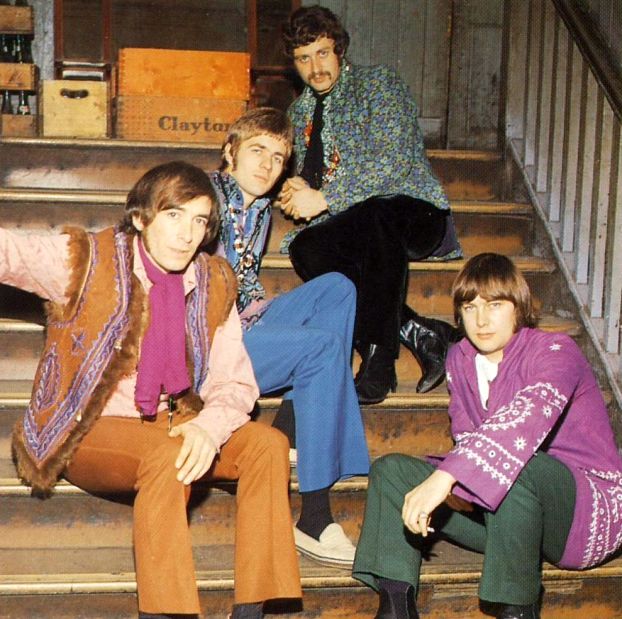
The Flower Pot Men may have created one of the most easy-going, light-hearted, songs of 1967, yet, because they were a band constructed of talented session musicians and didn’t stay together long, their name and this song have fallen into obscurity. But not to worry, there is still a strong coterie of individuals who remember and like the song enough to mention it, listen to it, and write about.

“Let’s Go to San Francisco” is the song I am obviously talking about. It was written and recorded by John Carter and Ken Lewis, who previously played in the Ivy League with Perry Ford – remember that song “That’s Why I’m Crying?” They were known as a pop-vocal band and that is what The Flower Pot Men was as well. Carter and Lewis, though, had no interest in promoting the song, so they hired a bunch of session musicians and vocalists to record the song. Tony Burrows led the group. The song kicked butt, as expected. This song was actually made fun of in Spinal Tap where the same-named band in the rockumentary had their first hit with the fictional song “(Listen to the) Flower People”

Harmony pop at its finest here folks. The hybrid call and response is magnificent – if you are into that type of thing of course. The song is upbeat but drawn out enough that you feel the musical saturation. You are doused with this Beach Boys’ like California (almost surf-like) beat that fits the title of the song perfectly. It is a relatively simple song and that is what makes it so excellent. We even get a Beach Boys breakdown (including some late 60′s instrumentation).

The band did not only release this hit. They attempted to strike it big again with “A Walk in the Sky” which for all intents and purposes is the same exact song. At around 54 seconds though something changes and it is remarkable. They actually progress years in their musical styling – from the inherently poppy early 60s pop to a late 60′s Pet Sounds like breakdown which is definitely the best part of the song. Check it out.

The Flower Pot Men would go on to change members (Jon Lord and Nick Simper of Deep Purple was actually in this band for a little while) and actually become the band White Plains that you may not have heard of but if you were around in 1970 probably heard this song.

It’s pretty much the same song as the other two with some strings and horns.

Zager and Evans in 2525 with Mr. Turnkey

28 Feb

Is it 2525 yet?

Zager and Evans represent one of the best examples of a 60s one-hit wonder. “In The Year 2525,” the repetitive, crescendoing, folk exploration of a future dystopia where humans are indolent and dependent on machines, was such a gigantic hit in the year 1969 that people still recognize it as one of the better folk compositions of the 60s in the year 2012.

Let’s give the song some credit. It claimed the #1 spot on the U.S. Hot 100 for six weeks. That is a difficult feat. It sold over four million copies in a year. To say things were looking up for the folk duo in 1970 would be an understatement. So what happened? Why did the duo not have another big hit. The answer to this question is simple. How about we take a look at the history of Zager and Evans prior to answering it?

Denny Zager and Rick Evans met at Nebraska Wesleyan University and founded The Eccentrics with drummer Danny Schindler. When Schindler left for Vietnam in 1965, the Eccentrics just became Zager and Evans, and the duo added bassist Mark Dalton and drummer Dave Trupp. The 2525 warning followed soon after. The song was actually written in 1964, but it was first released by Truth Records in 1968. It received a good amount of local radio play and then RCA signed the band and the song blew up.

Now, realistically, the advancements in technology that Zager and Evans talk of in the verses of the song - which gradually rise in close-to 1,000 year segments - could probably come to fruition prior to 2525 (to a point of course). I find it funny that they mention test-tube babies (nice premonition guys) for the year 6565, but a pill that does everything by 3535. Actually, there is a flaw in the lyric, because if there is a pill that controls everything you do in 3535, then why would you need to pick your baby in 6565 – the pill would just do it for you, right? Okay, I’ll stop my over-analysis now.

My favorite lyric from the song is the final verse:

Now it’s been ten thousand years,
Man has cried a billion tears
For what he never knew.
Now man’s reign is through.
But through eternal night,
The twinkling of starlight,
So very far away,
Maybe it’s only yesterday 

This final lyric suggests the circular nature of human existance. It’s creative and an excellent ending touch to the song.

Many people do not realize that Zager and Evans didn’t just record the apocalyptic classic and then stop making music. After the success of the song, the band released a follow-up single, “Mr. Turnkey,” a song about a rapist who nails his wrist to his prison cell because he is sorry for…wait, back up, what!?!

Yes, Zager and Evans followed up their cautionary tale of the future, with a slowed-down piece about a rapist. I don’t know why either. It also features one of the oddest descriptions of pulchritude in modern rock history, “she was lovelier than oil rights.” Take the melody, and it’s a beautiful song, but add the lyric, and it is disturbing (kind of Pink Floyd-esque with that). I have to think the release was a joke because if not, well, I just don’t know. The scary thing, though, is that the song is actually pretty good. Take a listen.

So why did the band not achieve any more success after “In The Year 2525?” Because of “Mr. Turnkey?” Well, I guess that it may have played a part. I think it is more because of how big of a hit “In The Year 2525″ was. It has difficult to follow up a first release that spends six weeks on the Hot 100 charts. But Zager and Evans should still be heralded for their release of one of the iconic songs of the late 60s, and a blatant song about a rapist.

Follow

Get every new post delivered to your Inbox.

Join 46 other followers

%d bloggers like this: