“Come gather round people wherever you roam.” The opening lyric of Dylan’s ode to the 60’s generation is one of the most recognizable song openings in rock history. No guitar riff, just Dylan’s distinct croon. I bring up Dylan’s classic for somewhat selfish reasons. The waters around me have grown and come Tuesday I will begin a new stage of my life, shredding the title of college student and taking on the new label of employee. Yes, I will be starting a full-time job with Wolters Kluwer as an Editorial Assistant and I’m extremely excited.
Obviously, this means that the blog will be experiencing changes, at least on my part. I will make this pledge. The Music Court will remain a memorable music blog and the content will always be fresh and entertaining. While my posting schedule may transform because of time constraints, I promise to keep publishing exciting and passionate music content.
So, while the times may be changing, my undying love for music and writing will never subside and, with the help of the Music Court’s other faithful contributors, we will continue striving to achieve our goal of becoming one of the internet’s most viewed music blogs. Before I sign off for the night (and embark on a weekend trip to Civil War sites with the family) let me quote Aristotle – “Change in all things is sweet.”
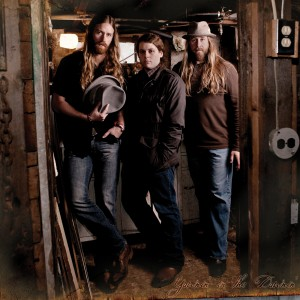
Never underestimate the power of music and brotherhood. The Barry brothers are proof of this sentiment. The band, Barry, was founded in 2011 by three brothers, who, despite having other commitments – like families, jobs and school – gathered in their self-made studio in Western, New York, and cut a fresh folk-rock album that oozes with such a cornucopia of sounds that I’m not sure how to label the music. The best I can do is alternative-inspired folk churned with harmony and a pleasant hint of country. I believe this description is suitable, but this is music you just want to lose yourself in. You can make your own judgment after experiencing their debut EP Yawnin’ in the Dawnin’ which was released on May 19. You can take a listen to some tracks below.
The Barry brothers are from Hume, New York. Just for some perspective, Manhattan is close to six hours away from Hume. New York. That is how far west they are. And I do think their location has an influence on their sound. It is agrestic, taking on the feel of rich farmland and open skies. Music like this cannot be created in a big city. This natural, old-time folk needs to bake in a town where the cacophony of screaming taxis and rumbling subways is not pervasive, and where when night falls true dark blankets the town.
The band is made up of Patrick Barry (Vocals, Guitar, Harmonica & Keys), Benjamin Barry (Bass, Vocals) and Bradford Barry (Drums, Vocals) and their musical maturity is on display throughout their first EP.
If I had to pick a favorite song it would be “Carnival(e).” The song combines two awesome elements. The verses are odd, but they match the carnival lyric well. The music moves up and down like a bouncing ball. The chorus strikes and the rhythm of the verse is replaced by a fast-paced rhythm and vocal harmony. This transition is skilled and much respected. “Three Years in Carolina,” another exciting song, displays Barry’s country influences. The chorus emits a southern effervescence and the well-placed harmonica helps carry the five-minute Carolina ode.
I have entered back into the mystical realm of WordPress posting after my brief stay in Florida. Florida was awesome. Nice weather, good people, Universal studios. Yeah, I was spoiled. But, hey, doesn’t everyone deserve a little fun vacation every once in a while. This weekend I am actually taking a Civil War sites tour with my family. So, I guess count that as two little vacations. But, come next Tuesday I will be taking the Long Island Railroad to the offices of Wolters Kluwer Health to start my FIRST JOB! I expect a ticker tape parade New York City. In all actuality, I will be greeted with Penn Station’s “busy” feel, which involves swarms of people focusing only on getting to their destination. This can result in some accidental shoving, but hey, I’ll be alright.
Woah, that reminds me of a song. Two points for the transition. On the flight back to New York last night, I was showing fellow Music Court contributor Josh Lampert some songs that he should listen to. “People Say” by Portugal, The Man was on that list. It’s bluesy and exceptionally catchy. Josh cannot avoid that combination.
“People Say” is a track off of Portugal, The Man’s 2009 release The Satanic Satanist. The song’s clear anti-war message is smooth. What I mean by this description is that the song does not try to force feed you its message. It is so easy to fall into this trap when it comes to passionate anti-war songs. “People Say” places biting commentary into short lines and this is effective. Read this before listening to the song:
Save me, I can’t be saved, I won’t. I’m a president’s son, I don’t need no soul.
All the soldiers say “It’ll be alright, we may make it through the war if we make it through the night.” All the people, they say: “What a lovely day, yeah, we won the war. May have lost a million men, but we’ve got a million more.” All the people, they say.
The verse is in orange and the quick chorus in green. The reference to the “president’s son” is not specific, but it is not terribly difficult to delineate the true meaning. But I do like this obscurity because it makes the lyric timeless. The chorus is hard hitting and comes early in the song. The verses are all very short. This is done for two reasons. First, I believe, Portugal, The Man released that the chorus of the song was catchy and awesome so they figured to keep that going for as long as possible. Secondly, and most importantly, the chorus enters with a medley of voices and sounds like a troop is singing it. Soldiers questioning the war they are taking part in, where life is recklessly lost and everyone tells them it will be alright. But is everything alright. According to Portugal, The Man that answer is a solid no.
The band pastes this awesome lyric over a strong blues riff that culminates in the moving chorus. It is tight and hard-hitting from a lyrical and musical perspective.

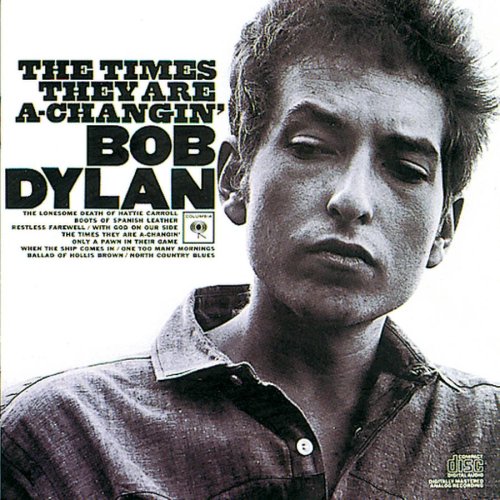 “Come gather round people wherever you roam.” The opening lyric of Dylan’s ode to the 60’s generation is one of the most recognizable song openings in rock history. No guitar riff, just Dylan’s distinct croon. I bring up Dylan’s classic for somewhat selfish reasons. The waters around me have grown and come Tuesday I will begin a new stage of my life, shredding the title of college student and taking on the new label of employee. Yes, I will be starting a full-time job with Wolters Kluwer as an Editorial Assistant and I’m extremely excited.




 The Music Court