Archive | July, 2011

If Not Now, When? Incubus’ New Album Put Under the Microscope

12 Jul

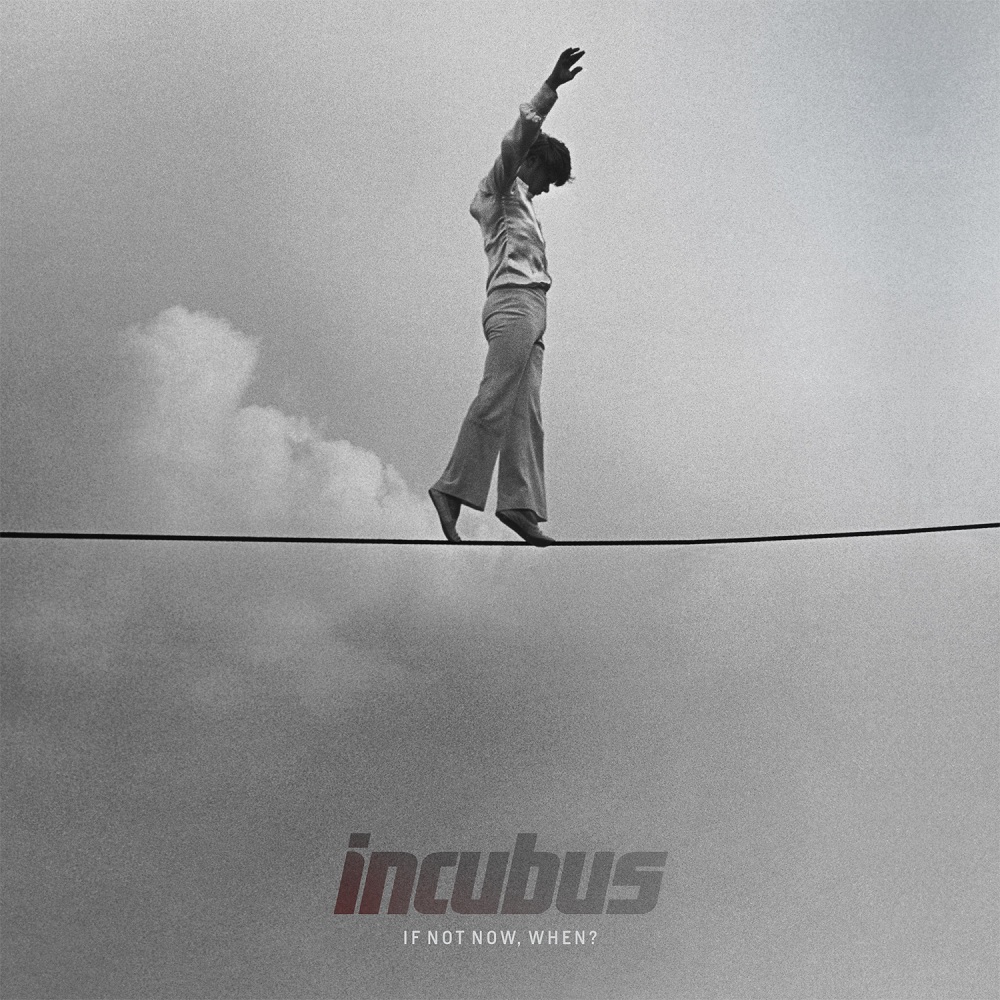
The album cover is a picture of high wire artist Philippe Petit, the subject of the documentary Man on Wire, that focuses on his death defying wire walk between the Twin Towers of the World Trade Center in 1974

Incubus’ new album, If Not Now, When? hit the shelves today and it does not disappoint at all.  Though the album lacks the harder rock feel evident in Make Yourself and Morning View, every song contains brilliant harmonies and an easy relaxing tone.

It’s no secret that Incubus has been moving towards more experimental sounds with less punch and aggression, and this was made clear by the album before this one, Light Grenades. If Not Now, When? is the evolved state of that transformation.

With that all said, this album has Incubus’ pure sound that is undeniably their own. As with every album produced thus far, Brandon Boyd’s voice gives a unique sound that dots the i and crosses the t in the sound produced. Every song on this album could arguably be plugged into any of the other Incubus albums and it wouldn’t feel too ridiculously out of place.

Most of the songs are about love and relationships, making for lyrics that could sweep a girl off her feet.

“Friends and Lovers” and “In Company of Wolves” fit into the parameters of experimental tunes while others fit into slower rock expected from Incubus such as “Isadore” and “The Original.”

A trend I noticed in the album is that in the “experimental” songs, Incubus seems to harmonize and create melodies with an organ/synth in the background, which is a slight abnormality.

“Isadore” and “Adolescents” are my two favorite songs off of the album. In “Adolescents,” the band really rocks and this gives Jose Pasillas a chance to show what he can do on the drums. Pasillas doesn’t have formal training on the drums, but can blow most drummers out of the water. He doesn’t get to showcase himself as much as he could in songs such as “Pardon Me” and “Stellar,” but he adds so much to the album with his skillful fills that never sound out of place.

The album is only 11 songs long, however it does leave the listener satisfied. All but two songs are longer than four minutes (leaving a few songs dragging on just a bit too long,) while “In Company of Wolves,“ (the most experimental song of the album especially after the 3:30 mark) is well over seven minutes long.

The one song that feels out of place in context of the album is “Switchblade.” While it is a good song that would fit in other Incubus albums, it seems out of place as it goes faster and Boyd is on the verge of rapping during some of the verses.

I miss Incubus’ use of turntables in the album. The turntables allowed for an interesting twist that normally isn’t found in rock songs. They never over-used the tables; listen to the pre-chorus of “Drive” and it belongs perfectly.

I would highly recommend this album. It’s relaxing and has a mix of both enjoyable rock and songs jam-packed with constantly changing harmonized melodies. The album leaves you wanting more and, because of this, the tour should run smoothly.

For those who just like downloading individual songs off of iTunes I would recommend “If Not Now, When?,” “Promises, Promises,” “Thieves,” “Isadore,” “Defiance,” and “Adolescents.”

If you have any views, comments, or questions, please comment on this article or tweet me at @MusicCourt or @AndrewLeibo and I’ll be happy to discuss or debate with you.

Here is “Isadore”:

Top 25 Guitarists of All time: A Quadruple Threat!! The Unveiling of places 19,18,17 and 16!!!!!!

12 Jul

#19: Eddie Van Halen

At number 19, we find ourselves with Mr. Eddie Van Halen. This man speaks for himself, or rather his guitar playing speaks for him. Van Halen proved himself worthy of this place because of his impressive guitar playing technique and proficiency. His utilization of two-handed tapping along with both natural and artificial harmonics created a sound everyone has come to know. He also exhibits very tasteful use of vibrato and tremolo picking. If you need any other proof of why Van Halen belongs here, I only have one word for you…ERUPTION.

Number 18:

Who will fill the slot in place number 18? Mark Knopfler! That’s right. The Dire Straits’ lead guitarist is number 18.  In 1977, he co-founded Dire Straits with his brother. The band was resoundingly successful until it disbanded in 1995. Knopfler has not given up. He still makes great music and composes film scores. Fascinatingly, Knopfler is left-handed, but plays guitar right-handed. He prefers not using picks and has developed his own fingerpicking style, or rather a variation on finger picking. Like Clapton, Knopfler prefers Fender guitars, yet came to appreciate the sounds of Gibson guitars in the ’80s. Knopfler is both proficient and plays with good feeling. In many of his recordings he tends to find very good places to bend notes, without overdoing it. Thus, he is number 18.

Number 17: Freddie King

At number 17 we have Freddie King. The “Texas Cannonball” belongs on this list as he is truly guitar royalty, being one of the three kings of electric blues guitar. The other two are Albert King, and the legendary B.B. King. Freddie is here because of his awesome songs and his technique of creating guitar parts with vocal nuance. He also inspiredd other important musicians. He was one of the guitarists that was taken from us far too young at the age of 42.

Number 16: !?!?!?!?!?!?!!

For number 16 we have…wait for it…wait for it… Buddy Guy! This guy is awesome! He has a radiance on stage that few artists tend to exhibit. You can tell he is genuinely having a great time on stage playing music with his friends. He plays with wonderful feeling and has inspired many musicians with his work. He is responsible for the Chicago blues sound and his showmanship is nothing short of fantastic. Buddy Guy is known as a type of bridge between rock and roll and the blues. Clapton got the idea for a blues/rock trio during and England performance in which Buddy Guy’s trio was performing. Clapton was inspired by Buddy Guy and formed the power trio we all came to know as Cream. Because of Buddy’s inspiration and fantastic musicianship, he finds himself at number 16.

The Bands of Summer – High Highs

12 Jul

High Highs

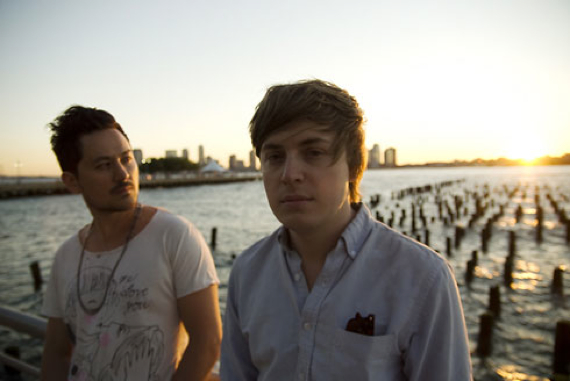
Today marks day two of the Bands of Summer new music special section. The order of these posts has no meaning, by the way. I am not attempting to rank the bands, but instead introduce their music to a wider audience. We travel today to ambient indie/pop after our exploration of the upper register of indie/folk with Dry The River yesterday. Everyone say hello to the Australian-born act titled High Highs.

High Highs is currently based out of Brooklyn, but their roots are firmly planted in a Sydney studio where singer/songwriter Jack Milas and electric/pop produce Oli Chang met. High Highs benefited from good fortune. While the two musicians did combine forces in Australia, it was only for a limited time, and, if not for the fact that they both worked for the same company and got offers to move to New York, the band would probably not be garnering record label attention today. The band attracted drummer Zach Lipkins and the tres amigos are currently recording, releasing and touring. But they are still a ways off from an album.

“We’ve only put out two songs, and that’s the story of it so far,” said Milas in an interview with Spinner back in March. Since then the catalog has expanded to four songs (one cover) according to the band’s Bandcamp. Two of these songs are available for free downloads. As for the band’s sound:

“Our PR agent, she wanted to insist that our genre of music is “church wave,” said Milas. “I find the whole “wave” thing really funny, in a good way. It works. It’s not music that’s religious in any way. It would just sound good in a church. Maybe we’re on to something.”

Church wave. I guess it’s a new way to describe the ambient indie/pop trend that is spreading quickly through the music world. With Milas’ falsetto and Chang’s ethereal music taste, High Highs is a solid EP/LP away from shooting up the ranks of the genre.

We start with “Horses,” a tasteful and intelligent release that floats with effervescent flare. The song, released in March, opens with an acoustic riff that merges into a spacey pre-verse segment. Milas’ voice is relaxing, imperturbable even. You get the sense that he is a real-life zen master. The song lulls listeners into a state of relaxation, but keeps them up with the poppy perambulating rhythm.

“Open Season” was released in November of 2010 and it was the piece that placed High Highs on the radar. The 3:48 song is a slice of indie pop mastery. The chugging rhythm moves well with Milas’ verses which evoke images of traveling down the California coast watching waves tirelessly crash into the sandy shore. You can almost feel the salty wind on your face. The song’s catch though resides at the minute mark. The well-placed keys make you want to whistle the segment that sticks to your ears like wet sand. The end provides this neat call and response ending with the acoustic riff under the first verse beautifully sung by Milas.

High Highs is a band worth looking out for. Hopefully their album will drop this year or early next year. For now, continue viewing their Myspace, Facebook and Bandcamp

The Bands of Summer – Dry The River

11 Jul

Over the next week The Music Court will profile six new bands that you, if you are not already, should be listening to. “The Bands of Summer” is the title of this special summer section. Many listeners who prefer oldies often conclude that no music released today is worth listening to. This is a false sentiment, and I know because I was once a recent music iconoclast. This list is short and there are several more talented new bands that are worth mentioning. Do a quick google search for best new bands of 2011 and you will be prompted with a dazzling display of new acts to listen to. Music is alive and well, trust me.

Let me explain that last sentence with a bit of a disclaimer. When I say music is alive and well, I am not talking about dub-step/hip-hop (throw-away genres that do not fit into this post). If you want to rage, that is the music for you, but if you are into appreciating tunes then this is the correct place. Many solid releases today fit under the broad umbrella of “indie” music. I believe you can split this genre up into several sub-genres (kind of like what I did with psychedelic music). There is folk/indie that has exploded with bands like Fleet Foxes and Mumford and Sons (who are leading the new British folk revival that parallels the early 70s). Then there is indie/pop which combines large bands with ambient sounds (like Arcade Fire and Edward Sharpe and the Magnetic Zeros). There are other sub-categories, but, for now let’s leave it at that. The bands that I will profile fit neatly into the parameters of indie music.

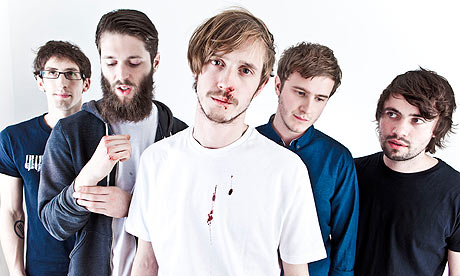
The band today is a up-and-coming indie/folk act who take the Mumford and Sons sound and transform it into music that is slightly less predictable and even operatic at parts. Dry The River is about to blow up and see the success that Mumford and Sons gained with Sigh No More. Singles are being released and music lovers are on their heels waiting for a full-length LP. Plus, on their Facebook “artists we like” section, The Magic Numbers are mentioned and that is just awesome.

Dry the River is best known through their tours. They have been touring since they were founded by Norwegian singer-songwriter Peter Liddle. Liddle added homeless punk-rock drummer (yes, he was homeless) Jon Warren, classically-trained violinist Will Harvey, guitarist Matt Taylor and bassist Scott Miller. The east-London band self-released a five-song EP in 2010 and have released a few singles since then (including the one below). What I think is most astounding about the band is their maturity. It sometimes takes an album (or two or three) before a band can release something worthwhile. But the EP is stuffed with rich sounds and Liddle’s powerful voice and the song below, “New Ceremony” can shoot up the charts with correct marketing. There is a huge record label bidding war for Dry the River and I understand why. It does not take a genius to realize that indie/folk is in and Dry The River is demonstrating their mastery of the genre.

“New Ceremony” is a perfect song. I do not often give such credit to bands, but Dry The River deserves it for this hit. The opening acoustic riff is intriguing. It is not effervescent, but rather somewhat melancholic. Liddle’s voice is choir-like. It explores the upper register with accuracy and efficiency. His annunciation flows well with the riff. The harmony leads into a true folk drop. The violin picks up the rhythm section with the drums. As the song starts adding more elements it speeds up and you get the feeling that it is about to get loud, and, true to Indie form, it does. But it is more theatrical than Mumford and Sons who simply speed up their acoustic instrumentation. Dry the River’s chorus (well the first part) takes a page out of Arcade Fire’s book. The music collides into an organized catharsis and Liddle’s voice is PERFECT. Seriously, it fits so well into the song’s somber explosion. Then the chorus shifts into a call and response harmony that fades into a violin rendition of the riff that transforms back into the chorus. It hits and hits and hits. The song is like Dry the River’s grand entrance into the indie party. Do you hear why record labels want to sign them?

I predict that after Dry the River releases an official LP they will become the new “in” Indie band. You will begin to hear “New Ceremony,” which has under 15,000 views on Youtube, on radio stations everywhere. So get linked in with Dry the River and enjoy the ride of witnessing the rise of a talented act.

The Fall of Troy – Phantom on the Horizon

10 Jul

My head was jerking violently, my eyes following a picture of a musical note scrawled onto a piece of paper hanging from piano wire. It was making me dance for my life, the snipers and high powered machine guns waiting for just a single misstep. As the subconsciously ritual unbuckling and buckling of seatbelts continued, I tried to calm myself without the help of my heart which had already sunk out of reach. Bloody smiles and mangled cars watched as the powerful magic I attempted to wield spun out of control. I hit the brakes but it was too late, my mind had strayed too far from the fine line. I had been thrown into the mercy of the other half

**********************************

Uhh… hi everyone. Today we will be exploring a little bit of the darker side of psychedelia. I’ll start with a little bit of history. Psychedelic rock was a main influence in what today is known as heavy metal. The genre is splintered into many sub-categories, such as death metal, thrash metal or even punk. There are countless forms of metal these days, but the one thing that is common among most of them is that the psychedelia has been phased out.

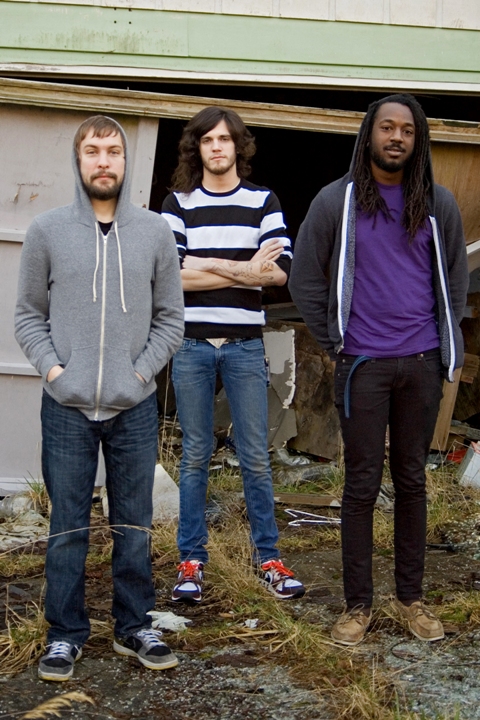
The band I bring to you today is the Fall of Troy. They are a hardcore band from Washington state that is also guilty of phasing out pyschedelia, up until recently anyway. One of their more recent EP’s, Phantom on the Horizon, is one of the best examples of heavy music implementing psychedelic elements out there. It does this, however, in a much different and darker manner than most traditional psychedelic bands would. This naturally suits a hardcore band.

If I had to accurately apply a genre to the EP, it could only be a psychedelic post-hardcore rock-opera. It consists of five songs, or ‘chapters’, and spans the length of a nightmarish and most-likely magic induced story about a Spanish galleon which encounters a ghostship from another dimension. It features amazing lyrics and is highly over-produced compared to the band’s other, more-raw albums, giving it almost this truly genuine hellish feeling.

Chapter II: A Strange Conversation opens with an extremely powerful introduction. The drums hammer away complex rhythms with precision while the guitar shreds away only building in intricacy as time passes. The combined sound creates that intense metal feeling right up until the beat skips and begins to stagger in a more hardcore manner in my opinion.

The vocals come in clear along with ridiculous guitar lines. The only thing that can make listening to this band better is knowing that both the singer and the lead guitarist are the same person. That means whenever you hear jaw-dropping shredding and raging screams, the source is the same entity.

Yes I did say screams. If that is cause for some alarm then let me try to ease you. I like to consider this song the friendliest introduction to screaming possible. They really aren’t that bad on this album in general, especially when compared to the rest of the band’s music, and they fit perfectly with the theme of the story.

What I love in particular about this song is that the screams truncate extremely clear and downright good lyrics, eventually leading into very powerful opera-esque wailing vocals which do justice to the singer’s wide range. In case you are wondering who is this extremely talented musician, his name Thomas Erak, a quickly blossoming guitar legend.

The song ends on a very slow and calm note, putting the post into post-hardcore. The music is one of a kind, and almost even more importantly, the feeling it conveys is a brand of overwhelming psychedelic insanity that bands in the 60’s only dared approach with a thick wall of dry-humor.

Chapter IV: Enter the Black Demon is the other song on the EP which I need to share. As kind of the musical apex, it opens with a flurry guitar notes and drum beats which melt into one another as if it all were riding on the edge of a massive volcanic explosion. A long howl does very nicely at indicating the mood at the current point in the story, and a second singer is implemented to represent the ‘black demon’.

The main vocalist and protagonist of the story fights for his sanity here with his confrontation with ‘black demon’ “Bang Bang Bang Bang, the thoughts in your head taking hold.” The representation of madness seen here is dealt with a passion that demands respect. A short heavy screaming part (MURDER) segues into a light and upbeat bridge. “Explanations turn to Explanations which turn to Explorations.” It gears you for a intense guitar solo which builds heavily into an abrupt and again peaceful ending.

The contrast between the endings and the rest of the songs on this album make for beautiful metaphors, kind of like sailing on the seas which one day are calm, the next stormy.

This sort of epic EP, with a length of only 37 minutes, is best enjoyed in a full sitting. Only then will you be able to truly appreciate a masterpiece of this sort of mood, which is actually very new to musical scene and is very psychedelic in nature. Just the screams alone convey a feeling which is truly hard to replicate any other way and even show a definite level of commitment to the music based on the negative effects of screaming. The sheer range of emotions in this EP creates an openness of interpretation which allows any listener enjoy it like a custom tailored movie experience.

Side- Note: If you are someone who refuses to listen to this because of the screaming then keep this in mind. Phantom on the Horizon is actually a remake of the band’s much earlier Ghostship demos. The demos were essentially the same songs, minus chapter three, much shorter, and a lot more raw. There is even a debate on the internet about which version is better, with supporters of the latter saying that the new release is way too tame for their tastes. In my opinion both are great in their own regards, and if you are willing to compare the two I will link the original version of chapter four down below. Just remember, screamed vocals are quite the… acquired taste… and please, for the love of god, don’t automatically associate them with ‘screamo’.

>&)

-oko

P.S. RRRROOOOOOOOOOOOAAAAAAAAAAAAAARRRRRRRR