This section has been on hiatus for a small while so I thought I would resurrect it and talk about guitars today instead of lyricists. Josh will be back on soon. He’s been busy. Whoever says college is not tough is lying. Anyway on to skilled musicians, most of whom never needed to succumb to a specific major. Practice was obviously necessary. But, no physics class.
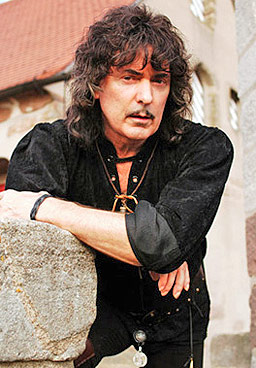
Biography and Music
Ritchie Blackmore dropped out of school at 15. It was one of the better decisions he ever made. Blackmore took an apprenticeship as a radio mechanic at Heathrow Airport and started receiving guitar lessons by Big Jim Sullivan, one of the most in-demand studio musicians of all time. He performed in more than one thousand charting singles over his career. No big deal or anything.
Blackmore’s first guitar was given to him by his father when he was 11. It came with a threat. His father promised to smash the guitar over Blackmore’s head if he did not learn how to play it correctly. So, a few classical lessons later, Blackmore was introduced to correct finger strokes and other various classical guitar techniques. This only helped him, but was not the reason why he became a true “highway star.” Deep Purple joke. Don’t worry about it.
Blackmore became your classic English guitarist. His upbringing in Middlesex, work for Joe Meek’s (famous English producer) studio, and backing of performers like Heinz, Screaming Lord Sutch and Glenda Collins all contributed to this label. In 1968, Blackmore teamed up with organist Jon Lord and formed Deep Purple. Deep Purple would eventually go down as one of the first hard rock (heavy metal) bands of all time. They, along with bands like Blue Cheer and even Black Sabbath were the predecessors of true hard rock. Blackmore’s playing somewhat spun the process into motion.
Style and Equipment
This section will describe why Blackmore stands on this list and, no, it is not just because “Smoke on the Water.” Blackmore is a very skilled guitarist. He understands the instrument and is able to play it with awesome proficiency. His riffs are catchy and his solos combine blues scales with elegant phrasing and minor scales most similar to classical European music. This interesting combination gives the music a dark but catchy feel. This can be heard in “Highway Star.” Take a listen:
Blackmore is a Fender Stratocaster man as well. His Strat’s have a scalloped fingerboard, which means the frets are almost scooped out to form a U shape. This is usually used by Shred Guitarists. Blackmore and Yngwie Malmsteen are two examples of guitarists who prefer this expensive process. Blackmore also liked to experiment with various pedals and guitar synthesizers with Deep Purple and his project Rainbow.
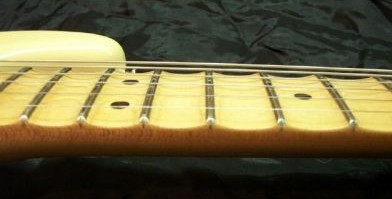
An example of a scalloped fretboard. This one is from Yngwie Malmsteen's guitar
His immense catalog of guitar work is just fantastic and his playing never lacks much. He stands as one of the better guitarists of all time because of this skill and his tremendous influence on a changing music population.


 The Music Court