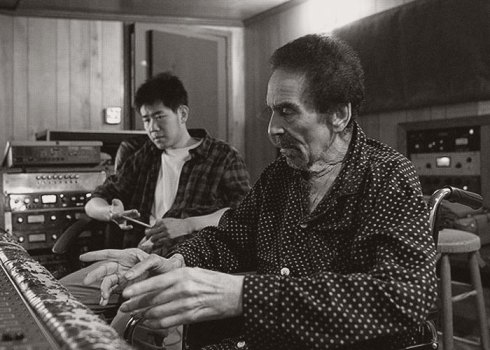
David Lee with his mentor, Willie Mitchell Photo by Antoine Sanfuentes
Willie Mitchell knows soul music. In 1969, a little known R&B singer named Al Green came into contact with Mitchell after struggling with his first release. After hearing Green’s voice, Mitchell quickly scooped him up as a vocalist. His instrumental piece of advice? Find your own voice. Be unique.
David Lee is unique. Born in South Korea in 1986, Lee and his family moved to Virginia when he was eight. After voraciously diving into new music, Lee borrowed an acoustic guitar from a friend and played it until his fingertips were frayed and the guitar was worn. He devoted his time to writing and recording several songs, but, like Al Green, he had difficulty defining a sound after years in the studio. Enter Willie Mitchell, who almost 40 years after discovering Al Green, was inspired by Lee’s smooth voice and perspicacious sense of melody. Mitchell took Lee under his wing as one of his last projects before his death in 2010.
Without Any Guard,the culmination of five years of labor (three with Mitchell), will be released in February 2013.
David Lee’s endearing voice carries his tunes. In “Stay Away From You,” the last song on his 11-track debut, his sweet John Mayer-like croon washes over a tranquil blues rhythm. There is a coffee-shop quiescence to the track; a touching sentimentality best suited for a quiet venue. It’s an impressive song despite seeming so effortless. This is one of Lee’s best attributes. He makes good music seem so easy. And as any wise musician will tell you, this is not an effortless task.
“Happy Birthday” begins with a picked riff – comparable to a bit of a Pachelbel’s canon/Always on My Mind mixture – proceeding into the main rhythm, a toe-tapping beat. The vocals are laid-back, but they remain subtly powerful and delicate. Lee balances power and control. His singing is skillful. In the CD version of this song, Lee is joined by a chorus that echoes “don’t let your heart down” and adds even more power to the piece without ever seeming overdone.
Lee’s music is engaging, melodic, and bluesy. He is a soul singer with his roots now fully embedded into a soul culture that Willie Mitchell first thrived in more than 40 years ago. Lee is an exciting new artist, and I fully endorse his new album. Don’t miss out!
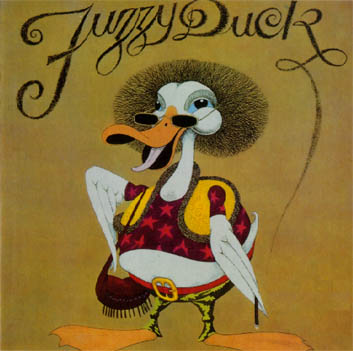
More like Funky Duck – Look at it’s Fro and subtle pimp cane!
Progressive rock is not easily definable. This sounds like a cop out, yes, but I do think that part of the intrigue of this genre is its obscurity. For the sake of continuing this post, I will attempt to define this genre that peaked in popularity during the 70s. Progressive rock (similarly to psychedelic rock) took classic rock and expanded it. It manipulated compositions, added instrumentation, and made music unpredictable. I do think that one of the reasons why bands like the Mothers of Invention, The Beatles, The Beach Boys, Jethro Tull, The Moody Blues (the list goes on) started experimenting with different music was because they were bored.
As the progressive rock movement spread (prior to the genre being termed), more and more bands sprouted up – many that are underappreciated (i.e. The United States of America, Gentle Giant, Amon Duul), but even many of those bands became cult sensations.
Today we are going to talk about a band that missed the boat entirely, never gaining much fame with their unique brand of progressive rock (I’ll save a more in depth analysis of my love for progressive rock later – the genre does house my favorite band of all time Pink Floyd). So may I introduce to you the one and only hairy fowl and introduce them to the obscure classic rock section of our humble castle.
Fuzzy Duck – yes that is the cover of the band’s eponymous first album (and what an album cover it is) – was formed in London in 1970 and it featured a few train-hopping musicians who experienced progressive rock from the perspective of a few oddly named bands. The original line-up consisted of guitarist/vocalist Grahame White, bassist Mick Hawksworth (formerly of Andromeda), keyboardist Roy Sharland, and drummer Paul Francis (formerly of Tucky Buzzard). Just before the band’s first and only album was released White left and was replaced by guitarist/vocalist Garth Watt Roy who was featured on the bands two 1971 singles before they all parted ways by the end of 1971.
In a way the short life of Fuzzy Duck feels like the relationship between Brenda and Eddie from Billy Joel’s “Scenes From an Italian Restaurant” – where the couple gets married during the summer of ’75 and has had it already during the same summer (and get a divorce as a matter of course). But before the band parted the closest of friends (okay, I’ll stop with the Joel references), they did release some music and I want to highlight two of their songs (tracks 1 and 2 on their album) in this post.
The song begins with a groovy 70’s riff over drums and harmony. As the song progressed we are introduced to a few elements that are identifiable as progressive rock. The tremendous organ solo at around the 1:40 mark is a classic signifier. Sharland kills it during this intense solo. The song (4:10 mark) also uses production techniques like displacing sound – another element that progressive rocks played with. A fuzzy guitar solo follows and leads into the choral harmonies that persist throughout the song. One of my favorite parts of this song is the skilled bass of Hawksworth. A solid bass can do more than simply carry rhythm and in “Time Will Be Your Doctor” it makes the song. Many view etheriality and airiness as two elements necessary in progressive rock, but this is simply not true. Progressive rock extended way beyond that realm – as proven by Fuzzy Duck and many other bands.
“Mrs Prout” immediately hits listeners with a wavy guitar that oscillates through different speakers and a strong rhythmic bass. It feels like early Progressive/Hard rock that did go on to inspire future hard rock/metal bands. An eerie alien keyboard leads into the beginning of a fine vocal by Grahame White. The song continues in this vein for a good amount of time – a constant, complacent beat. At around three minutes bass and drums begin to take the song over and a guitar quickly decides to join in on the impromptu jam that is funky and excellent. An organ rises and begins to drown out the small jam – and this continues until the end. I love the instrumental portion of the song. I feel that Fuzzy Duck’s true strength is there as well.
Don’t worry. The Andes are not really falling. Go back to bed South America, everything is going to be okay. But if the Andes were in Pittsburgh, PA, well, then residents might need to take caution. Falling Andes, a new Indie/Pop, is hot off the presses and one listen to their dulcet melodies and sticky rhythms will get you hooked on the Andes.
Falling Andes was manufactured by multi-instrumentalists Dan Peluso (vocals, guitar, synthesizer) and Jordan Wood (vocals, guitar, bass, keyboards). The accomplished duo started writing songs together and expanded the band to include drummer Peter-Michel Natishan and guitarist Mike Boyer. Now when I say the band is new, I am not pulling your leg. Their debut EP dropped two days ago on iTunes. Pick it up. You will feel mighty good about yourself when the indie world picks up on the exuberant joy of Falling Andes.
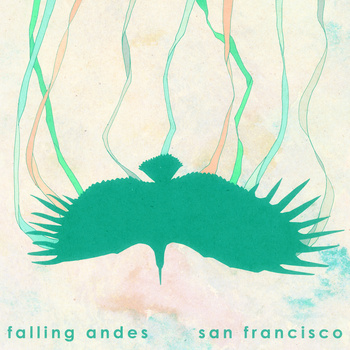
If I had to pick one song to introduce the band it would have to be “San Francisco.”
The synth beginning is promising, but when the airy guitar chords kick in and lay comfortably over the synth the listener is transported to Fisherman’s Wharf, his/her eyes staring at the San Francisco Bay. The voice of the lead vocalist is distinct. I’m not entirely sure how to describe it. His “oh, no” shouts remind me of the always theatric Arthur Brown’s shout of the same words in his song “Fire.” It fits perfectly, though. The song is fresh and catchy and I smell the sea when I listen to it. Which, of course, is interesting because the band is from Pittsburgh. Definitely check this band out.
I originally wrote this story for the LI Press which can be accessed by clicking on this link
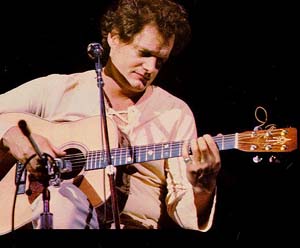
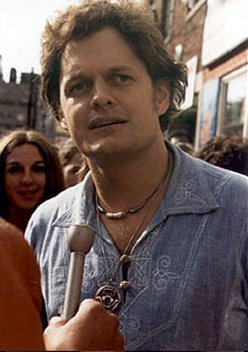
The epitaph on Harry Chapin’s gravestone is a lyric taken from his song “I Wonder What Would Happen to this World.” Carved into the speckled gray stone, under his name and the years 1942-1981, are the lyrics, “Oh if a man tried to take his time on Earth and prove before he died what one man’s life could be worth I wonder what would happen to this world.” Today, Saturday, July 16, marks 30 years since Brooklyn-born folk singer/songwriter Harry Chapin died in a car accident on the Long Island Expressway, but the tireless philanthropic work he did when he was alive has transcended time and made a man consistent with his epitaph.
“Chapin’s legacy to finding an end to hunger has lasted because he went after the cause with such passion,” says Paule T. Pachter, executive director of Long Island Cares, the organization Chapin founded in 1980. “Harry was walking through the halls of congress when he was talking about hunger. No one has come by with that kind of passion and conviction. There really hasn’t been another voice to fill his void.”
In memory of the 30th anniversary of Chapin’s death, Long Island Cares has created a 10-day celebration of Chapin’s life running from July 8-18, which will culminate over the next three days, beginning with a concert today and closing on Monday. Today, the anniversary of Chapin’s death, members of the Chapin family will gather at the Chapin Rainbow Stage in Heckscher Park, Huntington for a concert to support Long Island Cares. The concert is free but donations are appreciated. For a donation of $100 per person to Long Island Cares, each donor will receive an invitation to a special Meet and Greet reception with the Chapin Family one-hour prior to the concert at the Heckscher Museum. On Sunday, Pat Fenton, author of “Harry Chapin’s America, Remember When the Music,” will join musician Paul Gomez at Borghese Winery in Cutchogue for a tribute to Chapin from 2-4 p.m. Gomez will perform some of Chapin’s songs and Fenton will read excerpts from his book. And at 7:30 p.m. on Monday, July 18, a free Harry Chapin tribute concert will take place at The Harry Chapin Lakeside Theatre in Eisenhower Park, East Meadow.
Chapin first broke into music during the early 70s. His tender croon and cozy acoustic guitar made him a well-known folk musician. In 1974, Chapin released his fourth LP Verities and Balderdash, which is perhaps best known for its chart-topping single “Cats in the Cradle,” which skyrocketed Chapin’s album sales and made him a millionaire. But Chapin thought of money as an entity that could abet him helping those in need. And so, while his music made him popular, his charity work lifted him to the degree of legend.
“It’s hard to overestimate the amount of good [Chapin] did,” said Sen. Patrick Leahy in an interview with Associated Press. “There are a huge number of people who probably have no idea who he is. All they know is they got fed because of him and they wouldn’t have otherwise, both in this country and abroad.”
Long Island Cares provides nutritional food and support services to Long Islanders in need. It also provides educational services on self-sufficiency and the causes and consequences of hunger on Long Island. Along with Long Island Cares, Chapin also founded the organization World Hunger Year, now known as WhyHunger, with radio D.J. Bill Ayers in 1975. The group seeks to address the causes of hunger and poverty. But his work benefiting Long Island cannot be overstated.
“He established the first food bank on Long Island,” says Pachter. “In 1980 there were only two other food banks in downstate [NY]. He was also so accessible. If you saw him, he stopped and he spoke to you. That resonates with Long Islanders. He influenced people to be that way. Harry was just there and he was tremendously passionate about this island. This was his home.”
Just one year after founding Long Island Cares, Inc., Chapin was traveling in the right lane of Long Island Expressway on his way to a free concert he scheduled at Eisenhower Park when, after passing exit 40 in Jericho, he put on his emergency flashers, presumably because of mechanical issues with his Volkswagen Rabbit. Chapin slowed to about 15 miles per hour and swerved in the center lane directly in the path of a tractor-trailer truck. The truck rear-ended Chapin and his car burst into flames, and while the driver of the truck was able to remove Chapin from his vehicle, he could not be revived. Officially, Chapin died of cardiac arrest, but there was no way of telling whether it was before or after the accident.
Despite Chapin’s untimely death, his indelible impact on Long Island has been perpetuated by people devoted to keeping his eleemosynary work alive.
“We were recently at Bethpage ballpark and we were there doing a food drive,” says Pachter. “There was a collection box by our tent with Harry Chapin’s name on it, and this young father was walking with a child, and he stopped in front the box and he looked at the box and said to his son, ‘You see the man of this man on this box? He made it possible for people to eat.’”
GroopEase has a creative approach to selling albums. They feature several new artists a week and allow viewers to purchase the artist’s material for special prices for one or two days. It is the Groupon of music. I found out about this site a few days ago. So, naturally, I went prowling for cool new bands. And, even though I missed the special, I found Common Grackle, a hip/hop, indie blend. A what? I said the same thing. I pressed play. Out of my laptop speakers came the dopest Indie music I have ever heard. Why did I just write dopest? Because, I’m bemused, I have no clue what to call it. The music is a hugger-mugger of mashed-up rhythms and depressed lyrics. There is a slowed-down keyboard beautifully juxtaposed with lyrics about not wanting to die at a grindcore show (I’ll explain later). There are imprecations and rapping over spacey synthesizers. Then there is Gregory Pepper’s remarkably passionate voice that mixes witty sarcasm with true pain. It is an amalgamation of so many musical elements that my ears explode when I listen. But it’s a good thing. Let me make one statement before I move on.
Common Grackle is one of the most exciting indie acts to come out of the wide world of music in a while. And I think lead-singer Gregory Pepper has a response for my observation and it comes straight out of the lyric of “Down With The Ship,” track six of Common Grackle’s debut album The Great Depression (I bought it on Amazon for $5. Yeah, I’m cheap and poor). The line? “Told them all to take care but I don’t care a bit.”
The band formed at the suggestion of record label Fake Four Inc founder Ceschi Ramos (who raps in two of the songs including “The Great Depression” which is featured below). Singer/songwriter Gregory Pepper and hip/hop producer Factor were label mates and they began making music together in 2009. What formed was a magical combination of creative beats, hearty lyrics, intelligent instrumentation and one powerful vocal that sounds like it was chained up for years prior to this album. That is how effective Pepper’s voice is. Pepper and Factor churned out tracks with the help of Pepper’s band and a memorable 12-track album was created.
So where do I start with the music? There is bluegrass rap, a short dubbed ballad about a violent brawl at a laundromat. I think I am going to profile two of my favorite songs on the album, “The Great Depression” and “At The Grindcore Show.”
Oh, so I see where they were going with the title. How do you like that psychologically unstable video? How about the music and the lyrics? The music can best be described as indie/psych/pop/hip-hop fusion. Factor dreams up this swooning rhythm that hugs the rapped lyrics like a blanket. There is just so much sound and then, at the end, harmony. Harmony. Really good harmony, at that. The lyric is dark. “Dumb sh*t spilling out of his stupid f*cking mouth, I’m sorry mom and dad but I had a bad year, keyboard cut out hanging on the walls of heads of ex girlfriends.” It is downtrodden, melancholic and defeated. But, even with the rhythm, it works well.
This little ditty is hilarious, but scary. The melody itself is like a kid who just got ice cream, small and gleeful, but the lyrics are about how our protagonist is drugged and scared at a grindcore show where everyone is fake and he is lost. Sad but happy. Barret-esque. A lot of the music takes on this psychedelic quality and I am loving it. Keep rocking Common Grackle, it’s working well.



 The Music Court