Archive | Lyric of the Day RSS feed for this section

Lyric of the Day #55: Top 100 Lyricists #93

29 Aug

Good morning readers. I am sitting here in my dorm room with a watchful eye on the clock for breakfast will soon be upon my mates. So, yes, college is going to be a challenge for the blog. Soon enough I will be going to a three hour internship for four days a week and will be doing work for that, as well as, the three classes I am also taking during the semester. It will be busy and I promise I will try my hardest to keep to the post a day spirit. Wish I had others to help me out but still looking for some e-mails. Some posts may be shorter but I am definitely going to do my best. So, without further ado, lyricist #93

Did you know that Gordon Sumner has sold over 100 million albums worldwide and is widely regarded as one of the most succesful musicians on this side of the solar system (Kind of hard to compete with Madonna who also sells very well on her home planet (Saturn’s moon Titan). Which music fan who claims to know everything that music has to offer is shaking their heads and going to themselves Who? How can I not know who this is? Well, originally I had a very similar reaction. I had heard of the name but could not put a face to it. It became easy when I learned that Gordon Sumner is the birth name of a man who most refer to simply as Sting.

Sting

Now it all clears up. Sting has been about as succesful as you can be as an artist. With the Police he has hit great heights. 50 million records sold, #70 on Rolling Stone’s greatest artists of all time, a title of highest earning musicians in 2008. They did this all with their quirky mix of jazz, punk, and yes, even reggae music which they fused to make both marketable and catchy. Their music is good and everyone feels required to admit that the wierd combo of music works. But, lyric wise, Sting did not really blossom until his equally succesful solo career. His lyrics became more abstract and even self-deprecating. Sting turned an interesting corner and, for that reason, he is named the #93 lyricist of all time.

Like the rest of the artists for this segment, I would like to focus on two of their works of lyrics to demonstrate their lyrical abilities. For Sting we shall start with a little known song off of side two of his 1987 double album release …Nothing Like the Sun.

...or does it...according to Sting

...or does it...according to Sting

“If  we seek solace in the prisons of the distant past
Security in human systems we’re told will always always last
Emotions are the sail and blind faith is the mast
Without a breath of real freedom we’re getting nowhere fast

If  God is dead and an actor plays his part
His words of fear will find their way to a place in your heart
Without the voice of reason every faith is its own curse
Without freedom from the past things can only get worse”

Really uplifting right. Sting’s lyrics though do touch on some very interesting concepts, and I particularly think these lyrics are great because of how he puts into song a bit of a history lesson. The line that hits deep is the last one. There is a school of thought that says humans in no way will learn from their mistakes. The common adage is learn from the past. Yet, as Sting says eloquently without freedom from the past things can only get worse. I believe he is saying here that human beings have free will and that is why they will continue to make mistakes. They will not learn from the past because of this freedom. Yet, on the other hand, with freedom from past mistakes things my ultimately get better. Sting is touching on this concept and I think he is doing well
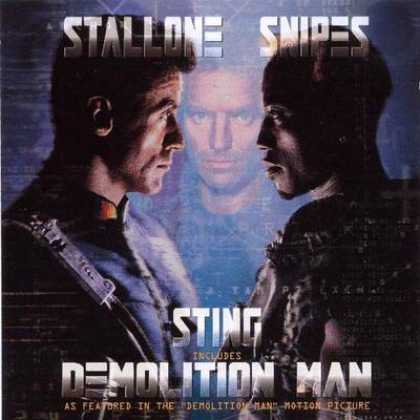
Demolition Man His next lyric is from the Police song (but mainly Sting piece) “Demolition Man,” that when released as an EP for the film “Demolition Man” with the always pleasent combination of Stallone/Snipes received very poor reviews. The lyrics are self-destructive and good.

“I’m a walking nightmare, an arsenal of doom
I kill conversation as I walk into the room
I’m a three line whip, I’m the sort of thing they ban
I’m a walking disaster, I’m a demolition man
Demolition, demolition
Demolition, demolition”

These lyrics are just funny. I like them because of this. It is like “Mr. Bad Example,” by Warren Zevon. Creative stuff. I kill conversation as I walk into the room. Haha. Thanks for letting us laugh at you Sting even though you have made millions and millions and millions of dollars. I’m not laughing anymore.

Lyric of the Day #54: Top 100 Lyricists #97

26 Aug

       In case anyone did not have a chance to read the post from yesterday, yes, I do understand that the above title says Lyricist #97. #97, as I am sure everyone can remember was Don McLean, but due to a radical list change-around I am promoting McLean (and his corresponding post) to #92. This post below will cover #97.

    Harmonica, Mouth Harp, didgeridoo, drums, 12-string guitar, 6-string guitar, resonator lapsteel and Weissonborn lapsteel, Baritone tricone resonator guitar, Acoustic/amplified open back banjo, Nylon string acoustic guitar, Ukelele. There are several instruments on this list. What the heck is a Bariton Tricone mumbo-jumbo guitar? I prefer my six string acoustic variety (with whatever strings I tie on). So, what do the instruments on this loaded list of crazy rock combinations have in common. They all can actually be linked to the Australian-American musician who can play them all (rather well may I add). His name is John Butler and his skill with musical instruments (while amazing in its own right) is not what we will be discussing today. It simply was acting as a smoke screen to misguide you readers down the wrong musical track. Hahaha (make believe that was an evil laugh). Okay, I will just get to why we are reading this thing, John Butler’s lyrics.

        John Butler began his young music career as a busker (street musician) in Fremantle, Western Australia. This added fuel to the lyrical fire, for while street performing Butler was able to get a glimpse of the main subject of any good lyric, people. How people walk, talk, and get seemingly addicted to anything and everything. This prompted the first lyrics that we will be discussing today from his 2007 hit “Used to Get High,” off of Grand National.

” I used to get high for a living
Believing everything that i saw on my tv
I used to get high for a living
Eating all the bullsh*t food that they sold me
I used to get high for a living
Thinking that my destiny was out of my control
I used to get high for a living
There’s lots of different reasons and i’ll tell you so

Super size, large fries, big mac, coca cola
Go on man, pick your poison
Speed, weed, ecstacy, LSD
Man, it don’t bother me cos we’re all on something
Caffeine, cigarettes, alcohol
You know i’m clawing at the walls trying to get my fix
Prozac, ADD tablets, coke, smack
Now you know i am turning tricks cos”

         The lyric is deceptively clever. It does not try to hard and remains rather fun (Butler practically raps the catchy verse). The reasoning behind my pick of Butler can be best described by this lyric above. Truthful and down to Earth observations hidden     underneath his exciting musicianship. The first lyrics of the verse demonstrate this.  
Super size, large fries, big mac, coca cola   
Go on man, pick your poison
Speed, weed, ecstacy, LSD
Man, it don’t bother me cos we’re all on something

          He portrays addiction in two lights. What is worse, being addicting to fast food or drugs, or is it all the same in the end. Yes, they do vary greatly in their effect but man, it don’t bother me cos’ we’re all on something.

        When Hurricane Katrina struck Louisiana and Mississippi in 2005 the United States Government was criticized for managing the relief and rescue operation poorly and, in many cases, completely neglecting those who were dying of starvation and thirst. John Butler, after seeing the response to the destruction scripted “Gov’ Did Nothin’, which also appeared on Grand National. Here are some lyrics.

“Way on down where they’ve been forgotten
city just sinking with the whole world watching
wading waist deep in water, living on my roof in the land of forgotten
hey, to the deaf giant with the big muscles why ya moving so slow
con, conquer and dividing, hole in the bucket got nothing to show”

     Not a tough lyric to unravel now that you know what it is about. It is pretty clear that the city that is sinking and being forgotten about is New Orleans. I enjoy how Butler refers to the United States as a deaf giant with big muscles that do not move. It is clever and that is what Butler does best. Clever, catchy, inspired lyrics. Enjoy the videos of the songs posted below

“Used to Get High”: http://www.youtube.com/watch?v=yI0_w9aV8G0&feature=PlayList&p=1C6403914C47406B&playnext=1&playnext_from=PL&index=12

“Gov Did Nothin”: http://www.youtube.com/watch?v=nNs7QcLaCeE

Lyric of the Day #53: Top 100 Lyricists #94

21 Aug

          Look, I will be the first to admit that modern music today has become, for lack of a better word, uninteresting. I find the music on the “popular” mainstream radio stations to sound all alike and almost daily I hear a new song sampling a good classic rock song or even a good underground modern song. 

When I searched Modern Music this is what I found. I am not complaining it is pretty cool.

When I searched Modern Music this is what I found. I am not complaining it is pretty cool.

It is close to sad. Is there not any talent left? Maybe it transformed from the focus on electronic “synth” music or the teen’s need to just hear one good single and ignore entire album creations (tracks, liner notes, album covers). If someone decided to cryogenically freeze themselves in the 60’s and came back today, out of the closet next to me, and after releasing his 40 year old bladder asked what became of all the great music (like anyone but me would pose that question first), I would probably respond, “Freeze yourself another forty years and we’ll talk then.” But, if he insisted on an answer I would definitely not show him the Billboard Hot 100 charts, focusing more on some really great music by some talented singer-songwriters who somehow still exist in this day that covets a song about getting freaky (and I don’t mean the paranormal) in a hotel room as #10 on the charts.

          One of those singer-songwriters who most definitely reaches back to the good ol’ days of forty years ago when lyrics mattered is a 32 year old from Moscow, Idaho named Josh Ritter. With him, and many other young lyricists like him, it is only body of work that has them low on the list of top 100 lyricists. Ten years from now he might be much higher.

        Josh Ritter is smart. Like Neuroscience smart. Like much smarter then I’ll ever be. I mean look at the last two sentences, I said like twice, I could have found another synonym don’t you think. And, that sentence I wrote is definitely not a sentence. I comma spliced like a freak. Okay, I am confusing myself, on to Josh Ritter and his incredible history.

       Josh Ritter, besides being smart, is also awesome and, most likely (I never met the guy), incredibly cool. Born to two neuroscientists in Idaho he first got the urge to play music at fourteen after listening to “Girl From the North Country,” by Bob Dylan. How many musicians have been inspired to first pick up a guitar by listening to Bob Dylan? The number must be in the thousands. He first attempted writing songs on a homemade lute, but, most likely, after every song came out sounding like a jester was singing in a medieval court, he bought his first guitar at K-Mart and has never looked back. After going to Oberlin college for neuroscience  he figured that, that major could not withhold his interest. So, instead of switching to English or Music, he decided to create his own major entitled “American History Through Narrative Folk Music.” Yeah, he is a bit eccentric. I wish I went to that school. After college he moved to Scotland and studied folk at the School of Scottish Folk Studies, before eventually moving back to the states (Massachusetts, this time) to play open mic’s until finding success in his music (from Ireland first). The Irish have good taste in music. Quite an interesting history. It makes the two lyric samples I am going to show you (one an apocalyptic love song and one about a girl in the war) make some more sense.

         Ritter’s lyrics are a delicate mix of intelligence, symbolism, and emotion. He knows how to control himself and carefully paint a picture, even with a scattered palette of mixed colors and shades. His lyric is both haunting and quite scenic and beautiful. His metaphor is abstract but certainly not cryptic. A brief analysis of some of Ritter’s lyrics will reveal his skill and beauty. Here is a segment of Ritter’s “Girl in the War,” off of his 2006 album The Animals Years

“Because the keys to the kingdom got locked inside the kingdom
And the angels fly around in there, but we can’t see them
And I gotta girl in the war, Paul I know that they can hear me yell
If they can’t find a way to help, they can go to Hell”

           In a clear anti-war statement, Ritter likens the war to the struggle in his head with the concept of heaven. The keys to the kingdom (referring to the key to the pearly gates, the entrance to heaven) are locked inside heaven, with “angels” who are invisible to our human eyes. In this he is suggesting that Heaven is an unreasonable clutch. One cannot be so sure that their loved one dying in war is going to go to this magical place. Paul, who represents one of the holy saints, St. Paul, has a conversation with Peter (representing St. Peter who holds the keys to the Kingdom of Heaven. Gates of HeavenPeter does not have the keys any longer and Paul is exclaiming that they (God) cannot hear him yell. He has a girl in the war and if God cannot help her then he can go to hell. Of course, a blasphemous and angry statement like that is simply one interpretation of a beautiful song that can, in all respects, simply be about love. Yet, this song emits a desperate anger. “The Temptation of Adam,” which appears on Ritter’s 2007 release The Historical Conquests of Josh Ritter focuses on being a quirky love song. Perfect, for an odd guy like Ritter. Here are some lyrics.

“We could hold each other close
We’d stay up every night
Look up into the dark and pretend it’s the night sky
Pretend this giant missle is a old oak tree instead
And I’d carve your name in hearts into the warhead
Oh Marie something tells me things just won’t
Work out above
That our love would live a half-life on the surface
So at night while you are sleeping
I hold you closer just because
As our time grows short I grow a little nervous

So I think about the big one
WWIII
Would we ever really care the world had ended?
You could hold me here forever
Like you’re holding me tonight
I think about that big red button and I’m tempted”

        The song is literally about two people stuck “In a top secret location 300 feet under the ground,” with the ability to destroy the entire world with nuclear warheads that are patiently waiting to be fired at the press of a red button. These two people fall in love and the words above is the conclusion to the song. In what are quite possibly the most incredibly ironic and magnificent words ever to be constructed in a song, Ritter plays with the human tendency towards the two most natural feelings man has. Love and Violence. I mean, he does it in two lines.

 “Pretend this giant missle is a old oak tree instead
And I’d carve your name in hearts into the warhead”
        

           Wow is all I can say. He is talking about two love birds innocently carving their initials into an oak tree to exclaim to the world (or those who look at the tree and see the heart surrounding the initials and are angry that people have defiled the tree) that they love eachother. Except, the tree is a WARHEAD. It is love and war right there for you folks. Make peace, Drop bombs, Josh Ritter has combined them both. Plus, we get the symbolism at the end of the song with the red button. The temptation of Adam. The original love story between Adam and Eve. Adam is tempted by the red button so he, and his love Marie, could spend their lives in love down underground. In his own garden of Eden. Marie, another form for the name Mary; Mary, The Virgin Mary, the most immaculate woman in Christianity. I told you Josh Ritter was smart!

“Girl in the War”: http://www.youtube.com/watch?v=kqLssKusGzM

“The Temptation of Adam”:http://www.youtube.com/watch?v=76MXROcqqxo&feature=PlayList&p=7AF39F0EF4F0E947&playnext=1&playnext_from=PL&index=10

Lyric of the Day #52: Top 100 Lyricists #95

19 Aug

                 Some people have all the luck. Well, by luck I guess I mean skill. You see, in 1967 a man by the name of Mark Knopfler (you may know him better as the lead singer, songwriter, guitarist, and overall great guy of Dire Straits) studied journalism for a year at Harlow Technical College. Yes, like me and many others, he was an aspiring journalist. He actually secured a job as a Junior Reporter at the Yorkshire Evening Report in Leeds, England. (Hmm. Maybe, I can get an internship there.) Two years later, Knopfler decided to advance his studies and he received an English degree from the University of Leeds. But, yeah, as I said some guys have all the luck. He could have stuck to that Journalism idea but nahh, you see, he had a little something extra.

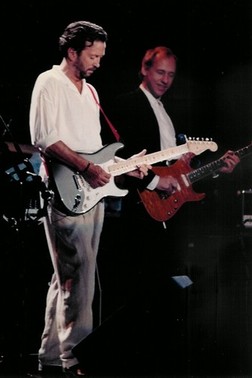
         What was that something extra you ask? Well, he is one of the most respected fingerstyle (plucking the strings of a guitar with your finger tips or with an attached pick) guitarists in the world and is currently ranked #27 on Rolling Stone magazine’s list of the 100 Greatest Guitarists of All Time. He has sold over 120 million records with Dire Straits and his own solo material. Let’s see what else. He has performed with other artists with names like Eric Clapton, Bob Dylan, John Fogerty, Phil Lynott, Randy Newman, Steely Dan, Chet Atkins, Tina Turner, and even Weird Al. Odd list, ain’t it? He has scored music for numerous films. Oh yeah and he can also write lyrics pretty well. Well enough, at least, to be considered the #95th greatest lyricist of all time by an aspiring journalist who is currently ranked as Rolling Stone’s # not even worth mentioning guitarist. Hey, I can finger pick! Like I said, some people had all the luck.

With Eric Clapton, Sweet

With Eric Clapton, Sweet

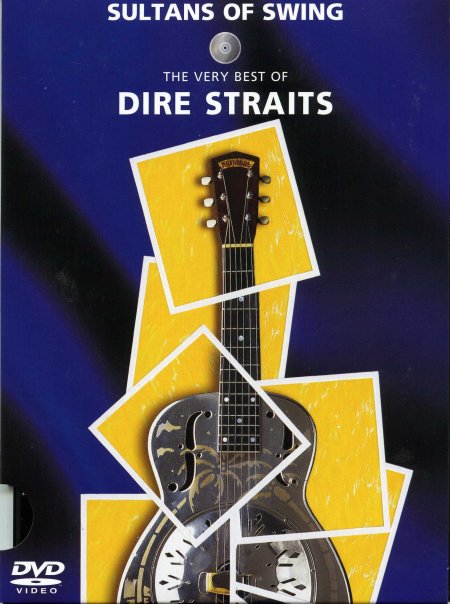
            So, let’s focus on some of Mark Knopfler’s lyrics. Now, of course, everyone knows the riff and a verse of Dire Strait’s hit, “Sultan’s of Swing.” If you do not think you know it, listen to it, and I will wait for the ohhhh yeahhh to come out of your mouth. My brother walked into the computer room donned in a wife beater and a bathing suit and asked what I was doing. When I told him I was doing #95 and it was Mark Knopfler, he smiled and said oh yeah, “Sultan’s of Swing.” You see, I believe every band or performer, unless you are of the likes of The Beatles or Pink Floyd, is known by their one super hit. “Sultan’s of Swing,” the tale of the guitarists of down south London town, propelled Dire Strait’s self-titled debut album to success. Sultans of SwingThe song reached #4 on the Billboard top 100 charts in 1978 and #8 on the UK singles chart. But, what many miss is how successful the album was. The album reached #2 on Billboard’s top pop album chart and #5 on UK’s Albums chart. Why did it reach so high? Was it because of the amazing guitar-playing and musical confidence? Yes, this definitely was a large reason why it was so successful. But, the lyrics of Mark Knopfler sure did not hurt.

            Check out my favorite lyrics from “Sultan’s of Swing”

And a crowd of young boys they’re fooling around in the corner
Drunk and dressed in their best brown baggies and their platform soles
They don’t give a damn about any trumpet playing band
It ain’t what they call Rock ‘n’ Roll”

          The imagery represented in this lyrical quatrain is simply phenomenal. Knopfler sets the scene of the young boys so well. They are all alike in the same popular gear roaming around South London looking for some true rock and roll. Okay, look I am a fan of Blood Sweat and Tears and I do like some trumpet playing bands but I love this line. It ain’t what they call Rock ‘n’ Roll.” First off, that is how Rock ‘n’ Roll is spelt and said, just with the n. Also, the lyric is so confident and cocky with an awesome swagger to the line.

            Yes, this is their best song, and arguably Knopfler’s best lyrics. But, I want you to check out these lyrics from the first track of the debut album. The song is entitled, “Down to the Waterline,” and it is about love on the docks.

Sweet surrender on the quayside
You remember we used to run and hide
In the shadow of the cargoes I take you one at a time
And we’re counting all the numbers down to the waterline
Near misses on the dogleap stairways
French kisses in the darkened doorways
A foghorn blowing out wild and cold
A policeman shines a light upon my shoulder
Up comes a coaster fast and silent in the night
Over my shoulder all you can see are the pilot lights
No money in our jackets and our jeans are torn
Your hands are cold but your lips are warm
She can see him on the jetty where they used to go
She can feel him in the places where the sailors go
When she’s walking by the river and the railway line
She can still hear him whisper
Let’s go down to the waterline

            Tell me that lyric is not beautiful. It is quiet and reserved with a perfect mix of positive and negative words. Sweet and kisses mixed with cold and wild. It has completely different lyrics compared to “Sultan’s of Swing.” Certainly the variety of lyrics that the former journalist expresses in his songs is good enough for #95 of all time. The efficiency and skillfulness of how he writes the songs does not hurt his cause.

Check out some songs:

“Sultan’s of Swing”: http://www.youtube.com/watch?v=z2nQZPC2uTs

and the same song with God/ Eric Clapton: http://www.youtube.com/watch?v=GkrWqpymXLY&feature=related

“Down by the Waterline”: http://www.youtube.com/watch?v=ylaynrlTEOI&feature=PlayList&p=EF24F7E6DD874842&playnext=1&playnext_from=PL&index=9

Lyric of the Day #51: Top 100 Lyricists #96

17 Aug


     On August 17th  1969, threatening Sunday afternoon skies welcomed Joe Cocker’s incredibly spastic, but amazing, soul-searching set at the site of the Aquarian exposition in White Lake, NY at around 2:00 p.m. (Oh no! Another Woodstock post. Man, this kid is obsessed with something that he learned through documentaries and his parents. Stay with me guys you will see how it all makes sense. Well, there I go talking to myself again.) At the time I am writing this post he was most likely belting “Do I Still Figure into Your Life” or “Feelin Alright,” but I am not entirely sure, I am just going by the set-list. After Cocker’s set a torrential downpour shut down the event for around four hours. Who knows? Maybe, Cocker’s strained voice sent the clouds in frenzy and the rain a’pourin. Or, maybe it was just a normal August thunderstorm. After the rain delay a band whose name mixed both Joseph Stalin’s nickname (Country Joe) and Mao Tse-Tung’s statement about how the true revolutionary swims through the peasantry (The Fish) into a combination of protest songs and witty chants, opened the concert again. Their lead singer-songwriter, performing for the third time at the festival in three days. A record for sure for a man who stayed firm in his belief for peace and love and still does to this very day. The number 96th greatest lyricist of all time, Country Joe McDonald.


            Four days ago I went to see a quasi-Woodstock reunion with a few original members of some of the better bands that performed at the Woodstock music festival. There was Big Brother and the Holding Company, lacking the pretty key Janis Joplin component, Canned Heat, lacking lead men Bob Hite and Alan Wilson, and even a twisted and odd version of Jefferson Starship (the band that was formed out of the original band from Woodstock, Jefferson Airplane. The music was fresh oldies though and the crowd was excited to see the originals pound away at their new drum sets and guitars (most likely purchased after the Woodstock festival), but nostalgia could only carry the sets so far. But, out on the stage after every act in a tie-die t-shirt was an older man with glasses, shaggy grey hair, and an acoustic guitar strapped to his neck like a weapon of peace. Yes, under all of the wrinkles and grey hair was the same young man that seemingly was out and about each day of Woodstock, on stage in front of hundreds of thousands. Performing in front of a crowd of One thousand and five hundred at best was Country Joe McDonald, still plucking that acoustic guitar and singing for peace after all of these years.


            After Woodstock ended forty years ago tomorrow, the spontaneous gathering of peace and love was gone. The endless line of muddy faces and bodies were cleaned, the butt-naked men and women were clothed, and the thousands who once roamed the field of Max Yasgur’s farm looking for some acid or pot or water or food (the basic necessities of late 60’s existance) were gone, only their mess left to clean up. As curly-haired concert promoter Michael Lang left the site by helicopter to visit bankers waiting to scorn him for losing so much money at the event he spotted out of the helicopter’s window a large crop-circle like peace sign made out of garbage. A beautiful site constructed out of dirty papers, bottles, and simple waste. The garbage peace sign could really be considered eerie and prophetic. It only took a few months later (December, 6th) for peace and love to turn into pure hatred and fighting at The Altamont Speedway Free Festival, the Rolling Stones attempt at Woodstock. For some reason The Hell’s Angels, the rowdy motorcycle gang, were asked to provide security because the stage was only four feet high. Look, if members of The Hell’s Angels wanted to come to enjoy the show, sure, the more the merrier. But, hiring a motorcycle gang to provide any type of security is just asking for trouble and trouble they definitely received. The Vietnam war was still raging, the Kent State massacre came in May of 1970, less then a year after Woodstock, and the garbage peace sign, the odd symbol of both beauty and, well, trash, had been cleared away and the farm in upstate New York turned back into a farm. But, the one man that continues to keep trying for peace is Country Joe and his protest music is the reason why he is #96 on the list.

            People may inquire how a guy who profited on a comedic protest song could beat one Don McLean or Ray LaMontagne. A fantastic argument can be made against my case and I welcome the feedback (seriouly somebody talk to me, I am lonely in the blogosphere.) But, in my warped opinion, I feel as if Country Joe’s body of work is more significant then these other fantastic lyricists. His anti-war lyrics or not only comedic, some are rather serious, and his tireless efforts for peace are just incredibly honorable. He does not have to be Bono or Bob Geldof, who, while being noble in their goals, also have an ulterior motive in cash cow schemes to make exorbitant amounts of money through benefit concerts. He just can easily list off members of Sullivan County, the town that encompasses Bethel, NY (where Woodstock took place), who were killed in both the Vietnam War and Iraqi/Afghanistan war before and after his black comedy anti-war hit, “The Fish Cheer & I-Feel-Like-I’m-Fixin’-To-Die Rag.” Subtle mentioning of the horrors of war. His staggering lines in his anti-war songs also are delicately placed in the music for effect. Check out these lyrics from “I-Feel-Like-I’m-Fixin-To-Die,” off of the self-titled 1967 album by him and his Fish.

 “Well, come on mothers throughout the land,
Pack your boys off to Vietnam.
Come on fathers, don’t hesitate,
Send ’em off before it’s too late.
Be the first one on your block
To have your boy come home in a box.”

 Be the first one on the block to have your boy come home in a box. It is just like, Woah. Did he really just say that? It is such a witty line and it is set to the backdrop of an old-time late 20’s rag song. But, it is and still is true. Now let us look at the lesser known, “Here I go Again,” off of the 1969 album “Here We Are Again.”

 “Father’s gone to fight the war,
He left us here alone.
I shiver in the lonesome night
Beside the telephone
But time brings no word,
I guess he’s not coming home,
It feels like the end,
It feels like the end, my friend.”

            This lacks any humor because there is no humor in war. Protest songs can be catchy and, in a sense, somewhat comical because war is obviously an incredibly dumb part of human existence, but when a father leaves for war and a child is left alone pondering whether he will ever see his father again the situation is certainly not comical. War is terror and peace may never possibly be able to exist in a world with so much violence, but Country Joe McDonald will for the rest of his peaceful life through attempt to bring a little peace with his lyric wherever he travels. This, in my opinion, is good enough for now.

 peace-sign.jpg peace sign image by dizzidee_2007