
Archive | Song of The Day RSS feed for this section

Suzanne in Montreal – Safe Voyage

18 Aug

Montreal

In the 19th century the Notre-Dame-de-Bon-Secours Chapel in Montreal’s Old Port became a mecca for sailors who would make offerings for “good help” for sea voyages. It still functions as an active cathedral in Old Montreal and come this upcoming weekend I hope to make my own pilgrimage to it. My girlfriend and I will be traveling to Montreal and Quebec City for a calm end-of-summer sojourn. Before I leave, though, I must highlight my favorite song related to Montreal – “Suzanne” by Leonard Cohen.

Cohen, a Montreal native, has accomplished a rare feat in his career – awards in both songwriting and literature. The daedal wordsmith has been crafting poetry and music since the late 1950s. He is the Da Vinci of Folk music – a renaissance man who rivals Bob Dylan and Paul Simon in talent and inventiveness.

“Suzanne,” a poem/song inspired by a friendship with Suzanne Verdal, is one of my favorite Cohen songs. It’s subdued potency echoes with Cohen’s soft acoustic guitar. The lyric rises with strings and angelic harmony. Clearly, as a Cohen song, the lyric is the absolute strength. The song memorializes Cohen and Verdal’s peregrinations to Old Montreal, past the Notre-Dame-de-Bon-Secours Chapel. Despite its documentation of a platonic relationship, the song possesses a sweet intimacy – something warm that captures the listener. The song concludes with this passage:

Now Suzanne takes your hand
And she leads you to the river
She is wearing rags and feathers
From Salvation Army counters
And the sun pours down like honey
On our lady of the harbour
And she shows you where to look
Among the garbage and the flowers
There are heroes in the seaweed
There are children in the morning
They are leaning out for love
And they will lean that way forever
While Suzanne holds the mirror
And you want to travel with her
And you want to travel blind
And you know that you can trust her
For she’s touched your perfect body with her mind.

I bolded the particular section that always gets me. The imagery portrayed by the opening line of the bolded section is perhaps the strongest in the song, a line that balances personification and metaphor. One almost feels that Cohen, like the heroes and children, will lean out for love forever. The song ends with the motif of travel represented in the repeated closing verse segments, and, as the verse before this suggests, Suzanne maintains a Jesus-like power of trust and perfection – platonic or not, this song rings with passion and love.


The Musical Beauty of Beneath Your Beautiful

25 Jul

Labrinth

I had heard “Beneath Your Beautiful” by Labrinth and Emeli Sandé in passing prior to listening to it closely for the first time yesterday. In small pieces of the song, I was able to recognize a pleasant piano piece mixed with a melodious vocal…and that’s about it. While I am partially ashamed to admit it, my first true listen to the song came at the behest of the America’s Got Talent results show on Wednesday night – and, ironically as it is, the musicians who performed it on the show were (and still very much are) from the UK.

“Beneath Your Beautiful” is the sixth single released from Labrinth’s debut album Electronic Earth. Labrinth is the stage name of English singer-songwriter Timothy McKenzie. While proficient in numerous instruments and keen to a R&B/Pop sound, Labrinth’s debut release focused much attention to a unique electronica blend. “Beneath Your Beautiful,” which features the wonderful voice of Emeli Sandé – a Scottish recording artist – is a more traditional piano ballad, although it does feature some well-placed electronic elements.

To be honest, this song has so many elements that strike a chord with me. Yes, I just went there with a terrible music joke! The opening piano riff is candid and simple. It is unbridled musical pulchritude (I’m a sucker for piano, I know). Labrinth’s vocal features a contained emotionality that is refreshing. The man has a tremendous voice, and he is not afraid to use his pipes when the time is right. But, while the voice is excellent, it is tender, and this helps establish its candor. The song adds strings and percussion when Sandé begins to sing, and she carries the verse perfectly. The harmony established by both voices is dulcet. It’s one hell of a song. And…apparently more than 50 million people agree on YouTube.

Note: The grammar mistake in the title was a jab at grammar nuts by Labrinth – or just a sneaky way of covering up a mistake – :). Initially, I took it to mean that the singer wants to see beneath the beautiful (metaphorically) and into the soul of his/her lover (I’m cheeky like that).

The High Wire and the Last Night on Earth

30 Jun

The High Wire

In advance of its third release, The High Wire is previewing “LNOE,” a warm, string-laden piece that packs a punch. The song will officially be released on July 29.

Originally the outlet of singer/songwriter Tim Crompton, The High Wire expanded to include West coast Canadian Alexia Hagen and UK native Ross Forrest. Citing Motown and the Gorillaz as influences, the band creates a melting pot of pop-sensitive pieces that utilize modern psychedelia and folk influences.

The band’s music has been described as everything from “Delirious shoegaze” (Artrocker) to “a narcoleptic wonderland” (NME), but “LNOE,” represents a different approach.

The rhythm is almost exclusively driven by an orchestra of strings, and this creates an ethereal sound that bounces off the listener. The persistent chorus is one part Coldplay, one part MGMT – an eclectic blend that utilizes hard-hitting British pop/rock and American psychedelia. While the harmony is strong and the song is certainly potent, the melody lulls the listener, almost inebriating them with the rich sound. Excellent release. We are looking forward to hearing the rest of the album.

Check out more of The High Wire on the band’s Website, Facebook or Twitter

The First Man of Motown – Marv Johnson

25 Apr

Marv Johnson

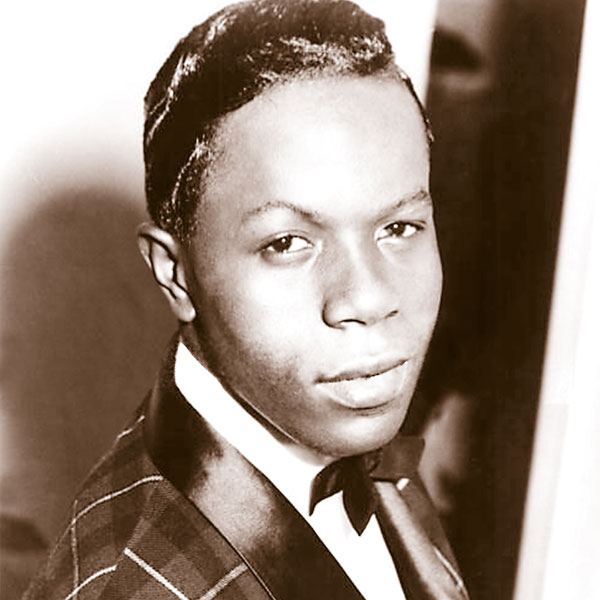
Here is a good trivia question. What was the first song ever released by the Motown/Tamla label (In 1960, the Motown and Tamla Records merged into Motown Record Corporation)? Miracles, Supremes, Vandellas, Four Tops, Temptations? Nope. Try Marv Johnson, the singer and co-writer of “Come To Me,” which, after it was released in 1959, would go on to reach number 30 on the Billboard Top 100 and number six on the national R&B chart. Since Motown was a fledgling label, Berry Gordy, the founder and king of “The Motown Sound,” sold the rights of this incipient piece to United Artists.

Berry Gordy first met Johnson at a carnival in Michigan. Johnson was performing with a doo-wop group called the Serenaders, and Gordy, a tremendous evaluator of vocal talent, implored Johnson to join his label. “Come To Me” was recorded in February of 1959 at United Sound Studios in Detroit. Johnson recorded with future Funk Brothers bassist James Jamerson and drummer Benny Benjamin. Take a listen to the song:

And, as they say, the rest is history. For good reason, Motown burgeoned like a pandemic. But, for a second, let’s imagine we are back in 1959 and listening to Marv Johnson performing this new song “Come to Me.” The song shares similar doo-wop qualities with the popular music of the time, but, the instrumentation and arrangement is different. It’s, dare I say, modern. More than 50 years later, it is easy to say that such characteristics helped spring Gordy, Smokey, and the talented folk at Motown to the cockaigne of music.

On Saturday, I will venture into NYC to see Motown: The Musical. If you have seen it, let me know what you thought of it. All I know, is that there will be the great music of Motown, and that is all I need.

The Mountain Goats Talk Growing Up in “Cry for Judas”

29 Aug

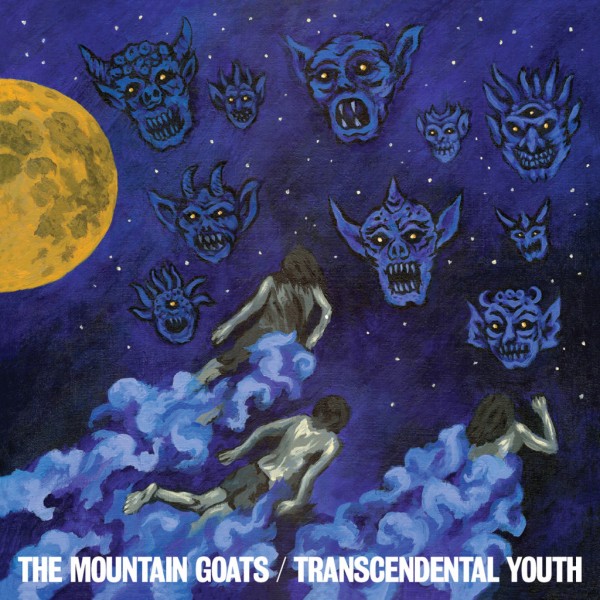
Transcendental Youth

John Darnielle and his band of Mountain Goats will release their 14th studio album, Transcendental Youth, on October 2. I know I mentioned this before on the Music Court, but I feel like I have a duty to mention it again. The album is sure to be awesome – like all of Darnielle releases – and it would surely be a shame if you missed out.

As a commenter on Darnielle’s tunes said recently, “nobody is better than Darnielle at writing such happy songs about utter hopelessness.” I agree and disagree. You see, this comment is true a lot of the time. Heck, if there is any hope in “No Children,” well, I haven’t found it yet. Still looking, though! But in Transcendental Youth, at least in the first song released from the album, there is a subtle hint of growth under the lyric. Darnielle paints a messy portrait of an adolescent teen struggling with growing up in the society he is surrounded by, a candid autobiographical depiction of Darnielle. And, to assist in my description of the song, here is a segment from The Mountain Goats’ website about the song – in Darnielle’s words.

“Cry for Judas,” it is about survival but that’s kind of an oversimplification, it’s also about building a vehicle from the defeated pieces of the thing you survived and piloting that vehicle through the cosmos, it’s kind of complicated but people who know what I’m talking about will kind of intuitively get the idea and the rest of you will I hope be able to get a sense of it through the song.

When people talk about surviving adolescence, they are not joking. There is innate passion, awkwardness, struggle, all inherent in the process of growing. And in the end you are you, and you survived as you. Time to pilot the vehicle. The lyric repeats the couplet (Long black night, morning frost, I’m still here, but all is lost). The important part is our protagonist is still there. It was a long black night, but despite the feeling that all is lost I can’t help but thinking that the character is just growing up. Look at the album title.

The Mountain Goats are also growing, somehow still maturing and falling into new sounds. The horns give the acoustic guitar a full sound, and then there is the bass guitar which provides an almost funky rhythm. The song itself is excellent. But, I mean, I wasn’t expecting any different.