Archive | Song of The Day RSS feed for this section

A panegyric for John Darnielle

30 Apr

If you do not like laudatory discourse look up Axl Rose on the blog and go far away from this post. I have spoken many times of John Darnielle and his Mountain Goats on the Music Court. They found their way at the top of my list for best album of the decade (however steep that ranking may have seemed to many). I have never said one bad thing about the band. Why? There is nothing bad. Some people may not enjoy Darnielle’s goat-like croon, but, because I enjoy it, I have nothing bad to say about them. Their beats are catchy and Darnielle’s lyrics are so good that he will not be written about on the top lyricists section for a long time (we are descending from 100 in case you did not know). Darnielle is a master. His band is good. The songs are wonderful, and often biographical. I can’t get enough and you must all check him out. If you enjoy lyrics (and you all know I do) and you have not checked out Darnielle, you will be arrested by the song poetry police if you do not listen now!

The Goat Pig

Anyway, all kidding aside, if you haven’t caught my drift, I really enjoy The Mountain Goats’ music. They are an extremely underrated band and Darnielle’s seemingly endless collection of songs is just unprecedented. He is the Mary Faulkner (Kathleen Lindsay) of the music industry. And, like Mary Faulkner he remains unfortunately unknown by many. I would like to profile one specific song today that I think is just a beautiful piece of music and story. Some fantastic lyricists would make excellent fiction writers. Darnielle is certainly one of them.

The song I will profile is off of his 13th release with the Mountain Goats, The Sunset Tree, which is heavily rooted in Darnielle’s memories of his abusive step-father. “Pale Green Things” tells of his step-father and a time they shared together at a racetrack. It is an interesting end to an album that tells so many negative stories of beatings and drunkenness. The song is oddly hopeful. It is soft, somewhat evanescent, and Darnielle’s fleeting, pensive voice set in front of a light cello marks a strong end to the album; a tender moment with a tint of forgiveness that only fantastic lyricists like Darnielle can master.

Search pale green things on google. This is what you get

My favorite lyrics from the song:

“You watched the horses run their workouts
You held your stopwatch in your left hand
And a Racing Form beneath your arm
Casting your gaze way out to no man’s land
Sometimes I’ll meet you out there
Lonely and frightened
Flicking my tongue out at the wet leaves
Pale green things
Pale green things”

It would seem in this verse that “lonely and frightened” is left rather ambiguous. He could be stating this his father was, in all reality, a scared man stricken with loneliness, or he could be referring to himself. I would support the former. I really enjoy the wonderful imagery of the separated father and son gazing out into “no man’s land.” I believe the motif of pale green things represents Darnielle’s mixed feelings of the death of his step-father. He juxtaposes negative and positive ideas. Pale, the negative, and green things (lively) the positive. This works quite well.

Listen to the song:
The Dark Side of the…Mushroom?

24 Mar

Tomorrow I begin my spring break. So, today, I have to pack and make sure everything is set here in Binghamton before the drive home tomorrow. Tonight will be busy. But, next week the lyricist section will be back up. I promise. I could not leave you all with no post today though. And, what better song to profile today than The Dark Side of the Mushroom.

Let me guess what some of you are thinking. Who are you and what have you done with my Pink Floyd? Well, please do not get to worried…or angry. “The Dark Side of the Mushroom (not moon)” is actually a 1967 song from the Chocolate Watch Band, a garage-rock band formed in San Jose, California. The song appeared on the album No Way Out which was released six years before Dark Side of the Moon. The song is a fantastic piece of psychedelia. It is exciting to hear early psychedelic songs; especially to this quality. The hook of this song is just genius and the haunting psychedelic fill is a remarkably fatidic melody. This band was doing psychedelia before it was cool and I give them so much credit for that.

Check out the Song:

Who Doesn’t Love Pan-Flute

9 Mar

So, I like songs that feature a pan-flute (or panpipes or quill) and no I am not Peruvian (bad South Park joke sorry). This ancient mouth organ has been improving songs for a pretty long time. Back in the crazy 60s, pan-flutes saw a kind of semi-revival back into mass consumption; as they were featured in numerous songs during the era.

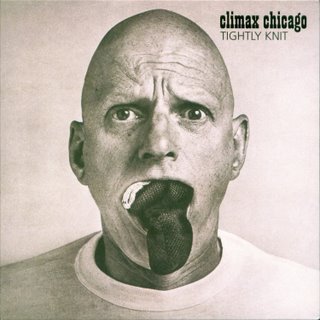
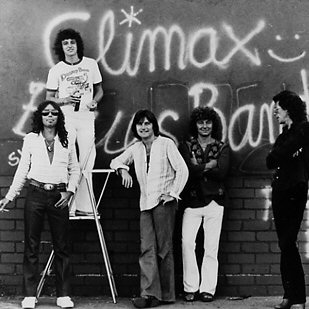
Perhaps the best example is Canned Heat’s “Going up the Country” which became a beloved song of the Hippie culture. Yet, I believe the title of most underrated pan-flute song goes to a virtually unknown song by a band that not many have heard of. In 1968, Peter Haycock, Arthur Wood, Derek Holt, Richard Jones, George Newsome and Colin Cooper formed The Climax Blues Band. If you are a fan of 60’s/70’s music you have probably heard their huge hit “Couldn’t Get it Right,” but today we will feature “That’s All” from their 1971 release Tightly Knit”


Unfortunately, I could not find a full audio file on the internet. But, below I am including a link where you will be able to hear a sample of the song. The song you want to listen to is “Let’s Work Together (this is “That’s All).”

Link: http://www.hbdirect.com/album_detail.php?pid=917714

This song is a fun-loving pan-flute medley. It’s a folk groove at its finest and it is hard not to sing-a-long if you know it or get it perpetually stuck in your head if you do not. Great song from an under-appreciated band. Enjoy!

Song of the Day #71: “Lost in the Supermarket”

6 Jan

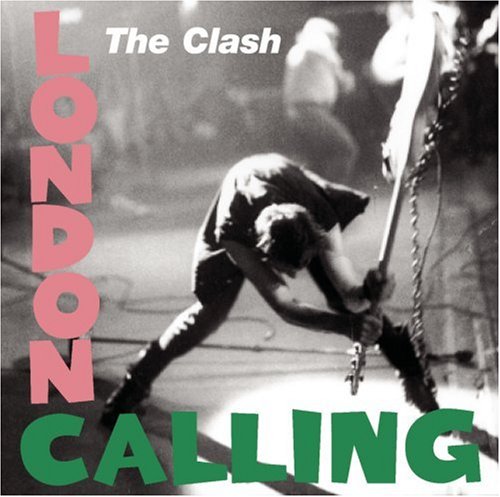
It has been 30 years since The Clash released one of the most influential and diverse punk/rock albums of all time. “London Calling,” their third studio album, is famous for its big hit with the same title. While London Calling is indeed one of The Clash’s biggest hits and is, in my opinion, in the top 3 of greatest punk songs, I thought we could focus on a heavily underrated song which features Joe Strummer’s lyrics but the soft voice of Mick Jones (not Foreigner’s guitarist).

“Lost in the Supermarket” is an unconventional punk song. Yet, do not be misguided, it still is associated with the punk era. It appears deep in London Calling as the eight song on the track listing. The song’s repetitive croon of the line “guaranteed personality” over lyrics describing disillusionment caused by the increased commercialism of the world (which has just increased more) displays Strummer’s lyrical prowess. Strummer is correct in his assumption that the youth (which included him at one point) is certainly swayed by the consumer world toward an addling labyrinth of products and styles. Hence, “Lost in the Supermarket” which just explains it best.

Check out the song:

Happy New Year: The History of “Auld Lang Syne”

31 Dec

A very happy new year from the writers of The Music Court. In May we started this blog with minimal expectation, only wanting to bring a little musical joy to everyone out there. Today, we have a loyal flock of readers and we want to thank each and every one of you personally. We promise to continue to bring great content to the blogosphere in the year 2010. So, as the clock strikes 12:00 A.M, wherever you are in the world, pop the champagne and sing “Auld Lang Syne,” hopefully now knowing what the song means.

“Auld Lang Syne.” You have heard of it before and have definitely heard more than one version. Personally I became accustomed to the Kenny G version. It is the classic new year’s song and if you are questioning how it goes watch this:

It all is coming back to you now, right? Good, now ever wonder where it came from. Did you know the song has lyrics? Auld Lang Syne is believed to be a poem written by Scottish poet Robert Burns in 1788. This is pretty funny to an English major who has taken British Literature because Burns, the national poet of Scotland, also wrote a poem called “To A Mouse” which inspired the title of Steinbeck’s “Of Mice and Men.” I always thought Burns’ poetry was kind of funny, so in seeing that he wrote this makes me kind of laugh too. Yet, the lyrics of this song are often forgotten. So, is the meaning of Auld Lang Syne which is kind of necessary when singing it.

Auld Lang Syne, literally means “Old Long Since,” yet, in order for it to make sense, it is easier to say “Long Long Ago.” Or, more modern, “For Old Time’s Sake.” The song basically calls to people to remember friendships. The content makes it the perfect New Years song. The Scots, being smart, started using this as their new years song and others quickly followed suit.

How did the song become popular in the United States? Credit band-leader Guy Lombardo whose playing of the song on new year’s eve popularized it in America.