
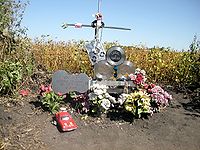
The Crash Sight
A large post for #50. Enjoy!
Just after 1:00 a.m on February 3rd, 1959, a beechcraft bonanza B35 holding enough talent to fill up numerous stadiums, crashed due to pilot error and poor weather conditions near Clear Lake (miserable irony), Iowa, killing all four flyers, including the pilot. The three musicians who were killed, none older than 30, were Buddy Holly, Ritchie Valens (he was 18), and J.P. “The Big Bopper” Richardson. The story before the crash is riddled with upsetting coincidences and haunting decisions. After a show at the Surf Ballroom in Clear Lake, Iowa (which was not an intended spot on the tour), Buddy Holly became frustrated with the tour bus (which had already given drummer Carl Bunch frostbitten feat because the heating system on the bus had broken down) and told his bandmates his plan to hire a small plane to take them to the next stop. The plane could hold three flyers for 36 bucks a pop. The Big Bopper had developed a case of the flu (possibly because of the cold bus) and asked Buddy Holly’s band member Waylon Jennings for his seat. Jennings gave it to The Bopper and after Holly heard about the trade he proclaimed jokingly to Jennings, “I hope your ol’ bus freezes up. Jennings responded, “Well, I hope your ol’ plane crashes.” He has never been able to live down those words. Ritchie Valens won his first trip on an a small aircraft by route of a coin flip. Kind of reminds you of when Jack wins his ill-fated trip on the Titanic by winning a card game. Okay, probably should have kept that analogy to myself.

It is funny how people can look at events that happened prior to a miserable accident and blame themselves for the otherwise regular day-to-day things that had occured. If the plane did not go down maybe rockabilly music would have lived on into the 60’s competing with the British Invasion of Rock and Roll. But, who knows. Music did live on and the 60’s brought possibly the most impressive cultural explosion of Rock music, but, on February 3rd, 1959, momentarily on that cold night rock’s future looked noticeably bleak and 12 years later a man decided that he still could not get over the events of that dark morning. So, in October of 1971, the first track of Don McLean’s second album wrote of an abstract story about the day the music died in 1959. The album and the song were both titled, “American Pie.”
Similar to Ben Gibbard of Death Cab for Cutie (#98 on the lyricists list) many can make the claim that the only reason why Don McLean is considered one of the top lyricists is because “American Pie” was such an influential song. Hey, when someone can describe an entire music generation in a seven minute epic I do understand the reasoning. It sure is his hit and I will portray to you faithful readers what specific lyrics in the song I find to be fantastic. But, what many people seem to forget is that besides all of the understandable hooplah that surrounds “American Pie,” McLean recorded other tracks and one in particular that maintains comparable lyrics to “American Pie.”

Yes, for all of you who are going hey is that not Vincent Van Gogh’s “Starry Night” painting that is not music, it is indeed the Van Gogh masterpiece and it also ties in perfectly with Don McLean’s admiration and tribute to Van Gogh. “Vincent,” is a masterpiece itself, playing with lyrics that paint a picture of a Van Gogh landscape with words. McLean describes through luscious metaphors and pastoral imagery how many did not understand Van Gogh, but now, finally they all possibly can. Take a look at some lyrics
Paint your palette blue and gray
Look out on a summer’s day
With eyes that know the darkness in my soul
Shadows on the hills
Sketch the trees and the daffodils
Catch the breeze and the winter chills
In colors on the snowy linen land
Now I understand
What you tried to say to me
How you suffered for your sanity
How you tried to set them free
They would not listen they did not know how
Perhaps they’ll listen now”
The first verse of the song that is written above is a wonderful explanation by McLean of an artists work. Their, sometimes hair-pulling attempt to portray that beautiful summer day on the “snowy linen land” that is the emptiness of a blank canvas on a painter’s easel. Most similar to a blank page’s glare on a lyricist. The chorus of the song holds so much beauty because McLean encaptures the struggle that Van Gogh had to go through. How he “suffered for your sanity.” How people during the time did not listen, did not understand, until he was dead. McLean ends his chorus proclaiming, “Perhaps they’ll listen now,” which is as touching as his lyric at the end of his masterpiece, “American Pie”.

The lyrics that I like the most.
“And the three men I admire most
The Father, Son, and Holy Ghost
They caught the last train for the coast
The day the music died”
Well doesn’t that describe it all. The song culminates into this ending statement. The only statement that makes any mention to the three men who died in the crash. The three men whose unfortunate demise was possibly the most shocking musical event in the 20th century. They did symbolically catch the last train for the coast on Februry 3rd, 1959. On the day that the music died.
Check out both songs:
“Vincent”- http://www.youtube.com/watch?v=dipFMJckZOM
“American Pie”- http://www.youtube.com/watch?v=S6uEjifqTaI&feature=related


Leave a Reply