
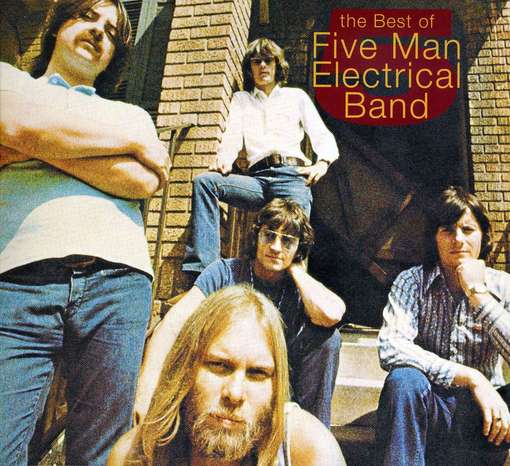
Get Electrical
And the sign said long-haired freaky people need not apply. If you were of cognition in 1971 you knew this line pretty damn well. Five Man Electrical Band’s “Signs” propelled the band into the national spotlight and engendered a youth protest against signs. Okay, not really, but it certainly did hold a message of inherent earthy freedoms and a sharp criticism of discrimination. While the hippie culture “died” in 1969, some elements did carry over in the 70s and this Canadian band’s symbolic piece’s success proved that protest against unjustifiable treatment was still ripe.
But let’s back up a little bit. “Signs” is widely viewed as a one hit wonder, and a gigantic one at that (one that reached #3 on Billboard Top 100, #1 in Australia for nearly two months, and went gold). The Five Man Electrical Band had been around for a while though and while they may never escape the one hit wonder crown, their history is still worth delving into.
The band formed in Ottawa in 1964 as the Staccatos and first gained recognition in 1967 when they recorded an album with The Guess Who. In 1968 the band was vocalist/guitarist Les Emmerson, bassist Brian Rading, keyboardist Ted Gerow, and drummers Rick “Bell” Belanger and Mike “Bell” Belanger. They released another album to no fanfare and attempted reviving their career in Los Angeles with a flop, “It Never Rains on Maple Lane.” The band changed their name and style, was dropped, was picked up – credit to the influential Dallas Smith here, and then finally released “Signs,” but originally as an unsuccesful B-Side. It was remarketed and then hit major success.
Let’s listen to the flop prior to the hit.
Okay it is not awful. It is Association-like pop music without a true hook to pull listeners in. That is probably why it didn’t meet success. The keyboard and harmonies are light-hearted and the lead vocal is smooth. It is definitely different from “Signs” which is more upbeat and rock-influenced.
More like this. “Signs” combines the elements of a succesful song. An excellent vocal combined with a catchy chorus. The song moves with an effervescent protest that is rich with strong harmonies and a smart lyric.

 The Music Court