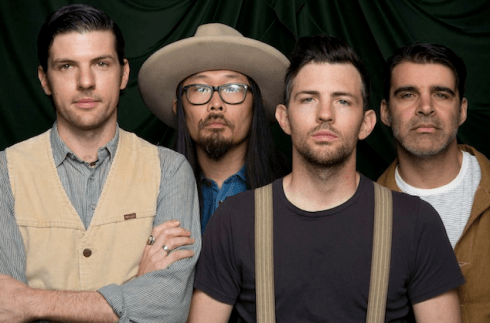
It is apropos that we begin this year’s countdown with a song off The Avett Brothers’ aptly-titled 9th studio album True Sadness. While the clamor labeling 2016 as one of the worst years in recent memory is a bit hyperbolic and overstated, The Avett Brothers’ hometown of North Carolina is no longer classified as a Democracy any longer, so perhaps there is legitimacy to those hoping 2016 let’s the door hit it on its way out in a week. That said, music in 2016 was at least halfway decent, and that means the annual Music Court’s Top 10 Songs countdown is underway. So, in a year of mostly downs, I bring you song number 10.
“Ain’t No Man” is carried by the best bass riff of the year. It is easily the best. The jaunty bass is splashed with clapping percussion and the jocular harmonic jabs of Scott and Seth Avett and Bob Crawford, the purveyor of the aforementioned bass riff. The song is the genius of the Avetts, fit with an in-studio genesis from the musically-inclined brothers (oddly enough not the only brothers on the list). The song stomps with a confident and bold lyric, which I’d say is needed to be listened to on repeat over the next week prior to entering the new year. Here’s the chorus:
There ain’t no man that can save me There ain’t no man that can enslave me Ain’t no man or men that can change the shape my soul is in There ain’t nobody here Who can cause me pain or raise my fear ’cause I got only love to share If you’re looking for truth I’m proof you’ll find it there
It is akin to puzzle pieces connecting when a lyric fits a song. The potent, positive message just reflects the song’s joyful instrumental revelry. It is a ditty, topping out at 3:30 soaking wet, and it feels even quicker than that, so, take it from me, the song is best listened to on repeat.
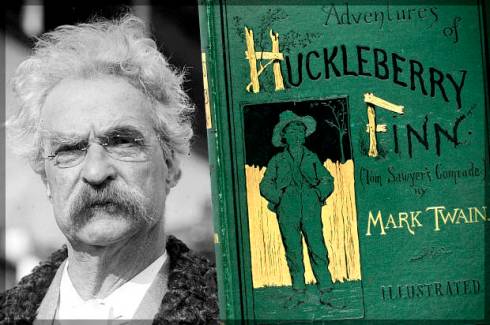
In Mark Twain’s renowned bildungsroman Adventures of Huckleberry Finn, Twain begins the novel with a disclaimer that reads:
“In this book a number of dialects are used, to wit: the Missouri negro dialect; the extremest form of the backwoods Southwestern dialect; the ordinary “Pike County” dialect; and four modified varieties of this last. The shadings have not been done in a haphazard fashion, or by guesswork; but painstakingly, and with the trustworthy guidance and support of personal familiarity with these several forms of speech. I make this explanation for the reason that without it many readers would suppose that all these characters were trying to talk alike and not succeeding.”
Twain’s quest of dialectic accuracy is, as he explains, painstaking, and any biography of the man would suggest that his ear for language was only rivaled by his perfectionist intransigence, a trait that made his texts all the more wonderful. In Adventures of Huckleberry Finn, Jim, an escaped slave, speaks to Huck, the book’s protagonist, in the “Missouri Negro Dialect,” a rich (and hard to understand) patois that is most similar to Creole.
Tomorrow, my students will learn about dialects and how they shape Adventures of Huckleberry Finn, so, because dialects are on my mind (and because I have already mentioned Creole), I figured a post on “Iko Iko (Jock-A-Mo)” would be germane.
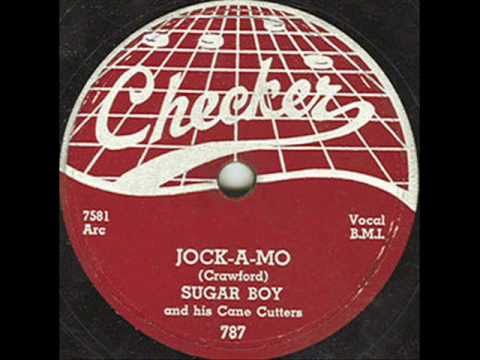
The story of this revered Mardi Gras piece (that has since been covered by musicians from Dr. John to The Grateful Dead to Aaron Carter – I kid you not) starts with Sugar Boy and the Cane Cutters, who unsuccessfully released the song as “Jock-A-Mo” in 1953. The song was popularized more than a decade later when The Dixie Cups released it as “Iko Iko” and scored an international hit; Sugar Boy (James Crawford) sued and got songwriting credits. If you don’t think you know the song, listen. You know it, right.
The song has reached the level of musical ubiquity, as it is the classic New Orleans tune. It also features a chorus that is a completely different language. A chorus that has been sung by many karaoke listeners and mispronounced and misphrased; I do it all the time. Actually, this is the first time I have learned what in the heck is said in the chorus of this song; I have usually just relied on my flawed ear and equally errant pipes. What is the chorus?
Hey now! Hey now!
Iko iko wan dey
Jock-a-mo fi no wan an dey
Jock-a-mo fi na ney.
And, of course, because nothing is easy in the world of old dialects, there are several opinions of what this means. Well, every word after the “Hey Now”; we are confident in our translation of those welcoming words. Let’s start with where these words come from.
According to a Mental Floss article in a “2009 article in the New Orleans music magazine Offbeat,” the author showed the song to a “local linguistics professor”in Ghana who concluded that the song’s famous chorus was borne from a West African language. A linguistics professor in the U.S., however, concluded that the lyric is from a “mixture of Yoruba and French Creole.” Creole is a combination of European and African dialects, and Yoruba is spoken in Nigeria. Thus, both linguistics professors were close.
What do the lines mean? We don’t know for sure, but here is one thought from American Blues Scene:
Iko! Iko! is Akout! Akout! (Creole)
“Listen! Listen!”
Iko! Iko! An Day is Akout! Akout! An Deye (Creole)
“Listen! Listen! At the rear”
Jocomo Fee No An Dan Day is Chokma Finha an dan deye (a mixture of half Native American, half Creole)
“It’s very good, at the rear”
Jocomo Fee Nan Nay is Chokma Finha – Ane (a mixture of half Native American, half Creole)
“It’s a very good year!”
And, yet another translation from the U.S. Linguistics Professor.
Iko! Iko! is Enòn, Enòn!
“Code Language!”
Iko! Iko! An Day is Aiku, Aiku nde.
“God is watching.”
Jocomo Fee No is Jacouman Fi na
“Jacouman causes it”
An Dan Day is ida-n-de
“We will be emancipated.”
Jocomo Fee Nan Nay is Jacouman Fi na dé
“Jacouman urges it; we will wait.”
Moral of the story? We may never know for sure what the lyrics mean, but it is fine singing them, so, like Mardi Gras, just enjoy!
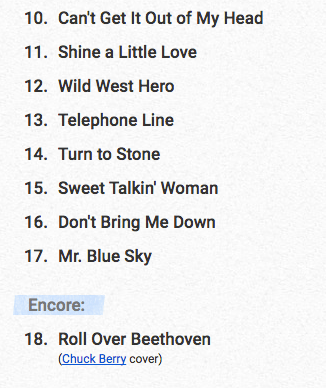
It is quite rare that you see a concert where the number of songs on the set list is actually fewer than the number of the band’s top 40 hits, but Jeff Lynne’s Electric Light Orchestra’s 18-song setlist came two short of the amount of charted hits from the band’s illustrious original 13-year career, where the band sold 50 million records and received 21 RIAA and 38 BPI awards. Those are just some of the tremendous statistics that I could conjure up about the tremendous career of one of the foremost progressive rock bands of the rock n’ roll era, but when I saw the reformed band of Jeff Lynne and Richard Tandy, two of the four originals (Tandy joined in 1972, two years after the bands founding) the band was solely concentrated on providing a bang-up performance for a sold-out Radio City audience, and that is what they did.
ELO formed out of the 1960’s early prog rock band, The Move, which was led by multi-instrumentalist Roy Wood. Lynne, who would later go on to produce a slew of records and help create the Traveling Wilburys (as Otis Wilbury), initially played second fiddle to Wood (inside joke for those who know what ELO was referred to in the States), but after Wood left the band in 1972, Lynne, Tandy, and drummer Bev Bevan released a remarkable collection of records, including a three year period where the band released Face the Music (1975), A New World Record (1976), and Out of the Blue (1977), a three-year assemblage of ELO hits, many of which were played during the Sept. 18 performance at the home of The Rockettes.
ELO mastered the craft of combining an infectious upbeat rock/pop sound with classical music. Many bands, like ELO, added such orchestrations to their music, but ELO was able to release songs with such efficacious alacrity that their success almost drowned out other bands trying to keep up with this pop/classical sound; thus, ELO was not only a pioneer but also the best in the business. It, therefore, was no surprise the ELO sold out two shows at Radio City Music Hall, and garnered a truly diverse crowd of several generations who enjoyed their music.
With vivacious crowd in tow, Jeff Lynne played a 1.5-hour set fit with a tremendous backing band and psychedelic video pairings. The crowd sang along with almost every song, and Lynne did a great job sprinkling hits throughout the set list, and then eventually bringing it home with a 9-song (yes, half the set list) string of songs that covered the full spectrum of why ELO is such a tremendous band.
Akin to nine straight hits in a baseball game, Lynne and his band played each song with an adept passion that obviously endeared the eager crowd and spawned the 6,000+ person arena to sing along with each noticeable song. It was too tempting not to join in, and I was there among the masses singing to each song. That is the joy of concerts like that from ELO, though, right? You go to sing along with the songs you love. Concerts, while communal, are still personal (somewhat singular) events where each goer responds to the music how he/she would like to respond. I always wanted to see ELO in concert as an ardent fan of their music, and I, my dad (my ever-present concert benefactor), and the rest of the crowd, was treated to a wonderful, energetic performance by a tight-knit group who knows the meaning of fun, catchy tunes. And, because why not, here is a live version of “Mr. Blue Sky” from 2001.
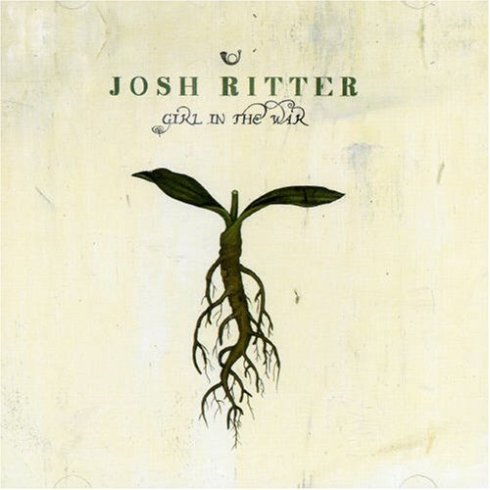
If you have read this blog somewhat consistently over the last few years, you may know these two facts: 1.) I am a High School English teacher and 2.) I greatly appreciate all things Josh Ritter. Thus, it is always a pleasure to combine these two elements into a lesson plan, and next week I will utilize Ritter’s “Girl in the War” in a lesson reviewing figurative language. Students will not only identify the plethora of writing devices Ritter uses in his 2006 anti-war classic, but also they will assess how Ritter’s use of these devices ultimately made his song more effective. Through it all, I’ll make sure to have “Girl in the War” blast over the sound system in my room – perhaps a few times.
I’ve used Josh Ritter before in my classroom. Last year, students explored “Annabel Lee” by Edgar Allan Poe and “Another New World” by Josh Ritter. It was rewarding to see students unravel the similarities between Ritter’s tribute to Poe’s classic about a “love that was more than love.”Since Ritter’s lyrics are so cogent, intellectual, and literary, the transition from iTunes playlist to classroom is quite simple.
I’m eager to hear the 16-year-old’s take on “Girl in the War” next week. The song contains several allusions, including the biblically-inspired conversation between apostles Peter and Paul. It also utilizes such clever metaphors as “talkin’ to God is Laurel beggin’ Hardy for a gun,” which I anticipate going over the heads of my students; a little clarification will certainly need to be in order. Ritter’s plea, eloquently sang through the lens of Peter and Paul, should be evident for students, as the “girl in the war” is repeated throughout and Ritter uses words like “yell” and “hell” – a sagacious rhyme in an otherwise “holy” song – when Peter begs to the angels that are “locked inside the kingdom.”
I hope students catch that Peter has the “girl in the war.” Peter is also the individual in charge of the pearly gates, with say of who gets to enter heaven. However, Peter has no say about his “girl in the war,” whose collective fate is out of his holy hands and is left, ultimately, to tears falling on Earth as the song ends.
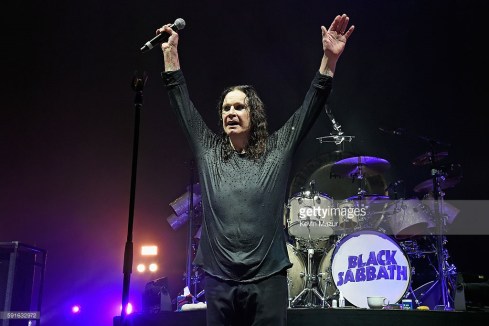
Black Sabbath perform onstage at Nikon at Jones Beach Theater on August 18, 2016 in Wantagh, New York. Credit Getty Images
On the concert poster that supports Black Sabbath’s “The End” farewell 80-date tour an inferno encompasses the Northern Hemisphere of Earth. That includes the south shore of Long Island that at times this summer has felt a bit like the portrayed firestorm. On August 17, Black Sabbath started the second leg of the North America swing of its farewell tour at Jones Beach Theater and with the help of 15,000 raucous fans set the beach ablaze (figuratively, of course) with a vehement and booming show.
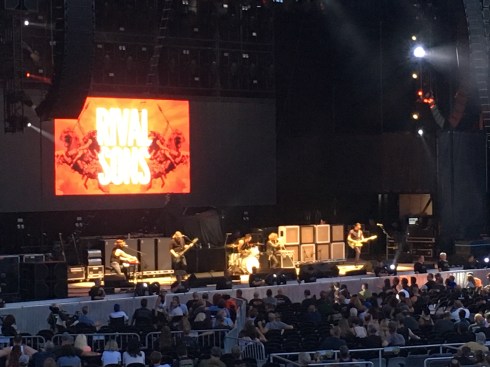
Before I get to breaking down Sabbath, let’s start with the turn out. I’ve been to plenty of concerts at Jones Beach, and I’ve never seen it as crowded as it was that night. The turn out was a fascinating mix of black-clad Sabbath fans. The mark of a great band is its ability to attract a range of fans, and Sabbath has developed that loyal following over the 45+ years of existence. The opening act was a band I had the opportunity to profile back in February. You can check that out by following that link. The band was an excellent choice as an opening act. Rival Sons plays a style of Southern Rock injected with heavy metal vocals and instrumentals. Back in February I wrote that the band features “old-style rock n’ roll music with a keen blues sound, driving percussion, and raspy vocals,” but after seeing them live I’d like to emend those descriptions, and add that the band can also crush a lick and headbang with the metal bunch. Rival Sons is an original sound, and you should check them out. Plus, the keys/synth player has an Amish-style beard that is all kinds of awesome.
He’s the one on the left but you can’t really see the mega beard
Black Sabbath played a 14-song set in around 2 hours. The set featured the classics, but the band dispersed the hits throughout the nights, which was kind of them: I hate when bands wait until the last three songs to play the top hits. After a dystopic video opening (the video was a cool supplement throughout the show except for when it stopped working for around 15 minutes, but what are you going to do), Black Sabbath came out to the apropos “Black Sabbath,” and Ozzy, the grand master of wicked ceremonies, greeted the crowd with an energy that can be best described as effervescence. Throughout the night, he bounced around the stage, throwing up his hands to rile up the crowd, and leading several call-and-response lyric and clap sessions. He even prostrated twice and professed his love for the fans. He was Ozzy at his finest, and he made it explicitly clear how much he enjoys to be on stage. The concert must have also been joyous for Tony Iommi, who was diagnosed with the early stages of lymphona in 2012 but announced only a few days prior to the concert that his cancer was in remission. Iommi is a wonderful guitarist, and he proved it with his usual stage adeptness and fretboard adroitness that he has had his entire career. Also, let’s give love to Geezer Butler whose bass is not made with any animal products; he is a strict vegan (which I find excellent as a vegetarian and husband to a vegan). Butler mans a potent bass guitar, and did so throughout the concert. The rest of Black Sabbath is keyboardist Adam Wakeman, who strangely played the role of man behind the curtain, as he was not actually visible on stage; Ozzy said it was because he was too ugly, but I think the massive amplifiers blocked him, and session drummer Tommy Clufetos, who played a sick drum solo during “Rat Salad” that gave the rest of the band a piss and water break, and entertained the crowd thoroughly.
All-in-all, what else can I say. Black Sabbath was tremendous. The crowd loved every second of the show. It was a riotous affair. Yes, Ozzy, we had fun. Excellent show. Get tickets to this one if you can.