Archive | Archives RSS feed for this section

RX Bandits – Mandala

5 Jun


Hey everybody!

I haven’t posted in a bit. I’ve been busy finishing my semester as well as my album. I am happy to announce it is done! There is link to my website at the bottom. Unfortunately however, as you might know, once you finish something you instantly start three new things. So I currently have a lot of things floating around my mind, but today I set aside some time to bring you some good tunes! : D

I will be presenting to you a band and an album which is very dear to me. The album just happened to be there for me when I was going through a rough time in my life and for that I will always cherish it. ❤

That album, as you may have deduced by now, is Mandala by the RX Bandits. Now be warned, this music is highly experimental. It is nothing crazy, but it’s considered alternative rock/ska which I don’t believe is something that has been done yet. It also contains elements of math-rock which adds a layer of musical craziness. This is most likely the reason why it meshes with me so much. Not to mention, it’s also trippy as hell/heaven.

Off the bat take this song as an example:

That would be Mientras lo Veo Sonar, a lovingly nicknamed Spanish song. If you are reading this that means you peeled your eyes away from that beautiful album art. However, it barely encompasses the complexity of this song. A heavy electronic opening gives way to Spanish diction and an intense drum beat. Matt Embree, the singer, guitarist, producer, and general driving force behind the band, begins singing in Spanish. I have no clue what he is saying other than ‘requesta’… request?

The verse then flows into the chorus, the singing switches to English and an easy ska-ish beat takes over, allowing you to catch up and get into the rhythm. But before you get a chance to get comfortable the song drops into a trippy verse, the singing this time half-Spanish, half-English. The electronic effects are on just about every single instrument, phasing in and out like as if you’re flying through space.

One more short chorus occurs and then we get one of the trippiest, drawn-out, awesome trip-out endings ever.  I love the emphasis on “Good-bye” as it begins to envelope you. Because once the piano begins to play you realize you are not where you were. The drumming, physically impossible for one drummer to perform, is the only reminder of what you are listening to as you drift somewhere away. As it ends you realize that a new day is starting both epic and mysterious.

Refreshment for the soul.

Now consider this song:

Probably my favorite song off the album, Breakfast Cat delivers anything a person could ask from a band like this. The beginning is a wild flurry of who knows what. It quickly catches an odd beat and is justified when a guitar plays it in and a riff is formed out of it.  But you do not even get a chance to think, because this song changes just as a fast as it possibly can. Once again Matt on vocals, quickly ushers the music into a series of transition after transition.

It eventually leads nowhere and after a brief synth interlude it jumps back into the main instrumental chorus. The singing returns, now for a shorter period of time. As that ends, transitions again make the bulk of one of these make-shift verses. Robot noises and echoed vocals are a definite recipe for a great time.

The final sung chorus, the shortest of the three, warrants higher expectations. And deliver it does as a trip-down ensues that will make you higher than anything. It is the final culmination of endless tangents – beauty and nothingness. Be warned, because the ending of this song will force deep amounts of introspection upon you. But this is psychedelic music. What did you expect?

Just try to picture a fat cat angry that it has not been fed yet, purring and rubbing your feet one second, hissing the next. Perfect imagery in my opinion for this monster of a song. :p

This band, hailing from California, traditionally had its roots in ska, albeit a very alternative style of ska. As a result they have garnished a certain image, specifically from ska-haters. But their musical journey has taken them extremely far and this latest album is definitely one which breaks down genre-walls and speaks to a new type of crowd. And maybe it will get the haters to quit hating. Who knows?

I will most definitely be returning to this band to cover past albums. I will also link one more video of theirs from one of the more slower songs off the album at the bottom, but even these three songs cannot fully represent this masterpiece of an album.

Happy listening!

-oko

*Be warned* – my music is very very weird

http://okko.bandcamp.com/
&)

P.S. One more song – March of the Caterpillar
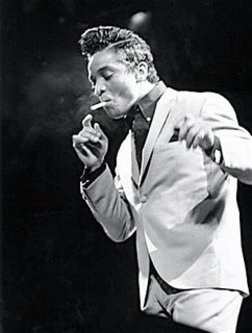
You’re Love Keeps Lifting Me Higher and Slower and Slower – Jackie Wilson, Soul Music’s Cool Uncle

31 May

It is common knowledge that Aretha Franklin is the Queen of Soul. Otis Redding is usually crowned as her king. And James Brown gets the laudatory title as the Godfather of the genre. But where does Mr. Excitement fit in? Jackie Wilson was as instrumental in the soul transformation as James Brown. He brought stage gyrations to the R&B scene and helped expand the genre of soul. While Ray Charles is often cited as its creator, Jackie Wilson certainly does not get enough credit for a performer who inspired Michael Jackson and Elvis Presley! If James Brown is soul’s Godfather than Jackie Wilson is definitely soul’s cool uncle.

The Master of Cool

Wilson hit major chart success with his 1958 R&B song “Lonely Teardrops,” a song that implemented doo-wop techniques and, because of Wilson’s powerful voice, neared on soul. His on-stage movements were crowd pleasers. “Lonely Teardrops” was written by a team of songwriters led by pre-Motown Berry Gordy who used the money from the song’s success to help create Motown, a record label that would become part of the definition of the soul genre. And there you go, a surprising fact about a popular song!

But wait. That just sparked my interest in perhaps Wilson’s best known song, “Higher and Higher,” which was released nine years after “Lonely Teardrops.” Wilson, then a true master in the field of soul, recorded this song with Motown Records’ house band The Funk Brothers. Well, he didn’t actually record it with the band. That is where the surprising fact reveals itself. Producer Carl Davis brought the Funk Brothers’ backing track to New York City for Wilson to record his vocal. After hearing the track, Wilson originally sang this upbeat classic as a soul ballad. Davis’ response?

“I said that’s totally wrong. You have to jump and go with the percussion. If he didn’t want to sing it that way, I would put my voice on the record and sell millions.”

It only took Wilson one more take to record the song the way Davis intended it to be heard. And it sold a lot of copies.

Best Guitar Riffs – The Double-Riff That Sings Layla

17 May

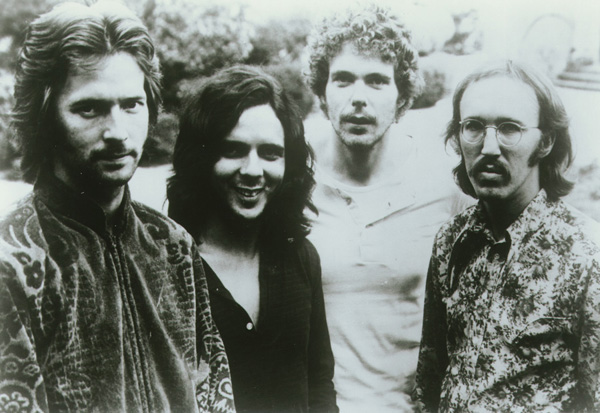
How can we have a Best Guitar Riffs section without the riff that fronted the essential rock “love” song? Derek and the Dominoes conquered the typical love ballad, and transformed the normal adoration tune into a spell-binding passion roller-coaster that portrays Eric Clapton‘s obsession with George Harrison’s wife-at-the-time Pattie Boyd. Everyone knows the basic story.

Clapton and Harrison were good friends. Harrison’s wife Pattie Boyd became Clapton’s obsession. After playing “Layla,” the love-rocker inspired by Boyd, at a party, Clapton confessed his undying love for Harrison’s wife in front of the sitar-wielding Beatle. And then Harrison kicked Clapton’s ass, right? Well, actually, no. Harrison was fine and remained married to Boyd for several more years before she gave in to Clapton’s charm and divorced Harrison for him. And then Harrison kicked Clapton’s ass in a Bruce Springsteen “Jungleland” dystopia where guitars are flashed just like switchblades. Actually, Harrison attended Clapton’s wedding party with Ringo and Paul and wished good fortune to the new couple. Women mattered and didn’t matter at all to these musicians I guess. “Layla” was made because of Boyd, but, did you know that its classic riff and rocking beat was not Clapton’s original intention.

Duane Allman, of the Allman Brothers, was the man you can credit for transforming Clapton’s vision of a ballad to his love into the classic riff we all know and play air guitar to. Let’s talk about the riff composition.

By the way, part two of the eight-minute epic was founded on a separate piano piece that was originally created by Dominoes drummer (yes, drummer) Jim Gordon. Clapton loved it and with Gordon’s blessing they recorded part two with Clapton playing acoustic and slide guitar and Allman playing electric and bottleneck slide.

Okay, on to the riff, or, rather, this:

“Layla” is composed of two riffs. The song can really be on our list twice. Hence why it is such a tremendous guitar piece. The first riff is Clapton’s famous hammer-on, pull-off, power chord epicness which sends crowds into frenzy on first play. He is then joined by an Allman original forming a guitar duet that juxtaposes sweet high notes with the lower-pitch main riff. The riff is commonly listed when top guitar riffs are compiled. On my list it reaches the top five easily. How can it not? It features the work of two guitar gods in their prime and there is nothing better than that.

The 60s Psychedelic Experiment: “Norwegian Wood” by The Beatles – Folk 1965

3 May

Norwegian Wood” was released in the nascent years of psychedelic music, and, if not for a fortuitous sitar, this hit from Rubber Soul would not be psychedelic at all. It’s creation would still be interesting, but it wouldn’t be psychedelic. John Lennon was the primary writer for this piece despite the co-writing Lennon/McCartney label. He sites Bob Dylan as a big influence on the song. The verses are Dylan-esque, concentrating on an acoustic guitar driven melody and vocals that follow the rhythm. “Norwegian Wood” is about extramarital flings, and Lennon actually wrote it while on vacation with his wife. “Honey can you play me the new song.” Pretty dumb move on the part of Lennon, though he attempted to be subtle. The song’s creation is all well and good, but for the purpose of this post we must talk about the impact by George Harrison, who is the reason this song has a sitar and is psychedelic.

According to Harrison, he was inspired by Indian musicians on the scene of The Beatles‘ movie Help to start messing around with a sitar. This turned into a more substantial interest when he bought a Ravi Shankar record and purchased a cheap sitar in London. He had it with him during the recording of “Norwegian Wood,” and, you know what they say, the rest is history.

” It was lying around. I hadn’t really figured out what to do with it,” says Harrison in the Beatles Anthology. “When we were working on Norwegian Wood it just needed something, and it was quite spontaneous, from what I remember. I just picked up my sitar, found the notes and just played it. We miked it up and put it on and it just seemed to hit the spot.”

The sitar is very coordinated, and Harrison did not have the mastery to freestyle with the sitar, which would have made the song more experimental and psychedelic. But, it still maintains a hint of that psychedelic quality and that makes the song certainly worth the mention.

The Psychedelic Experiment – Art Rock – Emerson Lake & Palmer “The Three Fates”

27 Apr

Totally Arting It Up

Psychedelic music inspired many talented performers to explore rock n’ roll’s endless possibilities. At its root, psychedelic music is experimental, and like any pioneering scientific discoveries, it engenders more research and, well, experimenting. While psychedelic music has numerous sub-genres, even more striking is the amount of genre manipulation that happened after the wave of psychedelia came to a near-end in the late 1960’s. I say near-end because psychedelic music never truly ended. But since it experienced a wave of popularity in the mid-late 60’s, it naturally became less popular. I know that I called this section the 60’s psychedelic experiment, but it is equally important to describe music that was created directly after the initial boom. I’m talking about the early 1970’s, which saw the rise of progressive rock and art rock, two genres that owe their creation to the success of psychedelic music. In a sense, art and progressive rock are both the complex expansion of psychedelic experimentation featuring music that concentrates on intricate and lengthy melodies combined with either a classical musical approach or more modern representation.

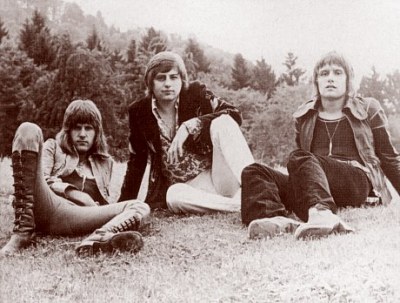
How did that paragraph go down? Smoothly, I hope. Seriously, the progression of Rock music is sometimes bulky, and this time period saw several changes to how rock would evolve. Art and progressive rock evolved from psychedelic music. Emerson, Lake & Palmer (ELP) was composed for Keith Emerson, from the psychedelic rock band The Nice, Greg Lake, from the late 60’s prog-rock band King Crimson, and drummer Carl Palmer who played in the Crazy World of Arthur Brown and Atomic Rooster. These three musicians composed one of the first Art Rock supergroups and their music reached for the classical portion of Art rock.

In my opinion, art and progressive rock are practically the same term. But, one of the key differences is progressive rock tends to focus more on guitars. As evidenced by the piece I am including, ELP swayed more towards piano and keyboards.

“The Three Fates” is the first song off of side two of their debut eponymous album. It is split up into three parts, each named for a mythical figure (Clotho, Lachesis, and Atropos). The piano playing is extraordinary. Keith Emerson is skillful beyond words. The ode to classical music is clear and this classifies the music as 1970 Art rock. So, you may be thinking, how does this apply to psychedelic music? Travel to around 5:30 in the song. Okay, this is Jazz-rock. But, wait, what are all of the background sounds and the musical layering and strange notation. Yes, this is psychedelic music of the 1960’s kicked up a notch to fit into the genres of Jazz and Classical. It is Art rock, and a perfect example of the evolution of psychedelic music.