Archive | Artist Profiles RSS feed for this section

Progressive Music from The Hague – Groep 1850

21 Feb

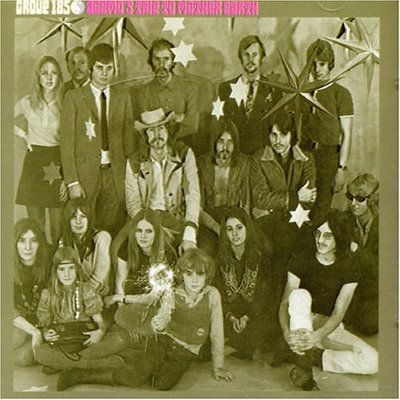
Packed with an awkward family photo

Three months in 1966 sparked the progressive rock movement that flourished in the early 70s and gradually fizzled away (it has been revitalized recently by bands like Dream Theater). Obviously, this statement is completely subjective, so take my opinion for what it is. I also love how the founding year is 1966, and, as you know if you read the blog last week, I will be bringing back Music Court March Madness and we will all vote on the best album released in 1966 in a few weeks.

In May of 1966, The Beach Boys released Pet Sounds, and while this album is an early favorite (and a top seed) in the March Madness poll, it also was one of the first (if not first) Progressive Rock albums ever released.

Progressive Rock features creative arrangements, unusual blends of genres (like Jazz/Rock), eclectic (almost baroque) instrumentation, and classical constructions. The songs tend to be long, drawn out, and excellent if you have the time to lie on your floor, stare at the ceiling, and allow music to seep through your skin.

After the release of Pet Sounds (which most definitely pushed the Beatles even harder with their 1967 release about a pepper or something), Frank Zappa and The Mothers of Invention dropped Freak Out in June of 1966. This simply added onto Brian Wilson’s masterpiece. Then, in July, The Left Banke, a French-inspired New York baroque pop band, asked Renee to walk away (and a few months later they had a date with a pretty ballerina). The three months represented the inception of this new genre and it allowed a whole new stock of bands to flourish, including a mid-60s act from The Hague. A group of musicians who, while being one of the first progressive rock acts, is widely forgotten – until now!

Wait. A grand orchestral piece based on “Frere Jacques,” the old French lullaby. Back up.

Groep 1850 was formed in the Netherlands in 1964 as Klits. I think you can add them to the list of most influential Dutch musicians. A few others immediately come to mind. Golden Earring and Shocking Blue – you know, the band with the lead singer who proclaimed that she was your “pen” *cough* I mean “Venus!”

The original incarnation of the band is not important because they released their first single in 1966 with these members:  Peter Sjardin (vocals, flute, organ), Ruud van Buuren (bass), Daniel van Bergen (guitar & piano), Beer Klaasse (drums) & Rob de Rijke (bass, flute).  Yes, the drummer’s name was Beer. This line-up would change again in 1968, after the band went on hiatus for a year. Sjardin and Bergen remained, but they were now joined by Dave Duba, Dolf Geldof (bass), and Martin van Duynhoven (drums).

Peter Sjardin was of the first line-up and Daniel van Bergen the second. They can be viewed as constants. Let’s get to the music. The band started playing gigs in ’66 and became an underground sensation, even opening for The Mothers of Invention in 1967. In 1968, the band released their first full-length Agemo’s Trip to Mother Earth (picture above). The album cover actually had a 3-D sleeve and it included 3-D glasses (hence why it is today a tough find and BIG LP sell).

“Mother No-Head,” the esoteric piece above, is on that album. It was also released as the A-side of a single in 1967. In every sense of the word, the song is weird. After beginning with a drum beat straight out of Jazzy big band, and a bass/guitar riff from a spaghetti western, a chorus of monks provide background to a deep, unclear incantation. It’s a Dutch Western. Then a flute introduces something straight out of a cheeky British movie soundtrack before more odd vocalization. At around 1:15, I realized that the monks were humming the French lullaby and this made me smile. Then when a twangy guitar plucked the notes of the lullaby I was just flat-out grinning. This is just great! We get some nice keys before we fall back into the beginning (the fleeting flute still there). Why is the progressive? The flute, creative drumming, intricate track layering, and monk chanting.

Here’s another one from the band. “Misty Night” was the B-side of the band’s first single, released in 1966. This certainly feels more psychedelic (even garage) at the start. We get a reverberating (like SERIOUS reverb) guitar at the outset. I kind of like the vocal – despite the fact it is grunt singing at the start. The song then falls into a lull with the relaxed bass and humming.

Here is some more information about them. Click here.
Kris Ife and the Quiet Five – A Little Morning Sun

14 Feb

The Quiet Five...uh...I mean Six

Let’s set the scene. Mid 1960s, London. When you think of music during that time, genres like Merseybeat, Pop/Rock, and Blue-Eyed soul all come to mind. We’re thinking The Beatles, Gerry and The Pacemakers, Freddie and the Dreamers, and The Hollies. Genres quietly fuse, and when Beat music slowly died out, it was replaced quickly with edgier R&B bands like the Animals. It was easy to get lost in this fog of famous musicians. Enter the Quiet Five.

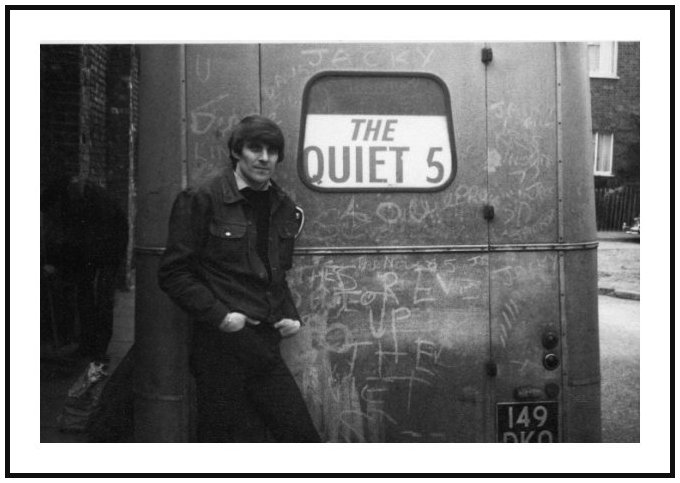
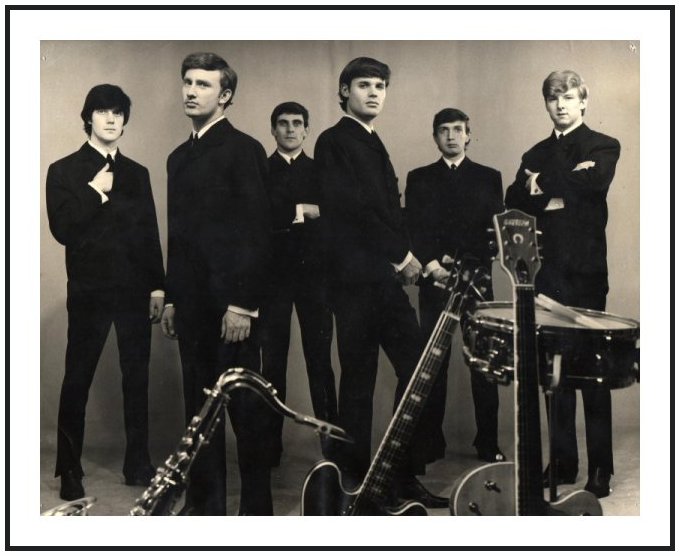
The Quiet Five was not always the Quiet Five. They formed as the Vikings in the early 60s, a group of musicians from Paddington. The original line-up was Kris Ife – Rhythm Guitar, John Howell – Clavioline & Guitar, Ray Hailey – Drums, Roger Mckew – Lead Guitar and Len Hooker – Bass. Len Hooker left soon after the band’s founding and was replaced by  Phil Leavesley. The Vikings worked mainly as back-up musicians for various artists, even supporting the Beatles at Romford Odeon in 1963. In 1964, the Vikings were combined with a South London band called the Quiet Five, adopting their name in the process. Leavesley was replaced by Richard Barnes (bass guitar/vocals) and the band added saxophonist John “Satch” Goswell. This line-up of six individuals, despite their name, went on to record the band’s most known hit of their short career.

Ron Richards, the Hollies’ producer and the producer of “Love me Do”, heard Kris Ife’s composition, “When the Morning Sun Dries the Dew,” and thought he could turn it into a hit. The year was 1965, and the song did find its way into the top 50, one of two top 50 hits the band would have. It lacked staying power though and did not reach a larger audience. After a few failures and a record-label switch, the group ended its recording career.

It’s a shame that “When the Morning Sun Dries the Dew” has fallen into obscurity because the song is actually pretty good. It features an opening guitar riff, slow and intimate, almost like a slowed down Peter and Gordon riff (which you can say is a Lennon/McCartney riff). The song is different from a lot of the music being released in 1965. It’s sensitive melodies, airy acoustic riffs, sincere harmonies, and strung-out keys, make it sound a few years before its time. The song could have very well been released in 1968 and hit more popularity. The reason I say this is because it is certainly not R&B or Merseybeat – it simply lacks the speed of the time. It’s a wonderful piece and I hope that more people begin to recognize it as such.

I want to continue this exploration with the man in the photo above, Kris Ife. Ife, who wrote  “When the Morning Sun Dries the Dew,” went on to have solo career that included a recording of a cover of “Hush,” originally by by Joe South. “Hush,” of course, became a big hit for Deep Purple, but, apparently, Deep Purple was inspired to play the song after hearing Ife’s version.

And listen to that. While each preceding version is fast-paced and explosive, Ife adds harmony, which is one of the reasons why Deep Purple’s version is so great. The version is obviously not Hard Rock, but it definitely inspired Deep Purple’s heavy use of bass, tremendous soloing, and gritty performance.

Various members of the Quiet Five do still perform today. You can follow Kris Ife on his website and the band’s great tribute Facebook page

A Monk of the Rarest Kind

8 Feb

The job for new bands out there is just getting harder and I’m not just talking about the fact that they must compete with washed-down mainstream garbage. The root of the problem is monotony. Too many bands sound exactly alike. This was easy to get around in the 60s because, well, even mainstream was good music. But today, listeners with keen ears are always searching for something different, something exceptionally unique. Music that when it comes on the iPod captures the listener. Indie music has become increasingly popular because of the bored listener. Now, if you are a new band, you better bring something new to the table. And, if you do infuse some originality into a worn genre, well, you will hopefully succeed – because you are worth it.

These are the bands that I like to focus on in the New Band Palace section of the blog, and I am not going to stop today. We travel to Eugene/Portland, Oregon, to seek out a collective of talented musicians who have decided to tackle a bushel of genres and create an eclectic blend of jazzy rock n’ roll that can blow your socks off with its productive sound, professionalism, and absolutely sick riffs.

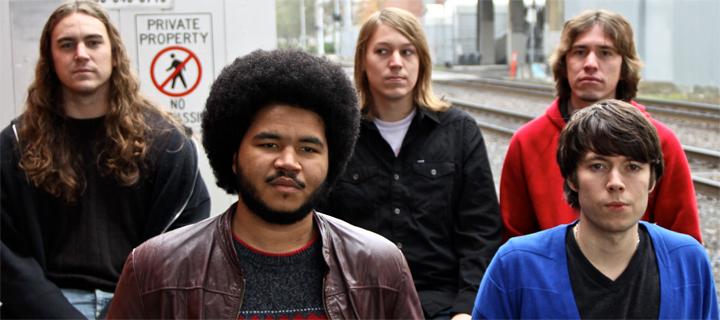
Rare Monk released a 7-track album called Astral Travel Battles in June of 2011 and have been playing shows around their area of residence. The album deserves recognition. It is a small featurette of the effervescent sound that the band produces and it hits on so many layered elements you can lose count. The band is Dorian Aites: Vocals, Guitars, Keys, Percussion; Isaac Thelin: Violin, Tenor Saxophone; Jake Martin: Guitar; Forest Gallien: Bass, Keys; Rick Buhr: Drums, Percussion.  Thelin rocks the afro in the photo above.

The best way to explore a band is to dive right into their music, so let’s take a swim in Rare Monk’s synthesis.

“Shoot Me Down,” which tells the story of a hardened escaped prisoner who is hunted down and (well listen to the song to find our what happens), is track one on the album, and, while the lyric features gem lines like “If my soul’s spending on credit, oh please Lord, don’t send the bill,” I want to focus a little more on the structure of the song itself. It’s important to start any album off with a strong composition, and “Shoot Me Down” begins with a kick-ass guitar riff that blends with some light percussion and Dorian Aites’ clear, guttural voice. At around 25 seconds, the band introduces a violin that gives the song this interesting western ditty feel – a little Modest Mouse-like. The song moves quickly through the chorus and then Thelin actually shreds on the violin. It is a refreshing solo – s0 different and well-done. A violin can work in hard rock songs and I’m glad Rare Monk employs it. At around 2:35, Rare Monk provides me with the first example of their originality. Many bands would have ended the song at that mark. Instead, the band displays true professionalism and slows the song down entirely into this Ska-like reggae beat that leads into a David Gilmour-like guitar solo from Jake Martin, splattered with soul and effects. Then a moving drum and bass lead to the culmination of the song which is the quick chorus.

“Somnifero” gives Rick Buhr an immediate drum solo and Forest Gallien a wonderful, jazzy bass riff that complements Thelin’s tenor saxophone. Martin’s guitar fits into the ska category again and the effects give the fills a 70’s progressive rock feel. Dorian Aites’ vocal is strong and contained, and I like its tenderness. Tthe tenor sax solo is the best part of the song. It is paired so well with the chaotic drum – like wine and cheese – and I absolute adore the little sampling of “These Are a Few of My Favorite Things.” The runs at the end with the bass is a perfect way to end the album.

My favorite song off of the album, though, is “Mama Bear,” and although it is an instrumental, I feel it may say the most about the band’s originality. The riff is simple, a droning, effect-saturated melody, that leads into a violin run that says more than any word could. This leads into a brief guitar and violin riff. What I find so spectacular about this song is the band’s competent use of melody layering, an aspect of music that can be difficult to master. If you close your eyes and listen to one part of the song, say 2:35 into it, you can hear everything. Listen for the violin over the initial riff, and then keep the background in mind when Thelin loses his mind on the violin.

Listen to more of Rare Monk’s music on their Bandcamp and check out their Facebook for more details

Beaming with The Widest Smiling Faces

25 Jan

Aviv Cohen

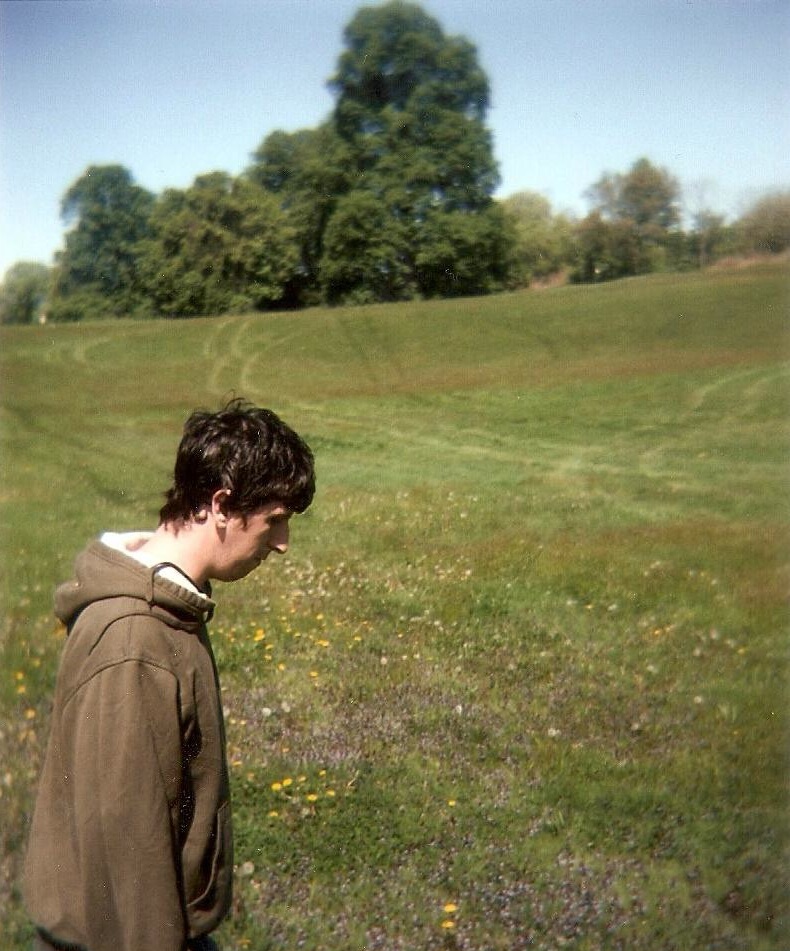
Aviv Cohen is a throwback. He is a consummate musician with a keen ear, laid-back skill, and an innate knowledge of what makes good music. It is always so refreshing being introduced to a musician who knows what they are doing and Aviv – who is the sole employee of the band The Widest Smiling Faces – has good reason to grin.

Aviv, who is based in Brooklyn, NY, has just released his second album Me and My Ribcage, and it features 12 tracks of ambient folk with a hint of medieval sampling and excellent guitar work. Most importantly, the music is light and breezy – like the sunny, cool New York afternoon that is just outside my window as I type this. It is a pleasure to listen to Aviv’s graceful melodies and you can tell that he – and Chris Wojdak, who added textures and assisted with arrangement, on the album – took care to make sure that the layers and sounds remained smooth.

The title track, “Me and My Ribcage” is the opening song on the album.The first minute of the song sends you soaring through light, immaculate clouds, into a denseless, gravity-less atmosphere. The weightless guitar sings a peaceful melody which at the one-minute marks pauses and leads into a soft acoustic guitar and Aviv’s low-fi, tender vocal. His vocal is actually a bit abstruse. I don’t know what to make of his calm vocal. It’s as if he is living in a different time, as if he recorded this back in 1930 – every word vibrates – similar to the way that John Darnielle plays with his voice even thought it is quite different. I actually do get a bit of the Elephant Six feeling as well.

British Progressive Folk groups like The Amazing Blondel played medieval-esque music back in the late 60s and early 70s, and the beginning riff of “Two Lips” followed by the multi-layered, accented vocal feels like this. I catch a little of Syd Barrett in the vocal. I also absolutely love the feeling I get when I listen to this. It is eccentric music – almost psychedelic (more in the Elephant Six way than the late 60’s way). Aviv is also a proficient lyricist and I would like to highlight the ending of the song:

“And two words sting my eyes with doubt brushed under skin and out of mouth (and down) he lied to feel our beating hearts it pulled us back to where we started.
In a way I had to grin we cut the hands from off of it and all his fingers red with stain will lead us to a house unfaded on the reeds.”

Poetic and well done

I am including “Lazy Boy” as my last sampling of Aviv’s music. I love the fullness of this song. Aviv’s music is relaxing and an absolute pleasure to explore. I suggest you take a listen to the entire album which is available here.

That’s One Fuzzy Duck – Having Some Fun With Early 70s Prog Rock

17 Jan
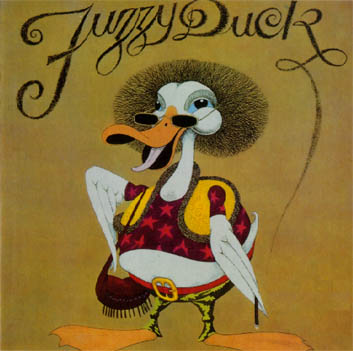
More like Funky Duck – Look at it’s Fro and subtle pimp cane!
Progressive rock is not easily definable. This sounds like a cop out, yes, but I do think that part of the intrigue of this genre is its obscurity. For the sake of continuing this post, I will attempt to define this genre that peaked in popularity during the 70s. Progressive rock (similarly to psychedelic rock) took classic rock and expanded it. It manipulated compositions, added instrumentation, and made music unpredictable. I do think that one of the reasons why bands like the Mothers of Invention, The Beatles, The Beach Boys, Jethro Tull, The Moody Blues (the list goes on) started experimenting with different music was because they were bored.
 
As the progressive rock movement spread (prior to the genre being termed), more and more bands sprouted up – many that are underappreciated (i.e. The United States of America, Gentle Giant, Amon Duul), but even many of those bands became cult sensations.
 
Today we are going to talk about a band that missed the boat entirely, never gaining much fame with their unique brand of progressive rock (I’ll save a more in depth analysis of my love for progressive rock later – the genre does house my favorite band of all time Pink Floyd). So may I introduce to you the one and only hairy fowl and introduce them to the obscure classic rock section of our humble castle.
 
Fuzzy Duck – yes that is the cover of the band’s eponymous first album (and what an album cover it is) – was formed in London in 1970 and it featured a few train-hopping musicians who experienced progressive rock from the perspective of a few oddly named bands. The original line-up consisted of guitarist/vocalist Grahame White, bassist Mick Hawksworth (formerly of Andromeda), keyboardist Roy Sharland, and drummer Paul Francis (formerly of Tucky Buzzard). Just before the band’s first and only album was released White left and was replaced by guitarist/vocalist Garth Watt Roy who was featured on the bands two 1971 singles before they all parted ways by the end of 1971.
 
In a way the short life of Fuzzy Duck feels like the relationship between Brenda and Eddie from Billy Joel’s “Scenes From an Italian Restaurant” – where the couple gets married during the summer of ’75 and has had it already during the same summer (and get a divorce as a matter of course). But before the band parted the closest of friends (okay, I’ll stop with the Joel references), they did release some music and I want to highlight two of their songs (tracks 1 and 2 on their album) in this post.
 
 
The song begins with a groovy 70’s riff over drums and harmony. As the song progressed we are introduced to a few elements that are identifiable as progressive rock. The tremendous organ solo at around the 1:40 mark is a classic signifier. Sharland kills it during this intense solo. The song (4:10 mark) also uses production techniques like displacing sound – another element that progressive rocks played with. A fuzzy guitar solo follows and leads into the choral harmonies that persist throughout the song. One of my favorite parts of this song is the skilled bass of  Hawksworth. A solid bass can do more than simply carry rhythm and in “Time Will Be Your Doctor” it makes the song. Many view etheriality and airiness as two elements necessary in progressive rock, but this is simply not true. Progressive rock extended way beyond that realm – as proven by Fuzzy Duck and many other bands.
 
 
“Mrs Prout” immediately hits listeners with a wavy guitar that oscillates through different speakers and a strong rhythmic bass. It feels like early Progressive/Hard rock that did go on to inspire future hard rock/metal bands. An eerie alien keyboard leads into the beginning of a fine vocal by Grahame White. The song continues in this vein for a good amount of time – a constant, complacent beat. At around three minutes bass and drums begin to take the song over and a guitar quickly decides to join in on the impromptu jam that is funky and excellent. An organ rises and begins to drown out the small jam – and this continues until the end. I love the instrumental portion of the song. I feel that Fuzzy Duck’s true strength is there as well.