Archive | Artist Profiles RSS feed for this section

Foul Deeds never seemed so pure

30 Jun

Pegi Young, the wife of folk troubadour Neil, is not just a female backup singer for her husband any longer. Instead, her new album, Foul Deeds, paired with her self-titled debut in 2007, proves that she is far more than a one-trick-pony; more like a true Crazy Horse.
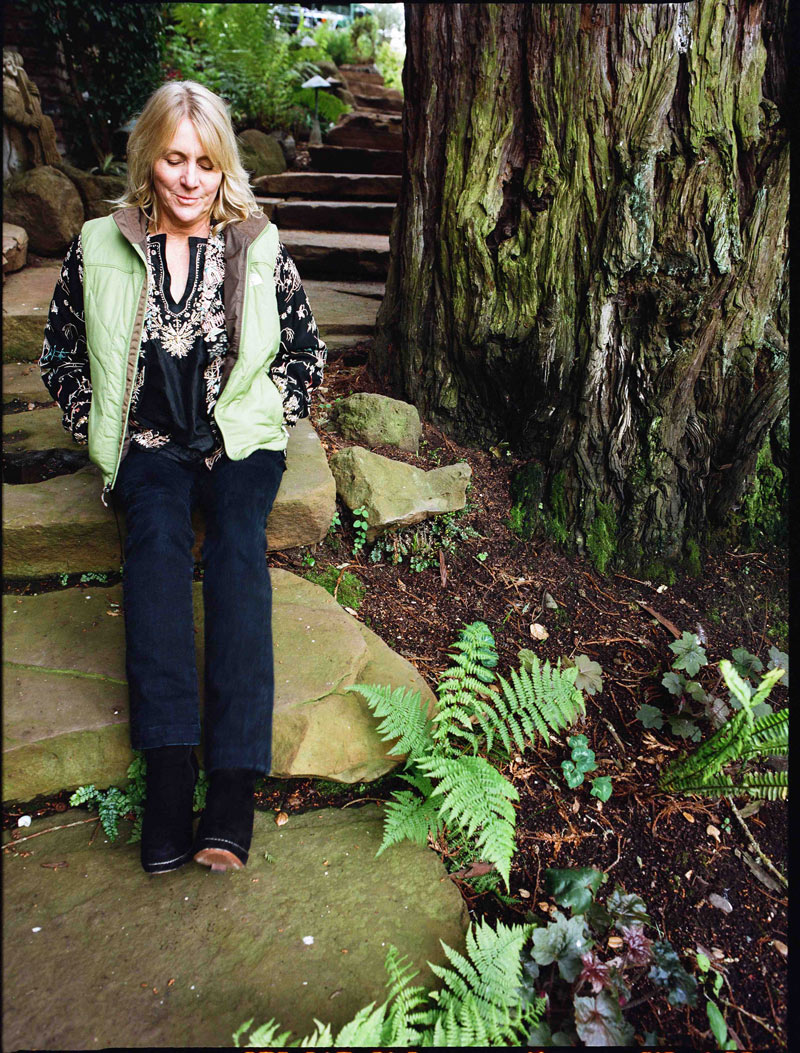
Young is the classic example of a late-blooming artist, releasing her first album in her 50’s. But, don’t let age fool you. In response to her age Young says, “I’m 57, so I’m never gonna be the next big thing, but I’m cool with that. If I was younger, I might be more focused on the commerce part of it. But I’m not a 20-year-old trying to make a living, so I don’t have to conform to some record company’s idea of whatever they’re looking for that week. In that way, I guess I can be truly independent and focus on the creative part. I have no idea where it will go from here, but I’m having fun and I feel really, really good about what I’ve done so far.”

While Young was too shy to do anything past amateur recording when she was younger, she began pursuing music only 10 years ago after her kids were grown. As a back-up singer for her husband, she was exposed more to music and was able begin recording her own songs.

As Young says in her quotation above, she does not need to conform to any record company’s idea and therefore can be independent. This is certainly reflected in her music. Her maturity inspired by life experiences is highlighted in her lyric and song. It is as if she just simply skipped the “growing up” portion that most musicians need to go through, and went straight into clean, fulfilling performances. Young knows who she is and it shows. I have so much respect for musicians who let everything out in their craft.

“Foul Deeds seemed like a good album title, because this record definitely has its share of dark themes… divorce, debauchery, disillusionment and despair,” Pegi Young says of her second album and first for Vapor Records. “But I’m not trying to be a bummer. I’m just trying to tell some stories and make music that I can get behind.”

And, isn’t this a breath of fresh air. Young tells it straight. So many musicians today put on a musical façade, refusing to reveal themselves. Young, while she may have been shy when she was younger, is recording music that she, “can get behind.” Music that she knows is real.

Foul Deeds is full of creative originals and fantastic covers. Her originals represent her grasp on heavy emotional issues and mastery over the folk style.
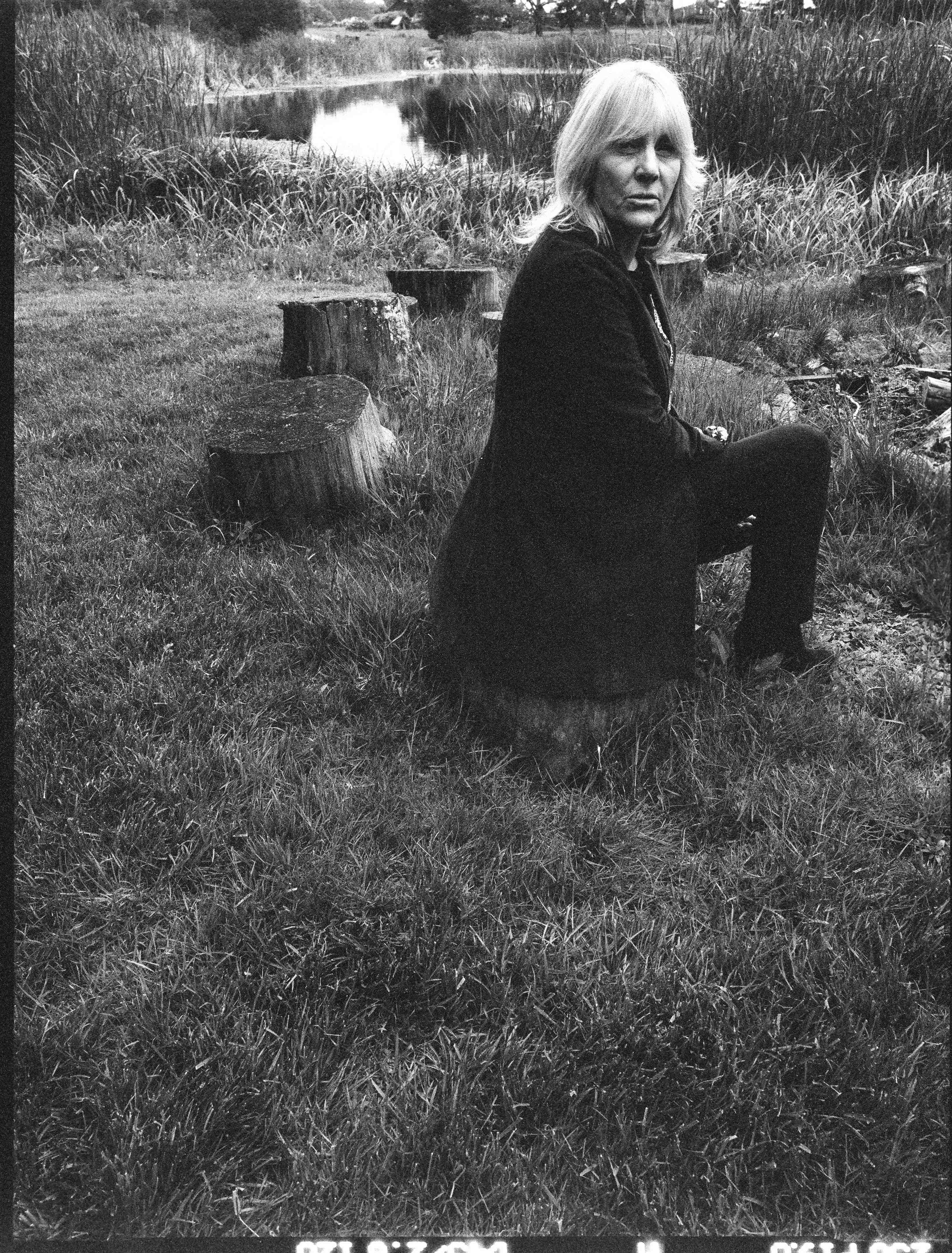
Young also concentrated on the flow of the album, a concept that is commonly forgotten about today. “I’m still a big believer in the old idea of a record being a complete experience,” Young asserts. “So it matters to me that the songs have thematic relevance, and that somehow it tells some kind of story. Maybe people don’t really listen to records as a whole anymore, and you can work on the sequencing till the cows come home but they’ll still put it on shuffle and it doesn’t matter. But it matters to me, and this group of songs just seem to make sense together.”

Info:
www.pegiyoung.com
Facebook: www.facebook.com/pages/Pegi-Young/133463653345541

Buy the album: http://www.amazon.com/gp/product/B003JH0L9G/ref=s9_simh_gw_p15_i1?pf_rd_m=ATVPDKIKX0DER&pf_rd_s=center-2&pf_rd_r=043NYMRAXTV0W6ER84QP&pf_rd_t=101&pf_rd_p=470938631&pf_rd_i=507846

Heavy Glow visits the New Band Palace

23 Jun

Band: Heavy Glow

Genre: Raw power rock with a hint of classic rock blues

Members:

Jared Mullins: Vocals, Guitar

Joe Brooks: Bass

Dan Kurtz: Drums

Band Description:

Bill Miller of the Rock And Roll Report said of Heavy Glow’s brand of rock, “I don’t think I have heard any other band capture the classic sound of 60s/70s guitar rock…This trio rocks it like it’s 1969.”

Quite a compliment. Reading this, I had to look into the band Heavy Glow and see what this comment was all about. And, classic rock fans look here, there are certainly elements of late 60’s hard rock bands like Blue Cheer in Heavy Glow’s original take of an old genre, where one can easily fall into the category of “It’s all been done before.” Isn’t that an exciting treat. It is always fun to come across bands who are keeping such a rockin’ sound alive.

Joe Brooks, Jared Mullins, Dan Kurtz (center)

Heavy Glow was formed by Joe Brooks and Jared Mullins in August of 2008 (Kurtz joined in 2009). They are based in San Diego, California, where their fresh music matches well with the unpolluted sea air. Their self-titled EP was released in February of 2009, and contained six raw releases, stripped of any unnecessary filler. After adding Kurtz in 2009, the band went back to work and released their most recent EP The Filth and the Fury in January of this year.

Favorite Song:

Out of the five songs on the new EP I must say that the second track, “Love Ghost” is the most catchy and wonderfully bluesy. It is this harder blues that hits you with a strong beat and distorted guitar that thumps inside of you. Mullins has stated that Heavy Glow attempts for, “hard-hitting, gritty, infectious and melodic rhythms to create a sound that is both informed by the past and undeniably modern.” This is put quite well, as it describes what their music accomplishes. They are an up and coming band and all I can say is watch out for the Heavy Glow.

Information:

Website: http://www.heavyglowmusic.com/

Buy the new EP: http://www.amazon.com/The-Filth-Fury-Explicit/dp/B0037BFC7U/ref=sr_1_4?ie=UTF8&s=dmusic&qid=1277317917&sr=8-4

Lady Gaga and Joplin:High School Days

18 Jun

This week Lady Gaga caused quite the stir, showing up at a graduation at her former  high school  in a characteristically eccentric get up. Complete in beekeeper hat and see-through lace pants, many cried foul that Gaga was trying to once again upstage the rest of attendees.

But Gaga would be the first to refute accusations of cheap attention ploys. Formerly  Stefani Germanotta, Gaga maintains that fashion is an expression of identity, and a full embrace of her true inner freak. The odd style of dress is a protest of conformity, as well as the standards and conventions regularly impressed upon free thinking in school days.

Lady Gaga in Highschool

When coming across these eye-popping images of Gaga, I couldn’t help but draw comparison to Janis Joplin, who pulled a similar stunt some 40 years ago.

Though she did not attend a ritzy private school for Manhattan elite, like Gaga, Joplin’s adolescence was very much defined by an outsider status. Her feeling of pain, rejection, alienation and damning heartbreak would come to define her music. Joplin reflected on her high school days as some of the darkest in her life, exclaiming that she had been “laughed out of class, out of school, out of town, out of the state”.

And indeed, Joplin would leave her small Texas town and seek liberation in the colorful Haight-Ashbury of San Francisco. In 1963, at the age of 20, the Joplin’s lost soul would encounter vibrant waves of Hippism and Blues. Unfettered in an atmosphere of freedom and love, Joplin would channel her sensitivity and torment into song.

Joplin in High School

Eventually gaining both critical and commercial success in the incredibly competitive record industry, Joplin re-visited the Texan town of Port Author for her ten year high school reunion. Like Gaga, Joplin was a spectacle, dressed in flamboyant garb and followed by cameras. Yet despite her popular following, Joplin was received coldly by her former classmates. Her own family rejected her, refusing to even acknowledge the advent of her visit. Rather than an opportunity to boast at former bullies, Joplin’s visit to her former high school was yet another display of her outsider status. Joplin’s chronic history of emotional pain and isolation eventually lead to her demise, as she would die, alone, through drug overdose.

There is no mistake that Gaga and Joplin are two very different characters in music. Gaga may have felt freakish in her adolescent years, but it is safe to say that it was Joplin who suffered severe internal devastation, coming from family and peers alike.

Nevertheless, at their former high schools both Gaga and Joplin took the opportunity to live out a popular fantasy. Being able to gloat at former naysayers is a victorious moment that one may often hope to experience, with some of us even eagerly practicing potential scenarios in daily life.

While some of us may never get to enjoy this kind of glory, or feel it as we would have imagined, it is no question that adversity powers great music.  The woe of the freak will continue to fuel our most cherished art, regardless of what popular views may govern.

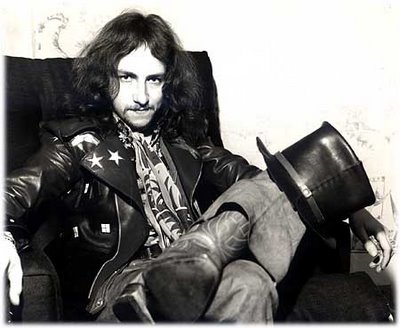
Mitch Mitchell – Better than 23?

17 Jun

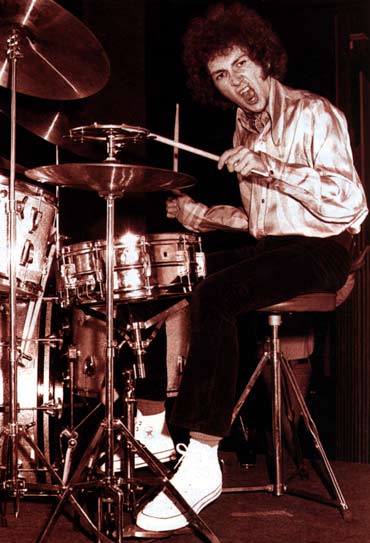
Rock n’ Roll top 100 lists are obviously arbitrary. If you do a quick search on Google you can find links to the top 100 guitarists, vocalists, bassists, roadies (okay, maybe not roadies) of all time. And, in a crunched list of only 100, there are sure to be a list of snubs that will make people angry. But, take these top 100 lists for what they are. An effort to appease the masses searching for a top 100 list so they can see where their favorite lands and then…well…probably complain. Now, it can be misconstrued that this is what I will be doing in this post, but please do not misinterpret. I am simply asking the question, does Mitch Mitchell deserve a better spot than 23 on the list of top drummers of all time?

Mitch Mitchell is an often forgotten about drummer. He may not have  had the flare of a Keith Moon (The Who) or the skill of Neil Peart (Rush) or John Bonham (Led Zeppelin), but, when you enter the realm of fusion drumming, Mitchell must be placed up there with the best of them. We will get into the fusion style in a little bit. Mitchell is best known for his library of work with Jimi Hendrix and his Experience (Noel Redding and Mitchell). Mitchell actually won the drummer position on a coin flip, beating out Aynsley Dunbar (who according to Experience manager Chas Chandler, was their other choice). Dunbar’s career did not take much of a hit from the decision. He flourished into an accomplished drummer and has played with a tremendous list of diverse rock acts. In case you were wondering, he is 27th on the rock n’ roll drummers top 100 list.

Mitchell=23 and Dunbar=27; I bet you are wondering who is smacked in the middle of these skilled drummers. Well, none other than Michael Shrieve, who, at 20 years old, took the stage with Santana on day two of the Woodstock music festival (Mitch Mitchell would come on to close out the festival with Jimi less than two days later) and blasted through a drum solo during an extended version of “Soul Sacrifice,” which, may just be one of the greatest solos of all time. For those that think differently, one must look at the circumstances. Similar to DeWayne Wise’s catch to save Mark Buehrle’s perfect game in the ninth, Shrieve’s drum solo was incredibly clutch. He was an inexperienced drummer who, because of the performance, may have very well propelled a lesser known Santana into the spotlight.

Like Shrieve's solo...Awesome!

I got sidetracked. Let’s move on. With the Experience, Mitchell released several albums and recorded numerous impressive drum tracks that provided the classic Hendrix blues/psychedelic sound a large boost. Mitchell, in 1969, played with the one-off collaboration of The Dirty Mac, who I talked about yesterday. He also performed with the short-lived Jack Bruce and Friends band which featured Mitchell, Bruce, keyboardist Mike Mandel and frontman Larry Coryell.

Demonstrating his devotion to Hendrix’s work, Mitchell helped with the posthumous releases of both The Cry of Love and Rainbow Bridge. He then went on to form an unsuccesful, but ambitious act named Ramatam, with guitarists Mike Pinera (Iron Butterfly) and April Lawton (who some consider to be the female Jimi Hendrix). Ramatam actually opened for Emerson, Lake & Palmer. When ELP was forming Mitchell and Hendrix were offered spots in the supergroup that Keith Emerson and Greg Lake were creating, but this never came to fruition. Wow, if Hendrix stayed alive and Mitchell and Hendrix ended up combining with Emerson and Lake, oh my goodness what a band. But, Carl Palmer – who is one of the greatest drummers of all time (ranked 4th on the ultimate list) – ended up receiving the spot.

Mitchell continued performing through the years, and passed away after the 2008 Experience Hendrix Tour. He died on November 12, 2008. Yet, Mitchell’s incredible sound lives on through his sensational performances with the Experience.

Mitchell blended jazz and rock drumming styles (fusion) and successfully developed an interesting interplay with Hendrix’s lead guitar, thereby creating “lead drums,” a rare concept in an emerging rock scene. Lead drums, of course, was not a new concept in the world of jazz. Mitchell, a jazz drummer at heart,  was inspired by the work of Elvin Jones, Joe Morello and Max Roach, all famous jazz percussionists. Mitchells drumming, consistent with the jazz style of making a melody with the drums, made heavy use of jazz patterns, fast rolls and snare rudiments. Now, all of these drumming terms may confuse anyone who does not play or know the drums well (I am raising my hand at this as well). So, the best way to learn is through hearing and seeing. For that, I am going to take you out to Woodstock in 1969. Listen here for the rudiment-heavy fills in “Hey Joe” and think, does Mitch Mitchell deserve a higher spot on the top 100 drummers list?

The True Foundling: Mary Gauthier

9 Jun

When you’re applying to college (undergraduate or graduate) a common question on each application is some variation of “describe yourself.” A very broad and surprisingly tough question. I remember sitting for a long period of time thinking how can I possibly make a quasi life story interesting. My childhood was rather sheltered and I was horribly spoiled (blame my parents). You here that. I want it and I want it now. But, seriously, when I was 17 I could not think of much to write about. Now, times have certainly changed and I like to think of myself as a more mature, well-rounded individual. Let’s put things in perspective though.

At 15 years old, Mary Gauthier stole her adopted parents’ car and left home. The next 20 years of her life – before she released her first song and found herself as a gifted songwriter – brought about drug abuse and rehabilitation, a struggle with her sexuality, and an overall theme of running away.  She consistently found herself travelling a personal road to quoz on tortuous roads without direction. As Mary states in her artist notes from her recent release The Foundling (released May 18), “I wandered for years looking for, but never quite finding a place that felt like home.” The Foundling documents Mary’s attempt to find home. It is an autobiographical triumph, exploring the deep emotions that are innate in an itinerant, Homer-esque journey.

Mary was born to an unwed mother in 1962 and orphaned at St. Vincent’s Infants Home on Magazine Street in New Orleans. She was adopted by an Irish/Catholic family. Her adopted father was an alcoholic and both of her parents were, “suicidal.” After stealing a car and skipping town at 15 she found herself in a vertiginous quagmire, where drug and substance abuse controlled her life. After getting herself enrolled at LSU as a philosophy major, Mary dropped out in her senior year and moved from Baton Rouge to Boston. She sobered up, enrolled at the Cambridge School of Culinary Arts, and opened a successful Cajun restaurant in Back Bay called Dixie Kitchen. But, her perambulating shoes caught up with her again, and she left the restaurant to pursue a music career, one that has spawned into the creation of a lyrical master.

In a way, Mary never stopped running. While she settled in as an exciting new musician, her insatiable need to find her birth mother overwhelmed her, and, she finally hired someone to find her mother. Mary writes, “She was located in three days, but it took me 6 months to muster up the courage to call her.”

This abetted the creation of a new, autobiographical release. As I stated above, any type of autobiography is not easy. It is especially hard to document your life when you are molding pure emotion into song like Mary does in The Foundling. One of the most famous autobiographical concept album comes from Elton John and Bernie Taupin. Their Captain Fantastic and The Brown Dirt Cowboy (released in 1975) explores both of their early musical careers. Albums like Elton and Mary’s do not come along often, and there is an even finer line between trite and original when entering the autobiographical realm. But, Mary’s album rides the line with skill. Her songs are original folk masterpieces and her voice is true and endearing.

When Mary finally mustered up the courage to call her, her worst fears were realized. Mary writes, “Almost fifty years later, I was still her shameful secret. She had no desire to meet me. It was too much for her.” It was an obviously painful experience. Yet, now looking back on the search and recently released album, Mary finds comfort. The album has the feel of a strong emotional release that gave Mary the opportunity to truly exhale.

She writes, “As I look, listen and reflect on what I’ve learned by writing this record and completing the search for my birth mother, I’ve discovered we are all wanderers of sorts, looking for meaning in lives that contain no guarantees. My birth mother and my adopted family loved me the very best they could and I am grateful for their sacrifices. I do have a good life. It has been a long road and it’s taken me longer than I am proud of, but these days I find myself at peace, grateful for each borrowed day.

Buy the album: http://www.amazon.com/Foundling-Mary-Gauthier/dp/B003CLAN24/ref=sr_1_2?ie=UTF8&s=music&qid=1276103435&sr=8-2

Information: http://www.marygauthier.com/ or http://www.myspace.com/marygauthier