
Archive | Musical Interludes (Melodic thoughts from the Jester) RSS feed for this section

Elijah Behar and Hollow Body

29 May

Elijah Behar

What happens when you combine influences like The Doors and the Velvet Underground with Radiohead, then stir the concoction with soulful singer-songwriter’s Jose Gonzalez and Leonard Cohen, and then top it off with a taste of modern electronica. Well you certainly get an intriguing blend of experimental folk, and Elijah Behar, a 22-year-old Californian musician now living in Los Angeles, has proven that such a blend of influences can not only work but also flourish.

Elijah released a solo EP entitled Hollow Body in April (which can be downloaded for free on his bandcamp page), and I do not hesitate in saying that this five-track release is fresh and exciting. His deep, lush voice invokes the engaging baritone of The National’s lead singer,  folk powerhorse Matt Berninger, and it also features a sensual quality like Jim Morrison himself. The voice suits the music perfectly as expressed in the first track on Hollow Body, “Black Sage.”

I had the opportunity to interview Elijah through e-mail where I asked him about his influences, music, and future. Before I post our conversation, I want to pull out one apt comment he made when asked about the creation of “Black Sage”

My aim for a track like Black Sage and the whole EP in general was to do only as much production as the song needed to deliver its full impact. I have been involved with projects that get produced and “perfected” to the point where the songs turn sterile and lifeless. On this EP I wanted to start with an acoustic guitar and a voice and build elements around those two instruments that simply compliment the original intention of the song.

Here is “Black Sage”

I would stress to Elijah that what he is doing here is what he should continue doing. The haunting piece features this dark acoustic riff that mixes with his slippery voice that is almost surreptitious and devilish. The song shifts at 1:30 into a Radiohead-like keyboard riff that purposefully lags with the percussion. The following echo is just a total mindscrew. The effects are well done. It is a treat to listen to Elijah manipulate the music and I think this has a shot to be the title track on full LP.

Here is the rest of the interview:

1) When did you first start writing and recording tunes?

 I started playing music at 14 and by the end of high school I was writing, recording and playing with a handful of bands in my hometown, Ojai, CA.

 2.) When you were growing up who were some of your biggest influences and how did those musicians shape you?

Growing up my biggest influences were The White Stripes, The Doors, and The Velvet Underground; pretty much the basic rock and roll package. Over the last few years I have become a diehard Radiohead fanatic (post OK computer), and have been loving more direct singer-songwriters like Jose Gonzalez, Johnny Cash, Leonard Cohen, and Elliot Smith. I also love electronic musicians like Modeselektor and Aphex Twin. These musicians continue to shape how I approach songwriting and performance.

3.) Is Hollow Body your first release? What were you trying to accomplish with the songs?

Hollow Body is my first solo release but definitely not my first project. I put out an album with the rock band I fronted, Marquee (www.marquee.bandcamp.com) a year ago, and have released a few other projects before that.

With Hollow Body, my goal was to define myself as a musician who combined the raw intensity of rock with the emotional honesty and directness of a more stripped down form, like folk music. I would define my genre as Experimental Folk.

4.) What is your favorite part about recording music?

My favorite part of recording music is towards the end of mixing where I feel like I can finally let go of the material that has bouncing around my skull for months. It’s a relief to have the music exist outside of me.

5.) I always ask this and it is often the most difficult question. If you had a chance to have record a session with three musicians (alive or dead) who would they be and why?

If I could have a recording session with anyone live or dead it would be with any members of Radiohead and Nigel, their producer. Actually I would be happy just bringing them coffee and cooking for them while they recorded new material.

 6.) What is in the future for Elijah Behar?

 In the immediate future, I will continue playing shows in and around LA, make some music videos, and record some demos of new material I have written since Hollow Body was released. Beyond that, I hope to tour the west coast as soon as possible, and I have been meeting with some heavy hitters in the music industry (can’t mention names) who want to help me expand.

One more song for you and then I urge you to check out his Facebook for more details.

A pretty standard folk tune that accentuates Elijah’s killer voice. Good luck to him!
Save The Starlite – Preserving English Rock History

25 May

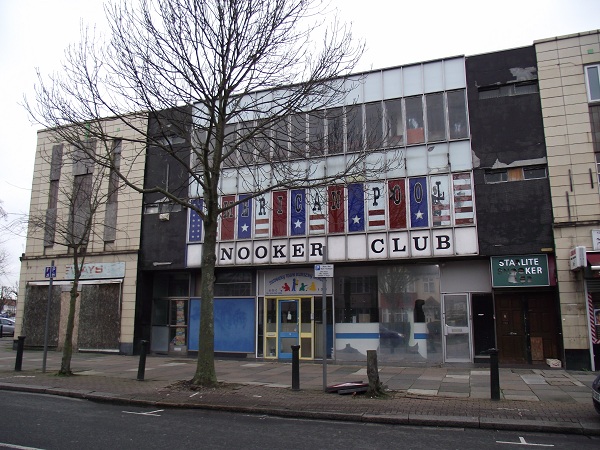
What’s left of the Starlite Ballroom on Allendale Road in Greenford, UK

When you listen to the classics you tend to get a sweet spot in your heart for the venues that allowed for the “magic” to happen. I know there are many historical places like this in New York (Cafe Wha, Cafe Au Go Go, CBGB) and it is fun passing by them and realizing what rich musical history occurred within the auspices of that building. This is why whenever I hear of a classic rock venue that may be shut down, I shed a tear (like the “Keep America Beautiful” crying Native American). Well, the tear is dripping from my face. Here is the story of the Starlite Ballroom, which has been threatened with demolition.

Located in the United Kingdom (specifically on Allendale Road in Greenford – northwest of London), the Starlite Ballroom featured an incredible list of well-known 60s artists. Ready for the list?

Pinkerton’s Assorted Colours, the Small Faces, the Who, the Quiet 5, David Bowie, the Yardbirds, the Troggs, the Move, Zoot Money, the Midnights, the Action, the Mode, Julian Covay and the Machine, Steampacket, the Symbols, Cliff Bennett, Cream, the Gass, Fleur de Lys, the Bystanders, Eric Burdon and the Animals, the Creation, the Syn, Pink Floyd, Warm Sounds, The Jeff Beck Group, Human Instinct, Breakthru, Alan Bown, Chris Farlowe, the Marmalade, Legay, Honeybus, The Gods, Georgie Fame and the Blue Flames, the Knack, the Triads, the Easybeats

That is quite the list. Pink Floyd, The Easybeats, The Animals, Cream David Bowie, The Troggs – heck I’m just going to repeat the entire list above. Most of these bands were knee-deep in the musical explosion of the 60s and this venue saw them at the beginning. Notice the Quiet Five there? We did a post on this excellent underrated band back in February which you can view here.

After it was abandoned as a music venue, it became a snooker club and has now fallen into disrepair, which is unfortunate because you would hope classic venues, especially those that sat more than 1,000 people, would spark more historical society empathy.

Before the venue held concerts, it opened as a cinema on September 16, 1935 with a showing of “The Mighty Barnum” starring Wallace Beery. It remained a cinema until 1956, when it was gutted and turned into a concert hall.

Do you want to help with the efforts to save this little piece of music history? There is a Facebook page devoted to it which can be accessed right here. The about section includes a little more about the venue and some plans of how to mold it into something else without subjecting it to the wrecking ball.

From the individual leading the efforts to save the venue, “I’m now asking everyone to send polite letters/emails to Julian Bell, Leader of Ealing Council (http://www.ealing.gov.uk/councillors/10/julian_bell) asking him to take action to save the Starlite Ballroom site and save it for use by the community. A petition is also in the works.”

Help out if you’d like! Also, there is a theme that goes along with this post. You will have to wait until Memorial Day to find out what that is! Have a happy long weekend!

Phillip Phillips Found a Very Mumford Home

24 May

Phil Phil Takes the Title

Did you really expect anything different American Idol viewers? Let me add to the stockpile of congratulations for Phillip Phillips who took home the American Idol Season 11 crown last night beating prodigious R&B 16-year-old Jessica Sanchez. I recognize the population of disappointed viewers who thought that Phillips was limited vocally and his carefree “hipster” style did not deserve victory over one of the better natural singers American Idol has ever had. I agree with that sentiment to a point. Yes, Jessica Sanchez is the better singer of the duo, but the best singer does not usually win American Idol. Phillips made up for what he lacked in vocal prowess with a keen creativity and perspicacious ear for acoustic music. As I wrote last night on Twitter, he will fit neatly into the modern folk revival – much like Mumford and Sons (whom I will mention in a bit).

Honestly, though, Idol Viewers, did you expect this to go differently? American Idol has just completed its 11th season and since zany bluesman Taylor Hicks took home the title in Season five, five men have won the competition, and they all (with the exception of David Cook, even though he too fits this somewhat), have been laid-back guitar-wielding songwriters. I am counting country crooner Scotty McCreery in this coterie. It is no secret who the main viewership is, and the typical 13-year-old girl loves cute, awkward, relatable, hipster artists. Phillips fit this all, and he won.

But with that all said, I am happy for the 21-year-old Leesburg, Georgia product, who actually paired his American Idol victory with a completed degree in Industrial Systems Technology from Albany Technical College. My guess is his career will go more towards the former accomplishment.

When you take a brief glance at this season as a whole, there were only a few individuals who actually could have made it to the finale. My original guess was that Colton Dixon would win the competition, but this turned out to be a misjudgment on my part mainly based on (and this will be the first time I have ever said this) my age. You see, as much as I like to consider myself up on music trends, Dixon fit the pop/punk genre that was popular among young people when I was like 16 years old, and I thought this was still superiorly popular. He had everything else. He was just playing the wrong music for the times. Don’t be surprised Idol viewers if someone like Phillips wins again next year. It is not gender bias, but rather a tendency to vote for what is currently in. If Florence Welch tried out for Idol, she would win.

As for Phillips’ single “Home,” it fits him like a broken-in pair of jeans. The song is a short ditty with a pre-chorus drop-down that is recognizable. The song is rich with a bluegrassy guitar beat mixed with Coldplay-esque “oohs” and airy “homes.” “Home” was written by songwriter Drew Pearson, and originally meant for British artist Greg Holden (who co-wrote the song), but was submitted to Idol as a possible finale number, and was snatched up smartly by Phillips, who will now make Pearson and Holden some nice pocket-money.

The song is pretty much a Mumford and Sons track. It’s not surprising that it was originally written for (and co-written by) a British folk artist. I think I can actually target out a specific track from Sigh No More where Mumford and Sons uses a similar technique.

Head over to 2:53 and just listen. Even the “awake my soul” repetition rhymes with “home.” 

It is a similar song, not the same song. The reason I mention it is because this is exactly where Phillips will be succesful. If he taps into this indie/folk genre and hits it head on he will not flame out and will continue to be heard of come season 12, 13, 14, and heck maybe even 15 if the show lasts that long!

Enjoying the Wait with Ryan Smith

17 May

Ryan Smith

Electronic music often gets a bad rap. Often the criticism is accurate. I find that heavily dubbed electronic tracks are often so beaten down by a desultory hodgepodge of messy rhythm and intrusive sound dispersion. Some would say this is purposeful organized chaos. To me it sounds like junk. This does not mean that electronic music is all bad. Much to the contrary, electronic music can be refreshing and innovative, if it maintains the melody, of course. And I have good news. Today’s new artist certainly understands the value of keeping the melody.

Ohio-native Ryan Smith released Waiting on May 1 of this year. The album features a creative concoction of electronic beats, piano riffs, and Smith’s subtle vocal. I hear Josh Joplin in Smith’s song structure – very focused on lyric and fine melodies. Ryan participated in an Artist Interview with the Music Court to discuss his recent release and his style. Before we get to the interview let me introduce the first song of the album to you all. Here is “Waiting,” a catchy piece saturated with electronic strings and a canorous piano riff – with just the right amount of effects.

Music Court : When did you first start writing and recording tunes?

Ryan: I probably first started writing and recording songs as a teenager.  I would setup two boomboxes and “bounce” from one to another while adding a new part until I had a song.  It wasn’t until my mid-20s that I started putting out albums under my own name.
 
Music Court: When you were growing up who were some of your biggest influences and how did those musicians shape you?

Ryan: I actually listened to a lot of country music growing up, so I imagine a lot song writing ideas came from there.  Then when I found out about The Beatles, it changed everything.  I mean, they changed everything!  That’s probably where my love of the studio came from.  In college, I was introduced to bands like Radiohead and Wilco, which were profound influences on thinking outside of the box.  Now, I really try to absorb anything I can, musically, whether it be the hot new “indie” releases or pop songs from the radio.
 
Music Court: So you have a new album out now called Waiting. When was it released? How would you describe the album?

Ryan: “Waiting” came out on May 1, 2012.  It is definitely the most electronic project I’ve ever attempted.  There have always been bits of synths, noises, etc. in my records, but this time out I really tried to fully embrace them.
 
Music Court: While the music certainly features some heavy electronic influences, I was blown back by your melodies. I feel that sometimes the “song” can be lost in electronic music. What do you think? Talk about your melodies and what you feel is most important in music.

Ryan: I totally agree.  These songs were all written on acoustic guitar, so I was intent on having good structures.  Then there were three versions of the album recorded over the span of three or so years.  This one, one that was more guitar driven, and one was a hybrid of the two.  I felt this version best captured the songs, and I enjoyed making it the most.
 
Music Court: I think my favorite song on the album is “When it Comes to What I Need,” which is tight and composed. It actually gives me a bit of a Josh Joplin feel.  I can’t get enough of the brief piano hook. Break down the song for me. Talk about the production of the song and how you came up with it.

Ryan: “When It Comes To What I Need” was the hardest song to recorded for the album.  I think it’s because I had very specific ideas in my head as to how I wanted it to sound.  In the studio, I really had to try to let go to see what I could come up with beyond those ideas.
 
Music Court: What is your favorite part about recording music?

Ryan: There are these various brilliant moments while you’re making a record where it’s like, wow, this could be really good.  It could be a just little synth hook, or an effect, whatever, but it’s very exciting.
 
Music Court: I always ask this and it is often the most difficult question. If you had a chance to have record a session with three musicians (alive or dead) who would they be and why.

Ryan: I’ll approach this as putting together a great band to play with, so Nels Cline of Wilco on guitar, Dave Grohl of Foo Fighters on drums and Miles Davis on trumpet.  We can get a session guy / girl to play bass.
 
 
Music Court: What is in the future for Ryan Smith?

Ryan: I always want to make better work, so the next thing is hopefully better than the last thing.  Obviously, the big goal is to get as many people to listen as possible.

How about we help out with Ryan’s last comment. Check out the whole album on Bandcamp where it is available for free. You can also like his page on Facebook.

A Quick One Before I Go: VE Day and Travel

8 May

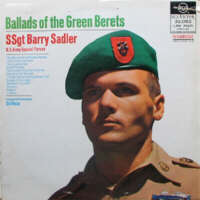
Today we celebrate the 67th anniversary of VE day. Tomorrow I travel to the U.S. capital, and then take a taxi to National Harbor, Maryland, for a conference I must attend for work. Thus, I am feeling a little patriotic as this Tuesday work day comes to a close, and before I wrap up my stay in the office and bid you all adieu until next week (I may or may not have a chance to post until then), I want to leave you all with a little pride. What better way to celebrate a war victory than with “Ballad of the Green Berets.”

Songs often viewed as proud American classics tend to be jingoistic. “Ballad of the Green Berets,” in typical army fashion (as it is sung by a true staff sergeant who was recuperating from a leg wound suffered as a medic in Vietnam) is straight forward. Like a command, it tells the story of the brave men of the Green Berets, a U.S. special operations force.

The lyrics to this #1 hit that stayed at that spot for five weeks in 1966 were written by Robin Moore (he wrote “The French Connection” which mostly everyone knows as the movie). The lyrics were written in honor of Green Beret James Gabriel, Jr, the first native Hawaiian to be killed in Vietnam.