Go ahead and type 2012 into google images and click search. Destruction of the Earth, perpetual darkness, that awful movie 2012 – yes everyone Happy New Year to you too. If it was up to Google images we will not make it through the year. But let’s remove ourselves from unfounded apocalyptic prophesizing and talk about something we can control – music released in 2011.
To all of the readers that have helped us eclipse the 500,000 view mark, thank you. I started writing this blog during my Junior year at Binghamton University and it has followed me into the “real world.” This blog truly means a lot to me and I appreciate everyone who reads it (even if we disagree and argue in the comments section!) I hope that I can continue to bring you fresh, interesting content in 2012 (until we all die in some fiery Earth-wide explosion of some kind).
So…moving right along for the first time in 2012, the top 10 songs of 2011 countdown went by incredibly quickly. It is always such a pleasure counting down some of the best songs of the year and I hope everyone enjoyed reading about great songs. In the vein of past countdowns, I will list the top 10 (in case you missed the countdown or want a quick reference guide) with the song and a small blurb from the article about the particular song. With that, let’s begin.
10.) “Summer Song” by Matt Duncan
What I Said: “In a way this song is a microcosm of a summer day at the beach. You ride in on the low groan of a car’s engine, are welcomed by the bright sun and sea breeze, play in the steamy orange sand and salty seawater, and then, just like that, it’s gone. But boy, it was one hell of a day – and song.”
What I Said: “This is a perfect example of vocal precision, passion, and productivity. The three P’s to a good vocal performance. She has a message, displays it well, and does so with such force and delivery that the listener is left in awe. A vocal masterstroke. I’d love to hear more like this!”
What I Said: “The song itself is also memorable. It features barbershop quartet/monk-like background singers that provide this religiously lachrymose backdrop. Darnielle sings the verse in a very observational tone, as if he is simply explaining what is going on. The call-and-response chorus is a treat. I feel as if I can imagine Darnielle singing this in some tenebrous dystopia where, I don’t know, “the heat’s about it break.” The song remains entertaining but somewhat complacent until after the two minute mark where a light shines on Darnielle and he belts out the chorus like a call to action.”
What I Said: “The song rises like a man getting out of bed with a sharp sun puncturing and reflecting off the glass. But it does take a bit of a dark turn that strays away from the happy melody. This dark turn remains for the rest of depressing song. The instrumentation serves as a bit of a contradiction to the lyric. But, when looking into this some more, I actually feel that it’s apt. The music is constant and pretty static. It is wonderfully crafted, but it does not change much. There remains the pounding percussion, same three chords, and similar harmony. I think the song represents a moment in time so well because of this constancy. And that is at least lyrically what the song was supposed to convey.”
What I Said: “Fitz and the Tantrum’s musical styling may come off as a direct homage to the sweet Motown soul and gritty Stax soul of the 1960s. The band makes use of the Motown organ, an airy, bubbly, and inviting organ that was popularized by bands like Motown’s Four Tops. But there is something else there. I believe it can best be described as 60′s R&B/soul a la Indie flavoring with drippings of 80s new wave. A tasty harmonious concoction.”
What I Said: “The first 40 seconds of the song deserve a breakdown. The very beginning of the song features a lone synth over a strung-out note. The synth in trademark M83 fashion (i.e. “Lower Your Eyelids to Die with the Sun” off of 2005′s Before the Dawn Heals Us”) tells a story. It speaks to the listener like a passionate lyric. A low bass is added into the mixture and supports this delicate combination until the song explodes with some more heavy synth, electric drums, and a female vocalists high hum. The resulting combination is flat-out magical. There is no other way to describe it. This combination will persist in the song, both haunting and inviting.”
What I Said: “In “Someone Like You” Adele sings of a lost love and lyrically envisions this ex happy in the future with a wife that is not her and children that are not hers. The relationship with this ex lasted 18 months and Adele thought it would end in marriage – which it clearly did not. Worst of all, the ex got engaged not long after. She is clearly bothered by these thoughts and her vexation shows through her vocal performance, which can best be described as sincere with hints of consternation, preoccupation, fearfulness, and sadness. She is able to tug on these emotions effortlessly”
What I Said: “The song is carried by this creative melody and Zach Condon’s distinctive drawn-out voice that is supported by some back-up vocals in this piece. The horns are simply magical and they totally carry the song, though. That is my point of focus. And at the very end when a lone trumpet can be heard holding onto its last breath over the piano that began the song the listener is shocked to find a somewhat religious aspect to the song – a heavenly togetherness.”
What I Said: “They sing this lyric over and over again, implanting it in the listener’s head. This does two things. First, it hopefully helps achieve the main message that Foster wanted people to take from the song. The song, in his eyes, is an attempt to quell such events by encouraging families and friends to provide love, support, and friendship to children who may seem isolated or violent. The song is also witty and clever. You see, the first few times I found myself listening to the song I couldn’t quite make out the chorus. Then, one day as I was driving and listening, I found myself singing “you better run, run, run, outrun my gun” and I stopped. What did I just say? The song is a giant f*ck you to hipsters because it is a true hipster song (whatever the hell that is). It is adorned with vocal effects, strung-out keys, constant rhythm, an excellent bass, and that whistle finale. And it is utterly catchy and infectious. So you dance to the song and sing the lyric and then feel terrible for singing it. In a way this also adds to the song’s overall effect. If Foster wanted to make people even more aware to the potential dangers of lovelessness and youthful alienation, then he did a pretty good job with this song.”
“And , when Simon’s climbs the ladder and meets the Lord he can only muster up this:
Lord, is it Be Bop a Lula? Or ooh Papa Doo? Lord, Be Bop a Lula? Or ooh Papa Doo? Be Bop a Lula.
When I first heard this I laughed hysterically. There is something so wonderfully funny and truthful about this lyric. Finally, in Simon’s world, man is given the chance to talk to the creator – the being who has apparently sponsored humanity and has all of the answers one seeks. Yet the only thing the character can muster up is gibberish. A mistaken song lyric. And perhaps that’s all there is. Well at least in the realm of this song. And how refreshing the song’s melody is as well. It features a fun rhythm backed by Simon’s 12-string acoustic guitar, a neat guitar riff, some hip percussion, a sax, keys, and even an accordion. The rhythm is proficient and quite fitting. It is a pleasure to continue listening to Simon’s effortless voice over create, transforming rhythms. He is a master at what he does and his musical themes will never get old.”
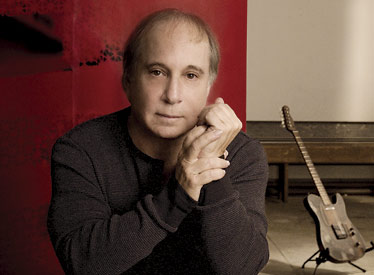
We have reached the promised land, and, by the looks of the #1 song on our top 10 songs of 2011 countdown – so has Paul Simon. A hypothetical heaven, though, one scribbled down by the consummate raconteur who knows the meaning of excellent music. “The Afterlife” is a keen, hilarious, zany, unexpected, metempirical, almost practical (I cannot list enough adjectives to describe the song’s utter beauty), take on heaven and dying.
“The Afterlife” appears on So Beautiful or So What, Paul Simon’s first studio album in five years. Simon is a musical anomaly. There are not many musicians who have the ability of producing critically acclaimed albums consecutively. He has been releasing such albums since the mid-60s – beginning with his folk duo with Art Garfunkel – and advancing forward with perspicacious solo albums. So Beautiful or So What, which was released in April, is the latest example of Simon’s genius. And I don’t use that term lightly.
I am watching the Twilight Zone currently. Rod Serling, the creator of the show, focused much attention on the unknown and alien aspects of humanity. The ultimate was, and still is, death. Much of man’s existence revolves around his inevitable fate. There is simply no way to avoid death. Yes, this may seem like a sobering and unfortunate reminder – especially on a celebratory day like New Years. But I do think there is some beauty in recognizing and understanding the ineluctable nature of our being. What comes after is a matter of faith and opinion. Some believe heaven. Some believe something else. Some believe nothing.
Paul Simon painted a humorous, bureaucratic picture in his song “The Afterlife” of a heaven where filling out forms and waiting in line is necessary before salvation can be reached. But underneath the humor is a seriousness that is emitted best in the third verse.
Buddha and Moses and all the noses From narrow to flat Had to stand in the line Just to glimpse the divine What’cha think about that? Well, it seems like our fate To suffer and wait for the knowledge we seek It’s all His design No one cuts in the line No one here likes a sneak
We all must wait for the knowledge we seek. I think this verse goes beyond Simon’s take on heaven and the divine. What he mentions in this verse is a fundamental part of humanity. It doesn’t matter who you are. You can be a biblical prophet or Paul Simon or a regular Joe. No one cuts in line. We all are humans on this Earth who must wait and ponder.
And , when Simon’s climbs the ladder and meets the Lord he can only muster up this:
Lord, is it Be Bop a Lula? Or ooh Papa Doo? Lord, Be Bop a Lula? Or ooh Papa Doo? Be Bop a Lula
When I first heard this I laughed hysterically. There is something so wonderfully funny and truthful about this lyric. Finally, in Simon’s world, man is given the chance to talk to the creator – the being who has apparently sponsored humanity and has all of the answers one seeks. Yet the only thing the character can muster up is gibberish. A mistaken song lyric. And perhaps that’s all there is. Well at least in the realm of this song.
And how refreshing the song’s melody is as well. It features a fun rhythm backed by Simon’s 12-string acoustic guitar, a neat guitar riff, some hip percussion, a sax, keys, and even an accordion. The rhythm is proficient and quite fitting. It is a pleasure to continue listening to Simon’s effortless voice over create, transforming rhythms. He is a master at what he does and his musical themes will never get old.
“Pumped Up Kicks” joins our countdown in the #2 spot despite being initially released as a single in 2010. The song was later released on the album Torches in 2011 so it is eligible for our countdown. Think of the countdown as the MLB Rookie of the Year award. “Pumped Up Kicks” did not play enough games to destroy its rookie eligibility. It, though, is certainly not a rookie song, but rather a deep glance at school shootings set to a contrasting fluffy melody. The song (and excuse my French) is a classic example of a mindf*ck.
“Pumped up Kicks,” like many great songs, was written in a few hours. Mark Foster, leadman of the group, wrote it soon after the band of three started up in 2009. The band is as follows:
Mark Foster (vocals, keyboards, piano, synthesizers, guitar, programming, percussion), Mark Pontius (drums and extra percussion), and Cubbie Fink (bass and backing vocals)
Foster, at the time, was using his multifarious musical talents writing commercial jingles at Mophonics in Log Angeles. Since he initially believed he was writing a demo he recorded all parts of the song and the song ended up going out just like that. So, pretty much, the song is an extended, very productive, morbid jingle. Another contradiction, yes. The song actually does pick up on some noticeable jingle elements, especially at the end where the song finishes off with a light Noah and the Whale whistle. A real hipster whistle.
So why is this contradictory song written by a jingle writer from Los Angeles so insanely good. Take a listen. Is it because of its lyric, its insatiable catchiness, its muffled vocal? I think the song’s popularity and goodness comes from a mixture of all of these elements, and, its absolute cleverness (or as Foster proclaimed – a “f*ck you to hispters).
The song is about a boy who finds his father’s gun and has thoughts of going on a murderous rampage (probably at school). Unfortunately, such a comment is not absurd, but rather a stark reality in our world today. Columbine-like rampages do not happen often, but they happen, and it is downright frightening to think that such a thing could/does occur. The lyrics strongest point is the chorus where Foster and the band sing:
All the other kids with the pumped up kicks, You better run, better run, outrun my gun.
All the other kids with the pumped up kicks, You better run, better run, faster than my bullet.
They sing this lyric over and over again, implanting it in the listener’s head. This does two things. First, it hopefully helps achieve the main message that Foster wanted people to take from the song. The song, in his eyes, is an attempt to quell such events by encouraging families and friends to provide love, support, and friendship to children who may seem isolated or violent.
The song is also witty and clever. You see, the first few times I found myself listening to the song I couldn’t quite make out the chorus. Then, one day as I was driving and listening, I found myself singing “you better run, run, run, outrun my gun” and I stopped. What did I just say? The song is a giant f*ck you to hipsters because it is a true hipster song (whatever the hell that is). It is adorned with vocal effects, strung-out keys, constant rhythm, an excellent bass, and that whistle finale. And it is utterly catchy and infectious. So you dance to the song and sing the lyric and then feel terrible for singing it.
In a way this also adds to the song’s overall effect. If Foster wanted to make people even more aware to the potential dangers of lovelessness and youthful alienation, then he did a pretty good job with this song.
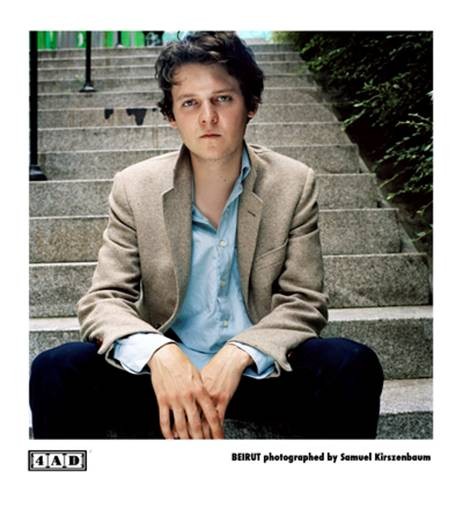
When Beirut – the band not the capital of Lebanon – released their third studio album The Rip Tide the reviews were generally favorable, but a little critical of a “change” in sound. If you are not familiar with Beirut let me fill you in on what type of music they play. The band, which is truly the brainchild of Santa Fe native Zachary Condon, blends indie folk with Balkan influences. The result is this effortless combination of accordion, horns, tender vocals.
Beirut’s first two albums are strong European blends. Eastern European to be exact. The melodies are smothered with these musical sentimentalities and it is not surprising to get lost in Condon’s attachment to non-American world music. This is one of the reasons why Condon and the band has garnered a huge fan base. We all look for different sounds and musical experiences. Condon’s tender, European croon (because I can’t describe it any other way), combined with the monumental accordion of Perrin Cloutier, percussion by Nick Petree, skillful bass of Paul Collins, and brass work by Ben Lanz, Kelly Pratt, and Condon himself, form a beautiful Eastern music symphony that is a pleasure to listen to.
The Rip Tide, though, demonstrates a bit of a change from these elements that have initially made this band quite well known. This transformation has lessened the bands appeal for some. For me, Condon finally comes home.
Zach Condon
The Rip Tide was recorded in a six-month reclusive session in a cabin near the site of the 1969 Woodstock Music Festival. If you want to close yourself off from the modern world for a while Bethel, NY, right off of 17, a long stretch of highway that I frequented going back and forth to Binghamton for school, is a good place to do it. The result? An American album with European influences as opposed to the other way around. And, in my opinion, the best songs on this album are stronger than any Condon has written in the past.
There are some absolute gems on the album. “Santa Fe” is a jaunty ode to his hometown. “East Harlem” is a true indie/pop song, also somewhat fast-paced with the trademark accordion and horns. But the title track “The Rip Tide” is the clear best song on this album. Why? It provides the best example of the blend of Balkan Folk and American Western.
The initial piano lays down a melody that will persist through the song’s 4:23 second existence. Layered on top of it is some rising percussion and the light striking of something that sounds like hollow metal (another element that remains throughout the song). This flows into horns that remind me of, well, Santa Fe. And here is what is so magical. These horns are multi-faceted. They both take on elements of Eastern European folk and old-school American westerns (similar to the album Rome which combined Italian composition with spaghetti westerns).
The song is carried by this creative melody and Zach Condon’s distinctive drawn-out voice that is supported by some back-up vocals in this piece. The horns are simply magical and they totally carry the song, though. That is my point of focus. And at the very end when a lone trumpet can be heard holding onto its last breath over the piano that began the song the listener is shocked to find a somewhat religious aspect to the song – a heavenly togetherness.
The lyric is short and repeated twice. It targets loneliness. I will leave you with it to ponder as you listen to the song over and over and over again.
And this is the house where I feel alone Feel alone now And this is the house where I Could be unknown Be alone now So the waves and I found the rolling tide So the waves and I found the rip tide
I’d say Adele Adkins (better known by her first name) is pretty well known at this point of her young career. While she is only 23 (one year older than me), she is far richer in talent and capital. Her two albums 19 and 21,both based on her age at the time of production inception, have become modern musical staples, and her familiar bluesy contralto is tender and powerful. She was labeled as the number-one predicted breakthrough act in 2008 by the Brit Awards, and they were correct in their assumption. Since then, she has added even more awards to her burgeoning closet.
I mean, 21 spent a total of thirteen weeks at number one on the Billboard 200, the longest an album has held the top position since 1998. It also spent 11 consecutive weeks at number one in the UK, surpassing Madonna as the longest ever by a female solo artist on the UK albums chart. The album has also broken the record for the most UK digital downloads. Pretty much what I’m trying to say is that her overflowing talent has leaked into the mainstream and the broad listening population has ate it up like my friends and I gormandized at an all-you-can-eat sushi joint last night.
“Someone Like You” is the most simple song on our countdown. It is also the most successful. Like I have said many times, complexity does not always lead to success. This is especially true when you want to crack into the mainstream. You want to “dumb down” songs. I’m not implying here that the whole of the mainstream listening population is slow, but rather I am attempting to convey that it is significantly easier to get into a song with less elements. I’d argue though, that despite its musical simplicity, “Someone Like You” is actually a complex, emotional piece and Adele’s passionate voice shines.
What’s so simple about this song is also what’s so complex. The song is piano and Adele. It was actually co-written and co-produced by Dan Wilson of Semisonic fame (remember “Closing Time”). There is some vocal layering but that’s it for effects. The black and white video echoes the candor of the piece. In “Someone Like You” Adele sings of a lost love and lyrically envisions this ex happy in the future with a wife that is not her and children that are not hers. The relationship with this ex lasted 18 months and Adele thought it would end in marriage – which it clearly did not. Worst of all, the ex got engaged not long after. She is clearly bothered by these thoughts and her vexation shows through her vocal performance, which can best be described as sincere with hints of consternation, preoccupation, fearfulness, and sadness. She is able to tug on these emotions effortlessly.
The song has been modestly successful thus far. It just has been certified platinum in the UK and 3x platinum in the US (3 million copies sold). I’ll admit that there is one thing I dislike about the song. It is played CONSTANTLY. Other than that, it totally deserves its number four spot.