Archive | Obscure Classic Rock RSS feed for this section

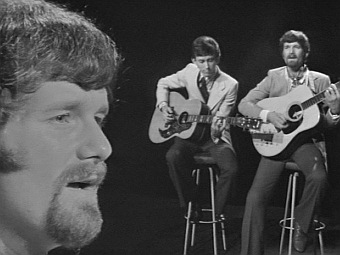
Zager and Evans in 2525 with Mr. Turnkey

28 Feb

Is it 2525 yet?

Zager and Evans represent one of the best examples of a 60s one-hit wonder. “In The Year 2525,” the repetitive, crescendoing, folk exploration of a future dystopia where humans are indolent and dependent on machines, was such a gigantic hit in the year 1969 that people still recognize it as one of the better folk compositions of the 60s in the year 2012.

Let’s give the song some credit. It claimed the #1 spot on the U.S. Hot 100 for six weeks. That is a difficult feat. It sold over four million copies in a year. To say things were looking up for the folk duo in 1970 would be an understatement. So what happened? Why did the duo not have another big hit. The answer to this question is simple. How about we take a look at the history of Zager and Evans prior to answering it?

Denny Zager and Rick Evans met at Nebraska Wesleyan University and founded The Eccentrics with drummer Danny Schindler. When Schindler left for Vietnam in 1965, the Eccentrics just became Zager and Evans, and the duo added bassist Mark Dalton and drummer Dave Trupp. The 2525 warning followed soon after. The song was actually written in 1964, but it was first released by Truth Records in 1968. It received a good amount of local radio play and then RCA signed the band and the song blew up.

Now, realistically, the advancements in technology that Zager and Evans talk of in the verses of the song – which gradually rise in close-to 1,000 year segments – could probably come to fruition prior to 2525 (to a point of course). I find it funny that they mention test-tube babies (nice premonition guys) for the year 6565, but a pill that does everything by 3535. Actually, there is a flaw in the lyric, because if there is a pill that controls everything you do in 3535, then why would you need to pick your baby in 6565 – the pill would just do it for you, right? Okay, I’ll stop my over-analysis now.

My favorite lyric from the song is the final verse:

Now it’s been ten thousand years,
Man has cried a billion tears
For what he never knew.
Now man’s reign is through.
But through eternal night,
The twinkling of starlight,
So very far away,
Maybe it’s only yesterday 

This final lyric suggests the circular nature of human existance. It’s creative and an excellent ending touch to the song.

Many people do not realize that Zager and Evans didn’t just record the apocalyptic classic and then stop making music. After the success of the song, the band released a follow-up single, “Mr. Turnkey,” a song about a rapist who nails his wrist to his prison cell because he is sorry for…wait, back up, what!?!

Yes, Zager and Evans followed up their cautionary tale of the future, with a slowed-down piece about a rapist. I don’t know why either. It also features one of the oddest descriptions of pulchritude in modern rock history, “she was lovelier than oil rights.” Take the melody, and it’s a beautiful song, but add the lyric, and it is disturbing (kind of Pink Floyd-esque with that). I have to think the release was a joke because if not, well, I just don’t know. The scary thing, though, is that the song is actually pretty good. Take a listen.

So why did the band not achieve any more success after “In The Year 2525?” Because of “Mr. Turnkey?” Well, I guess that it may have played a part. I think it is more because of how big of a hit “In The Year 2525” was. It has difficult to follow up a first release that spends six weeks on the Hot 100 charts. But Zager and Evans should still be heralded for their release of one of the iconic songs of the late 60s, and a blatant song about a rapist.
Progressive Music from The Hague – Groep 1850

21 Feb

Packed with an awkward family photo

Three months in 1966 sparked the progressive rock movement that flourished in the early 70s and gradually fizzled away (it has been revitalized recently by bands like Dream Theater). Obviously, this statement is completely subjective, so take my opinion for what it is. I also love how the founding year is 1966, and, as you know if you read the blog last week, I will be bringing back Music Court March Madness and we will all vote on the best album released in 1966 in a few weeks.

In May of 1966, The Beach Boys released Pet Sounds, and while this album is an early favorite (and a top seed) in the March Madness poll, it also was one of the first (if not first) Progressive Rock albums ever released.

Progressive Rock features creative arrangements, unusual blends of genres (like Jazz/Rock), eclectic (almost baroque) instrumentation, and classical constructions. The songs tend to be long, drawn out, and excellent if you have the time to lie on your floor, stare at the ceiling, and allow music to seep through your skin.

After the release of Pet Sounds (which most definitely pushed the Beatles even harder with their 1967 release about a pepper or something), Frank Zappa and The Mothers of Invention dropped Freak Out in June of 1966. This simply added onto Brian Wilson’s masterpiece. Then, in July, The Left Banke, a French-inspired New York baroque pop band, asked Renee to walk away (and a few months later they had a date with a pretty ballerina). The three months represented the inception of this new genre and it allowed a whole new stock of bands to flourish, including a mid-60s act from The Hague. A group of musicians who, while being one of the first progressive rock acts, is widely forgotten – until now!

Wait. A grand orchestral piece based on “Frere Jacques,” the old French lullaby. Back up.

Groep 1850 was formed in the Netherlands in 1964 as Klits. I think you can add them to the list of most influential Dutch musicians. A few others immediately come to mind. Golden Earring and Shocking Blue – you know, the band with the lead singer who proclaimed that she was your “pen” *cough* I mean “Venus!”

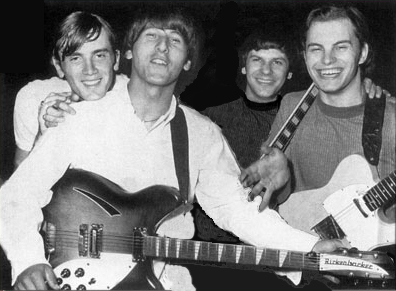
The original incarnation of the band is not important because they released their first single in 1966 with these members:  Peter Sjardin (vocals, flute, organ), Ruud van Buuren (bass), Daniel van Bergen (guitar & piano), Beer Klaasse (drums) & Rob de Rijke (bass, flute).  Yes, the drummer’s name was Beer. This line-up would change again in 1968, after the band went on hiatus for a year. Sjardin and Bergen remained, but they were now joined by Dave Duba, Dolf Geldof (bass), and Martin van Duynhoven (drums).

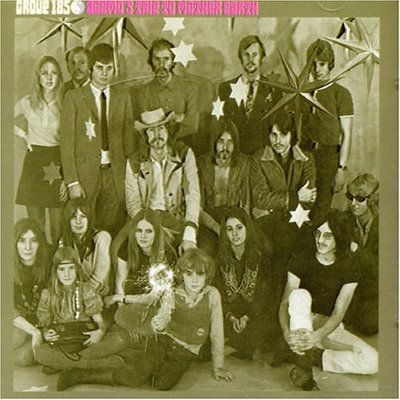
Peter Sjardin was of the first line-up and Daniel van Bergen the second. They can be viewed as constants. Let’s get to the music. The band started playing gigs in ’66 and became an underground sensation, even opening for The Mothers of Invention in 1967. In 1968, the band released their first full-length Agemo’s Trip to Mother Earth (picture above). The album cover actually had a 3-D sleeve and it included 3-D glasses (hence why it is today a tough find and BIG LP sell).

“Mother No-Head,” the esoteric piece above, is on that album. It was also released as the A-side of a single in 1967. In every sense of the word, the song is weird. After beginning with a drum beat straight out of Jazzy big band, and a bass/guitar riff from a spaghetti western, a chorus of monks provide background to a deep, unclear incantation. It’s a Dutch Western. Then a flute introduces something straight out of a cheeky British movie soundtrack before more odd vocalization. At around 1:15, I realized that the monks were humming the French lullaby and this made me smile. Then when a twangy guitar plucked the notes of the lullaby I was just flat-out grinning. This is just great! We get some nice keys before we fall back into the beginning (the fleeting flute still there). Why is the progressive? The flute, creative drumming, intricate track layering, and monk chanting.

Here’s another one from the band. “Misty Night” was the B-side of the band’s first single, released in 1966. This certainly feels more psychedelic (even garage) at the start. We get a reverberating (like SERIOUS reverb) guitar at the outset. I kind of like the vocal – despite the fact it is grunt singing at the start. The song then falls into a lull with the relaxed bass and humming.

Here is some more information about them. Click here.

Kris Ife and the Quiet Five – A Little Morning Sun

14 Feb

The Quiet Five...uh...I mean Six

Let’s set the scene. Mid 1960s, London. When you think of music during that time, genres like Merseybeat, Pop/Rock, and Blue-Eyed soul all come to mind. We’re thinking The Beatles, Gerry and The Pacemakers, Freddie and the Dreamers, and The Hollies. Genres quietly fuse, and when Beat music slowly died out, it was replaced quickly with edgier R&B bands like the Animals. It was easy to get lost in this fog of famous musicians. Enter the Quiet Five.

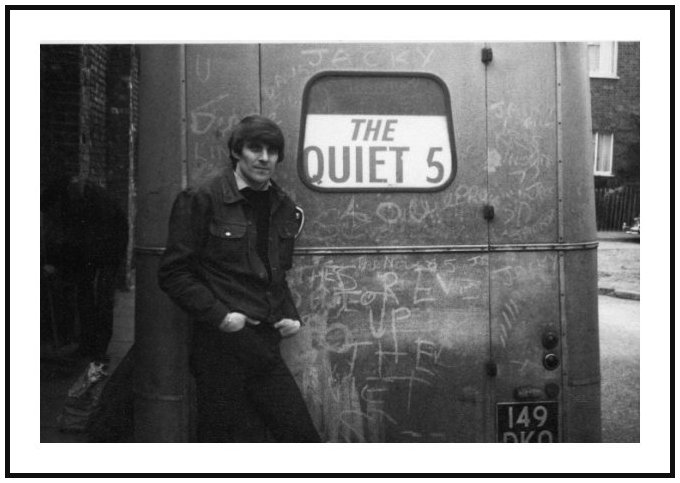
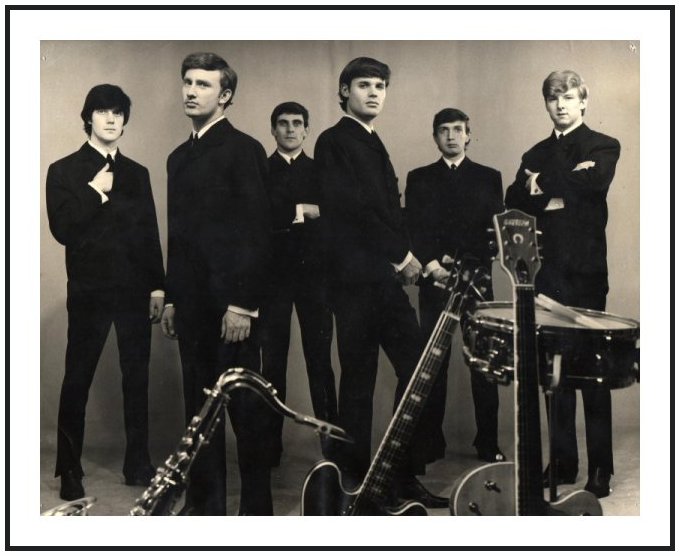
The Quiet Five was not always the Quiet Five. They formed as the Vikings in the early 60s, a group of musicians from Paddington. The original line-up was Kris Ife – Rhythm Guitar, John Howell – Clavioline & Guitar, Ray Hailey – Drums, Roger Mckew – Lead Guitar and Len Hooker – Bass. Len Hooker left soon after the band’s founding and was replaced by  Phil Leavesley. The Vikings worked mainly as back-up musicians for various artists, even supporting the Beatles at Romford Odeon in 1963. In 1964, the Vikings were combined with a South London band called the Quiet Five, adopting their name in the process. Leavesley was replaced by Richard Barnes (bass guitar/vocals) and the band added saxophonist John “Satch” Goswell. This line-up of six individuals, despite their name, went on to record the band’s most known hit of their short career.

Ron Richards, the Hollies’ producer and the producer of “Love me Do”, heard Kris Ife’s composition, “When the Morning Sun Dries the Dew,” and thought he could turn it into a hit. The year was 1965, and the song did find its way into the top 50, one of two top 50 hits the band would have. It lacked staying power though and did not reach a larger audience. After a few failures and a record-label switch, the group ended its recording career.

It’s a shame that “When the Morning Sun Dries the Dew” has fallen into obscurity because the song is actually pretty good. It features an opening guitar riff, slow and intimate, almost like a slowed down Peter and Gordon riff (which you can say is a Lennon/McCartney riff). The song is different from a lot of the music being released in 1965. It’s sensitive melodies, airy acoustic riffs, sincere harmonies, and strung-out keys, make it sound a few years before its time. The song could have very well been released in 1968 and hit more popularity. The reason I say this is because it is certainly not R&B or Merseybeat – it simply lacks the speed of the time. It’s a wonderful piece and I hope that more people begin to recognize it as such.

I want to continue this exploration with the man in the photo above, Kris Ife. Ife, who wrote  “When the Morning Sun Dries the Dew,” went on to have solo career that included a recording of a cover of “Hush,” originally by by Joe South. “Hush,” of course, became a big hit for Deep Purple, but, apparently, Deep Purple was inspired to play the song after hearing Ife’s version.

And listen to that. While each preceding version is fast-paced and explosive, Ife adds harmony, which is one of the reasons why Deep Purple’s version is so great. The version is obviously not Hard Rock, but it definitely inspired Deep Purple’s heavy use of bass, tremendous soloing, and gritty performance.

Various members of the Quiet Five do still perform today. You can follow Kris Ife on his website and the band’s great tribute Facebook page

Are you a Human Beinz? Out of the Cover Garage

7 Feb

In any era of fantastic music, great cover songs are frequently released. In the 60s, bands like the one featured today made their jump to fame by releasing covers of popular songs. Some covers from the 60s/70s are so well-known and well-done that it would surprise you to find out who originally recorded the song. I’ll name a few for the heck of it. “Feeling Groovy (The 59th Street Bridge Song)” was written by Simon and Garfunkel, but many prefer the version recorded by Harpers Bizarre. “Mr Tambourine Man” is, of course, recognized as a Byrds song, but it is a Dylan original. “You Shook Me,” and “I Can’t Quit You Baby,” on Led Zeppelin are Willie Dixon songs.

How about “Gloria” which hit the charts with Shadows of Night, but was written by Van Morrison and Them? Did you know another band named The Human Beinz also lent their sound to this hit, just after the Shadows of Night recorded the song? 

The Human Beinz thrived on covers. The band recorded covers of songs like “Foxy Lady” and “The Pied Paper.” They did hit it big with one of these covers in the United States, and then hit it really big with another cover in Japan. Actually, The Human Beinz was a 60s band that found more popularity in Japan then in the United States.

The Human Beinz were formed as the Premiers in 1964 and changed their name to the Human Beingz in 1966. They were a garage/frat rock band from Ohio formed by John “Dick” Belley (vocals, guitar), Joe “Ting” Markulin (vocals, guitar), Mel Pachuta (vocals, bass) and Gary Coates (drums).

Garage rock was big in Ohio during this time. Rick Zehringer (Derringer) was from Ohio and recorded “Hang on Sloopy” with the McCoys in 1965. Phil Keaggy and Glass Harp gigged in Youngstown, Ohio in 1968. Actually, and I love when you find out about incestuous rock relationships, Steve Markulin, Joe’s cousin, was in Glass Harp and left the band to join the Human Beinz.

The Human Beinz became the Beinz (instead of Beingz) because after signing to Capitol Records in 1967, their band name was misspelled, the g left out. In 1967 they hit it big with a cover of the Isley Brothers’ “Nobody But Me,” and the song kicked butt on the charts peaking at #8 in February of ’68. The name remained Beinz

It’s an awesome cover. They added rock flavor to an R&B song and did it well. I love the initial call and response that just makes you nod your head and move your legs. One of the strongest parts of the song is the defined bass guitar that carries the rhythm (even getting a brief solo prior to a buzzy guitar solo) along with repetitive claps and the repetition of “No.” The Isley Brothers loved repetition.

“Nobody But Me” was not their most popular song though. They released a cover of “Turn On Your Love Light” (recorded first by Bobby Bland in ’61 – and then covered by, you guessed it, Them, and the Grateful Dead).

A basic garage rock piece also carried by clangy drums, loud keys, vocal looseness, and a strong bass guitar. The song did not do much in the United States, but it reached #1 in Japan.

FUN FACT: “Nobody But Me” was used in Kill Bill: Vol. 1, and I would have included the video if it wasn’t full of black and white trademark Tarantino gratuitous gore.

Putting New Mexico on the Music Map – The Fireballs and “Sugar Shack”

1 Feb

Let’s travel back in time and explore some pre-British Invasion American rock n’ roll. For the past few installments of this category, I have featured a good amount of late 60s psychedelic/progressive acts and I do believe it is necessary to diversify. It is difficult for many who did not live during the 60s (or are familiar with the decade’s music) to believe that there was popular American music in the decade prior to the Beatles and the Rolling Stones. The “British Invasion” is known to have started in 1964 (even though you can put that date two years earlier when The Tornados had a huge hit in the US with “Telstar – let’s just keep it at 1964). There was a solid four years of rock n’ roll prior to this date.

The music was heavily influenced by 50’s rock n’ roll – poppy, bubbly, danceable, melodious. It’s fun, innocent, and clean-cut music. The musicians fit the bill as well. I think there is a charm to early 60’s music and I enjoy listening to vocalists sing about love, dating, and loss (there was a brief obsession with death pop – we will get into that another time). One such band that had success during this time was New Mexico’s The Fireballs, and their lead singer Jimmy Gilmer.

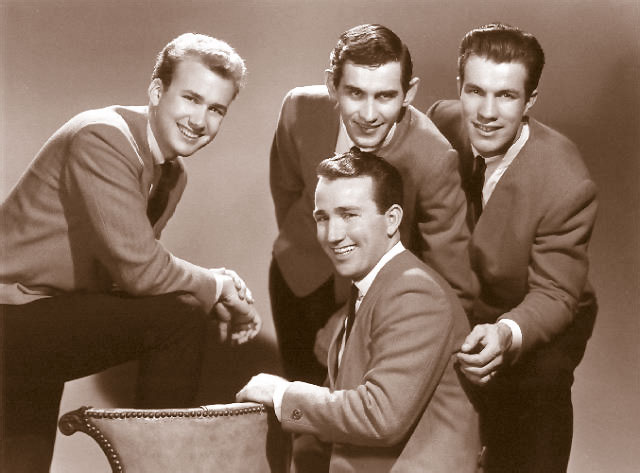
A lot of people just went, “OH! I remember this song.” Not surprising. This was a HUGE hit in 1963. Before we delve into Gilmer’s stylings, let’s look a bit at the band’s history. Like I said, they originated in New Mexico. George Tomsco (lead guitar), Chuck Tharp (vocals), Stan Lark (bass), Eric Budd (drums), and Dan Trammell (rhythm guitar), formed an instrumental band in the late 50s. They recorded and released a few semi-popular hits. After  Budd, Trammell, and Tharp left the group in the early 1960s, the group added Doug Roberts on drums and vocalist Jimmy Gilmer, a Texas-raised singer.

That line-up recorded the group’s most well known songs. “Quite a Party,” which peaked at #29 in the UK charts in 1961, was the band’s first true hit. In 1963, the band released “Sugar Shack” which saw a meteoric rise in popularity going to #1 for five weeks in the U.S.A., with 15 weeks in Billboard hot 100. The Fireballs became the first New Mexico band to ever have a #1 vocal song with “Sugar Shack.”

“Sugar Shack” is your classic ditty. It comes and goes with precision. The light-hearted keyboard riff is infectious and Gilmer’s voice, featuring a little Buddy Holly twang (Holly recorded in the same studio as the Fireballs, by the way), works well in the song.

Before I leave you, here is another song by the Fireballs from 1960. Notice the laid-back harmony and George Tomsco’s underrated, skillful rock n’ roll guitar.  I hope it makes you smile!