Archive | Obscure Classic Rock RSS feed for this section

That’s One Fuzzy Duck – Having Some Fun With Early 70s Prog Rock

17 Jan
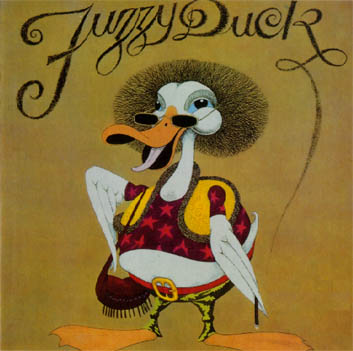
More like Funky Duck – Look at it’s Fro and subtle pimp cane!
Progressive rock is not easily definable. This sounds like a cop out, yes, but I do think that part of the intrigue of this genre is its obscurity. For the sake of continuing this post, I will attempt to define this genre that peaked in popularity during the 70s. Progressive rock (similarly to psychedelic rock) took classic rock and expanded it. It manipulated compositions, added instrumentation, and made music unpredictable. I do think that one of the reasons why bands like the Mothers of Invention, The Beatles, The Beach Boys, Jethro Tull, The Moody Blues (the list goes on) started experimenting with different music was because they were bored.
 
As the progressive rock movement spread (prior to the genre being termed), more and more bands sprouted up – many that are underappreciated (i.e. The United States of America, Gentle Giant, Amon Duul), but even many of those bands became cult sensations.
 
Today we are going to talk about a band that missed the boat entirely, never gaining much fame with their unique brand of progressive rock (I’ll save a more in depth analysis of my love for progressive rock later – the genre does house my favorite band of all time Pink Floyd). So may I introduce to you the one and only hairy fowl and introduce them to the obscure classic rock section of our humble castle.
 
Fuzzy Duck – yes that is the cover of the band’s eponymous first album (and what an album cover it is) – was formed in London in 1970 and it featured a few train-hopping musicians who experienced progressive rock from the perspective of a few oddly named bands. The original line-up consisted of guitarist/vocalist Grahame White, bassist Mick Hawksworth (formerly of Andromeda), keyboardist Roy Sharland, and drummer Paul Francis (formerly of Tucky Buzzard). Just before the band’s first and only album was released White left and was replaced by guitarist/vocalist Garth Watt Roy who was featured on the bands two 1971 singles before they all parted ways by the end of 1971.
 
In a way the short life of Fuzzy Duck feels like the relationship between Brenda and Eddie from Billy Joel’s “Scenes From an Italian Restaurant” – where the couple gets married during the summer of ’75 and has had it already during the same summer (and get a divorce as a matter of course). But before the band parted the closest of friends (okay, I’ll stop with the Joel references), they did release some music and I want to highlight two of their songs (tracks 1 and 2 on their album) in this post.
 
 
The song begins with a groovy 70’s riff over drums and harmony. As the song progressed we are introduced to a few elements that are identifiable as progressive rock. The tremendous organ solo at around the 1:40 mark is a classic signifier. Sharland kills it during this intense solo. The song (4:10 mark) also uses production techniques like displacing sound – another element that progressive rocks played with. A fuzzy guitar solo follows and leads into the choral harmonies that persist throughout the song. One of my favorite parts of this song is the skilled bass of  Hawksworth. A solid bass can do more than simply carry rhythm and in “Time Will Be Your Doctor” it makes the song. Many view etheriality and airiness as two elements necessary in progressive rock, but this is simply not true. Progressive rock extended way beyond that realm – as proven by Fuzzy Duck and many other bands.
 
 
“Mrs Prout” immediately hits listeners with a wavy guitar that oscillates through different speakers and a strong rhythmic bass. It feels like early Progressive/Hard rock that did go on to inspire future hard rock/metal bands. An eerie alien keyboard leads into the beginning of a fine vocal by Grahame White. The song continues in this vein for a good amount of time – a constant, complacent beat. At around three minutes bass and drums begin to take the song over and a guitar quickly decides to join in on the impromptu jam that is funky and excellent. An organ rises and begins to drown out the small jam – and this continues until the end. I love the instrumental portion of the song. I feel that Fuzzy Duck’s true strength is there as well.
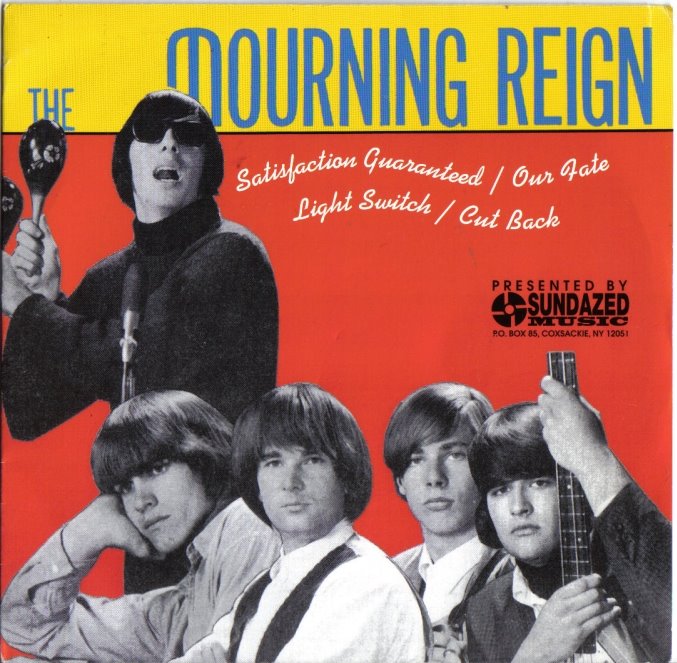
The Mourning Reign in the Garage

4 Jan

So many of our obscure classic rock posts have come from the garage thus far I think I should make a separate category profiling garage-rock bands of the mid 60s. Before the psychedelic revolution there was a large focus on the garage-rock sound (around 1963-1967). The British Invasion – specifically “beat” groups like the Rolling Stones, The Animals, and the Kinks had a large influence on these bands, as did folk-rock groups that were beginning to experiment in America. This mishmash of influences helped form famous garage-rock bands like the Kingsmen, The Count Five, The Syndicate of Sound, and the Leaves (and even the Troggs in Britain). This genre of music provided much inspiration to the future punk music movement and it also laid a foundation for the soon-to-be psychedelic movement which sparked in popularity during the years of around 1966-1970.

But – like with any popular genre – there were bands that fell through the cracks. Today we are going to take a look at the Mourning Reign, a San Jose band that formed in 1965 and broke up in 1969. This band combined the fuzz of garage rock with folk rock. They even played around with hints of psychedelic music.

The band was made up of:

Lead/Rhythm Guitarists: Johnnie Bell, Tom O’Bonsawin, Steve Canali

Rhythm Guitar/Vocals/keyboardist: Jay Garrett


Bass Guitarist Charlie Gardin

Drummer Craig Maggi — Mike Hossack (Doobie Brothers)

Lead Vocalist Beau Maggi


Let’s listen to some tracks.

The first few notes of “Satisfaction Guaranteed” scream garage rock. A fuzzy guitar and well-defined bass provide the rhythmic backing to the introduction. Everything about this song is typical garage sound – from the Jagger-like vocals (which I must say are very well done by Beau Maggi) to the choral harmony. When I first listened to this I thought that it sounded like some song – and then I quickly realized it sounds like 100-or-so songs I know and listen to. So where does it differ? The multiple-guitar solo is wonderful and atypical. This band had a surplus of guitarists and they used them to their advantage. That may be the best part of the song which otherwise is simply a solid, enjoyable garage track.

“Light Switch,” which appears on the same EP, immediately takes a 180 degree turn. It makes you perk up. The band takes from its folk-rock influences, but, more from early 60’s pop melody. The vocal harmonies are fantastic. They are tight and, wait, what was that. Is that a church bell and a plucked acoustic and an accordion. The song transforms into this odd progressive (even psychedelic) segment halfway through and this leads up to rising percussion and a Phil Spector-like wall-of-sound vocal moment briefly. This is an oddly prescient segment. The song ends on a guitars ominous twang. Absolutely the best song by The Mourning Reign and one that should be listened to by all.

The Anachronism That Was The Music Machine.

13 Dec

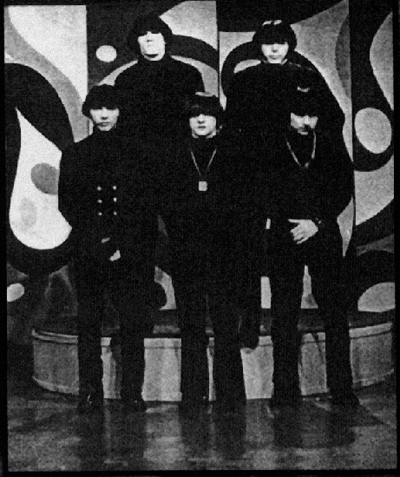
Bizarro Beatles or 60's Screamo (just kidding)

 
The grainy photo above depicts a never-before seen example of the gothic response to American Bandstand. Just kidding! The picture is of the Music Machine and I think it is time that we explore this band’s story in today’s version of Obscure Classic Rock.
 
The Music Machine story begins with a high-school age Sean Bonniwell, who, after hearing the song “Only You” by the Platters, decided that he wanted to form a clean-cut vocal band. The result of this aspiration was the pop/folk quartet the Wayfarers who released three albums under the RCA label. It is important to understand that despite never reaching tremendous success, Bonniwell was a very talented musician who released several albums.
 
The folk scene eventually started dying down after the British invasion and the introduction of harder, bluesier rock, with electrical instruments, organs and keyboards; an overall heavier sound. Bonniwell decided that he wanted to take advantage of this scene in 1965. He formed the Ragamuffins and the band immediately fit neatly into the edgy, fuzzy garage rock sound that was spreading throughout the nation. The Ragamuffins, who would become the Music Machine in 1966, was based in Los Angeles.
 
Perhaps the most distinctive part of the group was their look. We will get to their sound in a second. As you can see from the picture above, each member wore all-black clothing, dyed black moptops, and (not visible) a single black glove (Michael Jackson’s staple – pre-Michael Jackson). Their anachronistic look reminds me of the all-black gothic scene that was a fad (is it still?) when I was in High School (like 5 years ago). It can also be viewed as punk. Hmm. Punk. Lucky that their music cooperates with the punk sentiment.
 
 
“Talk Talk” was the Music Machine’s most succesful song. The band, which featured singer/songwriter Sean Bonniwell, Doug Rhodes (organ), Keith Olson (bass), Mark Landon (guitar), and Ron Edgar (drums), released their first album (Turn On) The Music Machine, which premiered “Talk Talk,” in 1966 on the Original Sound label. Besides this top-20 hit, the album didn’t meet with much success and, after the corresponding promotional tour, the entire band, except for Bonniwell, left because of internal issues. Bonniwell kept the band together, even signing on to Warner Bros. in 1967 as The Bonniwell Music Machine, but the self-titled LP met with no success. It all kind of ended there but the Bonniwell Music Machine is still around (http://www.bonniwellmusicmachine.com/) revitalized by Bonniwell’s autobiography “Beyond the Garage.”
 
Let’s talk about the song “Talk Talk.” It is an awesome piece. Here is why the less than 2-minute song is worth listening to over and over and over. The riff is classic garage rock – fuzzy guitar layered over an organ. Bonniwell’s deep voice suits the song perfectly. I absolutely love the Hendrix-like grunts (pre-Hendrix) and, what I can only describe as the Talk Talk repetitive beat (because of how the song ends). I am keen on saying a lot of garage rock released during this time period exemplifies pre-punk (or protopunk). I throw around this term a little too much, but, with “Talk Talk” I do believe that there is clear inspiration evident. The short, fast, heavy beat, repeating guitar riff, bare instrumentation. It all fits. And I love it.
 

Take a Ride on Dantalian’s Chariot to the World of 60’s British Psychedelia

1 Dec

When the psychedelic movement presented itself in Britain prior to 1967 it was back-shelfed by numerous radio stations and simply not played. It was a crucial part of the burgeoning underground culture and spacey, experimental sounds were initially only played by DJ’s like John Peel on Radio London. The British youth was drawn to psychedelic music’s distinct flavor and caught on quickly, sparking psychedelic clubs to open to accommodate individuals who wanted to tune in and move on from the now tired merseybeat/R&B movement. In 1967, psychedelic music traveled from the undergrounds into the limelight and several bands, who may/probably were not playing psychedelic music, started experimenting with odd sound effects, zany vocals, and different instrumentation. One such band was Dantalian’s Chariot, a band more known for its members than its medieval witchcraft inspired name.

Dantalian’s Chariot was founded by George Money, better known as Zoot Money. Zoot was the bandleader and keyboardist for the early 60’s Big Roll Band, which toyed around with rhythmic blues and jazz, garnering success in London clubs, but little album support (even though they were signed by Columbia). This is a solid genre foundation for psychedelic music. But psychedelic fusion, not the pop psychedelia that became pervasive in 1967.

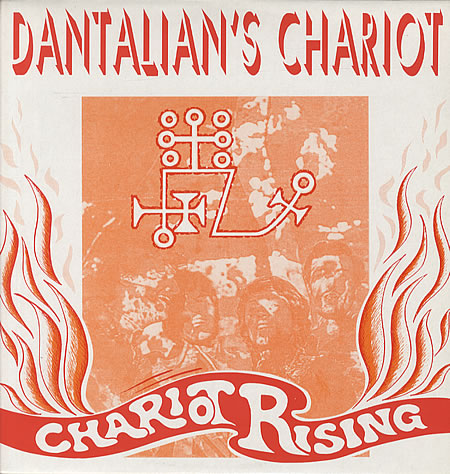
In 1967, Zoot formed Dantalian’s Chariot, which was made up of Money, who would later play with the Animals, drummer Colin Allen, who would go on to play with John Mayall and the Bluesbreakers, skilled bassist Pat Donaldson, and a 25-year-old guitarist Andy Somers (prior to changing his surname to Summers) who, of course, is a member of the Police. So Chariot was one of those bands that would be considered a super-group lineup today, but not in 1967. And even though this psychedelic band was only around for a year and released only one album Chariot Rising under the Chariot name, their music is still worth a listen.

“The Madman Running Through The Fields,” the only single released by the band, is your classic piece of ’67 psychedelic music with its Byrds-like electric guitar, tape delay sound effects, and ending poetic psychedelic breakdown. Plus, go to the vocal part at around 50-55 seconds. Tell me that doesn’t sound like a Sting-like vocal outburst. Come on. A little? But still, as enjoyable as this piece is, it still falls into the trap of being like so many like it. Show me something Zoot.

“This Island” is my favorite song from Dantalian’s Closet. Yes, the sitar was becoming overused in ’67, but the mellifluous ocean sound mixed with western harmonies and strung out keyboard combine to make this song a wonderful example of pre-progressive instrumental. It is a quiet, reserved, unassuming piece and I love it for that.

The Crazy Road of Stained Glass

9 Nov

Stained Glass

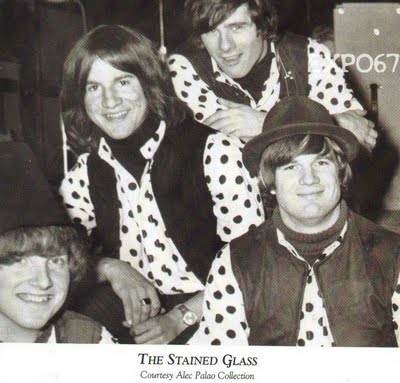
Another Obscure Classic Rock post and another underappreciated band. Stained Glass was a pop band from San Jose, California, that was formed in 1964 by Jim McPherson, bass, Roger Hedge, guitar, Bob Rominger, guitar, and Dennis Carrasco, drums. They all provided vocals.

After being signed by RCA at the end of 1966, Stained Glass was instructed to record a version of the Beatles’ “If I Needed Someone.” RCA estimated that the Beatles were not going release the single in the US for a bit of time, and their slight miscalculation probably impacted the limited success of Stained Glass’s version, but, the song garnered enough airplay to spark a brief East Coast tour for the California band. The immediate follow up to the band’s first single was “My Buddy Sin”/ “Vanity Fair” which was released in the same year. We are going to take a listen to “My Buddy Sin.”

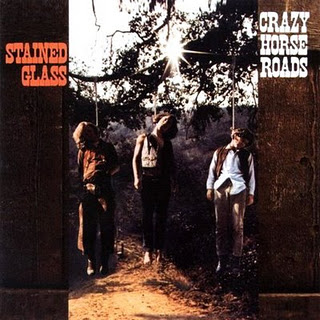
“My Buddy Sin”  moves like a merseybeat tune (and this is understandable because their last recording was just that, a Beatles’ merseybeat song), but the band adds in some other elements that makes this song stand out. First off, the vocal harmony is unorthodox. It is not your typical light-hearted, fast-paced, early Beau Brummels’ like American merseybeat harmony. No, instead, it almost takes a page out of the Association’s handbook. The harmony is rich and delicate. It is fresh and entrapping, more like a choir than a pop group. The song also features a bluesy harmonica and a fast-paced blues guitar solo over an angelic vocal background. It is an odd mixture of genres, some popular at the time, and some prescient (British folk, for example). It, to me at least, seems like a strong second release. A great song. It is overlooked though, in favor of the band’s 1967 version (and following single) of “We Got a Long Way To Go,” which is, despite its popularity, a little trite and uninspiring. After another follow-up single and the departure of Hedge, Stained Glass released their first album Crazy Horse Roads, which is perhaps best known for its controversial cover (see picture below), but should actually be known as a strong release from a budding psychedelic band that sampled strong vocal harmony and garge rock flavor.

Sort of - Kind of - Definitely distrubing

The needle touches down on typical fuzzy garage-rock guitar, Stained Glass harmony, psychedelic sampling, and hints of folk. It is wholly diverse and filling. Yet it did not, and still has not, gained the recognition it deserves. This case kind of surprises me. Stained Glass was too good of a band to just fall into obscurity. They were able to fuse genres and that generally leads to success. Perhaps it also sometimes distracts listeners. I am including the most accessible song from the album and one of my favorites.

Listen to McPherson’s driving, funky bass and Rominger’s loud hollow-bodied electric with fuzz. Catch the vibes. The psychedelic flavoring can be heard in the riff and solo, as well as the echoed choral endings. I hear Blues Magoos and a little Count Five. Pretty much, Stained Glass should have gained more success than they did and that is unfortunate.

In 1969 Rominger was replaced by Tom Bryant and a second album, “Aurora” was released which didn’t sell well either. The group disbanded in 1970. According to the wikipedia page for the band,  the very talented Jim McPherson died in 1985. Dennis Carrasco lives in the San Jose area. Tom Bryant lives on the east coast. Bob Rominger lives in Newnan, Georgia.