Tag Archives: Music

Ben Folds and yMusic Rocked That Paramount

2 Nov

1424944689_11027974_1075827205776030_8276052267287995598_n

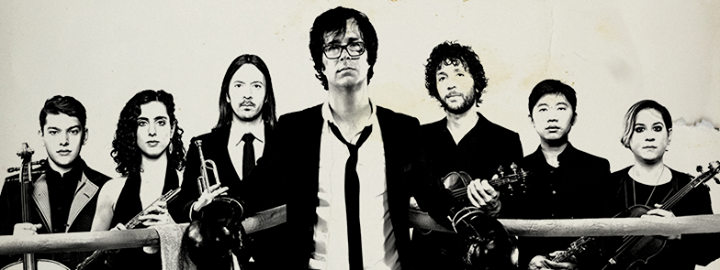
One of the reasons why Ben Folds has found consistent success over his now quarter-of-a-century-old music career is his musical malleability. Folds has now done everything from releasing successful albums with Ben Folds Five to collaborating with musicians like Regina Spektor and Weird Al Yankovich. He has created experimental literature/music compilations with writers like Nick Hornby and has even starred as an erudite judge in the NBC a cappella show “The Sing Off,” where he was able to show off his musical knowledge and pipes. Yes, Ben Folds has seemingly done it all. His next endeavor: combining forces with a classical music troupe with a penchant for modernizing orchestral music.

So There, released this past September, features several pieces with yMusic Ensemble, and might just be his best collaboration yet. Folds’ music, specifically his solo material, is adorned with elegant instrumentals that sparkle like bedizened clothing, but do not touch rococo overemphasis, instead including just the correct amount of tasteful musical goodness. In celebration of his new album, Folds just embarked on a tour with yMusic, and I had the opportunity to see them at the Paramount in Huntington, a beautiful club venue that is spacious and modern. The concert, like all Folds’ concerts, was conversational and effervescent; Folds is himself – like him or not – and this candor finds its way into his verbal ramblings and music theory rants.

Folds always garners a knowledgeable crowd and almost everyone in the audience was aware of Folds’ on-stage antics, which did not change – if anything they were highlighted – despite the appearance of yMusic, who created a U around Folds’ piano, which was set a little back on stage adjacent to the drums. Folds mused on stories that formed songs and the dangers of sleep deprivation, all while nailing every note and assuring that all members were held accountable, including himself – at one point he stopped the beginning of a song because he did not like his opening note. When improvising his always topical “Rock This Bitch,” he seemed to have fun challenging his panel of accomplished musicians with complex scales and pauses.

The highlights of the night were the band’s energetic performances of Jesusland,” “Steven’s Last Night in Town,” “You Don’t Know Me,” and, of course, the crowd-aided, encore song about a LSD trip turned born-again Christian conversion, “Not the Same.” Each song was played with such eager ardor; Ben Folds loves what he does.

Drunk Tank Pink Sessions – Christoffer Øien New Release Out September 4

1 Sep

551522_780049858748911_5945838541707379719_n

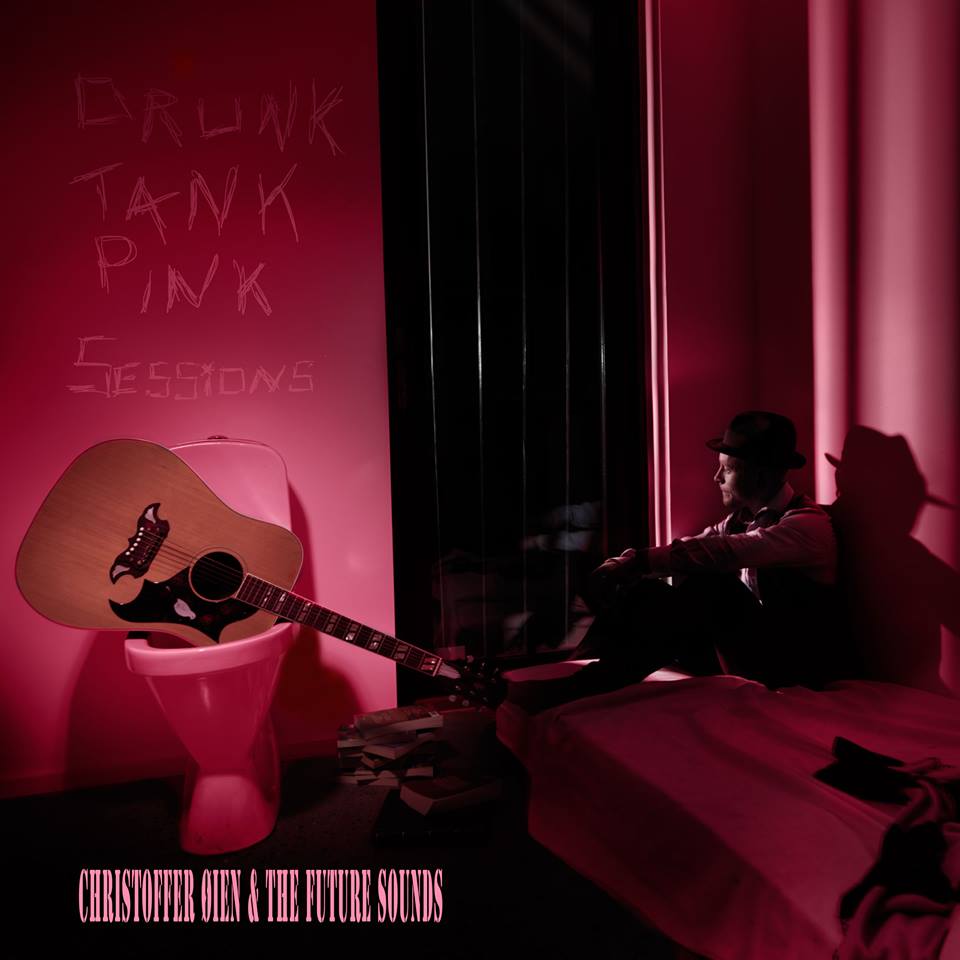
When we last left Christoffer Øien a few years ago, he was coming off the heels of his successful debut Monster, which the Music Court lauded as “expansive folk; it mixes the style of some of Joe Purdy’s slower, lugubrious pieces with a mystical Radiohead flavor.” So, when I received a note from Øien that his new album would be out in September (tomorrow!), I got excited. Øien’s acoustic creations are keen and pastoral; true bucolic masterpieces from the land of fjords and trolls.

With the new album comes the continuation of Øien’s brand of mountain folk, a darker brand of music that is led by deep acoustic guitar tones and Øien’s smooth, quivering vocals. The music, while melancholy, has a unique ghost-like haunt to it; the riffs and Øien’s voice stays with you and not long after listening you find yourself humming the melody to disturb the silence. That’s staying power.

“Drunk Tank Blues,” the quasi-title track features all of the qualities about Øien that entice listeners. It is a slow-moving piece that features a crisp acoustic and dulcet violin. The song, which features a minimalistic almost existential video, matches the lugubriousness of the video, a smooth melody about drunk blues. The song moves slowly, accentuating each verse and string fill with skill.

Another song you should check out from the album is “Future Sounds.” A lighter track, with a riff higher on the fret board, Øien advises the listener about a future that does not look so bright, unless people can “find it in your heart to put a smile upon a stranger’s face … and find love in so many ways.” His vocal is particularly strong on this track, particularly emphasizing his best vocal quality – his ability to reverberate his notes. The strongest part of the song is its chorus, which builds with continuing harmonies and becomes like wonderful melodic message.

Check out his website, Facebook for more information.

Grab Your Air Guitars and Let’s Jam

26 Aug

chris_AirGuitar

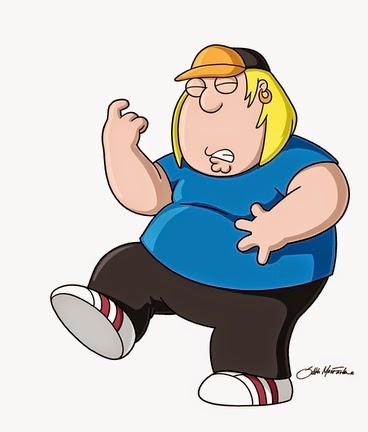
Ah, the dog days of summer are upon us. Need a way to fight the end-of-summer blues? How about jamming on an air guitar. Yes, you heard me right. The air guitar, which has become a performance staple in places like the car, shower, or karaoke bar, is celebrated every year with the Air Guitar World Championship, which begin today in Oulu, Finland and run through August 28th.

Air Guitar is not all about performance. According to the World Championship, it is judged by a panel using four categories: technical merit (how close to an actual guitar does it look), mimesmanship (how can the performer effectively create the illusion of a guitar), stage presence (how much you can ROCK), and Airness (how much the performance was art … not just moving your hands around an invisible instrument). Yeah, they don’t joke around at the World Championship; you need to have a combination of guitar knowledge and pretend playing skills mixed with the innate ability to bedazzle the stage with moves aplenty.

You can track the proceedings of the 20th annual tournament (yes, this has been a thing on the competitive level for 20 years) on the website.

Now, I know what many of you are thinking. I play air guitar all the time. Just play me some Slash and I’ll be effortlessly and apoplectically moving my fingers up and down an imaginary fret board while miming the best guitarist facial contortions. Do you want to see a professional?

That was almost like a hardcore dance routine, which air guitar pretty much is, as you have to entertain the crowd while wielding an invisible instrument. She employed the outstretched windmill, though, and that’s impressive.

This whole air guitar thing got me thinking. What is the most classic Air Guitar song. In order to come up with a list, I considered some of the most important categories to an Air Guitar song: guitar riff/solo and quick beats. That didn’t help narrow it down. Heck, I’ve seen people air guitar to “Dust in the Wind” by Kansas; you can break out the imperceptible instrument anytime. That said, I’ve narrowed it down to one song, which, in my mind, will always be the perfect air guitar song. I’m eager to hear your opinion, though, so share what your thinking in the comments.

Without further ado, here it is, the perfect Air Guitar song!

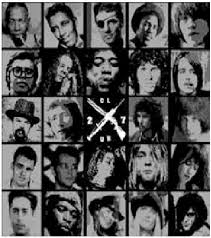
Contributions of The 27 Club

22 Jul

images


The anniversary of Amy Winehouse’s death is tomorrow. She is part of the infamous 27 club. Let’s welcome Marus Conner to the Music Court for a guest post; he outlines the longstanding impact that musicians in the 27 club had on the industry.

The Achievements of Fame’s Tragic 27 Club

Despite the fact that the world lost these extremely talented individuals at the tender age of 27, the contributions they made were astounding. The music world and, in many cases, society at large has benefitted from the impact of their lives, work and death.

Jimi Hendrix

Jimi Hendrix was a self-taught guitarist, singer and songwriter, who could not read music. Instead he played by ear without the help of a teacher. Easily, one of the biggest and most recognizable cultural figures of the 1960s, he was named the greatest guitarist ever by Rolling Stones Magazine. He revolutionized the use of a Fender Stratocaster as an electronic sound source. He was also distinctive in his playing of the instrument because as a left hander, he played a right-handed guitar upside down. This pioneering musician was the front man for the Jimi Hendrix Experience and Band of Gypsys.

Janis Joplin

Rock and roller Janis Joplin was a songwriter and lead vocalist for Big Brother and the Holding Company, the Kozmic Blues Band and Full Tilt Boogie Band. Notably she had a hit #1 song for 9 weeks in 1971, with “Pearl” which was released posthumously. Her former home in the Haight district of San Francisco was transformed into a drug rehab center in 1999, four years after she was inducted into the Rock and Roll Hall of Fame.

Jim Morrison

Brilliant Jim Morrison, with a 149 IQ and a voracious appetite for reading, was a poet, songwriter, singer, film director and front man for The Doors. He led the group to be named the #1 rock group in the United States in 1969. The group’s first three albums went gold, paving the road for a successful future that was marred by Morrison’s untimely death in 1971. At the Atlanta International Film Festival in 1969, multi-talented Jim Morrison won the Golden Phoenix Award for the film Feast of Friends. He has been included in many lists of greatest singers.

Kurt Cobain

Kurt Cobain was the lead singer, guitarist, song-writer and founding member of the band Nirvana. He led the alternative rock band to numerous awards and nominations from its start in 1992. The group was known as “the flagship band” for Generation X and Cobain was designated “the spokesman of a generation”. Twenty years after his death, he was inducted into the Rock and Roll Hall of Fame.

Amy Winehouse

Amy Winehouse was a British singer and songwriter who was well known for her throaty voice and the way in which she mixed different musical genres. Jazz, reggae, rhythm and blues and soul all came together for her, leading to 63 music award nominations and 25 awards. She was the first British woman to win 5 Grammy awards. Notably she sang Happy Birthday to icon Nelson Mandela.

Throughout her career, Winehouse was extremely generous and supported numerous charities. The Amy Winehouse Foundation was created by her family following her death to help disadvantaged young people and to increase awareness of the negative effects of drugs and alcohol.

Brian Jones

Brian Jones was the original founder of the famous Rolling Stones. In addition, he was a guitarist and played a variety of instruments. Brian Jones created the Rolling Stones, chose its members, decided on the music style, named the group and even secured gigs in the early days. He was the driving force behind the debut of the group and was known as being an exceptional musician.

Ron “Pigpen” McKernan

Ron “Pigpen” McKernan was a founding member of the Grateful Dead, being the one who suggested to Jerry Garcia that they form an electric group. As the keyboardist and singer for the Grateful Dead, McKernan was key to the group’s early success. 19 years after the death of McKernan, the Grateful Dead was finally inducted into the Rock and Roll Hall of Fame.

Dave Alexander

Dave Alexander was the bassist for the group the Stooges prior to his 1975 death. The group pioneered the genre punk-rock. He was credited as having been the lead composer on several of the songs the group and a driving force in many respects for the group’s first two albums.

Pete Ham

Pete Ham of the British band Badfinger, is a Welsh guitarist and keyboardist. He led the group, which was made famous because of its musical collaborations with The Beatles on multiple occasions. He was also a gifted composer who co-wrote songs for other performers, such as the hit “Without You” made famous by Harry Nilsson. Along with Badfinger, he is noted as being amongst the first performers of the genre power pop.

Mia Zapata

Mia Zapata, was the lead singer of the group the Gits, when she was murdered in 1993, just one month after Atlantic Records offered to sign the group. The positive cultural impact of her violent death came about at the hands of her friends who, following her death, created an organization called Home Alive that focused on self-defense. Benefit concerts for this organization featured some of the biggest names in music in Seattle, including Nirvana, Pearl Jam, Heart and Soundgarden, as well as several presidents of the United States.

Chris Bell

Chris Bell was a member of pop band Big Star, as a singer-songwriter and guitarist. He was key in the making of the band’s first album “#1 Record”, as he did vocals, songwriting and played guitar. While this album only under 10,000 copies when it was first released in 1972, yet in 2003 it was ranked number 438 in the Rolling Stone list of the 500 greatest albums of all time. This created a resurge in interest in the album.

Freaky Tah

Freaky Tah, also known as Raymond Rogers, is a rapper and a member of the hip hop group Lost Boyz. The song that propelled the group to fame was the single “Renee” from their 1996 album Legal Drug Money. It reached Gold status and was on the Billboard Top 20, and was included on the soundtrack of the comedy movie “Don’t Be a Menace to South Central While Drinking Your Juice in the Hood.” The album Legal Drug Money was number one on the Top R&B/Hop Hop List, number 6 on the Billboard Hot 200 and went Gold according to the RIAA, just two months after it went on sale.

Kristen Pfaff

Kristen Pfaff was a member of the alternative rock band Hole where she played bass and also a background vocalist for the band Janitor Joe out of Minneapolis. The Buffalo Music Hall of Fame inducted Kristen as a member just months after her 1994 death. The band Hole gives a portion of album sales to the Kristen Pfaff Memorial fund. In addition, each year a radio station in Minneapolis offers a Kristen Pfaff Memorial Scholarship of $1000.

Even though these legends did not live long, their impact on their industry and the world can still be felt today, all impressive tributes for those who left this world too early.


Marus and his friend also created a website depicting each artist mentioned in the post with some music from them. Check it out


Bridging Ears Back to Soul

24 May

Leon Bridges

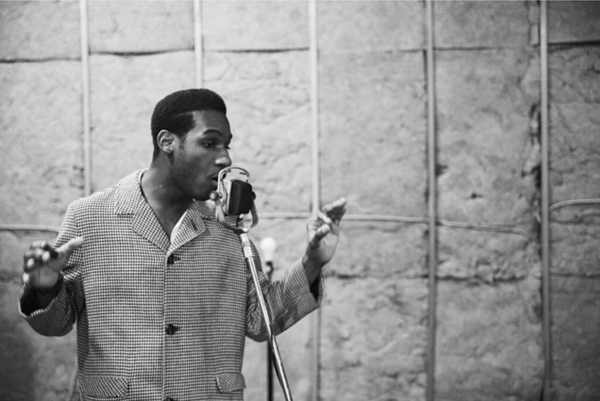
When I first heard Leon Bridges my immediate reaction was that Sam Cooke had come back from the dead. I’m serious. The black-and-white soul sound sent me back to that magical moment when I first explored the inception of Soul music: the early 1960s sounds of names like Cooke, Wilson, and King. Then, I shook myself out of this initial daze. Sam Cooke – A man widely regarded as one of the finest vocalists of all time!?! How could I make such a wild comparison? But, as I took more time to listen to some tracks off Bridges’ soon-to-be-released debut album Coming Home, I realized that the comparison, while lofty, was not ridiculous. Bridges’ voice “sends me” to the soul-saturated sounds of the early 60s, and, while it may not in full bring back the mainstream popularity of slow horns and vocal harmonies, the music is certainly bridging that sounds to the ears of soul ingénues.

Bridges, who was born in Atlanta and now resides in Fort Worth, reached viral success with his song “Coming Home,” which caught the ears of several and helped him secure a record deal with Columbia Records. The overflowing bucket of talent that Bridges exuded did not stay hidden for long. With the help of Austin Jenkins and Joshua Block from White Denim, Bridges recorded his first few tracks – employing the aid of vocalists and bands that helped complement the 60s sound. His renown and success will only skyrocket with his release in June.

Coming Home” immediately takes on the feel of “You Send Me” with tastes of “A Change is Gonna Come,” and Bridges soft croon, a smoother Hozier (to make a modern comparison), has a rich Gospel feel to it that is just the right kind of sweet, not mawkish and not overpowering – it’s a voice that you can sink into, like silky gelato. The song itself is classic early Motown. It is carried by a bluesy piano and guitar mixed with traditional percussion. It is not difficult to imagine Sam Cooke or Otis Redding singing this song, and Bridges’ voice is not really a step down; heck, I am almost willing to go so far to exclaim that Bridges parallels the singers in a sense. Not too shabby.

From the slower “Coming Home” to the early Marvin Gaye-esque “Better Man.” The song features a literal doo-wop backdrop that is combined with a sweet horn section. It is almost minimalistic in its approach, and perhaps that is what I like so much about Bridges and his throwback tunes. In a musical world dominated by heavy electronics where artist after artist attempts to impress with eclectic sounds and instrumentation, Bridges takes a more traditional approach, fitting a wonderful track into a little more than two minutes.

Bridges is an artist worth tracking. You can follow him on Facebook, Twitter, or his Website.