
Archive | August, 2009

Lyric of the Day #50: Top 100 Lyricists #92

14 Aug
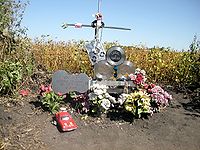
The Crash Sight

The Crash Sight

A large post for #50. Enjoy!

Just after 1:00 a.m on February 3rd, 1959, a beechcraft bonanza B35 holding enough talent to fill up numerous stadiums, crashed due to pilot error and poor weather conditions near Clear Lake (miserable irony), Iowa, killing all four flyers, including the pilot.  The three musicians who were killed, none older than 30, were Buddy Holly, Ritchie Valens (he was 18), and J.P. “The Big Bopper” Richardson. The story before the crash is riddled with upsetting coincidences and haunting decisions. After a show at the Surf Ballroom in Clear Lake, Iowa (which was not an intended spot on the tour), Buddy Holly became frustrated with the tour bus (which had already given drummer Carl Bunch frostbitten feat because the heating system on the bus had broken down) and told his bandmates his plan to hire a small plane to take them to the next stop. The plane could hold three flyers for 36 bucks a pop. The Big Bopper had developed a case of the flu (possibly because of the cold bus) and asked Buddy Holly’s band member Waylon Jennings for his seat. Jennings gave it to The Bopper and after Holly heard about the trade he proclaimed jokingly to Jennings, “I hope your ol’ bus freezes up. Jennings responded, “Well, I hope your ol’ plane crashes.” He has never been able to live down those words. Ritchie Valens won his first trip on an a small aircraft by route of a coin flip. Kind of reminds you of when Jack wins his ill-fated trip on the Titanic by winning a card game. Okay, probably should have kept that analogy to myself.

It is funny how people can look at events that happened prior to a miserable accident and blame themselves for the otherwise regular day-to-day things that had occured. If the plane did not go down maybe rockabilly music would have lived on into the 60’s competing with the British Invasion of Rock and Roll. But, who knows. Music did live on and the 60’s brought possibly the most impressive cultural explosion of Rock music, but, on February 3rd, 1959, momentarily on that cold night rock’s future looked noticeably bleak and 12 years later a man decided that he still could not get over the events of that dark morning. So, in October of 1971, the first track of Don McLean’s second album wrote of an abstract story about the day the music died in 1959. The album and the song were both titled, “American Pie.”

Similar to Ben Gibbard of Death Cab for Cutie (#98 on the lyricists list) many can make the claim that the only reason why Don McLean is considered one of the top lyricists is because “American Pie” was such an influential song. Hey, when someone can describe an entire music generation in a seven minute epic I do understand the reasoning. It sure is his hit and I will portray to you faithful readers what specific lyrics in the song I find to be fantastic. But, what many people seem to forget is that besides all of the understandable hooplah that surrounds “American Pie,” McLean recorded other tracks and one in particular that maintains comparable lyrics to “American Pie.”

Yes, for all of you who are going hey is that not Vincent Van Gogh’s “Starry Night” painting that is not music, it is indeed the Van Gogh masterpiece and it also ties in perfectly with Don McLean’s admiration and tribute to Van Gogh. “Vincent,” is a masterpiece itself, playing with lyrics that paint a picture of a Van Gogh landscape with words. McLean describes through luscious metaphors and pastoral imagery how many did not understand Van Gogh, but now, finally they all possibly can. Take a look at some lyrics

Starry, starry night
Paint your palette blue and gray
Look out on a summer’s day
With eyes that know the darkness in my soul
Shadows on the hills
Sketch the trees and the daffodils
Catch the breeze and the winter chills
In colors on the snowy linen land

Now I understand
What you tried to say to me
How you suffered for your sanity
How you tried to set them free
They would not listen they did not know how
Perhaps they’ll listen now”

The first verse of the song that is written above is a wonderful explanation by McLean of an artists work. Their, sometimes hair-pulling attempt to portray that beautiful summer day on the “snowy linen land” that is the emptiness of a blank canvas on a painter’s easel. Most similar to a blank page’s glare on a lyricist. The chorus of the song holds so much beauty because McLean encaptures the struggle that Van Gogh had to go through. How he “suffered for your sanity.” How people during the time did not listen, did not understand, until he was dead. McLean ends his chorus proclaiming, “Perhaps they’ll listen now,” which is as touching as his lyric at the end of his masterpiece, “American Pie”.

The lyrics that I like the most.

“And the three men I admire most
The Father, Son, and Holy Ghost
They caught the last train for the coast
The day the music died”

Well doesn’t that describe it all. The song culminates into this ending statement. The only statement that makes any mention to the three men who died in the crash. The three men whose unfortunate demise was possibly the most shocking musical event in the 20th century. They did symbolically catch the last train for the coast on Februry 3rd, 1959. On the day that the music died.

Check out both songs:

“Vincent”- http://www.youtube.com/watch?v=dipFMJckZOM

“American Pie”- http://www.youtube.com/watch?v=S6uEjifqTaI&feature=related

Les Paul 1915-2009

13 Aug

           What many do not realize is that without Les Paul there is no rock and roll. No Beatles, No Stones, No Jonas Brothers (ew! Maybe he should have put a limit on who can use the guitar). Les Paul, besides being an incredible guitarist, was a rock pioneer and his invention of the solid bodied electric guitar kind of started a pretty big movement in music. I mean can you imagine an unplugged performance of “Enter Sandman” in Madison Square Garden. Yeah, probably wouldn’t sound so metal. Les Paul, rock god, unfortunately passed away today at the age of 94 and instead of focusing on lyricist #97 I thought that it would be only right to pay my respects to the man who shaped 20th century rock and roll by focusing on his incredible life in this post.

Les Paul

  Les Paul was a tinkerer. A life long experimenter. Give him a musical object and he would search his brain for ways to make it work and sound better. He also was like any performer who is young at heart. He became easily bored. That is one of the reasons he created the solid bodied electric guitar in the first place. The acoustic guitar simply wasn’t making the cut anymore and Paul wanted some more sound. So, at the same time that Leo Fender also was experiencing a similar dilemna, Paul went on a mission to create a guitar with an electric sound. The project resulted in his famous “Log” (the guitar prototype), a 4 x 4 aptly titled piece of lumber which came with the full works (guitar neck, fret board, and, of course, a pickup). He then slapped on the body of an Epiphone hollow-bodied for the appearance. The result. Well, this:

 Look familiar. Yeah, those rock artists today you see performing with a Les Paul in concert are using variations of this 1939 beauty. After performing with the Les Paul Trio (which actually included Chet Atkins older brother, Jim, the Gibson Guitar Corporation got wise and designed a guitar using Les Paul’s plans. Les Paul liked the creation and signed on with Gibson agreeing only to be seen with Gibson guitars. Interestingly, Paul’s contract with Gibson ended after Paul saw a changed, more agressive-looking guitar, in the window-sill of a shop. Gibson had changed the design on Paul and this did not make him happy. Yet, after none other then guitar legend himself Eric Clapton used the guitar again, it regained its popularity and the brand of the Les Paul was once again added to the Gibson line after Paul resumed his relationship with the guitar company.

            Paul did not stop at guitars, also revolutionizing recording techniques in 1948. Multitrack recording, which allows for separate tracks of sound to be combined to form one complete project, was also created by Les Paul. Paul also saw the ability to use multi-track recording, as well as several other potential features (like echo) with the new commercially produced reel-to-reel audio tape recorder (recording that focused on reels rather then encased cassettes. Paul, when given the model, used the machine to play along with previous tracks and record over these tracks in the process. Keep in mind the recordings were Mono (singular, ONE) so tracks were erased when new tracks were made. This, of course, until the innovative two to three track recorders that Les Paul created because of the necessity to not erase all of the tracks. With this revolutionary recording process Les Paul, and his wife Mary Ford, created some incredible tracks reflecting on the new technology. For example, “How High The Moon,” and I have a video.

http://www.youtube.com/watch?v=7UvXr2e9DwU&feature=related  (Check this out it is great stuff)

           Paul finished his illustrious career with a 1988 induction into the rock and roll hall of fame, an award by the Mix Foundation named after him in honor of his work in audio mixing, an induction into the National Inventors Hall Of Fame and an induction into the National Broadcasters Hall of Fame. His work will forever go down as both incredible and highly necessary. Next time you go to a concert think of how key it is that the guitar is hooked up to an amplifier. Rest in Peace, Les Paul, and for all you aspiring rockers, play on.

Song of the Day #49: “Monterey,” by The Animals

12 Aug

Yesterday I spent the day walking around the Bronx Zoo and checking out their wide collection of incredible species of animals. No joke there, it was actually a pretty awesome visit. One would think that the visit to the zoo obviously sparks the choice of artist for the song of the day but this hasty assumption is only partly right. You see, you underestimate the immensity of the pointless comments I can make. No, the zoo did not specifically spark the Animals, but, a highly convoluted reason sparks both the song and the artist.

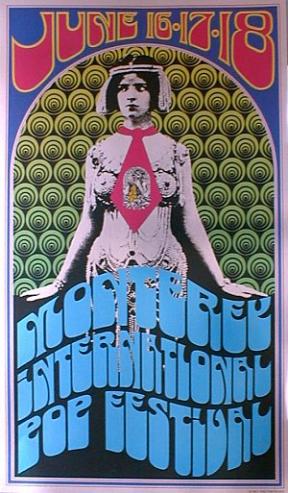
Monterey Pop Festival

Let me take you back to a land before my birth. An incredibly smelly place filled with fish guts and fishing huts. A coastal town that gained its worth and income from their fisheries, and their main catch, sardines. Pretty gross right. Well, after the fisheries eventually went out of business, the town fell into disrepair and became an unfortunate relic of its former self. Yet, after many years of fading away in the California sun it was revived when an idea for a concert hatched and decided it wanted Monterey. Flash forward to a small building in the heart of the Bronx zoo. A building that greeted each visitor with a smell of…well…dung. While all the rest of the animals were Anteateroutside chilling on the beautiful day, two anteaters remained indoors with the unbearable farm-like smell. The anteaters were involved in digging holes in their exhibit to rest and in their own funny way they were actually graceful. That’s right, in the smelly, forgotten about location a small gem could be found. A needle in a haystack, an oyster’s pearl on the enormous sea bed. Do you see where I am going with this? Both situations are somewhat similar and stuck in the middle of this all is the conveniently named band The Animals, or Eric Burdon (the lead singer) and The Animals, or simply Eric Burdon. Yeah, the guy became a little full of himself.

The Monterey Pop Festival happened over three days, like the more famous Woodstock festival, in 1967, two years prior to the event’s big brother. Planned in seven weeks by Lou Adler, John Phillips (of the Mamas and the Papas), Alan Parisir and Derek Taylor, the Monterey Pop Festival was heavily promoted and ended up drawing close to 200,000 people. Funny how that number still pales in comparison to Woodstock. The festival was truly the first “Rock” festival and famous performers lined the days events. One of which, The Animals, performed in between Johnny Rivers and Simon & Garfunkel on day 1 friday, June 16th of the festival. Eric Burdon summed up the group’s experience in Monterey with his song of the same name. In his prophetic hit he mentions some of the artists who performed at the festival. While the festival did enjoy over thirty performers, Eric Burdon specifically mentions The Byrds, Jefferson Airplane, The incredibly young Who, The Grateful Dead, a man who went by the name of Jimi Hendrix. It is almost as if Burdon knew in 1967 who would become famous and who would not. He called the musicians “young gods,” and in many ways Monterey did not only come to fruition, but also many of these musicians reached god status.

Lyric of the Day #49: Top 100 Lyricists #98

11 Aug

Wow, this list is going to take a long time. This is the thought that is running through my head at 12:26 a.m. Well, luckily, many of you will have the enjoyment of waking up in the morning and being greeted by the #98th greatest lyricist of all time. And, yet again, we have a relatively new and young lyricist to profile. I believe it is great that there are still some great young lyricists out there. Yes, music may have become repetitive and pretty much unimpressive since, let us say 1976, but there are still some musicians out there that know what they are doing…if you dig deep enough. Lyrics are poetry though and great writers are always around. So, at #98 I finally agree with Digitaldreamdoor, but only because of one song and I will explain to you why.

Digitaldreamdoor’s #98: Ben Gibbard (Death Cab for Cutie)

My Pick #98: Ben Gibbard

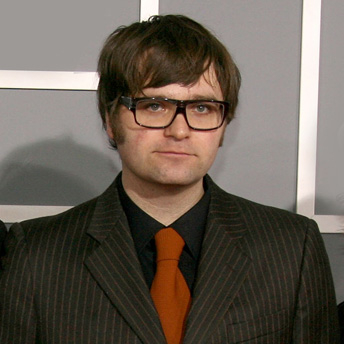
Ben Gibbard

Ben Gibbard, from Washington (like, as it seems, all great musicians), has fronted four bands, including his most popular project Death Cab for Cutie. His lyrics generally revolve around tired themes like love and relationships, but, with his huge solo acoustic hit “I Will Follow You Into The Dark,” the lyrics are oddly touching and simple making any aspiring lyricist, like myself at one point, wondering why they could not come up with something like that themselves. What I find especially impressive about the lyrics is the subtle, but beautiful, metaphors. Think of the topic of love. From shall I compare thee to a summer’s day to I love you like a fat kid loves cake, every single love comparison has seemingly been made. It would seem that no love lyric can be written that has not been written before. Sort of like the classical music conflict. You know, all music has been done before (like over 300 years ago).  But, Gibbard obviously disagrees and proves you wrong. Let’s check out a particularly revealing part of the song, the chorus.

“If heaven and hell decide
That they both are satisfied
And illuminate the “No”s
On their vacancy signs
If there’s no one beside you
When your soul embarks
Then I’ll follow you into the dark”

The song is a touching promise from the singer saying he will be by his loves side in death and beyond death. He explains, in a fantastic metaphor, if Heaven and Hell both illuminate NO on their hotel vacancy signs it does not matter where your soul embarks I will be there and will follow you into the unknown. Quite an interesting way to describe the after life. I thought that this was called purgatory but whatever. Having one great song generally cannot propel you into a spot among the top lyricists of all time but this one is just a perfect masterpiece. Kind of like an “American Pie” by Don McLean. His other stuff is okay. “Vincent,” for example is a relaxed tune, but nothing matches “American Pie.” Don McLean will be on this list, maybe sooner then you expect, so, there is no reason why Gibbard, who like McLean has other not as good hits, should be left out. Oh, and by the way, today is his 33rd birthday. So, happy birthday Ben Gibbard and congrats on being named the #98 best lyricist of all time.

Death Cab for Cutie

Song of the Day #48: “Hope,” by Jack Johnson

10 Aug


               I will be honest with you guys. I never thought I would be profiling a Jack Johnson song for the Song of the Day section. Not because I do not respect the man and his soft musical accomplishments, but, I have never really listened to him. Maybe in passing when a song by him is playing overhead in a store or an outdoor sitting area next to Chipotle in the Tanger Outlets in Deer Park, NY. I assume you all can guess where I heard “Hope” by Jack Johnson now. The hook, that constantly repeats “You better hope your not alone” (and many other variations of the same line) got so stuck in my head my girlfriend suggested that she sent me a text with the song title so I did not forget it. Thank you Rebecca.

              Jack Johnson, the Hawaiian singer-songwriter, surfer, movie maker, et cetera, tends to get little respect from music listeners who label his brand of soft rock as well soft. Yes, while some of his music may be a little hard to listen to, “Hope,” is actually great. It is incredibly catchy and it does a great job demonstrating Jack Johnson’s style. He may not be slamming on the guitar or putting together some illustrious musical sound, but, he does have an acoustic guitar, a mellow voice, and a pretty solid sound. Good sound for a surfer dude. He’s better then the inaudible music of Eddie Vedder.

          Right before the chorus the song slows down and Johnson’s voice sounds over silence. This breakdown is quite revealing. What does it show? Johnson is one of those artists who is simply comfortable. He knows who he is and he is not going to change. I respect that.


Check it Out: http://www.youtube.com/watch?v=nglKASnDxhI