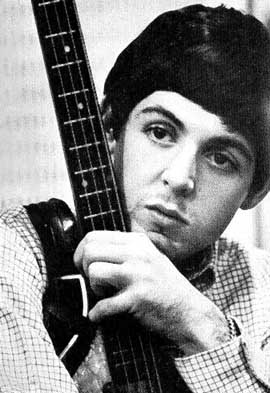
In 1968, The Beatles released “Lady Madonna,” a short, fast-paced groove about an overworked mother. It was written primarily by Paul McCartney, but credited to Lennon/McCartney. John Lennon did help with some of the lyric. In typical Beatles’ fashion, the song reached #1 in the UK and #4 in the U.S., and interestingly, was the Beatles’ last release on Parlophone. The Beatles would release “Hey Jude” on Apple Records a few months after “Lady Madonna.” Has anyone ever suggested that perhaps the Beatles were just too good. Perhaps they were all truly musical aliens, intergalactic hit machines. Well, some band had to be the greatest band to ever play, right?
Anyway, I mention Lady Madonna in this version of “Great Moments in Music Cover History,” not because it’s a cover (which it is not), and not even primarily because it spawned several covers, but because it was inspired by a musical legend, Fats Domino. Yes, so I should perhaps title the category as “Great Moments in Music Inspiration History,” but you’ll all see how the covers fit into this in a few words.
“‘Lady Madonna’ was me sitting down at the piano trying to write a bluesy boogie-woogie thing,” said McCartney in a 1994 interview. “It reminded me of Fats Domino for some reason, so I started singing a Fats Domino impression. It took my voice to a very odd place.”
You can hear the blues piano inspiration in this song and Fats Domino was such a champion of the burgeoning rock/piano genre. McCartney was also inspired by Humphrey Lyttelton‘s “Bad Penny Blues.” The beginning piano riff is somewhat similar to the piece. Take a listen:
The reason this fits into the cover category is because Fats Domino actually covered “Lady Madonna.” It’s sort-of like an ironic twist. McCartney thinks about how it would sound if Fats Domino was playing the piano, and then Fats gives McCartney the ultimate compliment and re-records the song. Here is the Fats version:
Not bad. The Fats flavor is cool. Plus, listening to Fats’ accent during the piece feels right. McCartney and Fats should perform this song together. That would be awesome.
Now, just for giggles, here is another cover of the song by…Elvis Presley! It is from a 1970 rare recording session (where he also performs “Got My Mojo Working”). He is obviously having a lot of fun with it. He doesn’t even know all the words.
When Rod Stewart received his first guitar from his father, he first developed hard-earned calluses from playing “Worried Man Blues.” The folk classic sparked the musician inside of Stewart. Now, obviously, Stewart did not stake his claim as a guitarist, but the song helped engender Stewart’s burgeoning musical creativity. I mention this little story because “Worried Man Blues” is another example of a traditional folk song lost to time; a deracinated ditty, a matchless melody. Okay, you get the point. “Worried Man Blues” was first propagated by the Carter Family, but its roots are forever lost in the vast annals of time. Please excuse my corny hyperbolizing. Let’s explore the evolution of this folk smash.
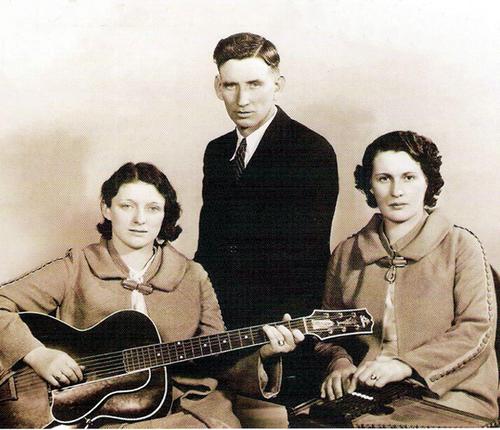
Like I said in the previous paragraph, “Worried Man Blues,” came from somewhere, but past the first recording of the song in 1930, we do not know much about its history. What one can delineate from written record is this: A.P. Carter, the tall, lanky male member of the original Carter Family was known for traveling throughout the country and collecting old songs, especially in the Appalachian region. In 1928, he met Lesley Riddle, a one-legged blues musician, and Riddle joined Carter on his country-wide blues excursions. Carter would write down the lyrics of songs they picked up, and Riddle would memorize the melodies. It is possible that “Worried Man Blues” came from these trips. But it is also possible that Riddle had nothing to do with the old-time piece. Carter did pick up the song and in 1930 he recorded “Worried Man Blues” with his wife Sara Carter and his sister-in-law Maybelle Carter. Here is the recording.
If you have heard the piece before performed by more recent artists you might notice that there is a distinct different. In more modern versions, the opening line of every verse is repeated three times. But in the Carter Family version (and in the later mentioned Guthrie version – which we will get to), the first line of each verse is only repeated twice. The melody is also slower than some other versions. Each version does practically have the same melody and chord structure (G with variation, C, D – easy to play on the guitar or banjo, you just need to figure out the picking pattern) The lyric is where the differences really shine. I am going to paste the full Carter Family version so we can have a solid FIRST lyric for reference.
LYRIC By CARTER FAMILY
It takes a worried man to sing a worried song
It takes a worried man to sing a worried song
I’m worried now, but I won’t be worried long
I went across the river and I lay down to sleep
I went across the river and I lay down to sleep
When I woke up, put the shackles on my feet
29 links of chain around my leg
29 links of chain around my leg
And on each link an initial of my name
It takes a worried man to sing a worried song
It takes a worried man to sing a worried song
I’m worried now, but I won’t be worried long
I asked the judge, what might be my fine
I asked the judge, what might be my fine
21 years on the R.C. Mountain Line
The train arrived, 16 coaches long
The train arrived, 16 coaches long
The girl I love is on that train and gone
It takes a worried man to sing a worried song
It takes a worried man to sing a worried song
I’m worried now, but I won’t be worried long
If anyone should ask you who composed this song
If anyone should ask you who composed this song
Tell ’em ’twas I, and I sing it all day long
I love this last little passage, which, by the way, is completely original to the Carter Family version, and it doesn’t appear again often (if ever) in more modern versions. It sort-of has a mark of irony, since we are now asking 81 years later who first sang this song. I guess it was I, and I sing it all day long. Old folk/blues pieces with unknown origins are kept alive by popular recordings and kids, who, like Rod Stewart, pick up a guitar, pluck the simple chords, and sing about being a worried man singing about being worried all day long. This timelessness is genuine. After the Carter Family recorded the song in 1930, Woody Guthrie picked up the classic and took it on in 1940. Here is a version from volume two of the Asch Recordings (1944).
Guthrie’s version immediately just sounds different, especially with the slightly out-of-tune, but stylish acoustic guitar. The all-male vocal backing obviously differs from the Carter Family. The main difference, though, is that Guthrie, unlike all other versions, does not begin with the chorus. He dives right into going across the river and lying down to sleep. Guthrie maintains the two repetition of the Carter’s, but, starting with verse two, stuff begins changing.
In the game of lyrical telephone (like I mentioned in previous blues evolution posts), some of the first things to go are numbers and places. In this case, Guthrie mentions 21 links of chain, as opposed to the Carter’s 29 links of chain. Then, on the next verse, the protagonist of the song is sentenced to 21 years on the Rocky Mountain line. In the Carter’s version, the protagonist is spending 21 years on the R.C. Mountain line. What is the R.C. Mountain line? Railroad Company? Perhaps. It may be referring to the Rocky Mountain line, but, supposing this song was first learned from Appalachian blues artists, it is most likely referring to a rail line in the east.
Guthrie’s train is 21 coaches long (he has an obsession with the number 21) and the Carter’s train is 16 coaches long. Also, Guthie ends the song with a completely independent verse that he seemingly made up. It goes:
Twenty-one years Pay my awful crime Twenty-one years Pay my awful crime Twenty-one years And I still got ninety-nine
It is a neat, different version of the song, perhaps inspired by other versions he heard outside of the Carter’s 1930 recording, or, Guthrie may have just taken creative liberty. A group that took complete creative liberty was the Kingston Trio, who recorded a completely different version of the song – only keeping the chorus – in 1958. It is sped up (in typical Kingston Trio fashion) and repeats the first line of the chorus three times. Hmm…interesting. (The first song is “Worried Man Blues”)
This is actually the first version of the song I became familiar with. It’s just completely different, but still enjoyable.
I would like to leave you all with one more version of the song. This one performed by folk perfectionist Pete Seeger and the great Johnny Cash (1970). Pete Seeger is awesome. There is just no way around that statement. He is a classics man and he performs the songs with such enjoyable passion. I also love when Cash performs old folk songs (see the last blues evolution I did). This version also repeats the lines three times. It does, though, follow the classic version pretty well. It also features a Seeger monologue and, hopefully without being too sententious, I want to post his statement for I think it is rather apt for this post.
“These old songs are never going to die out. This song is the whole human race. I crossed the river, laid down to sleep, and woke up with shackles on my feet. Across the river we thought we solved all of our problems. You have that revolution. You get that home. You get that job. You think you solved all of your problems. You crossed that river and found you got shackles on your feet. And who’se the judge. Is it some old guy, 74 years old, with black robes. It might be the young judging the old or the old judging the rich. But no matter what mistakes we ever made, there is still a last verse that holds out some hope.” – Pete Seeger
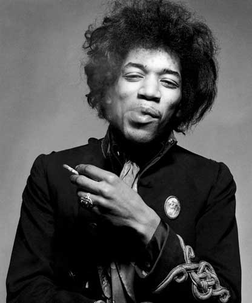
Johnny Allen Hendrix (otherwise known as James (Jimi) Marshall Hendrix) was born in Seattle in November of 1942, thereby founding the “Live in Seattle if you Want to Be a Talented Musician” act. Seattle, where it rains so much the only thing to do is play music.
Hendrix has practically become another name for guitar. His effortless skill, dripping passion, and innovative creativity for the six-stringed sound-producer has elevated him to the status of legendary in the eyes of practically all who have ever listened to a G-chord once in their lives. If one took the average top five of every “Best Guitarist” poll created in the past 50 years, Hendrix would not only be in the top five, but also he’d probably be first. Now we can sit here and debate whether Hendrix’s short spurt of talent makes him better than guitar gods like Clapton, Allman, King, Vaughan, etc., but that debate is pretty much endless. Simply, they are all great guitarists, and Hendrix, despite only living to 27 years old, is with the group.
On Sept. 18, 1970, 41 years ago, Jimi Hendrix died in London. I know I am two days late on the anniversary, but since Tuesdays are now reserved for music news (when interesting), I thought I would do my anniversary post today. Much mystery surrounds Hendrix’s death. The initial report is that he asphyxiated on his own vomit after consuming a copious amount of red wine, but John Bannister, the surgeon who treated Hendrix and made this claim, was accused by Monika Dannemann, Hendrix’s girlfriend at the time, of malpractice, and was reprimanded for two counts of medical malpractice, and struck off the medical register for fraud in 1992. Apparently, according to reports, Hendrix had little alcohol in his system. Dannermann’s account of the night, though, have changed from interview to interview and she committed suicide shortly after being found guilty of contempt of court for repeating a libel against Kathy Etchingham, another of Hendrix’s girlfriends in the 60s.
A recent book released by a former Animals’ roadie named James “Tappy” Wright claimed that Hendrix was murdered because he wanted to end his management contract, but this report was repudiated by Bob Levine, Wright’s long term business associate and Mike Jeffery’s (Hendrix’s manager at the time) assistant manager in New York. Levine said that Wright made up these stories to sell a book. In the book, Wright has commentary by John Bannister saying that is is plausible that Hendrix could have been murdered.
“At some point early that morning he took nine Vesparax. In all likelihood he was under the impression that the pills were weaker than American pharmaceuticals and, desperately needing rest, took a handful. If he had intended to kill himself, as was later assumed, it was odd that he left 40 pills, more than enough to have assured an easy and virtually immediate death.”
“As it was, the nine pills he swallowed would have made him lose consciousness quickly. Some time during the early hours, the combination of the Vesparax, the alcohol in his system and the other drugs he’d used that night caused Jimi to heave up the contents of his stomach. What he brought up — mostly wine and undigested food — was then aspirated into his lungs, causing him to stop breathing.”
The death may forever remain a mystery. Conflicting reports make a true reason-of-death out of reach. A conservative guess would be that the report above is true, but, where there is mystery, there will always be speculation. And where there is speculation, there will always be conspiracy theories. The best guess is your own produced from unbiased sources. But, as the article above concludes, despite everything, Hendrix was still dead on the morning of Sept. 18 and the world mourned.
Here is Hendrix performing “Red House” at Royal Albert Hall in London on Feb. 24, 1969.
Has music ever made you feel high? I don’t mean high like at an Allman Brothers Band Concert or like Keith Richards before, during and after he fell out of that tree. I’m talking about a feeling of lifting off and just soaring, free from all bonds imposed by gravity and without a care in the world. Although U2 dreamed big like Michelangelo, Radiohead turned inward to paint tortured lyrics in the same way Van Gogh painted Starry Night and Coldplay merged them to produce an inward looking but still optimistic artist my knowledge of art history doesn’t cover. All three made music that just sounds big. Turn the lights down, put on your big dj headphones, close your eyes and just lose yourself.
Just put on the previous clip and read on. The slow opening synth chords move into the Edge’s guitar and the driving rhythm section which culminates into Bono‘s voice. Like many other U2 songs, especially on the album The Joshua Tree, “Where the Streets Have No Name” makes a political and social message sound so damn cool by adding layers of synthesizers and the Edge’s unique talent for making his electric guitar more than just a guitar. The rest of the album is just as good. Throughout their career, U2 has changed their sound by combining elements of other genres, especially in the 90’s, but they can never be accused of dreaming small either in sound or in message. Their early albums (The Joshua Tree and Rattle and Hum) capture these ideas at their finest, but checkout the following video for one of their later songs that is maybe not filled with overwhelming sound, but with overwhelming execution.
Upon writing this, I didn’t realize how much I could say in the introduction or about U2 so I decided that I’m going to do a second article about the other major bands I was going to talk about. There is one band that I wasn’t sure if I would have the space to write about, but apparently now I do. They are Explosions in the Sky.
If you’re one of those people that listen to music for the lyrics, then these guys are certainly not for you considering they have no vocalist or lyrics. They do, however, convey emotion just as, if not even more powerful, through three guitars and a single drummer. The following song, like most of their others, builds slowly and uses different effects operating on separate guitars that come together to surround the listener in a dome of sound.
Mummies wrapped in caution tape stand swinging traffic signs into the air. They line the dark streets, reflective and destructive. A drunken group of people wearing magic hats run around. They cheer as they run directly into the danger, being struck down dead by the traffic signs with explosions of bright color but, they continuously re-appear so that the group continues on their merry way seemingly unharmed. They laugh with the music emanating from a large bronze mechanical dog following them shooting lasers into the night sky. Each person’s hat has a number on it which decreases each time they have to re-spawn. First one to zero wins.
That’s definitely a good music video idea right there. Or maybe it could be a fun way to spend your time once virtual-reality is invented. /shrug
*****
Zach hill is a self taught drummer from California, primarily known for his role in the band named Hella. He recently released a solo-album which both displays his spectacular drumming abilities as well as his eccentricity. The album is called Face Tat.
A rip of paper, an amazing bouncy bass-line, and voracious high-hat hits are what consist of “The Primatives Talk”, definitely the most listenable song on the album. The vocals are very well done with their trippy lines. “Why is everyones face blurred? Tell me that you saw what I just saw” The song has a slight hint of a light tone, giving the song overall a very bizarre vibe. Like a happy, yet confusing bliss.
An old radio station tunes into “Jackers”. The drum-beat in the this song is oppressive upon the soul, but only in the best of possible ways. I again cannot stress how talented Zach Hill is as a drummer. This short song is basically him drumming over a rhythm of completely random noises. Too short in my opinion.
“Ex-Ravers” is out there. Again, we see a brilliant display of drumming, but this time it is accompanied with very harsh and bizarre vocals. “I changed my mind, by clearing the room” The synths definitely make song by giving it this slow motion feel. It probably contains some excellent time signatures which I cannot even begin to understand. The two different ‘parts’ of this song contrast very well, giving you something to desire, ending in the most perfect way possible.
The rest of the album only gets weirder, but in my opinion the man is a visionary. I did however try to pick the most listenable songs for all of you out there… completely honest. Music like this isn’t for everyone, but if you are one can appreciate it like me, then all the more power to you. The more types of things you understand in life, the fuller your life will be.




 The Music Court