Archive | February, 2012

Progressive Music from The Hague – Groep 1850

21 Feb

Packed with an awkward family photo

Three months in 1966 sparked the progressive rock movement that flourished in the early 70s and gradually fizzled away (it has been revitalized recently by bands like Dream Theater). Obviously, this statement is completely subjective, so take my opinion for what it is. I also love how the founding year is 1966, and, as you know if you read the blog last week, I will be bringing back Music Court March Madness and we will all vote on the best album released in 1966 in a few weeks.

In May of 1966, The Beach Boys released Pet Sounds, and while this album is an early favorite (and a top seed) in the March Madness poll, it also was one of the first (if not first) Progressive Rock albums ever released.

Progressive Rock features creative arrangements, unusual blends of genres (like Jazz/Rock), eclectic (almost baroque) instrumentation, and classical constructions. The songs tend to be long, drawn out, and excellent if you have the time to lie on your floor, stare at the ceiling, and allow music to seep through your skin.

After the release of Pet Sounds (which most definitely pushed the Beatles even harder with their 1967 release about a pepper or something), Frank Zappa and The Mothers of Invention dropped Freak Out in June of 1966. This simply added onto Brian Wilson’s masterpiece. Then, in July, The Left Banke, a French-inspired New York baroque pop band, asked Renee to walk away (and a few months later they had a date with a pretty ballerina). The three months represented the inception of this new genre and it allowed a whole new stock of bands to flourish, including a mid-60s act from The Hague. A group of musicians who, while being one of the first progressive rock acts, is widely forgotten – until now!

Wait. A grand orchestral piece based on “Frere Jacques,” the old French lullaby. Back up.

Groep 1850 was formed in the Netherlands in 1964 as Klits. I think you can add them to the list of most influential Dutch musicians. A few others immediately come to mind. Golden Earring and Shocking Blue – you know, the band with the lead singer who proclaimed that she was your “pen” *cough* I mean “Venus!”

The original incarnation of the band is not important because they released their first single in 1966 with these members:  Peter Sjardin (vocals, flute, organ), Ruud van Buuren (bass), Daniel van Bergen (guitar & piano), Beer Klaasse (drums) & Rob de Rijke (bass, flute).  Yes, the drummer’s name was Beer. This line-up would change again in 1968, after the band went on hiatus for a year. Sjardin and Bergen remained, but they were now joined by Dave Duba, Dolf Geldof (bass), and Martin van Duynhoven (drums).

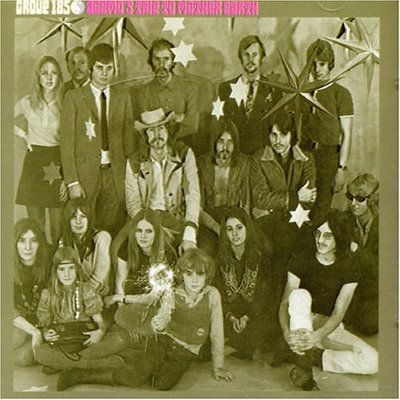
Peter Sjardin was of the first line-up and Daniel van Bergen the second. They can be viewed as constants. Let’s get to the music. The band started playing gigs in ’66 and became an underground sensation, even opening for The Mothers of Invention in 1967. In 1968, the band released their first full-length Agemo’s Trip to Mother Earth (picture above). The album cover actually had a 3-D sleeve and it included 3-D glasses (hence why it is today a tough find and BIG LP sell).

“Mother No-Head,” the esoteric piece above, is on that album. It was also released as the A-side of a single in 1967. In every sense of the word, the song is weird. After beginning with a drum beat straight out of Jazzy big band, and a bass/guitar riff from a spaghetti western, a chorus of monks provide background to a deep, unclear incantation. It’s a Dutch Western. Then a flute introduces something straight out of a cheeky British movie soundtrack before more odd vocalization. At around 1:15, I realized that the monks were humming the French lullaby and this made me smile. Then when a twangy guitar plucked the notes of the lullaby I was just flat-out grinning. This is just great! We get some nice keys before we fall back into the beginning (the fleeting flute still there). Why is the progressive? The flute, creative drumming, intricate track layering, and monk chanting.

Here’s another one from the band. “Misty Night” was the B-side of the band’s first single, released in 1966. This certainly feels more psychedelic (even garage) at the start. We get a reverberating (like SERIOUS reverb) guitar at the outset. I kind of like the vocal – despite the fact it is grunt singing at the start. The song then falls into a lull with the relaxed bass and humming.

Here is some more information about them. Click here.
President’s Day Jam

20 Feb


Paste Magazine had a clever music-related idea for honoring the presidents on this President’s Day. They took each president’s term and matched it with a song that correctly related to said president. You can view all of the pairings here.

A fun commander-in-chief music game? Count me in. What else am I supposed to do on my day off? Now, of course, many songs can fit different presidencies, but I think the author did a good job establishing fun pairings. There were a few cop-out choices. Picking a song about specifically about the president to describe his candidacy is a little too convenient. But seriously, what better song describes President James K. Polk than the They Might Be Giants’ classic?

I don’t know what’s funnier; the song itself or the kids dancing.

For President Teddy Roosevelt, the writer chose an Elvis song, “Teddy Bear” because of obvious reasons (the Teddy Bear was/is important). But, come on, Teddy is known for being a presidential bad-ass; a big-game hunter and environmentalist who met adversity with pugnacious fortitude. Teddy Bear? Come on. He deserves something a cooler than that. Here’s my choice for the U.S.’ brash 26th president and one of our biggest patriots.

Pretty much a no-nonsense patriotic tune about the United States. It would obviously be anachronistic in Teddy’s time, but, I think it suits presidential passion well.

Best choice on the list?

Guess the president? Haha. I also liked the choice for President Obama. The author mentioned the temptation to pick “A Change is Going to Come” by Sam Cooke, which he did use in his campaign. I would also have been tempted by this particular version of “We Shall Overcome”:

What do you think are some good songs that represent presidents? Comment!

The Music Court’s March Madness Is Back!

17 Feb

Last year, The Music Court celebrated the College Basketball March Madness tournament by forming its own unique March Madness-themed poll that had nothing to do with college basketball. Instead, we set 16 albums against each other (all released in 1967) in a battle of superiority. How did it work?

I did my research and (in completely and obviously biased fashion) picked what I thought were the top 16 albums of 1967. Feel free to search March Madness in the search bar for a glimpse at how last year’s competition progressed. It worked like a region in the March Madness poll. The 1-seed faced the 16-seed and so on. Readers (you) voted on your favorite album each round and the match-ups naturally became more difficult as the competition progressed. At the end of the competition, expectedly, the #1 seed, Sgt. Peppers Lonely Hearts Club Band took home the top Music Court prize and the title of “Best Album of 1967.”

The poll idea was mainly an experiment. In order for something like this to work, I need help from all of you. The response was good enough to keep this March Madness poll annual. And, as you can see by the picture above, we are traveling back in time one year (from 1967) and reproducing the idea. The Beatles may have taken the title of best album of 1967, but what artist released the best album in 1966. Was it still the Beatles with Revolver?

Starting a little under a month from now, I will post up the initial match-ups and urge you to vote. I hope that we can produce an equally awesome performance and I am looking forward to getting the show on the road. I compiled the list today, and, although we are not starting with the first match-up right now, I do have something related to share with you all. Oh, if you are confused about all of this March Madness mumbo-jumbo and need a good description, do not worry, I will provide one in the first poll post soon.

When I was compiling the list of albums earlier today, I initially listed 19 albums. I needed to get the number down to an even 16, and after some inner deliberation, trimmed the fat, so to speak. The 17-19 best albums of 1966 may have just missed our list, but they are still excellent albums that deserve recognition. If you have been reading the Obscure Classic Rock section, you can appreciate how difficult it was to succeed in music during the mid-60s because of the high level of talent and competition. Sitting at #17 are The Fugs and their self-titled second release.

This folk/psychedelic act named after Norman Mailer’s euphemism for a certain four-letter word that begins with F in “The Naked and the Dead”, featured Beat/Hippie crossovers Ed Sanders and Ken Weaver, and Beat poet Tuli Kupferberg. The songs certainly reflected the burgeoning 60s hippie counterculture, and their satirical protest songs are humorous, poignant and original. This particular album has my favorite Fugs song, “Kill for Peace,” a clear contradiction and Kupferberg composition. It is a ditty that inspired future artists like Country Joe.

How Good is Willie Nelson’s Cover of “The Scientist”

15 Feb

By now most music lovers have heard a portion of Willie Nelson’s acoustic cover of “The Scientist” by Coldplay. The cover was featured in a stop-motion advertisement by Chipotle called “Back to the Start.” In the advertisement, an individual farmer falls into the trap of factory farming and then realizes the mistake in his ways and goes back to open, healthy farming. It is a wonderful advertisement, beautiful in its sincerity and simplicity, and effective in its message. It is somber and uplifting. I think it is one of the best advertisements I have ever seen. I love Chipotle’s Vegetarian Burrito Bowl and will most certainly continue visiting the establishment. But I’m not writing to share with you all how good the burrito bowl is (even though it is such an excellent post-gym Saturday lunch). One of the reasons the commercial is so successful is Willie Nelson’s passionate cover of “The Scientist.” Listen and watch the advertisement:

After its first primetime spot on the Grammy’s this weekend, the Youtube views for the advertisement have ballooned to 5 million, eclipsing viral status and entering legendary territory. It has over 22,000 likes and has sent the music news world into a posting frenzy. Of course, also, it has sparked the questions of whether Willie Nelson’s version is better than the original.  Even Coldplay fans are bowing to the 78-year-old country crooner saying that his version is superior. I don’t think it is possible to say which version is better. Despite that Nelson’s version is a cover, the two songs couldn’t be more different. Seriously, I have heard two original songs sound more alike than these two versions of the same song.

Coldplay leadman Chris Martin recorded “The Scientist” after a late-night rendezvous with an out-of-tune piano in Liverpool. He just happened upon the chords and thought they sounded lovely. He actually wanted to work on the George Harrison song “Isn’t it a Pity,” but found “The Scientist” instead. After being released as the second single from A Rush of Blood to the Head in 2002, the four-chord melody took off and today is one of Coldplay’s most beloved songs. Coldplay’s version is almost certainly about a failed relationship and a plea to try again.

Willie Nelson’s version, though, recorded in 2011 for the Chipotle commercial, takes on a completely different feel. Nelson has been a widely renowned critic of overly mechanized farming and the poor treatment of farm animals and independent farmers. The song, in this sense, seems to be a plea to tear down our modern farming constructs and work ourselves back to healthy food and family farming. It is a plea for health, and, in that way, may even make the lyric (while it doesn’t fit perfectly) stronger.

So what about Willie Nelson’s version is so fantastic. Let’s start with the Coldplay version (above). Chris Martin’s elegant falsetto is infectious and the simple piano fits his voice well. The song is stripped down itself, rising softly with some strings and drums, but remaining a true ballad throughout. It is celestial and boundless in its omnipotence. Listen to how it sets the nighttime scene.

Nelson’s version is more rural and pastoral. It sounds like it can be played on a porch while looking out on an open plain. Instead of a piano, Nelson favors a tuned-down acoustic guitar, picked delicately, with a haunting electric providing a passionate whine. The drums begin in the second verse and I like the addition. The sound remains soft, but full, with many tasteful elements.

The kicker in this song is Willie Nelson’s voice. There is no denying that Chris Martin has a wonderful voice, but Nelson’s worn croon is, itself, an American icon. His voice is stitched into the tapestry of America’s music tradition with musicians like Johnny Cash and Buddy Holly. At 78 years old, his voice painted with such tenderness and verisimilitude, I almost feel that I am with him seeing his farm turn into an intolerable operation.

Before this song was released, I, like everyone, would have probably said that Willie Nelson’s greatest cover is his version of “Always on My Mind” which reached #5 on the U.S. charts in 1982. But now, I think that “The Scientist” is clearly number one. And, I think it has a similar power that Johnny Cash’s version of “Hurt,” originally by Trent Reznor and Nine Inch Nails, has. Simple, passionate, and real. A musician who has been through it all giving a career performance (like a historical record). Reznor has publicly come out and laughed about how Johnny Cash’s version made his song a Johnny Cash song, and while the same may never happen with Nelson’s “The Scientist,” I do think Chris Martin may have to soon publicly acknowledge how legendary Nelson’s version is.

Kris Ife and the Quiet Five – A Little Morning Sun

14 Feb

The Quiet Five...uh...I mean Six

Let’s set the scene. Mid 1960s, London. When you think of music during that time, genres like Merseybeat, Pop/Rock, and Blue-Eyed soul all come to mind. We’re thinking The Beatles, Gerry and The Pacemakers, Freddie and the Dreamers, and The Hollies. Genres quietly fuse, and when Beat music slowly died out, it was replaced quickly with edgier R&B bands like the Animals. It was easy to get lost in this fog of famous musicians. Enter the Quiet Five.

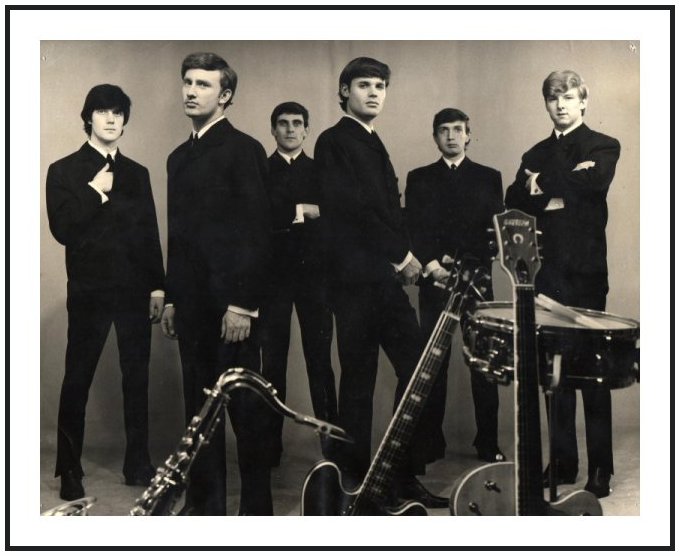
The Quiet Five was not always the Quiet Five. They formed as the Vikings in the early 60s, a group of musicians from Paddington. The original line-up was Kris Ife – Rhythm Guitar, John Howell – Clavioline & Guitar, Ray Hailey – Drums, Roger Mckew – Lead Guitar and Len Hooker – Bass. Len Hooker left soon after the band’s founding and was replaced by  Phil Leavesley. The Vikings worked mainly as back-up musicians for various artists, even supporting the Beatles at Romford Odeon in 1963. In 1964, the Vikings were combined with a South London band called the Quiet Five, adopting their name in the process. Leavesley was replaced by Richard Barnes (bass guitar/vocals) and the band added saxophonist John “Satch” Goswell. This line-up of six individuals, despite their name, went on to record the band’s most known hit of their short career.

Ron Richards, the Hollies’ producer and the producer of “Love me Do”, heard Kris Ife’s composition, “When the Morning Sun Dries the Dew,” and thought he could turn it into a hit. The year was 1965, and the song did find its way into the top 50, one of two top 50 hits the band would have. It lacked staying power though and did not reach a larger audience. After a few failures and a record-label switch, the group ended its recording career.

It’s a shame that “When the Morning Sun Dries the Dew” has fallen into obscurity because the song is actually pretty good. It features an opening guitar riff, slow and intimate, almost like a slowed down Peter and Gordon riff (which you can say is a Lennon/McCartney riff). The song is different from a lot of the music being released in 1965. It’s sensitive melodies, airy acoustic riffs, sincere harmonies, and strung-out keys, make it sound a few years before its time. The song could have very well been released in 1968 and hit more popularity. The reason I say this is because it is certainly not R&B or Merseybeat – it simply lacks the speed of the time. It’s a wonderful piece and I hope that more people begin to recognize it as such.

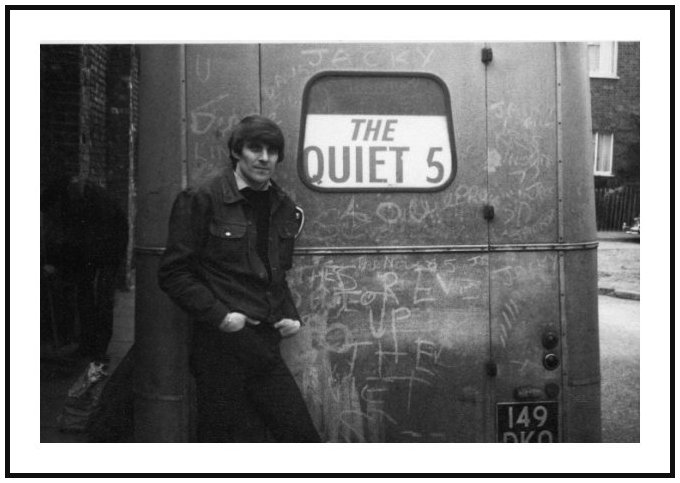
I want to continue this exploration with the man in the photo above, Kris Ife. Ife, who wrote  “When the Morning Sun Dries the Dew,” went on to have solo career that included a recording of a cover of “Hush,” originally by by Joe South. “Hush,” of course, became a big hit for Deep Purple, but, apparently, Deep Purple was inspired to play the song after hearing Ife’s version.

And listen to that. While each preceding version is fast-paced and explosive, Ife adds harmony, which is one of the reasons why Deep Purple’s version is so great. The version is obviously not Hard Rock, but it definitely inspired Deep Purple’s heavy use of bass, tremendous soloing, and gritty performance.

Various members of the Quiet Five do still perform today. You can follow Kris Ife on his website and the band’s great tribute Facebook page