Archive by Author

In The Jester’s Ear – Say It Mowgli

19 Jan

large

Rudyard Kipling, the author of the Jungle Book series and creator of Mowgli, the feral child protagonist of the novel and namesake for the California-based alt/rock band, once said, “I always prefer to believe the best of everybody, it saves so much trouble.” Before I even get to the song that is currently in my ear, I want to focus on Kipling’s quotation and the purpose of me placing it in the post. The 7-member Mowgli’s pair their wall-of-sound blend of Indie/Pop with a campaign to “Be a Mowgli” and do good deeds for other individuals – a social network of kindness. The Mowgli’s truly believe the best of everybody. The band also creates some tremendous tunes.

A few years old and only growing in popularity, The Mowgli’s employ a Grouplove-like Los Angeles sound that combines melodies and vocals together into incredible amalgamations of sound. “Say It, Just Say It” is a quintessential example of the band’s draw. The song begins with a chorus of voices – much in the same vein of Edward Sharpe and the Magnetic Zeros – over a smiling guitar riff. The band plays an infectious type of power indie/pop that bands like American Authors and Young Rising Sons has found recent success with. The Mowgli’s, though, just have so much people power, and it has developed such tremendous unity, almost like Polyphonic Spree. It’s like a family band. And the music is awesome. I love listening to it, and it is currently in my ear (and will be for a while).

Capitalism and the Legacy of Bob Marley: An Influential History

17 Jan

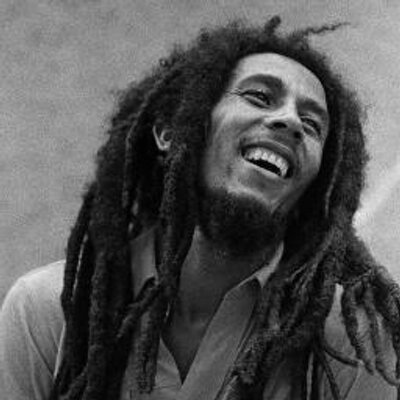
We have a special treat for you this Saturday morning on the Music Court. Guest writer, Beth Kelly, provides her take on the unfortunate commercialization of Bob Marley, whose final words were “money can’t buy life”.
 

95841c04807c60c21052bfd1c4d1d8c9_400x400

Even though Bob Marley died from cancer at the young age of 36 in May 1981, his legacy has lived on – though likely not in the way he intended. Born in Jamaica in 1945, Marley’s musical career began when he was just a teenager.

Playing a large role in the formation of his band the Wailers, he helped cement their success throughout upcoming decades. Going on to produce a number of reggae hits, their unique sound also inspired numerous international artists to adopt reggae styles within their own music. That influence is sustained today, giving particular consideration to the proliferation of ska record labels in the 1990’s, and the incorporation of reggae elements in genres such as pop, punk and rap.

Though the Wailers broke up in 1974, Marley’s solo career thrived until his death. Over the final years of his life, he created highly politicized music, perhaps highlighted by 1979’s “Survival,” which attacked apartheid in South Africa. Though he dodged death once in a politically-motivated shooting in 1976, Marley tragically lost his life to melanoma just five years later.

Marley’s Evolution

During the time Marley and the Wailers were together, his religion shifted from Catholicism to the religious beliefs of the Rastafari.

Marley’s beliefs inspired him to provide financial support to those less fortunate in Jamaica, as well as his ever-growing family. His benevolent approach to dealing with the ills of society was something that was ingrained in his psyche after growing up in poverty. Also, brought to anger by the lack of political rights for people in all levels of economic strata, he helped echo the words of the repressed through his music.

However, his religious beliefs also resulted in what could be considered a “tactical mistake” on his part, as they held him back from creating a last Will and Testament before his death.

The Price of Fame

Unfortunately, the philosophies espoused by Marley while he was alive have been soiled in the three-plus decades since his death. Yes, he is still revered as a countercultural icon, but his name and image have essentially been branded, and used as tools by shrewd businessmen. And perhaps even more unfortunately, much of this branding strategy has come from within Marley’s own family as they seek to cash in on his name.

Their attempts to merchandise their family member’s legacy contradict any rational understanding of Marley’s true beliefs, which definitely didn’t include an official merchandising company. Now, his name and notoriety help sell a variety of products that stand in stark contrast to his political leanings.

Headphones, an organic food line and watches are some of the contributions that have Marley’s name attached. Even worse, a Marley-branded “natural” drink helped make a group of schoolchildren sick in 2012. And given Marley’s connection to marijuana (again related to his Rastafarian beliefs), additional marketing inevitably includes the sale of cannabis-laced lotions and accessories, as well as a special blend of the herb where has already been legalized.

Looking at Marley’s legacy from a neutral perspective, commercial affiliations aren’t a complete surprise. Given the number of similar, supposedly socially-conscious rebels from the 1960’s and 70’s who have since sold the rights to their work to the same people they used to rail against, it seems like the allure of money gets everyone in the end. However, in this case, Marley isn’t around to offer his opinion. One could compare his estate to that of Dr. Martin Luther King, Jr, in that family rifts have some of his children wanting to put a price on invaluable bits of history.

Remembering the Rastafarian Legend

In early February, the date that would have been Bob Marley’s 70th birthday, will pass. His absence continues to be felt not only in the musical world, but the ever-changing political landscape. His son, Ziggy Marley, offers some hope. Recently appearing on DirecTV’s Guitar Center Sessions, he has kept the spirit of his father alive through music – a much better tribute than cannabis creams and screen printed t-shirts. While Bob Marley will likely never disappear from the public eye completely; one hopes that his activist legacy will not be completely overshadowed by greed.

The Folky Skins of Anna Dobbin

15 Jan

a2743570232_2


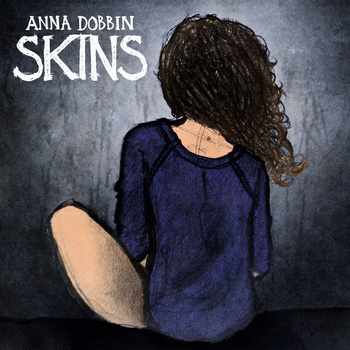
I have a great local release from the esteemed musical borough of Brooklyn, NY for you all tonight. Skins, an intimate 9-track release from singer-songwriter Anna Dobbin, is a delightful acoustic string of melodies with jazzy instrumentation and folky overtones. Most of all, though, it is the smooth Deb Talan-like vocals (for those Weepies fans out in the musical blogosphere) from Dobbin that carries this album, and, if you are looking for a serene soundtrack to listen to on this Thursday night, you have come to the right place.

Dobbin describes the album as a palette of a great variety of songs that she, with the help of a few other musicians, weaved together into a comprehensive piece. One of the reasons I am digging this album is its utter simplicity. Aside from the eclectic bassoon, which does fit perfectly mind you, the tracks are Dobbin, some light clickity-clack of a drum set, and the familiar sound of a comely acoustic guitar that is strummed creatively. Interspersed throughout the album is some lead guitar and keys, but it is done so tastefully that it does not shake the placidness the listener feels while first hearing this album.

Let’s take a listen to “The Trouble I Could Cause,” a quintessential Dobbin track (as my description above portrays). The song begins with a lightly strummed acoustic guitar next to flicked drum beat. Dobbin’s voice is filled with a blissful pulchritude that, while tranquil, still sounds worn. This piece specifically features some vocal layering that adds an echoing effect to the sound adding to the song’s power. The orchestral quality provided by the bassoon is refreshing and different; one might not think it would work, but just take one listen and you can hear how it does indeed help the song.

Another track that caught my attention on the album is a duet named “So Long” (co-producer and vocalist Austin Greenfield can be heard singing verses on the track). The acoustic features a segmented strumming pattern and trading vocals. It is as if Josh Radin or Peter Bradley Adams combined with JayMay or Ingrid Michaelson and the output was this piece. All in all, it is a pleasant song with consistently good vocals – controlled and calm.

Nice going! Listen to the rest of the album.  

2015 Albums Preview – January and February

28 Dec

How was your 2014? As demonstrated by the Top Songs/Albums countdown, 2014 was an exceptional year for music. At the end of each year of this blog’s existence I have always found myself questioning how the following year will one-up the previous year, and every year I am surprised by the following year’s ability to exceed my expectations. While many contemn modern music, I always exclaim that good music exists when you life the veil of mainstream mediocrity, and The Music Court exists to help you strip off this superficial covering. Let us help you get a jump start on your 2015. Here are some albums you should check out during the beginning of 2015.

Absent Fathers by Justin Townes Earle – January 13.

300x300

Absent Fathers is the apt follow-up companion LP to Single Mothers from the Americana troubadour Justin Townes Earle (Steve Earle’s son). Earle’s alt/country croon and guitar-driven tracks are worth a few listens to and, considering the success of Single Mothers, there is no doubt that Absent Fathers will be a solid release.

Check out more information on the album

What a Terrible World, What a Beautiful World by The Decemberists – January 20

the-decemberists-what-a-terrible-world-608x608

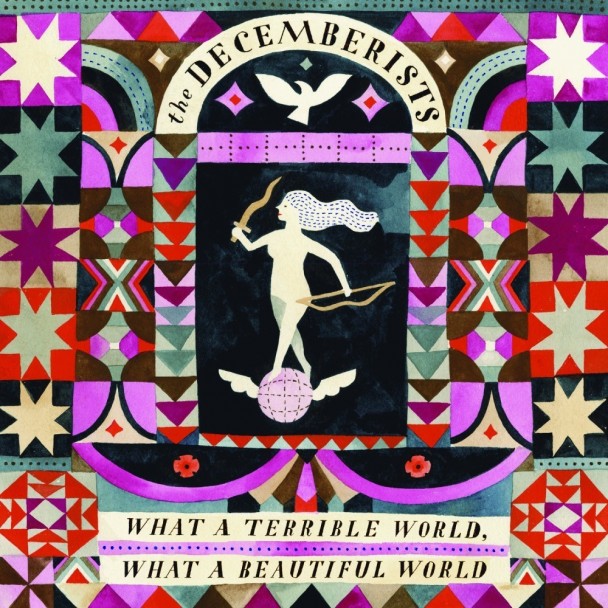
If “Make You Better,” the Decemberists’ first single from its seventh studio album, is any indication of  what Colin Meloy’s new creation will sound like, I am happy to report that the music will blend The Decemberists’ recent drive to a more pop sound with its alternative roots. The music combines a Death Cab for Cutie sound with a little R.E.M. and even some Carbon Leaf. Then, of course, in typical Decemberists fashion, the song features some diverse instrumentation and creative harmonies.

Check out more information on the album

Vestiges and Claws by Jose Gonzalez – February 17.

vestiges_claws-cover-881

I am so very much looking forward to Vestiges and Claws. The album, Jose Gonzalez’ first solo LP release since 2007 (has it been so long?), is bound to be a 10-track testament to 60’s throwback acoustic music. “Every Age,” the official video of which is available on YouTube (and below), is classic Jose Gonzalez, relaxed and melodic with light percussion.

Check out more about this album


Top Albums of 2014 – #2: Turn Blue by The Black Keys

24 Dec

604054_10152315638445309_311625226_n

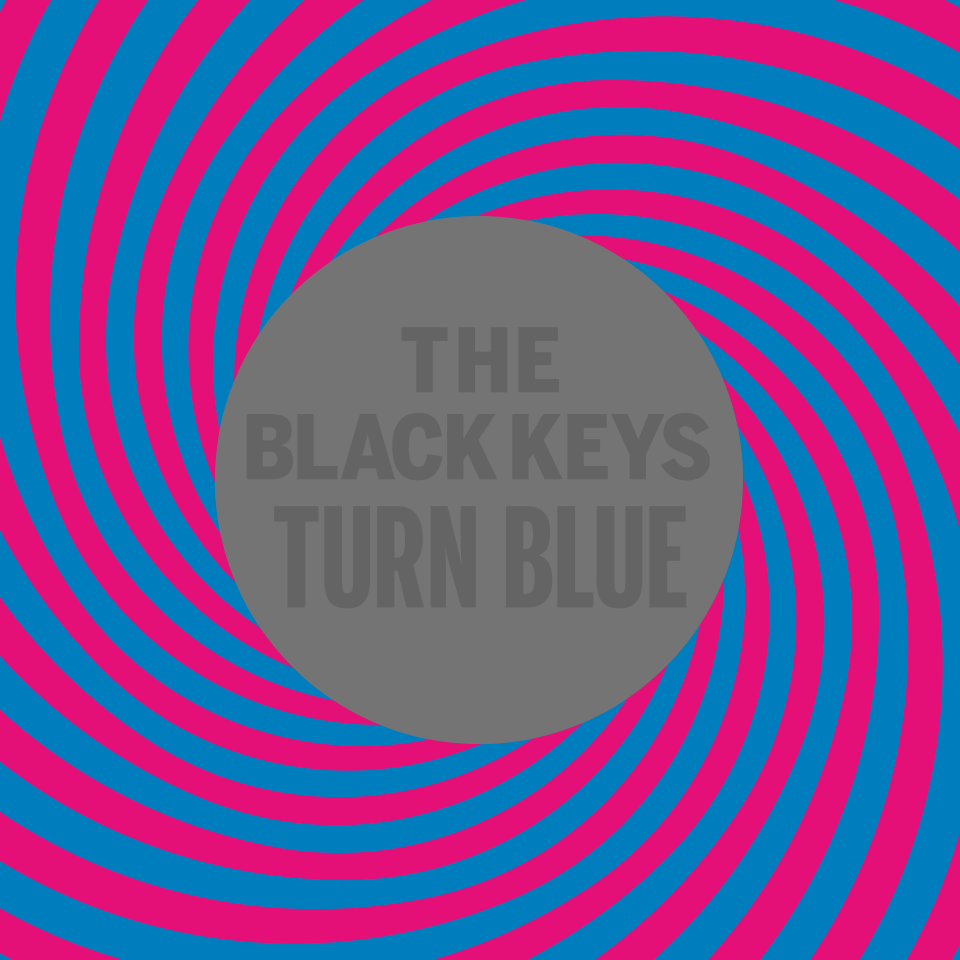
To be honest I was not sure where to start with this post on the #2 album of 2014: The Black Keys’ epic LP Turn Blue, an album eagerly awaited by a substantial fan base since the uber-successful release of the band’s 2011 album El Camino. My loss of words is directly caused by the plethora of topics I can discuss concerning this album. There is the continued partnership with producer Danger Mouse (who always finds his way onto the Music Court’s end-of-the-year charts with multiple bands), the Mike Tyson aided release announcement in March of this year, the Ghoulardi-inspired album title and the blue and pink Twilight Zone-esque spiral album cover, and, of course, the powerful 11 tracks that features sounds that range from psychedelic, low-key Broken Bells inspired keys to the upbeat blues rock that the Black Keys became famous for.

I’ll stick with the music.

The Black Keys, the baby of two childhood friends Dan Auerbach and Patrick Carney, has produced excellent scratchy garage rock since the band’s inception in 2001, and since then the band has continued to evolve as an inventive propagator of engaging, catchy rock music, and this has helped the duo develop a loyal fan base. Turn Blue, the band’s 8th studio album, involved some tenseness (as expected in the creation of any album) and a lot of new exploration for the band, which helped produce some fascinating tunes that take the Black Keys out of its comfort zone.

“Weight of Love” is a perfect indication of this. The inception of the song draws out two chords, distorted guitar, and distended percussion.  The first two minutes plays like pre-Dark Side Pink Floyd mixed with Burton’s spaghetti-western inspired Rome. The song then transforms to a sprawling rock piece with echoed harmonies and wall-of-sound keys. There are so many elements magically combined into this piece and this combination is done incredibly well. It is masterful. The fear was that it would be too self-indulgent, but, instead, the song actually blends 50 years of rock music elements and takes on past and present with ferocity and listenability. Excellent piece.

“Gotta Get Away” is refreshing. It’s a jaunty on traditional Black Keys garage rock. It is an infectious song with drawn-out keys and jocular instrumentation. It’s just a joy to listen to, so do so, and have a wonderful holiday!

Listen to more – Black Keys Website