Archive by Author

Mason Jennings has “Always Been” Using His Voice

10 Jan

Mason Jennings


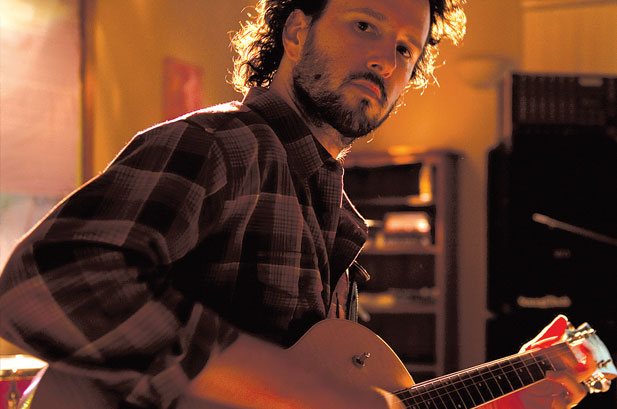
The first song I ever heard from Mason Jennings was “Ballad of Paul and Sheila” off of Jennings’ fourth album Use Your Voice released in 2004. The incipient picked chord progression piqued my interest and Jennings’ commanding and delicate croon hooked me. It was only a bit later that I learned that the song was dedicated to Minnesota senator Paul Wellstone and his wife Sheila who died in a plane crash in 2002 (Wellstone was a strong advocate for peace and social advocacy and was the only senator facing reelection to vote against the Iraq war) – I was 14 and not that up on politics at the time! The simplicity of the memorial lyric stuck me to the music of Mason Jennings for good, and 10 years later Jennings is still creating exceptional acoustic music and flying under the radar when he should most definitely be soaring among the most renowned folk artists today.

Aside from “Ballad of Paul and Sheila” my favorite Jennings song is “Jackson Square,” which is perhaps Jennings finest moment as a sad raconteur. The song is one of the finest examples of a lyrical story. You can check out the lyrics by following that link, and I also urge you to listen to the song.

I tell you all of this because Ritter released Always Been back in November of 2013, and for me it was his best release since In The Ever, which he released back in 2008. Always Been put him in double digits for albums with original content (not including The Flood), and is demonstrative of an artist who just continues to create multifarious content that still harbors the impressive emotional appeal, as if each song is a track created just for the listener. Good artists are able to create this feeling for a few songs, but great artists like Mason Jennings do this consistently, and Jennings has done it since the late 90s. Hence why I am always shocked that more listeners are not aware of his aptitude.

Jennings was born in the Aloha state but moved with his family to Pittsburgh at an early age (quite the unfortunate move if you ask me). He learned to play the guitar, dropped out of High School, and toured the U.S. gathering stories and experiences that he would use to script his first foray into music. After settling in Minnesota to produce music, Jennings started to churn out album after album of songs rife with political activism, first-person narratives, and emotional tributes. While narrowing in on his identity, his music became tighter. Now, nearing 20 years as an artist, Jennings is masterful. His effervescent songs can liven up any room and his minimalistic singer/songwriter pieces carry an innocence and ardor that affects listeners.

Always Been is most similar to Bone Clouds, Jennings most potent release. The song are riveting and each one has a distinct Jennings flavor that captures the attention of the listener. Jennings has been working on an expanded, fuller sound that is recognizable with this release. While he still is able to garner the solo drawn, his other tracks maintain a jauntiness that complements his storyteller vocal. A great example of this is “Wilderness.”

“Dreaming” is a more traditional Ritter track, although it is almost like a folk lullaby. Plus, tell me the falsetto “dreaming” in the second chorus isn’t just sweet. It’s impressive. The short piece is stripped down in this live recording (a little different than the studio version). Ultimately, although I hate the word, it is a nice song.

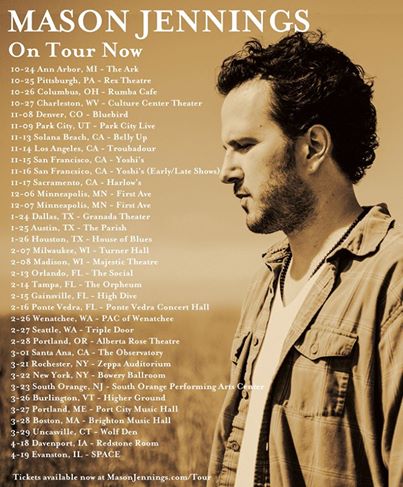
Check out the full album on Mason Jennings’ website and check him out on tour.
Tour Dates


The Amazing Blondel Sinfonia

9 Jan

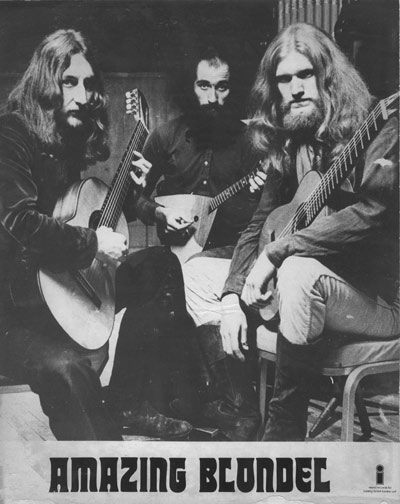
Amazing Blondel

Gosh, I have not done a 60s Band of the Week post in months. You know, when I first started the Music Court back in 2009, my intention was to create an epic music amalgamation. Quite simply, I wanted to highlight newer bands I enjoyed with the perennial sound of the 1960s/early 1970s – the music that made me fall in love with … music! I do not want to lose the latter goal. Thus, my New Years Resolution for the Music Court is to go back to my original intention. While new music, incipient artist profiles, concert reviews, and other keen posts from Music Court writers will crowd the pages of the Music Court as always, I am bringing back the 60s/70s and continuing with the epic band profile list. Amazing Blondel kicks off the year!

Sinfonia is the Italian word for symphony. Two roots in this word. Sym meaning “with” and phon meaning “sound”. It’s a Latin word (symphonia) derived from greek (both usages were for instruments). This mini English lesson does have a purpose; I promise. The consonance associated with sinfonia is ancient. Sweet sounds have always engendered pulchritude and comfort. This was no different in the in the 60s/70s. Available among the genre smorgasbord was a sub-genre of the folk revival called folk baroque. Known musicians like Simon and Garfunkel (“Scarborough Fair”) and Nick Drake explored this genre, which blended English antiquity with modern American sounds. This was just one example of progressive folk/pop.

The Incredible String Band took this genre to new levels with the release of its exceptional album The 5000 Spirits or the Layers of the Onion. This album implemented medieval instrumentation (oud, flute) and African instrumentation – we can thank the perspicacious Robin Williamson for this. Thus Medieval folk rock was born. Two of the most popular bands from this genre were Pentangle and Amazing Blondel. Amazing Blondel was unique, though. Many bands in the Medieval folk rock genre embraced jazz and electric music influences. Amazing Blondel stayed true to antiquated instrumentation (lute, theorbo, cittern, tabor, ocarina, flute, crumhorn, dulcimer, and glockenspiel). For the flute, they were compared with Jethro Tull, but Amazing Blondel was in a musical class of its own with a multifaceted genre that no one could quite pin down. It was medieval-style music with British performers. I’m just impressed the band was able to find the instruments I listed above. One would think there were (and are now) not many music shops selling crumhorns.

Amazing Blondel was started by John Gladwin and Terry Wincott, two multi-instrumentalists who left harder rock music to form a band that focused more on delicate instrumentation and wispy singing. The band focused on acoustic instrumentation and clearly pulled from a good amount of resources. The band added Eddie Baird after the release of its debut self-titled album in 1970 and started touring with bands like Procul Harum and Genesis (makes sense, right?) The full band released three albums from 1970-1972 and a few more after John Gladwin left. Of the band’s albums, the 1972 release England is my favorite of the band. Why don’t we have a listen?

The strings in this track are mesmerizing. The listener is caught in the instrumental story. The song shifts from a depressed darkness to light fast-paced strings and then back to staccato rhythms over a glum harmonium (may be a mellotron). I was always struck by the proficiency of the musicians. It’s a remarkable little piece and my clear favorite on the album.

“Landscape” is your classic upbeat medieval piece fit with lovely flute, background strings, and mellotron. The vocals are fine and feathery like a soft pillow. It is also just so British, which works so well for all of Amazing Blondel’s music. It is difficult to dislike this song. It’s just beautiful, plain and simple.

What Do “You Say” About Morning Fuzz?

6 Jan

Morning Fuzz

Feeling glum? It’s Blue Monday, the day marked off as most depressing of the year. There is a f-f-freezing cold blast that is   providing brumal torture to a large portion of the United States. Depressed, you say? Let the Music Court lift your spirits. Well, I don’t know what good our words will do. Let me rephrase. Let the Music Court introduce you to a band that will help put a smile on your face.

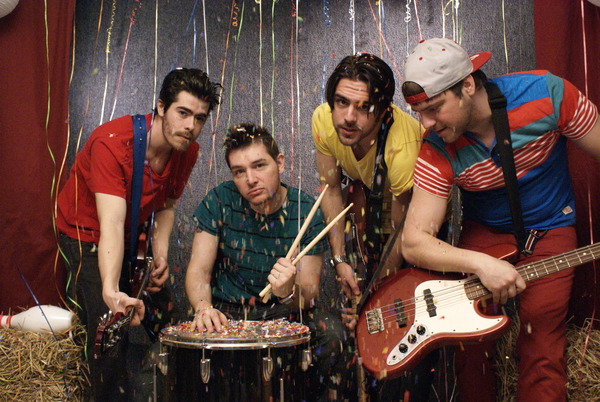
“You Say” is my favorite track off of vivacious alt/rock band Morning Fuzz’s debut album Chasing Ghosts. From its outset it pumps energy into your cold and weary bones. Shake the languor and get your toes tapping and head bopping. This quartet from New York wants to engender some warmth to replace the soul-sapping cold. So turn up the volume and read a bit about the creation of Morning Fuzz.

The band is the spawn of Ultra High Frequency, a rock band created by New York natives Frank Fussa (Vocal/Guitar) and Christopher Johanidesz (Bass). After UHF met a sudden end, Fussa and Johanidesz decided to strip down the musical concoction and regroup as a band that focuses on catchy rhythms, uplifting harmonies, and, dare I say, good old-fashioned rock n’ roll. After a few EPs, the band finally found a constant drummer (Marco Sulis) and also added guitarist Michael Cullari to take on a more elaborate, full sound.

Since then, Morning Fuzz has gained a performance reputation on the East Coast, and wrapped up the recording of its full-length LP (which was released in Summer, 2013), which they recorded in Laundry Room Studio with producer Barrett Jones. You can check out the full-length here.

“You Say” is a jaunty track that is balanced by a staccato guitar rhythm. The sprightly rhythm drops out in favor of light harmonies pre-chorus, and then a chorus that is a premium example of call-and-response melody. It’s a catchy, well-constructed song that makes you feel happy. The alt/rock groove is strong throughout the debut album, but “You Say” stands out.

Check out more of Morning Fuzz on the band’s Website, Facebook, and Twitter.

Happy 2014 – Some Albums to Look Forward To

2 Jan

2014

After finishing 2013 with a list of top sings from the past year, The Music Court is ringing in 2014 with a few album previews for exciting new albums to be released in the coming months. Will these albums feature songs that appear on the top 10 songs of 2014 list? I can’t think that far in advance! Before we swing back into new band profiles and other new, rich content, let’s check out three albums on the platter of melodies for the new year. We start with a duo of accomplished musicians who will look to pin their respective ability against the dreaded sophomore album slump.

Broken Bells

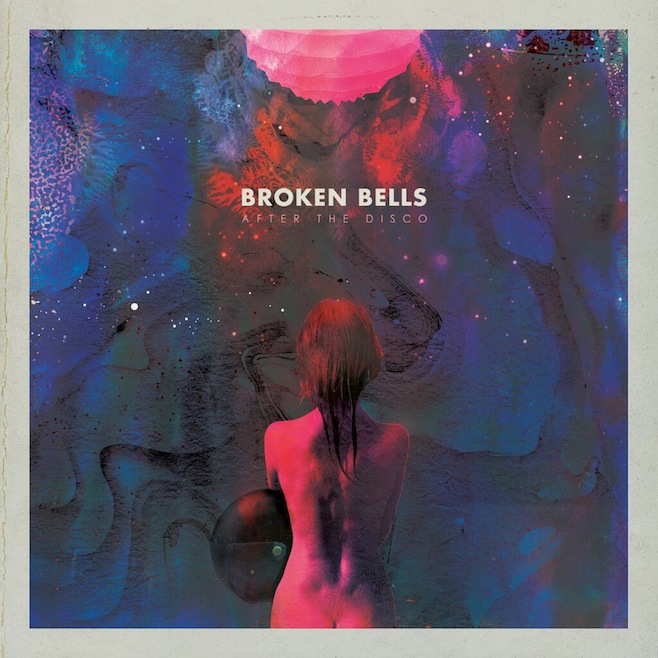
Broken Bells, the Indie rock side-project of Shins leadman James Mercer and multifarious producer/musician Danger Mouse (Brian Burton), is coming off an uber-successful eponymous release back in 2010. After the Disco, the much-awaited second release from the duo, has already received some serious buzz from music lovers (The Music Court wrote about the first single from the album – “Holding on For Life” – back in November). The album is a bit spacier and implements elements of disco (Mercer’s airy vocal helps for this). Will it be a second revelation for the band or spell an end to the project? Check out for yourself on February 4th

High Hopes

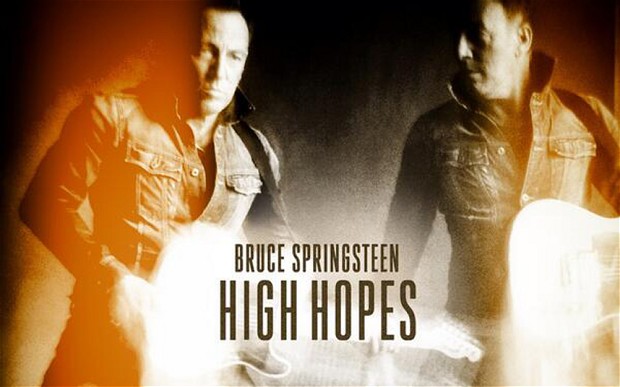
This is Bruce Springsteen’s 18th studio album. Yes, 18. The Boss will never stop working, and he clearly has high hopes for this unprecedented release. Unprecedented, you say? This is the heartland rocker from Jersey’s first studio album composed entirely of covers, unreleased material, or reimagined versions of past songs. For other musicians this may be considered the beginning of the end, but for Springsteen it is a celebration. Tom Morello joins Springsteen on eight out of the 12 tracks, and late saxophonist Clarence Clemons (the big man) and organist Danny Federici (Phantom Dan) appear on two tracks. If you haven’t already gotten a copy of the leaked album it comes out for real on January 14. 

Fanfarlo

Fanfarlo has had a dear spot in my musical heart since the release of its debut album in 2009. The London-based band that defies all genre defining (the band describes its sound as Space Opera meets Spaghetti Western, so do with that what you will) features a plethora of rich instrumentation and potent vocals. Not band for a quartet of multi-instrumentalists. The band’s last release was a concept EP that explored the past, present, and future of humanity. Let’s Go Extinct comes out on February 10. 


Top 10 Songs of 2013 – #1: “Pompeii” by Bastille

31 Dec

Bastille Band

We have reached the end of our annual countdown and standing alone on the top is “probably the happiest song about volcanic destruction you’ll ever hear.” It’s an apt quotation from the band. It is true that I have not ever heard a song about a pernicious volcano that I have liked more. I have also not heard a song in 2013 that I have liked more than “Pompeii.”

Bastille has been going at this whole music thing since 2010, but it goes without saying that 2013 was its most successful year. The London-based rock band was founded by Daniel Smith as a solo project. Not long after, he decided to form a band, and he added two multi-instrumentalists (Kyle Jonathan Simmons and William Farquarson) and drummer Chris “Woody” Wood. Signed by Virgin Records, the band started releasing singles in 2012 to moderate success in the UK. “Flaws,” a track from Bastille’s excellent debut album Bad Blood, worked its way into the top 40. Then, in February of this year, the band released “Pompeii,” and like Mount Vesuvius, the song literally blew up, reaching top 10 chart positions in more than 15 countries.

Bastille is a distinguished part of a new crop of alternative/Indie rock bands that are sweeping the musical climate. This list includes bands like Imagine Dragons (who had quite the 2013), The Neighbourhood, Young the Giant, Foster the People, and Grouplove. Out of all these bands (and there are some more I am leaving out), though, I am most excited about Bastille, whose Muse-like epic musicality makes each song potent,  infectious, and unique.

Although quite different, “King of Spain,” “The Afterlife,” and now “Pompeii” – each #1 song on respective annual Music Court countdowns – share a similar quality: the songs all near perfection (hence their #1 placement!) “Bastille” scores high marks on all qualities of an excellent song (rhythm, melody, lyric, vocal, and instrumentation).

The song begins with a Blue Swede-like vocal rhythm. This rhythmic chanting sets an almost allegorical tone, meaning the melody is representative of intense Roman religiosity. One can almost hear this dark chanting in a temple of worship – overwhelmingly spiritual and subtly lugubrious. Dan Smith’s airy voice breaks the chant and carries effortlessly over clacky percussion. This culminates in a choral diapason with crashing percussion, melodious harmonies, and the chanting. The song swoons until it breaks into war-like percussion (the percussion in this song is ridiculously skilled) and a repeated bridge (partially a cappella). The lyric completely fits the song. Over the “tumbling” “walls” and “darkness from above,” Smith urges listeners to “close your eyes” where “it almost feel [s] like nothing changed at all?” While the song is quite literally representative of the destruction of Pompeii, it is difficult not to take it as a metaphorical look at when any unwelcome change occurs in life. Sometimes it is difficult to be “an optimist” and you must “close your eyes” and dream of better days.