
Archive by Author

Top 10 Songs of 2013 – #2: “Say Something” by A Great Big World

30 Dec

A Great Big World

Back on November 1 I wrote a post urging readers to listen to “Say Something” and brace themselves for the inevitable Great Big World rise to the top. Three days later, an eager Christina Aguilera paired with A Great Big World to release a “Say Something” duet, which she recorded with the band. After a consecutive performance of this duet on “The Voice,” the song has ballooned, reaching the #1 spot on the iTunes charts, selling more than 180,000 copies in a week (and more than one million copies overall), and ultimately propelling Ian Axel and Chad Vaccarino to high-profile performances and an eagerly awaited upcoming album.

But let’s back up. Admittedly, I was late on the Great Big World train. Prior to the performances on the Victoria’s Secret Fashion show, “The Voice,” and even the initial “Say Something” feature on the final of “So You Think You Can Dance” (seven days after it was released as a single in September of this year), A Great Big World was already a known commodity in the Indie Pop world. Signed in May of 2013 by Epic Records, the group previously went on national tours with Ingrid Michaelson, Five for Fighting, and Matthew Morrison. The now long forgotten song “This is the New Year” was featured on Glee, ESPN, The Amazing Race, and One Tree Hill. While the meteoric rise of “Say Something” teetered on an overnight success story, it was more approbation for the hard work put in by the two songwriters who met while attending the Steinhardt school at NYU.

This, though, is a countdown of songs, so let’s get to the #2 song on the countdown. As you are now noticing, I included the version of “Say Something” without Aguilera. I enjoy the uber-popular Aguilera version. Unlike most songs, Aguilera does not actually out-sing the song. She has an incredible voice with almost excessive range, but instead of gratuitousness, she holds herself back and provides a heart-wrenching complement to Axel’s sincere, clean vocal. But, like in most cases, I like the untampered original. A Great Big World, however, might think the contrary. While some misguided YouTubers actually label the song as “Say Something” by Christina Aguilera feat. A Great Big World, which is shameful in its inaccuracy, the band certainly has the Staten Island diva to thank for its rise to the top.

The song, as I expressed in my initial post about it, is minimalistic. It demonstrates musical simplicity at its finest – a soft piano and tender vocal. The lyric is also simple, featuring choral epistrophe and concise verses. While simple, the song is never banal. Conversely, it is one of the freshest songs released in a few years. Perhaps it is its candor or wholeness. The song packs ardor and intelligence into a four-minute piano ballad punch.

Top 10 Songs of 2013: #3 – “Don’t Swallow the Cap” by The National

26 Dec

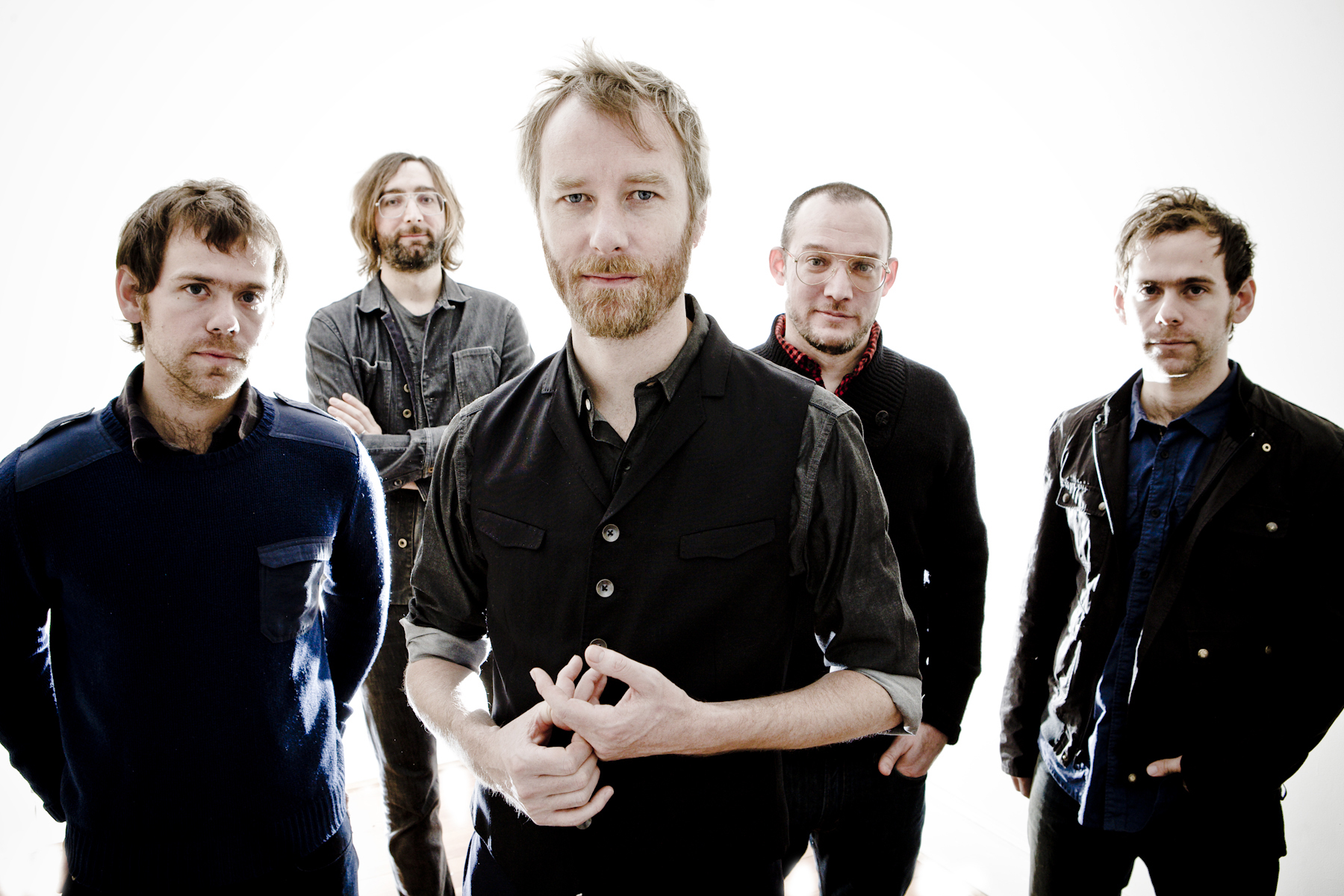
The National

In 2010 The National appeared on the Music Court’s incipient end-of-the-year countdown. “Bloodbuzz Ohio” reached the eight spot, and, three years ago on Dec. 22 I wrote the following about the song:

When the lyric, voice and instrumentation all join together to struggle with the same concept that the song represents, well, that demonstrates musical experience and intelligence, two things that The National has a lot of.

“Bloodbuzz Ohio” probably deserved a higher placement on the 2010 list. I’m making up for that now. “Don’t Swallow the Cap,” a single off of the National’s sixth studio album Trouble Will Find Me (May 17, 2013), is a perfect demonstration of the above quotation. The new album, which was recorded in New York (north of NYC), debuted at #3 on the US Billboard 200, the same spot as the band’s 2010 release High Violet. While both releases are similar in content and ratings, the new album represents an expected maturation for the band, and this musical efficacy is best displayed in “Don’t Swallow the Cap,” the #3 song on the Music Court’s 2013 list.

One of the rare negative reviews of Trouble Will Find Me stated that the music seemed emotionally dry. This couldn’t be further from the truth. If anything, the melancholic baritone of Matt Berninger is even more saturated with driving, lachrymose rhythms and candid, painful lyrics. It is easy to be deceived, though, because it does seem that the musicians in the National are finally comfortable with who they are. Comfort does often lead to complacency, but for the National it has led to newfound puissance.

While Berninger’s distinctive baritone absorbs the vast majority of the National’s praise, it is essential to point out the two sets of brothers who lay the groove and hold down the musical fort with adroitness. Aaron and Bryce Dessner, who also produced the album, take care of the guitar and airy keyboard that provide the complement to Berninger’s somber vocal. Scott Devendorf helps drive the rhythm forward with an effective bass guitar, and his brother Bryan is responsible for the persistent drumbeat. For the first 30 seconds of “Don’t Swallow the Cap,” the band is in full force. Perhaps most impressive in the song’s inception are the effervescent keyboard sounds that are high-pitched (relatively) and alien-like. The sounds set an eldritch scene, one that Berninger snugly fits into when he opens his mouth.

“Don’t Swallow the Cap” is yet another quintessential lugubrious lyric that features such gems as “I have only two emotions, Careful fear and dead devotion” and “Don’t think anybody I know is awake.” It’s a song about loss and grieving, and Berninger’s croon glides throughout the song like a figure skater, effortlessly manipulating the thin ice. Excellent song by an excellent band.

Top 10 Songs of 2013: #4 – “Recovery” by Frank Turner

23 Dec

Frank Turner

Frank Turner is no stranger to this whole music thing. His road to get to now was just a slight bit unconventional. You see, Turner’s first music love was Iron Maiden metal. Yes, the picture above does juxtapositional wonders: tattoos on his fingers hugging an acoustic guitar. His folk fervor came after his initial band, Million Dead – a post-hardcore effort with songs like “Murder and Create” and “Pornography for Cowards” – split up. After coming across Bruce Springsteen’s Nebraska, Turner had an apotheosis: fuse his hardcore roots with a punk-infused folk style and see what comes of it. Five albums later and fit with a full backing band, The Sleeping Souls, Turner has just reached the pinnacle of his solo career with his 2013 effort Tape Deck Heart, which coincidentally was inspired by another break up; this split was of the love variety.

Turner, of Meonstroke, Hampshire, has developed a unique style based on his illustrious and diverse career. It seems that when you blend hardcore and folk together, you get an esoteric form of punk. His music is laced with an acute acoustic vibe that maintains punk angst and power. Think Violent Femmes mixed with celtic punk mixed with Bob Dylan. It doesn’t seem to mesh, but Turner skillfully does it, and he does it particularly with the #4 song on our list – “Recovery.”

In 1962, Neil Sedaka and Howard Greenfield penned the song “Breaking Up is Hard to Do,” and this ditty concisely stated a fact of life. Breaking up is indeed hard to do. Turner wrote and recorded his new album after the collapse of a long-term relationship, and this adversity sparked some tremendous music. “Recovery” is not your usual break-up song, though. Turner’s lyric is jam-packed with candor and passion. In a sense, Turner, whose vocal is that of a strained raconteur, is pleading throughout the song, and the subject of his emotional petition is skillfully placed as the conclusion of the piece when he sings “Darling, sweet lover, won’t you help me to recover.”

Turner, in an ode to Dylan and other folk songs of the past, packs in so many words in each verse that the song plays like a short story. The music permits this lyrical burst. The Sleeping Souls help drive the piece, which is carried by a swinging piano and heavy percussion. The acoustic guitar glides with Turner’s busy vocal. Musically, the climax comes at around 2:15, when the Turner’s vocal falls out after the bridge in favor of a small piano solo and rising guitar. The strength of this song, though, is Turner’s masterful lyric.

Perhaps the strongest lyric is the full second verse.

“And I’ve been waking in the morning just like every other day
And just like every boring blues song I get swallowed by the pain
And so I fumble for your figure in the darkness just to make it go away.
But you’re not lying there any longer and I know that that’s my fault
So I’ve been pounding on the floor and I’ve been crawling up the walls
And I’ve been dipping in my darkness for serotonin boosters,
Cider and some kind of smelling salts.”

Fumbling for his ex-lover’s figure in a daze and then realizing that it was his fault that she is gone. Then following this pursuit by searching for anything (serotonin boosters, spiked cider, and smelling salts) to lift him up from the crippling depression he is feeling. Talk about truth, right? Turner does not want to paint an optimistic picture here. Before hitting the last chorus, where Turner sings of the long way to recovery, he croons, “Because I know you are a cynic but I think I can convince you. Yeah, cause broken people can get better if they really want to. Or at least that’s what I have to tell myself if I am hoping to survive!”

He, like most after break-ups, cannot shake the thought that perhaps if he changes he can convince his ex to come back. But, in honest fashion, he realizes that he is only telling this to himself to “survive.” He intertwines the metaphor of drowning into this piece, and that is a smart decision because while the listener drowns in the sound and words of this piece, Turner is quite literally drowning in his words, trying desperately to rise up into recovery but undergoing a song-wide realization that he may not be able to do it without his “darling, sweet lover.”

Top Songs of 2013: #5 – “Royals” by Lorde

20 Dec

Lorde

We are halfway through our Top 10 countdown, and we have reached a song that may warrant some legitimate complaints because of its placement. Many can make an excellent case that Lorde’s minimalistic mega-hit “Royals” should grace the top of all Top 10 song lists for the year 2013. It does represent the rare piece that transcends all music, gaining frequent mainstream radio play and Indie appeal. This year saw several infectious hits (“Blurred Lines,” “Get Lucky,” and “Roar”), but these songs were geared towards and remained in their mainstream niche. “Royals” and another song on this list that was not mentioned yet literally blurred music lines, but not in a lewd, egotistical (but somewhat sardonic) manner. For that and a slew of other tasty reasons, “Royals” leads off the homestretch of this 2013 song countdown.

What can be said about “Royals?” Well, first, I guess it is important to mention that Lorde – Ella Maria Lani Yelich-O’Connor – was born during the height of Los Del Rio’s vexatious dance-craze “Macarena,” which quite literally swept the world (much like “Royals”) and was #1 on the Billboard charts when Lorde was born in New Zealand. So, yeah, she is 17. Mature beyond her years, Lorde is known for her musical precociousness. She was signed by Universal at 13 and immediately started writing songs. It was only a matter of time before one of the songs stuck. She released her debut EP The Love Club on SoundCloud in November of 2012, and by March of this year “Royals,” track two on that album, hit #1 on the New Zealand Top 40 and rapidly started its Godzilla-like destruction of global charts. And wow does this song have staying power. Months later, it is still voraciously consumed by eager ears – meaning, while some over-played hits get stale (OK, ALL overplayed hits), “Royals” has this mysterious lasting power that draws in listeners and doesn’t let go of them prior to the passing of a three-minute sing-along.

The song is a reflection of the artist. Lorde’s mother is an award-winning New Zealand poet (Sonja Yelich), and this poetical artistry bleeds out in the song. Lorde maintains a delightfully dark presence (almost Adele-like) and this esoteric passion is reflected in her performance and vocalizations. “Royals” would not be nearly as good of a song if it weren’t performed by an individual whose vocal is authentic and almost pained. That quality is invaluable.

Let’s delve into the piece. “Royals” is clearly carried by its basic percussion. The song is just percussion, basic synth, and vocal layering. Compare this song with “Get Lucky,” which features a slew of electronic instrumentation. Both songs are equally viral, but “Royals” does a lot more with a lot less. This is just one endearing quality of this song. Lorde’s vocal is haunting and oddly sensual. She is able to create a tremendous sound without any garishness, which is actually the main theme of the lyric. The song features heavy emotion and verisimilitude while remaining comprehensive and shrewd. It’s a tasteful, zaftig piece that is well-constructed and melodically astute.

The lyric is also quite keen. The motif of “a different kind of buzz” stands out in the song. While many songs on the radio talk of extravagance (“jet planes,” “islands,” “diamonds,” and “Cadillacs”), Lorde speaks of these items as mere fantasies (well, they may not be for her now!). The “luxe” of the so-called rich and famous doesn’t “run in our blood” and she aptly says that the subjects in the song will never be “royals.” It’s not a song about the joys of modesty, but rather it is an acute portrayal of materialistic youthful aspirations that are often marked by misguided avarice. Smart song, huh?

And if this is #5 … can you imagine what is next? Scroll down for #6-10 as well as the preview post, which outlines songs 11-19, and make sure to stay tuned for the rest of the countdown!

Top 10 Songs of 2013: #6 – “New Lover” by Josh Ritter

18 Dec

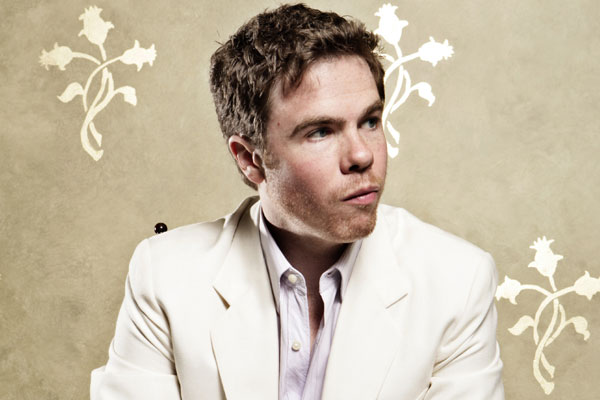
ritter

Josh Ritter is no stranger to the Music Court’s end-of-the-year countdown. In 2010 he placed #4 with his ode to Annabel Lee, “Another New World.” Readers of the Music Court will recognize that I do maintain a sort-of music reviewer crush on Mr. Ritter, but let me assure you that … well … ok, the selection is inevitably biased. Although I cautioned all readers that the selections were obviously biased, I did judge songs based on a metric, and did so as objectively as possible. Honestly, I did not want any repeat performers from past years and I ended up with (spoiler alert!) two, but I believe this is more of a testament to each artist/band’s potency and productivity than any unconscious subjectivity. Truth be told, Ritter absolutely deserved a spot on this year’s list. “New Lover” encompasses a rare blend of masterful, spiteful lyrics and deceptive acoustic pacifism. Don’t be fooled; Josh Ritter has constructed a subtly epic “f*ck you” to his old lover.

Ritter released his seventh full-length studio album in March of this year. The album just continued his streak of excellent releases. Although some could aptly argue that all of his albums are excellent, Ritter hit his stride with The Animal Years and has since sailed through his Historical Conquests (his best album) and So Runs the World Away, where 2010’s #4 song appears. The Beast in Its Tracks, this year’s release, combines Ritter’s one-two punch – infectious acoustic instrumentation and witty, daedal lyrics that bounce effortlessly with the rhythm and make ink imprints in the mind of the listener.

“New Lover” represents Ritter’s split with Dawn Landes. The song so well portrays the thoughts and feelings of a forlorn lover that it would actually be a disservice for me not to include some of my favorite lines in this post. I would literally be depriving you of lyrical mastery. Future lyricists of the world, check out Ritter’s words for inspiration.

I can’t pretend that all is well, it’s like I’m haunted by a ghost
There are times I cannot speak your name for the catchin’ in my throat,
There are things I will not sing for the sting of sour notes.

Ritter starts the song with an inevitability. Breaking up is indeed hard to do, and one reason for that is that the individual haunts you and causes pain even when he/she is gone. He even compares the entire process to music (understandably, that is his trade) and it is true that a split carries the “sting of sour notes.”

Moving on, Ritter writes:

I’ve got a new lover now, I know that she’s not mine,
I only want to hold her, I don’t need to read her mind,
And she only looks like you when she’s in a certain light.

I don’t need to read her mind. Burn. But he still can’t escape his former love, as described by the looking like you portion. Throughout the song, Ritter sings that he hopes that his ex has also found happiness, but one can almost tell in the song that there is some facetiousness in his vocalization, which throughout the song is subdued but noticeably sardonic and pained – almost Dylan-like. How does he end the song, though?

I hope you’ve got a lover now, hope you’ve got somebody who
Can give you what you need like I couldn’t seem to do.
But if you’re sad and you are lonesome and you’ve got nobody true,
I’d be lying if I said that didn’t make me happy too. 

Tell me you didn’t smile. Tell me you haven’t felt this way. Ritter is human. You are human. He demonstrates the ineluctable post-breakup spite with such poise and finality. Just freaking perfect.