
Archive by Author

A True Rock ‘n’ Roll Fantasy – Four Years of the Music Court

27 May

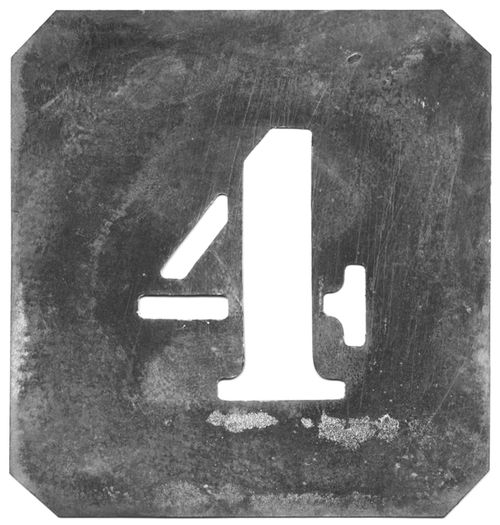
4 Years

WordPress has just prompted me that I first signed up for a blog four years ago yesterday. Four years! Wow. The Music Court has persisted to the tune of more than 1,000 posts. That translates to around 250 posts a year. Originally, The Music Court started at the behest of my brother who urged me to start a music blog. On May 26, 2009, I wrote a brief “Harmonious Goal” – a musical edict – that I still follow:

“Music expresses that which cannot be said and on which it is impossible to be silent.” It comes to no surprise that this truthful quotation was spoken by Victor Hugo whose most famous work has itself delved into the wonders of song. It is indeed impossible to be silent about good music and we, as your trustworthy jester, will introduce, review, and reflect on all tunes, notes, lyrics, and melodic sounds. The jester and his lute to the rocker and his guitar; music is life and life forever will be encapsulated in music

And just like that the Music Court was born. I envisioned developing a diverse supply of creative 60s posts and new music/band reviews. I am happy to report that I have not strayed from my original goal. While, at times, I admit the blog has fallen into doldrums (because of time constraints and lassitude), I hope that I have been able to provide readers with fresh perspectives on music. I hope that my ardor for all things music has been appropriately evinced in each of my posts.

When I started this blog, I didn’t want to simply embed a song in a post, write a brief 20-word synopsis, and urge the readers to listen and enjoy. I attempt to provide useful commentary, impassioned thoughts, and some written intellectual music fodder for all readers with every post I write. I love music. I love to write. This blog has been a labor of love. I thank you all for your continued support and look forward to continuing this musical journey with you!

As for the first real post…I go back to Lyric of the Day #1 (Edited).

“Here Come The Jesters, 1 2 3″ – “Rock and Roll Fantasy” by Bad Company off of the 1979 album “Desolation Angels”

C’mon. What else would you expect for the opening lyric of the day from the Music Court? Did you know that Bad Company’s first lead singer Paul Rodgers played with Micky Moody in Free. Micky Moody later went on to Whitesnake fame.  It makes me ask the question: was Rodgers the first inspiration for Tawny Kitaen’s show on David Coverdale’s Jaguar in the power ballad “Here I Go Again.” 

Ouch…terrible joke, Matt!

Turn Out the Light – Ray Manzarek

23 May
Ray Manzarek

Ray Manzarek

I was shocked when I heard Ray Manzarek passed away earlier this week. Really shocked. Still sort-of shocked. As I was listening to some musicians reflect on the tremendous career of the former Doors’ keyboardist, I tried to understand why I was so surprised. He was 74. In 2013 that is young, but he did fight a long battle with cancer. I think my shock was a product of a Manzarek-Krieger concert I saw at the NYCB Theater at Westbury in 2011. I had seen them once before with my father and brother when Manzarek and Robby Krieger went by the moniker Riders on the Storm. Considering that Riders on the Storm sounds like a cheesy cover band, it is probably a good thing the formers Doors’ members chose a band name of their last names.

Not many people know (or can envision) that The Doors played Westbury Music Fair (the former name of the current NYCB Theater). The Doors, one of the most celebrated and influential rock bands to come out of the 1960s, played a small venue less than a 5k from my house. Manzarek and Krieger celebrated their grand return to Westbury by recreating the set list from their April, 1968 show. It was electric. At the conclusion of the effervescent concert, the band played “Light My Fire.” Here is what I wrote about it back in 2011.

“Think of everything you love about The Doors – the energy, sexiness, ruthlessness, originality, togetherness – and throw it into a pot of boiling liveliness and love. Let that boil for around a 20-minute epic performance of “Light My Fire” that neared mystical levels and you have a great performance. Manzarek stood up from his stool, kicked it over, and swiftly put his right foot on the keyboard! 72 years old, my ass.”

That’s why I am still so surprised. His vivaciousness was striking. His effusive passion for the music was alive and well. While Jim Morrison was the soul of The Doors, Ray Manzarek was the mad genius behind the scenes concocting keyboard riffs on his Vox Continental. But when he got out on stage, it was clear that Manzarek was in love with the music the band was creating. If you have been listening to any of the eulogies of Manzarek over the past few days, I am sure you have heard words like “genius” and “master.” Sometimes these words are thrown around loosely. In the case of Manzarek, though, it would be unwise to understate his musical ability and perspicacity. Every member of the Doors was supremely talented. That is one reason why the band created keen, genre-bending music that appealed to the masses and maintained its canny flavor. But, if it weren’t for Manzarek’s proficiency with the breathy and psychedelic Vox Continental combo organ, low-pitched keyboard bass, and other keys, we may not be speaking about the Doors.

I include “Light My Fire” not because it is my favorite Doors song (that title is reserved for “Roadhouse Blues” or “Waiting for the Sun”) but because of the renowned organ intro. It is arguably one of the best known keyboard riffs ever. It is a riff of pure afflatus. While this may sound overly simplistic, there is just something so introductory about it. Without the riff, the song would not have the same potency. Manzarek’s work on keys on “Light My Fire” was a microcosm for how much he meant to the The Doors. As the elder statesman of the band, Manzarek also acted as an intellectual and sagacious force.

In the wise words of the Doors (from “When The Music’s Over” off of Strange Days):

So when the music’s over 
When the music’s over, yeah 
When the music’s over 
Turn out the lights

Painting a Diverse Choir

22 May

Of the Painted Choir


Invariably, all musicians are inspired by artists who came before them. Those who play any variation of rock will often cite bands like the Beatles, the Rolling Stones, and other 60s-70s acts that helped mold their respective sounds. Of the Painted Choir is no different. But, as evidenced by its eponymous debut EP, this Arizona-based rock quartet is able to do something that most new bands cannot. The band effectively taps into the 60s, pulls back elements, and blends these elements with modern electronic instruments and stylings.

Of the Painted Choir was founded by Frederick Huang, a musician who developed a love for song writing and producing in Tucson, Ariz., while working with Tucson-based artists and interning at Wavelab Studios. Huang recruited Darren Simoes, a former guitarist for The Bled, and then added Phillip Hanna (keyboard/synthesizer) and Wayne Jones (bass), formerly of popular Phoenix bands Kinch and Tugboat. The band is completely DIY, and it records, mixes and produces its own music.

My favorite song off the EP is the third track, “The Shame,” which blends late Beatles-inspired folk, southwestern country, and modern indie. Take a listen:

The song begins with a neat acoustic riff that can best be described as Western. The vocals, though, are soft and provide a nice complement to the granular riff. The first minute of the song sounds like Spaghetti Western folk – almost like how it would have sounded if Rome by Danger Mouse and Daniele Luppi was recorded by a modernized Indie version of a 60s folk troupe. A saxophone creeps into the piece adding an even more eclectic element to it, which, after the initial Sax portion, shifts to a jungle of gritty acoustics and smooth sax sounds. It is an eccentric piece – one that clearly fits into today’s Indie scene.

“A Spanish Mountain” immediately features a different sound. Replacing the rough acoustic guitar is an effervescent, echoed guitar that spills into rapid percussion and a vibrating vocal. This song takes a more modern approach but still employs the classic “wall of sound” to pour sound on the listener.


Check out more from Of the Painted Choir: Facebook, Twitter, Website


Ritter and the Royal City Band Rock Terminal 5

20 May
Josh Ritter and the Royal City Band

Josh Ritter and the Royal City Band

In “Lights,” the concluding track of Josh Ritter’s new album The Beast In Its Tracks,” Ritter sings “Every heart on Earth is dark half the time,” an apt line that seems to sum up Ritter’s unique brand of potent folk/rock and poetic lyric. Ritter, a realistic romantic, paints extraordinary love songs with settings that range from an Egyptian tomb to a government controlled missile silo, but balances these resplendent short stories with tales of lost love and regret. The heart is dark half the time.

But…it’s ablaze the other half of the time, and this vivacious beating organ was on display at Terminal 5 this past weekend when Ritter and his dashing Royal City Band wholeheartedly rocked a packed crowd with a satiating 20-song set.

After The Felice Brothers, a local New York folk/rock band, set a passionate tone with a vivacious opening act fit with sultry Dylan-like folk pieces and perfervid blues-laden songs fit with white-hot accordion, fiddle, and even washboard, Ritter came out alone at around 9 p.m. and immediately sang the soft opening notes of “Idaho,” his tribute to his home state.

One of the most striking features of a Josh Ritter performance is how happy he is to be on stage performing to a crowd. As a listener, you get the sense that he would be beaming even if he was performing to a group of 20-or-so listeners. He has a clear love for music, poetry, stories, and performance. This warmth was echoed by the audience that sang along to most of the songs – even providing the much-needed background to the end of one of Ritter’s most serene and melodic songs, “Change of Time” (below).

Ritter displayed why he is a true troubadour in his between-song monologues where he talked about his life – including a candid expression of divorce and love.

Each song was tinged with a calm force that washed over the crowd like a breeze. But of all the songs I wanted to hear, I was most excited for “The Temptation of Adam,” which was the song (off of the 2007 album The Historical Conquests of Josh Ritter) that first attracted me to Ritter’s music. This uber-creative love song that links the transition between attraction to deep (but somewhat apprehensive) love with a “top secret location 300-feet under the ground” (a missile silo) is as eccentric and zany as it is wondrous and impassioned. Ritter demonstrates his remarkable ability to write witty and brilliant lyrics that flow perfectly with the song. While I do not have a recording of his performance from this past Saturday, I do have one (Youtube) from 2011, also in Terminal 5.

Excellent concert! If Ritter and the Royal City Band is performing near your town, I seriously suggest you go to see them!


Paul Diello Doesn’t Lose

16 May

Paul Diello

We are traveling across the pond for today’s artist, Paul Diello. Diello was awarded the Best Solo Artist distinction at the Brighton Music Awards in 2010, and has since released his debut album The Last Green Bottle in October 2011 to positive reviews. He has toured the album extensively, playing across the UK, Ireland, Germany, France, Holland, and America, where he is currently. His burgeoning popularity is for good reason; Diello possesses a masterful, genre-bending voice.

That is, of course, one of the most important prerequisites of any solo artist. Stripped down to the purity of artist and song, Diello is able to take listeners on an emotional odyssey that turns on every nook of his vocal. By far, this is Diello’s most endearing quality. His vocal is one part Tim Rice-Oxley, one part Adam Lambert – a mixture of subtle, timorous falsetto and flamboyant, impassioned chops. To express Diello’s voice I am choosing to share a song without any window dressings. This is the piano (radio edit) of his song “You Lose.”

Notice the fluffy airiness that is masterfully mixed with his ardent timbre. Diello’s controlled vibrato echoes over the keys with clean efficiency. It is simply a joy to listen to him sing. Then as the song reaches its climactic end, Diello pours emotion into the remaining notes but never loses his vocal discipline. It’s a wonderful example of firm flexibility. Great piece by an up-and-coming artist!

Keep track of Diello on his Website, Facebook, and Twitter