Archive by Author

Heavy Glow and the Midnight Moan – Album Review

24 Jun

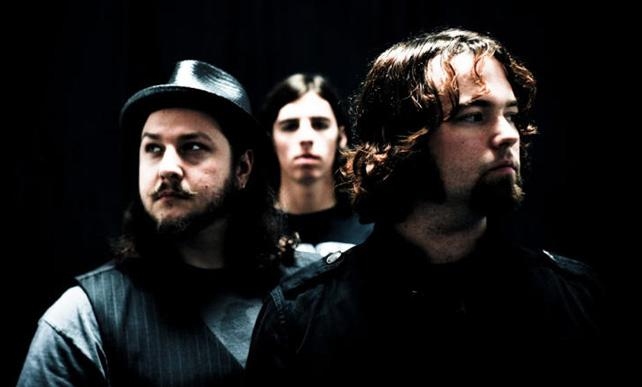
Heavy Glow

On June 23 of last year I profiled Heavy Glow on the New Band Palace. It is sheer coincidence that I am bringing the band back on the blog today. Something about June and Heavy Glow, I guess. Never heard of Heavy Glow? Click on their name above for last year’s post on the three-man hard rock group. Their new nine-track release Midnight Moan treads the line between hard blues rock and heavy metal. But not the heavy metal that you may immediately think of. Heavy metal traces its roots back to the late 1960s when blues rock and psychedelic rock collided and formed a genre of massive sounds and heavy distortion. The genre immediately focused on heavy guitar and hard drumming, hence heavy metal. Heavy Glow, an apt band name, is just that. They play to the sounds of the progenitors of the genre, i.e. Deep Purple and Black Sabbath. Yes, their music is highly modernized. Heavy Glow uses several recent distortion techniques and the electric hard guitar sounds much more like recent metal guitar than early 70’s rock, but they are familiar with their roots, even experimenting with some acoustic blues at the end of the album.

Right out of the gate Heavy Glow demonstrates their grasp of classic rock blues. “Lose My Mind” entraps listeners with its traditional blues feel mixed with a hard-hitting rhythm and a clean, but raw solo. I particularly enjoyed its shortness. The song only takes up 2:45 of the album. Like a book’s first sentence, the first song of an album should be representative of the material you will experience throughout and it should be intriguing. “Lose My Mind” makes you want to listen to more.

Track two, “Slave Dance,” is modern blues/metal. The riff is effectively slow and monstrously well struck. It is a pump-up riff that acts as a drawn-out head banger, a perfect compliment to the celerity of the first song. “Slave Dance” develops small verses and more rock experimentation culminating in a planned solo attack that acts as a solid firework before the song’s ending.

“All My Money” which falls in the fourth spot on the album is the most catchy track and I will mark it as my favorite because of its carefree rock flavor that is refreshing when you are trapped in a sea of near-metal explosion. Check it out:

While track four may be my favorite, I particularly enjoyed the last few tracks on the album, where Heavy Glow decided to experiment with some old-fashioned acoustic blues, an unexpected but welcome transformation from the modern heavy rock we hear at the album’s outset.

“Smithereen” is an unusual tune, melancholic but melodious. The acoustic guitar work is appreciated and vocals are not to shabby. By the way, the following track “Midwestern Lullaby” is a 1:42 pure instrumental treat and it leads into the plus seven-minute finale.

Solid effort by the young band and an enjoyable album indeed.

Check out and buy the album:
www.heavyglowmusic.com

60’s Band of the Week: Al Martino

22 Jun

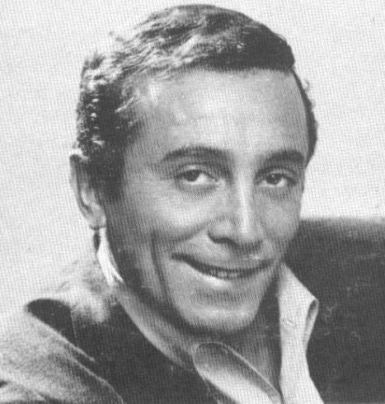
This is the first time I am including a video prior to writing a 60’s Band post. Al Martino, the guest on today’s weekly section, is best known for this 1966 hit. And since he is a vocalist who performed from the early 1950’s to the 2000’s, prior to his passing in 2009, I thought it was important to place him in the rich 60’s vocalist culture. I present to you Al Martino.

Artist: Al Martino (Born Alfred Cini – Martino was adopted from his maternal grandfather)

Origin: Philadelphia, Pennsylvania

Genre: Italian Pop Crooner

History:

Al Martino will forever be known as one of the greatest Italian-American pop crooners. His trademark deep voice and voluble Italian helped him hit the charts in the 50s, 60s and 70s, an impressive feat for any artist. Martino, or Johnny Fontane for those who recognize him from his role in The Godfather, had to deal with real-life mob implications that slowed down his career, but this did not prevent him from becoming popular three times. Let me explain.

Martino first hit success with his 1952 debut single “Here in My Heart.” He got the recoding gig with BBS, a Philadelphia-based label, after garnering exposure from a first place finish on the Arthur Godfrey’s Talent Scouts show. The song shot up both the U.S. and U.K. charts. It was number one on the first-ever U.K. singles chart earning a spot in the Guinness Book of World Records. The song also went number one on the U.S. pop charts for three weeks. The record sold over a million copies and Martino was immediately picked up by Capitol records where he recorded three more hits through 1953, all of which hit the top 40. And then the records stopped dropping.

The mafia took over Martino’s contract and ordered Martino to pay a $75,000 fee upfront which he did to ensure his family’s safety. He then fled to England to avoid the mafia. I guess it was an offer he couldn’t refuse. That was awful, I’m sorry. Luckily, the mafia would not wreck his career any longer, and after a few productive years in England, Martino was able to return to the U.S. in 1958. The next time the mafia came knocking it was fake and he made profit.

It took a few years before Martino was able to establish himself in the U.S. again. He recorded for 20th Century Fox and didn’t do that poorly, but they dropped him. He then got a new deal with Capitol Records in 1962. The music climate had changed significantly in 10 years. Instead of competing with other crooners, Martino was now faced with Booker T., Ray Charles and Chubby Checker. Rock n’ Roll was the rage and Martino was far from this genre. But there was still room for powerful crooners, and Martino was one of them. He started charting again through the early 60s and then in 1966 released “Spanish Eyes,” an adaptation of an instrumental piece by Bert Kaempfert. While the song did only reach 15 on the pop charts it spread like wildfire throughout Europe. The song is no synonymous with Martino.

And when his career began to slow down again, Martino’s friend Phyllis McGuire (one of the McGuire Sisters) alerted him of Paramount’s decision to make a film version of Mario Puzo’s The Godfather. She also told him he’d be great for the role of Johnny Fontane, a fading pop idol who needs the mob to land a film role. Martino didn’t need the mob’s help on this one. The real mob taketh, but the movie mob giveth back. The role propelled him to visibility again and he recorded two popular songs in the mid 70s, including a disco version of “Volare,” which is awful, but Europe enjoyed it.

Think about it. Martino was able to transcend music genres. Not many musicians can say they did that. Give the man credit. He overcame obstacles, but still marked himself as a legendary pop crooner.

Here is “Here in My Heart”

Dirty Deeds Done Dirt Cheap – An English Opera

20 Jun

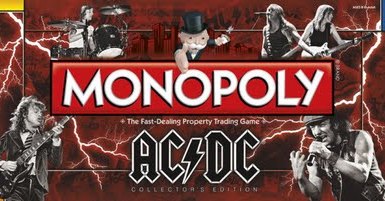
AC/DC Monopoly?

Park Place...is on FIRE

In what will perhaps be the most high voltage Monopoly spin-off, AC/DC has signed up to release a Collector’s Edition Monopoly game later this year.

Players will be able to play as a cannon, bundle of dynamite, lightning bolt, etc., instead of the traditional dog, car or thimble. AC/DC and Milton Bradley despoil some warped rock utopia. Players will buy and sell AC/DC records and attempt to improve their properties with gold and platinum records. Extravagance, AC/DC style.

While I think the whole novelty Monopoly shtick is a little old, the AC/DC version does not bother me. I think it’s pretty funny. I wonder if Bon Scott shouts “Jailbreak, I got to break out out of here” when you roll doubles and get out of prison.

____________________________________________________________________________________________________________

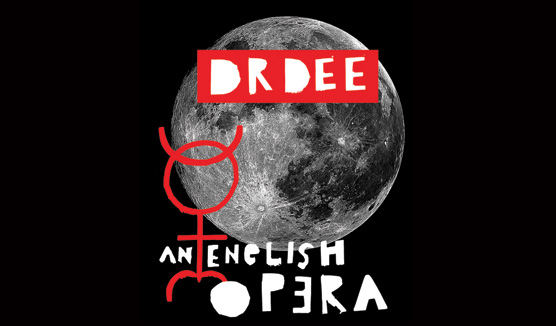
Damon Albarn Opera

Damon Albarn is easily bored. With Gorillaz on break, Albarn has decided to write and star in Dr Dee, an opera about 16th Century alchemist, astrologer and spy John Dee.

Dr Dee is set to run from July 1-9 at the Manchester International Festival. It will then be staged at the home of the English National Opera as part of London’s Cultural Olympiad program,” writes Consequence of Sound.

Check out “Apple Carts” a song from the opera.

It’s excellent. Albarn’s voice is tender and the acoustic guitar meshes perfectly with his accomplice’s medieval instruments. The intention was certainly to give off that medieval flare and the song does so with proficiency.

R.I.P Clarence Clemons

18 Jun

I just saw the news as I got on my computer tonight. Even though Clemons suffered a massive stroke a few days ago it just seemed that the big man would fight through it and recover. I didn’t expect to see a report that he had passed away. So let’s say farewell to a legendary saxophonist.

Read this Obit from the Times: http://www.nytimes.com/2011/06/19/arts/music/clarence-clemons-e-street-band-saxophonist-dies-at-69.html?_r=1&hp

And however corny this Clemons and Browne concoction is here is “You’re a Friend of Mine”

Day Of The Robin Trower

16 Jun

Yes, my proclivity to make horrendous musical puns is lousy, but you will need to bear with me. This post is not about my diction. I’d prefer to preview the concert I will be attending later at B.B. King’s Bar and Grill where one of rock n’ roll’s best guitarists will be gracing the stage with his custom-built Fender Strat. I want to stress some words in that last sentence. One of rock’s BEST guitarists. You can see I am slightly disgruntled with Trower’s treatment in the world of top guitarist lists.

Here is my issue. Trower does not find his way onto the Rolling Stone Top 100 Guitarists List. I know it is only one list, but it is the damn Rolling Stone’s list and most people use Rolling Stone’s selections as a “best” guitarist indicator. You may not use the list as an indicator, but for those who are not knowledgeable enough to make an independent decision on the subject, the Rolling Stone list is an organized and concise reference. And this lack of recognition derides Trower’s skill and passion. I think it is time we start recognizing one of the rock’s most unappreciated guitarists a little more. If you have any question about his talent, watch this:

Trower is not only a guitarist, but also a solid lyricist who began his songwriting with Procul Harum (even though he is overshadowed because the band was stacked with great songwriters). He had previously been in a band with high-school friend Gary Brooker called the Paramounts, but after they disbanded Brooker founded Procul Harum and Trower ended up on deck in 1967. If you are familiar with Harum’s maritime baroque rock, the last sentence features an awful pun.

Even though Procul Harum featured a lot of dominant piano-rock, Trower shines through on some pieces like on “Something Following Me” where his fuzzy guitar solo is unique and executed well.

Trower’s guitar success did not fully evolve until he left Procul Harum and started his own Robin Trower Band. This band focused on guitar-based rock and spacey soloing. Trower focuses a lot of attention to music released in 1973-1977, where he gathered five certified gold releases and truly cemented his status among some of rock’s finest guitarists. A review of the concert will be up tomorrow. Enjoy the day!