Archive by Author

Review of the American Idol Finale

26 May

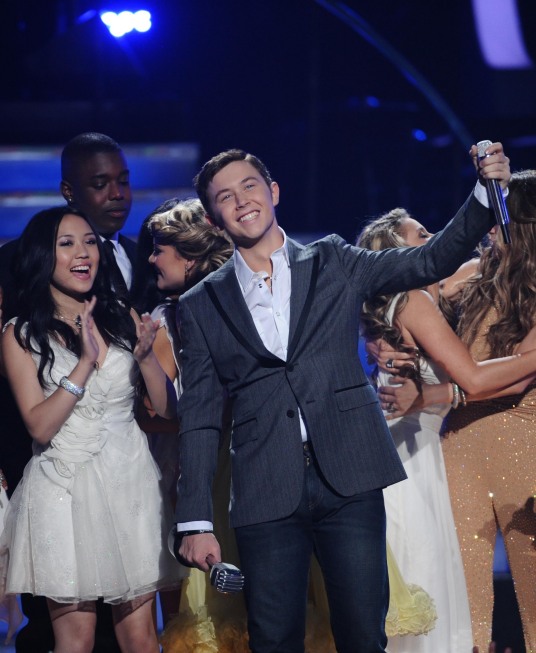
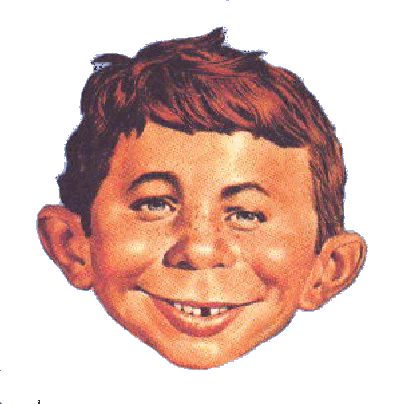
17-year-old Scotty McCreery became the 10th winner of Fox’s American Idol last night, marking a creative season of new judges and exciting talent that boiled down to two country singers in the finals. At the end, 16-year-old Lauren Alaina could not lasso the strong country vote away from the unmistakable croon of Scotty. The win was unsurprising and pretty unexciting. Scotty was practically tagged as the winner when the viewer voting began. He does fit the perfect parameters of a winner. He is a baby-faced, good-mannered individual whose dark voice fits effortlessly into country music. He also looks like a frightening hybrid of Alfred E. Newman and a young George W. Bush. It’s striking, right?

While Scotty winning Idol was rather pablum and seemingly pre-planned, the finale last night was a concert. I have to think that’s why most people tuned in. The night featured guest performances by Lady Gaga, Marc Anthony, Tony Bennett, Tom Jones, Beyonce, Bono and The Edge (from Spiderman: The Musical), and even Jack Black. Yes, Jack Black, who was his normal hyperbolic and awkward self. Lady Gaga and Bono/Edge performed theatrical sets by themselves, but singers like Tom Jones and Beyonce joined season 10 Idol contestants. Jack Black performed with bearded odd-ball Casey Abrams and Tony Bennett joined the grunty, jazz singer Hailey Reinhardt. Oddly enough, the two most vapid, uninteresting performances of the night belonged to the finalists, but maybe that’s just because I am not a big country music fan. If I had to give the grade of A+ to one performance during last night’s variety act, the title would have to go to the poppy/gospel rendition of “I Smile” with Kirk Franklin, Gladys Kight and season 10 contestant Jacob Lusk.

Jacob Lusk sings gospel. That is just what he does. Idol, though, forces singers out of their “comfort zones” so they can grow comfortable with all musical climates. The result is generally unproductive. Let the contestants sing what they sing well. Unless you are a contestant like Casey Abrams or season seven winner David Cook that demonstrates strong musical ingenuity, it is difficult turning a Carole King song into heavy metal (season 10 contestant James Durbin‘s plight throughout the season). Lusk is comfortable in gospel as displayed above. The performance was powerful. It was jam-packed with vocal runs, a stentorian chorus and, of course, the aura of Gladys Knight. Well done bringing this choir together, American Idol. It made the show.
All You Fascists Gonna Lose Three Years After Dylan’s Birth

24 May

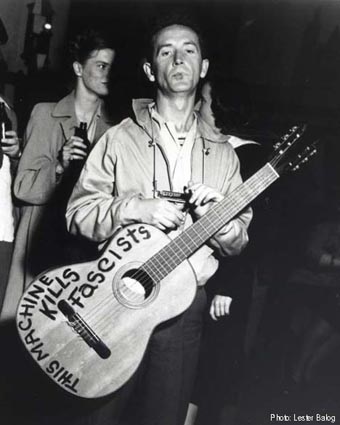
The year was 1944. World War II was raging, No Exit by Sartre was first published and Bob Dylan was three years old. Woody Guthrie, Dylan’s main teenage inspiration, was creating lyrics about how fascists were never going to win. Yes, Guthrie was advancing the genre of protest folk music. As we celebrate Bob Dylan’s 70th birthday, I thought we could take a little spin on the birthday celebration and give some credit to Dylan’s folk inspiration. The reason? I need to be different. So, my gift to you on your 70th Bob is this:

Oh the 1940’s, where the term “hillbilly” was, at least in Woody Guthrie’s mind, an indication of educated patriotism. “All You Fascists” is one of the most prescient Guthrie songs, an incredible salute to an American dream that would not be realized for another 25 years.

“People of every color marching side by side
Marching ‘cross the fields where the million fascists died
You’re bound to lose, you fascists are bound to lose”

Guthrie sings of a world where race hatred is a thing of the past. He longs for great change in the country, where fascism can be ended domestically and across seas. Dylan learned from the best.

If Only She Was Lying to Me – King Crimson Rules

23 May

Bob Dylan Was Addicted to Heroin?

Link: http://www.rollingstone.com/music/news/bob-dylan-admits-heroin-addiction-in-newly-released-1966-interview-20110523

On Sunday I graduated Binghamton University. One of the many reasons that I received my degree was because of academic integrity. In other words, I didn’t lie. On the heels of his 70th birthday, I can confidently say that Bob Dylan certainly does not get an A in honesty class.

Okay, that was a miserable transition, but I did want to mention my graduation. Yes, I am officially an alumnus of Binghamton University. How does that sound? I am back on Long Island and writing this post in my permanent room. My next room may be one that I own and that is certainly an odd prospect. But, until then, I remain a resident at home (which is not a bad thing at all) and since I have a little more time during the summer you all will see new categories and longer feature posts over the upcoming weeks. Sound good?

We begin with Monday’s staple (music news). According to Rolling Stone (link included above), Bob Dylan kicked a heroin addiction that he picked up after arriving in New York City. He told this to New York Times writer Robert Shelton on a plane from Lincoln, Nebraska to Denver during the 1966 Electric tour. But this newly released admission is already receiving many B.S. calls. Remember, Dylan is well known for his love of fiction. He did claim that he worked as a male prostitute after moving to New York. With all of these claims, I’m starting to think that Dylan is more of a “Midnight Cowboy” inspiration, rather than a folk/rock pioneer. Did he kick a heroin habit? Who knows. My guess is no. Dylan loves storytelling. That is one of the reasons his lyric is legendary. That is the issue. The man lives in the fictional world of song.

——————————————————————————————————————————————————————————

“In The Court of the Crimson King” #1

Link: http://www.popmatters.com/pm/feature/141547-best-25-rock-songs-of-all-time/P4

Peter Sinfield


King Crimson‘s “In The Court of the Crimson King” was named the #1 progressive rock song in an enjoyable list by Sean Murphy of PopMatters. Murphy writes:

“Virtually any song from this album could ably represent the whole, but the title track is an unsettling, ceaselessly astonishing track that is at once the introduction and apotheosis of what progressive rock became. It has all the important elements: impeccable musicianship from all players, rhythmic complexity, socially-conscious lyrics and an outsider’s perspective that is neither disaffected nor nihilistic.”

Eloquently put and absolutely correct. King Crimson’s impact on progressive rock cannot go understated. Any mention of the genre without talk of this supergroup is a crime. The band simply oozed with talent and this song is no different. The lyric of this Crimson classic is poetic and medieval. It is a creative image of hell and it comes from the mind of Peter Sinfield, the true unsung hero of the band. So, while you enjoy the song make sure to also respect the lyric.

The rusted chains of prison moons
Are shattered by the sun.
I walk a road, horizons change
The tournament’s begun.
The purple piper plays his tune,
The choir softly sing;
Three lullabies in an ancient tongue,
For the court of the Crimson King.
The keeper of the city keys
Put shutters on the dreams.
I wait outside the pilgrim’s door
With insufficient schemes.
The black queen chants
the funeral march,
The cracked brass bells will ring;
To summon back the fire witch
To the court of the Crimson King.
The gardener plants an evergreen
Whilst trampling on a flower.
I chase the wind of a prism ship
To taste the sweet and sour.
The pattern juggler lifts his hand;
The orchestra begin.
As slowly turns the grinding wheel
In the court of the Crimson King.
On soft grey mornings widows cry
The wise men share a joke;
I run to grasp divining signs
To satisfy the hoax.
The yellow jester does not play
But gently pulls the strings
And smiles as the puppets dance
In the court of the Crimson King.

The Koobas Play “Sweet Music”

19 May

I will be a graduate of Binghamton University on Sunday. For some graduates the prospect of graduation seems unbelievable or “scary.” The word scary is thrown around. I am embracing graduation. I cannot wait to get out into the world of journalism and hopefully enjoy the fruits of my labor. This will most likely be my last post as an undergraduate and it leaves an opening for some nostalgia. I started this blog at my wise brother’s urging after I finished Sophomore year. Since then, The Music Court has amassed over 400,000 views and, while this statement does seem trite, it is because of the support of you all. Thank you to all my faithful readers and I hope to continue to provide you with enjoyable music writing as I enter into the post-undergraduate world.

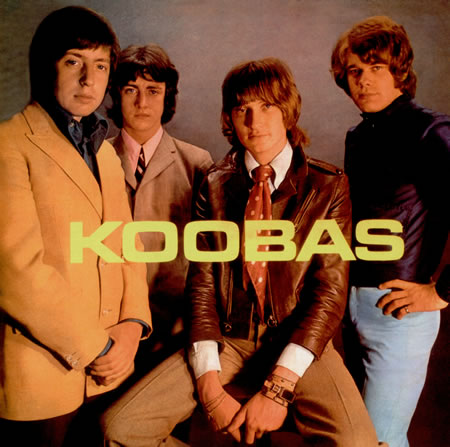
We are in the early morning hours and I wanted to do a quick song of the day prior to going to sleep. The Koobas are The Beatles that never happened. The emerged as a Beat group from Liverpool in 1962 (two years after the Beatles) and were signed by Brian Epstein (The Beatles’ manager) in 1964. Heck, The Koobas even toured with The Beatles as their opening act during The Beatles’ last British tour. Yet, despite the connection with the most successful band ever, The Koobas could never catch a hint of success and fell off into obscurity, reserved for future listeners of 60’s music lovers. Here is my favorite song by The Koobas, the 1966 single “Sweet Music”

Best Guitar Riffs – The Double-Riff That Sings Layla

17 May

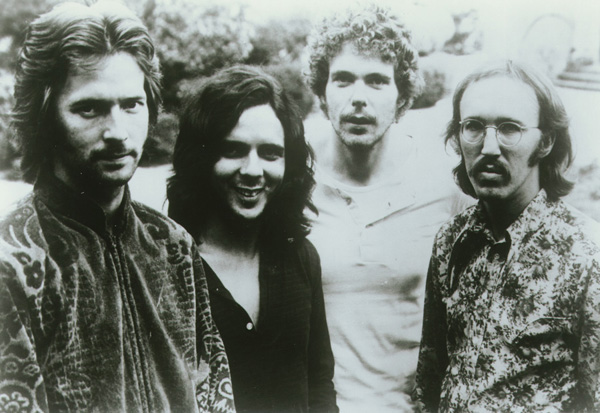
How can we have a Best Guitar Riffs section without the riff that fronted the essential rock “love” song? Derek and the Dominoes conquered the typical love ballad, and transformed the normal adoration tune into a spell-binding passion roller-coaster that portrays Eric Clapton‘s obsession with George Harrison’s wife-at-the-time Pattie Boyd. Everyone knows the basic story.

Clapton and Harrison were good friends. Harrison’s wife Pattie Boyd became Clapton’s obsession. After playing “Layla,” the love-rocker inspired by Boyd, at a party, Clapton confessed his undying love for Harrison’s wife in front of the sitar-wielding Beatle. And then Harrison kicked Clapton’s ass, right? Well, actually, no. Harrison was fine and remained married to Boyd for several more years before she gave in to Clapton’s charm and divorced Harrison for him. And then Harrison kicked Clapton’s ass in a Bruce Springsteen “Jungleland” dystopia where guitars are flashed just like switchblades. Actually, Harrison attended Clapton’s wedding party with Ringo and Paul and wished good fortune to the new couple. Women mattered and didn’t matter at all to these musicians I guess. “Layla” was made because of Boyd, but, did you know that its classic riff and rocking beat was not Clapton’s original intention.

Duane Allman, of the Allman Brothers, was the man you can credit for transforming Clapton’s vision of a ballad to his love into the classic riff we all know and play air guitar to. Let’s talk about the riff composition.

By the way, part two of the eight-minute epic was founded on a separate piano piece that was originally created by Dominoes drummer (yes, drummer) Jim Gordon. Clapton loved it and with Gordon’s blessing they recorded part two with Clapton playing acoustic and slide guitar and Allman playing electric and bottleneck slide.

Okay, on to the riff, or, rather, this:

“Layla” is composed of two riffs. The song can really be on our list twice. Hence why it is such a tremendous guitar piece. The first riff is Clapton’s famous hammer-on, pull-off, power chord epicness which sends crowds into frenzy on first play. He is then joined by an Allman original forming a guitar duet that juxtaposes sweet high notes with the lower-pitch main riff. The riff is commonly listed when top guitar riffs are compiled. On my list it reaches the top five easily. How can it not? It features the work of two guitar gods in their prime and there is nothing better than that.