Archive | Artist Profiles RSS feed for this section

Matt Kiefer’s Musical Craft

4 Sep

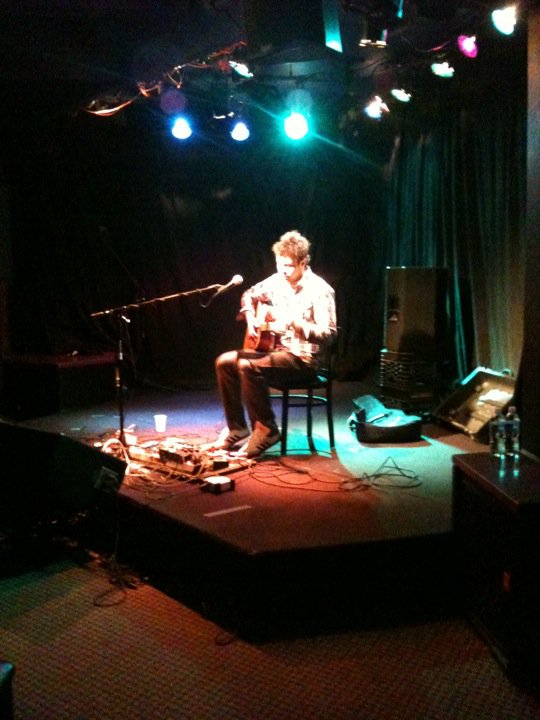
Matt Kiefer cares about music’s honesty. What is musical honesty? Artists are quick to go into studio and process songs like a frozen McDonald’s hamburger. It is easy. There are little mistakes. But musical honesty occurs when an artist refuses to let the “studio” do work for them. Kiefer, a musician and recording engineer from Pittsburgh, does find himself in an interesting situation because he is a recording engineer. If anyone knows a screw up, he does. He explained to me that he once would record several versions of each piece in meticulous fashion. But now, he thinks authenticity is most important.

“Of course I want the songs to sound perfect for the listener and capture the best possible performances but I also think those live takes and occasional mistakes sometimes add to the beauty or naturalness of the song,” Kiefer explained in an interview with The Music Court. “I used to stress over little things and take 5, 6, 7 or even 10 takes of a track to assure that the performance was spot on..But now I only take 2 or 3 takes at most and just keep the best ones. On the EP you’ll hear some occasional string smudges and stuff like that, but I think it feels more real to the listener…Like im sitting there playing it right in front of you. I’d rather give people something honest and that will translate perfectly live rather than “studio magic” up some polished manufactured piece that falls apart or doesnt translate the same way live. I like my recordings to say:  “I’m not the best musician, I screw up like everyone does…But I mean well!” I really just want to seem human.”

Kiefer’s worldly pieces do feel human and one can feel the love that Kiefer has for melody and quality. In the instrumental “Lucky Vegas,” Kiefer’s fluffy guitar transforms into a more pleading sound with the culmination of the creative drum beat that changes throughout the piece. It is fresh and original. “New York Puppy” provides a similar, but deeper feel. The song moves with the guitar’s efficiency. Kiefer will be releasing a free EP soon, but before that release check out his Reverbnation for songs. Follow Matt on Twitter: http://twitter.com/#!/realmattkiefer

Like I wrote earlier, I had a chance to do some Q+A with Kiefer. Here are Kiefer’s insightful answers.

1.) When did you first start recording and writing songs?
I first started writing songs when I was about 12 years old when i started playing guitar and really started listening to punk rock. Bands like The Ramones, Rancid, and The Smiths were all I was listening to at the time and all of their songs were just a few chords and really easy to play so I dabbled with their songs a bit and eventually started learning how to pick the chords up by ear and pretty soon I was figuring out and jamming along with all my favorite records and albums. As far as recording music goes, I worked my ass off cutting grass and selling it when I was about 15 and bought a little four track tape recorder from the pawn shop (that I probably paid way too much for, come to think of it now) and started making demo tapes in my bedroom with a crappy pawn shop mic and crappy old cassette tapes I’d find in my dads dirty dank basement. I remember I would sit on my bed all day and record hundreds of ideas that I’d come up with and just listen back to them thinking I had hundreds of songs…when all i actually had were just the same riffs and chord progressions in different keys! (laughs)
2.) What were your big music influences when you were growing up and how did this shape you into the artist you are now?
Growing up I listened to a lot of punk rock and a lot of 80’s soul and RnB. The punk bands were introduced to me by kids Id cut school to skateboard and get stoned with and new bands I’d find out about going to shows around the city. My dad used to play a lot of Journey, Alabama, Prince, The Jacksons, 80s Pop, & Jimi Hendrix records throughout the house so I think naturally I ended up being influenced by the old school stuff hearing it all the time. The focus with all those classic groups was strong melodies, so i think my sense of, or intent of wanting to be super melodic with anything I do probably stems from them.
3.) Okay, give me the rundown of what you have been recording. Just solo tracks? Have an album in the works?
Well, right now im recording an EP that will be for download absolutely FREE in the next couple of weeks on various music sites on the net. Im calling it “The FREE-P” and expecting to have it up for download by the end of September.. So far its just me and a bunch of acoustic tracks layered on top of each other… but I’ve got some great friends who are layering keys and strings on the EP as well as playing drums and various other instruments for me. But the majority of the work is just me in my home studio. So look out for that! After that I’ll be right back in the studio working on a full album slated for release around the end of this year. The album will be a mix of chill melodic acoustic tracks and also a full band feel at times ala Red House Painters/Sun Kil Moon. I really want to release a very strong collection of music this year.

5.) I’ve noticed that you put a lot of effort into melody. “Lucky Vegas” is an instrumental and “Be Honest” has a melodious long folk opening. The melodies are fantastic. Talk with me about them?
Thank you! I’m glad people appreciate the melody! I definitely put a lot of focus on making sure the melodies are strong but still accessible to the ears of everyone. I can respect great musicians like Steve Vai and Joe Satriani, who are very melodic in their playing, but I cant force myself listen to their music for more than 5 minutes without feeling like their songs are just completely ‘masterbatory!’ (Laughs)
Instrumental music is something that I’ve listened to for many years and is really all I listen to these days besides classic Oldies and 80’s pop. When writing Lucky Vegas I was sitting in my hotel room on the Vegas strip at the Monte Carlo Hotel on the 43rd floor just staring out the window at 3 a.m. trying to write a melody that captured how I felt looking at all the lights and the people and the experiences I had in the city that week and the plane ride there. That song kind of wrote itself actually. That’s usually what happens. I start with a simple melody and it takes off from there and then two hours later I have a 3 or 4 minute piece of music that im in love with and describes a feeling or emotion or memory for me.
Be Honest was kind of the same process. It is a song I wrote a few years back about a failed relationship and the bitterness that comes along with the ending of it. Whenever I use lyrics in a song I always want the melodies of the instruments to be just as strong, if not stand out more. I kind of put my lyrics and voice second to the instruments. In this particular song I layered a bunch of guitars on top of the main guitar in an attempt to really add an atmospheric feel without turning on 15 pedals and making it sound like a My Bloody Valentine tune. I think it worked out the way I wanted it too, doesnt feel too cluttered! (laughs) Originally the intro was about two bars long then the vocals dropped in, but I really was digging the feel of the harmonies & the visuals I got in my head from of all the guitars after I wrote them so I decided to just let it ride a little longer and really build up something in the listeners head to the point where you feel like “Whats coming after all this?” Really wanted an epic intro to the lyrics, especially for first time listeners hearing my music for the first time.
6.) What is your favorite part of recording songs?
I can’t say there is a part of recording songs that i would call my favorite… To me the whole experience is absolutely enjoyable. I like the engineering aspect of miking instruments up, getting good tones, playing around in Pro Tools, breaking the recording “rules,” getting cool sounds and so forth. I also really enjoy the experimentation that comes along after I get the bed or main guitar track and vocal track recorded. Adding harmonies, taking them away, extending and building off of parts, adding new instruments… I also really enjoy listening back to the finished product & figuring out what I could do to change the song and make it better or breathe a little more. The way a song sounds once its recorded, mixed, and mastered usually sounds way different than when I originally wrote it. What I like about that though, is at the heart or core of all those layered melodies and different instruments is really just a very simple song I can play on the acoustic guitar and sing along with all by myself and still have them same impact.
7.) I always ask this, so bear with me, if you had a chance to have record a session with three musicians (alive or dead) who would they be and why?
Hmmmm…thats a tough one! There’s so many great musicians that I would love to collaborate with! I think I’d definitely like to get Prince in the room with me because I know he is gonna write some real crazy sh*t and probably bring the funkiest vibe with him.
Jeff Tweedy from Wilco would be pretty cool too. He seems like he lost his mind long ago and had it replaced with lots of insight and also knows how to make 50 incredible and timeless songs out of the same 6 chords over and over. Last, we would need someone who can throw down on the rhythm section so I’d probably ask Jeff to call his drummer Glenn Kotche. Dude is absolutely nuts on the skins and extremely innovative with some of the different rhythmic instruments he’s invented! I definitely reccommend Googling or youtub’ing him and watching his videos. Im always humbled anytime I get the chance to accompany musicians who are better than I am. Whether they are famous (never), strangers, or just my friends who are great at what they do. I think no matter how good we may believe we are, theres always something big or small we can learn from someone else.
8.) Future plans and aspirations?
Future plans are definitely focused around getting this EP out this month, and getting an Album out before the years end. From then on its gonna be back to touring either solo or with a full band. Whichever makes more financial sense! (laughs)
As we speak, I’m auditioning new members for a full ensemble to play out. We are gonna really bring something diverse to the live shows. Id like to have a set that incorporates a lot of loud, wet, atmospheric and distorted full band sounds and then we switch it up and pick up the acoustics and pianos a few songs later. Lots of ups and downs and something that really takes the audience for a ride for 45-60 minutes. Bring out some crazy lights, Projector screens and visuals and really talented musicians to really help bring these songs to life. The biggest and most attainable goal of it all though is just to keep writing songs that speak to me and keep me inspired and just hope other people can relate as well.

The Andes are Falling!

11 Aug

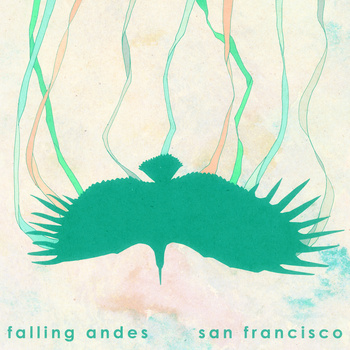
Don’t worry. The Andes are not really falling. Go back to bed South America, everything is going to be okay. But if the Andes were in Pittsburgh, PA, well, then residents might need to take caution. Falling Andes, a new Indie/Pop, is hot off the presses and one listen to their dulcet melodies and sticky rhythms will get you hooked on the Andes.

Falling Andes was manufactured by multi-instrumentalists Dan Peluso (vocals, guitar, synthesizer) and Jordan Wood (vocals, guitar, bass, keyboards). The accomplished duo started writing songs together and expanded the band to include drummer Peter-Michel Natishan and guitarist Mike Boyer. Now when I say the band is new, I am not pulling your leg. Their debut EP dropped two days ago on iTunes. Pick it up. You will feel mighty good about yourself when the indie world picks up on the exuberant joy of Falling Andes.

If I had to pick one song to introduce the band it would have to be “San Francisco.”

The synth beginning is promising, but when the airy guitar chords kick in and lay comfortably over the synth the listener is transported to Fisherman’s Wharf, his/her eyes staring at the San Francisco Bay. The voice of the lead vocalist is distinct. I’m not entirely sure how to describe it. His “oh, no” shouts remind me of the always theatric Arthur Brown’s shout of the same words in his song “Fire.” It fits perfectly, though. The song is fresh and catchy and I smell the sea when I listen to it. Which, of course, is interesting because the band is from Pittsburgh. Definitely check this band out.

Visit the band’s website

The Rhythmic Folk of JF Robitaille

8 Aug

I am a little late on this profile of JF Robitaille. He released the EP that I just acquired in 2006. Robitaille released his first full-length LP around a month ago, so I am comforted in the fact that I have not missed material in between, but I do still have to pick up the new album. I am a firm believer, though, that it is never too late to get into any musician (most of my favorite artists stopped recording music prior to my birth) and I follow my mantra today with the Canadian singer-songwriter JF Robitaille.

The Blood in my Body (EP) was Robitaille’s first release as a solo artist and its rich six-song bounty provided listeners five years ago with the same folk joy that it provides listeners with today. I am living proof. Robitaille is an up-and-coming singer-songwriter, already achieving comparisons to genre masters Nick Drake and Leonard Cohen. His smooth voice, creative lyric and acoustic verses certainly plant him in the cabbage patch of singer-songwriters. But in order to sprout higher than others the music needs a sticking factor, a charm that makes listeners want to listen to songs on repeat. Many cannot get over this hump. Robitaille has the talent to do just that.

(Song starts at 30 second mark)

“Morning After Morning” is a simple piece. Basic chords picked by Robitaille while the rhythm section keeps linear heartbeat-like percussion. Yet, and I’ve said this a good amount of times on The Music Court, simplicity is not a bad thing when the song’s tight structure is intriguing. “Morning After Morning” keeps your attention.

“New York” is not even two minutes long. It is also a much more frantic piece. The choral harmony is quick, but enjoyable. It is also fly-trap catchy. It is a good sticky though. The verses are carried by shortly stroked chords and fast-paced drums. The lyric is also noticeable.

“I died while I was dreaming,
For a second I stopped breathing and I woke up on the quiet side of town.
Didn’t sleep that year at all.
A haze of cigarettes and alcohol, this dust had settled in my eyes.”

The diction certainly hits hard even in this short piece.

Check out some more of Mr. Robitaille’s music by following this link to his website

The True Barry

2 Aug

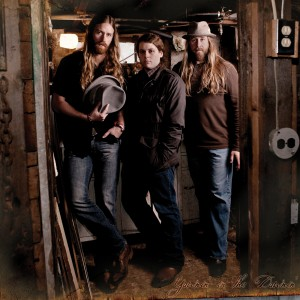
Never underestimate the power of music and brotherhood. The Barry brothers are proof of this sentiment. The band, Barry, was founded in 2011 by three brothers, who, despite having other commitments – like families, jobs and school – gathered in their self-made studio in Western, New York, and cut a fresh folk-rock album that oozes with such a cornucopia of sounds that I’m not sure how to label the music. The best I can do is alternative-inspired folk churned with harmony and a pleasant hint of country. I believe this description is suitable, but this is music you just want to lose yourself in. You can make your own judgment after experiencing their debut EP Yawnin’ in the Dawnin’ which was released on May 19. You can take a listen to some tracks below.


Music Player web

The Barry brothers are from Hume, New York. Just for some perspective, Manhattan is close to six hours away from Hume. New York. That is how far west they are. And I do think their location has an influence on their sound. It is agrestic, taking on the feel of rich farmland and open skies. Music like this cannot be created in a big city. This natural, old-time folk needs to bake in a town where the cacophony of screaming taxis and rumbling subways is not pervasive, and where when night falls true dark blankets the town.

The band is made up of Patrick Barry (Vocals, Guitar, Harmonica & Keys), Benjamin Barry (Bass, Vocals) and Bradford Barry (Drums, Vocals) and their musical maturity is on display throughout their first EP.

If I had to pick a favorite song it would be “Carnival(e).” The song combines two awesome elements. The verses are odd, but they match the carnival lyric well. The music moves up and down like a bouncing ball. The chorus strikes and the rhythm of the verse is replaced by a fast-paced rhythm and vocal harmony. This transition is skilled and much respected. “Three Years in Carolina,” another exciting song, displays Barry’s country influences. The chorus emits a southern effervescence and the well-placed harmonica helps carry the five-minute Carolina ode.

Check out the band’s:

Facebook

Twitter

Website

The Boom of Heidi Klum’s Bangs

24 Jul

Heidi Klum's Bangs

The popularity of the full-length LP has vacillated throughout history. Before the British Invasion and Psychedelic revolution, A-B-side singles were preferred. Then the concept album was born and numerous 1960’s bands created full-length albums (10-12 songs) that oozed with artistic creativity and musical intelligence. But that faded, and the individual song took over once again in the late 1970s into the 80s. Then the turn over happened again. The 90s brought grunge, alternative rock, and the nascent stages of indie music. All of a sudden people were asking if you had listened to Nirvana’s new album or dove into the heavy sounds of Neutral Milk Hotel. Today, though, the album has been superseded by the single for the most part. The influence of music downloading and purchasing sites like iTunes, where individual songs cost 99 cents (or more at times), has been tremendous. Yes, albums are being created and some indie bands like Arcade Fire are still dabbling in the art of concept releases, but creating albums is not the current popular choice. Albums, in more cases than not, act as mere folders, just created to hold all the singles in one place. The question that can be posed today is whether or not that modern album is dead? Perhaps more specifically, has the concept album perished?

“I think the album is still alive, and I have absolute faith in it, and I know that there are artists out there who still want to make true albums and people who enjoy hearing a cohesive or unified work,” said Zach Beck, multi-instrumentalist and singer for indie/concept band Heidi Klum’s Bangs (the subject of our new band profile today!) “I mean, not that singles are inherently bad or anything, but personally, I would easily take a unified 11 or 15 or 27-song album — even if there may be a (couple of) song(s) on it that I’m not really crazy about but that are still a necessary part of the overall theme or are integral to the story as a whole or that advance the narrative or provide another frame in the film strip or whatever — over a mix of 12 perfectly executed, flawless singles.

Zach, 22, and his brother Dylan, 17, make up the Mountain Home, Arkansas band Heidi Klum’s Bangs, and their quasi first release Palace Pier (released May, 2011) is good evidence that the draw of a concept album is still alive and well. A linked album is like a good novel while singles are more like flash fiction (short prose that ends in four pages or less). A novel needs time to plan and form. There needs to be plot, theme and message. The concept album needs this as well. The best linked albums carry an organized message through both music and lyrics. I believe Zach says it best:

“In my view, the album remains the best and most wonderful way to make something beautiful and/or meaningful and/or emotionally moving and the best and most wonderful way to connect with others. And to connect others with others, too. And that was basically the goal of Palace Pier.”

Zach and Dylan have been creating music for around three years in several formats. First, the brothers created a “post-rock / experimental / ambient band called Thee Children of Light,” and from there Heidi Klum’s Bangs was conceived. They have been working under that name for about 16 months at this current point.

When I interviewed Zach, I needed to ask where the name Heidi Klum’s Bangs came from.

“The story behind that sorta has to do with this girl I had a thing for at the time,” he said. “I mean, I thought I had a thing for her, even though I didn’t know anything about her, but I started writing something to her anyway and ended up writing just line-after-line about her hair. And then some at point soon after, I somehow found myself watching Project Runway, you know, and there was Heidi Klum, and I thought, “Wow! This girl has just about the exact same hair style as Heidi Klum!” And of course the aspect of it that drew the majority of my attention were the prominent bangs. So that ended being the title of the song-that-wasn’t-really-a-song. And it felt right for how I imagined the sound of our band, so I remember vividly just saying to Dylan, ‘The name of the musical endeavor that I am going to pursue is Heidi Klum’s Bangs. Feel free to hop aboard if you’d like; if not, see you later.’”

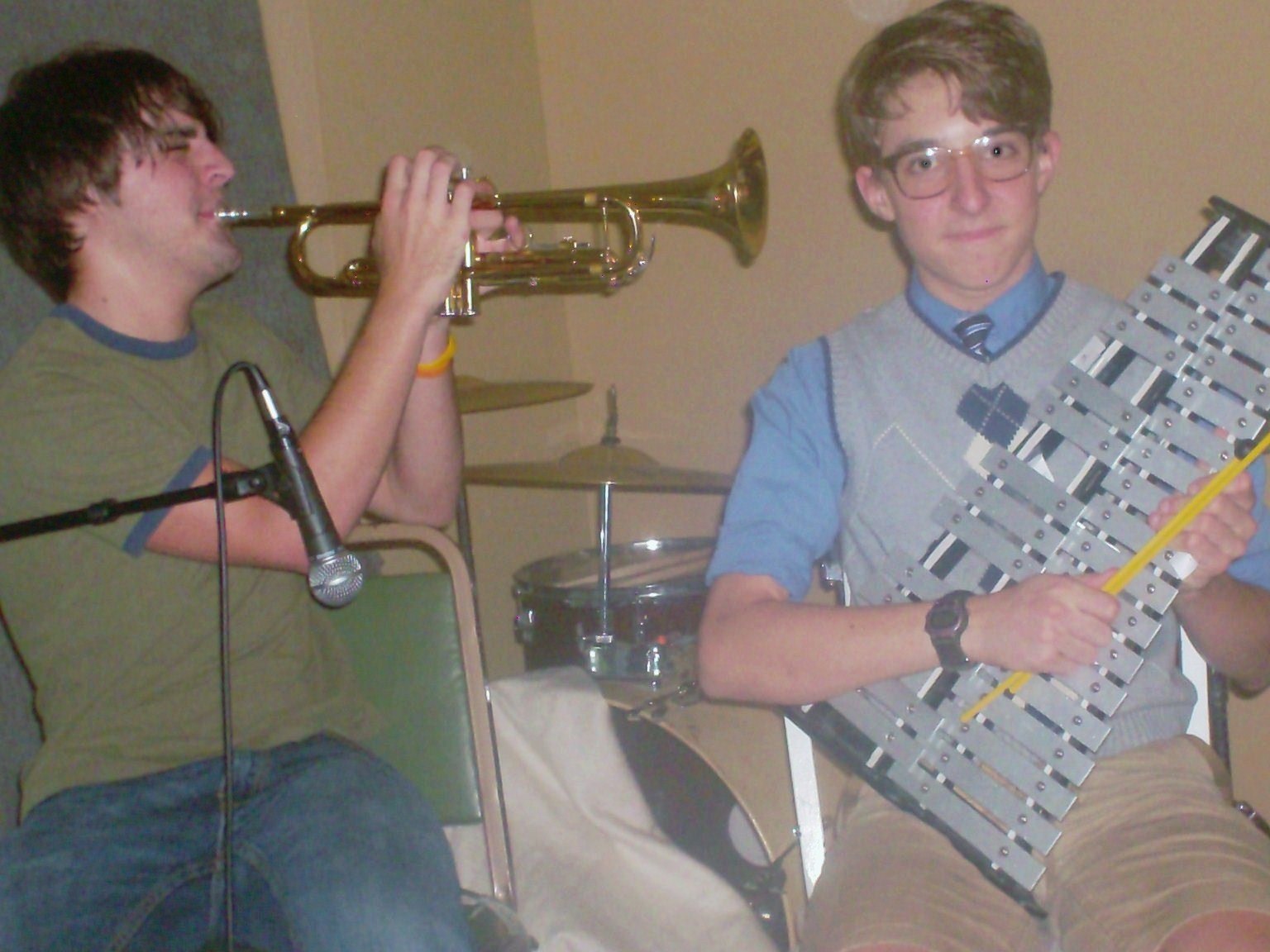
In short, Dylan said yes to the name and the brothers started dreaming up the concept album Palace Pier. The end result, after six months of recording in their basement, was a dreamy psychedelic release of 13 tracks most similar to the beautiful rawness of late 90s experimental acts out of the Elephant 6 Recording Company like Neutral Milk Hotel and Elf Power. Zach and Dylan are both talented multi-instrumentalists and the sound they create is a well-produced low-fi blend of indie and experimental rock. Zach writes, sings and plays guitar, trumpet, bells, keyboards/piano. Dylan completes the band with drums, bells, keyboards and marimba.

Let’s look at the introduction to the album, “The Window.”

The song begins with drawn-out keys under a tranquil, halcyon sample of seagulls and children at a beach. It lulls you into a state of comfort. The background drops out in favor of rising drums and keys. It gradually rises in sound and then falls into acoustic guitar and then into the combination of instruments that forms the song. When the voices drop I feel like I have just taken a time machine back to the experimental 90s. The harmony and the trumpet are so much in the vein of those releases that this opening track is actually somewhat freaky to a fan of Elephant Six. Freaky in a good way. The lyric is enigmatic, but certainly related to the sounds.

Painted waves
Changing shape
That smooth tattoo
Pulsing through
The beams of light
In soft cascade
To silver night
Let’s watch it fade

Descriptive but succinct and that is effective. “The Window” is my favorite track from the album. I believe the male/female harmony works well to establish the concept album. I asked Zach about the point of the full album.

“The theme of the album has to do with the transience of things – like coming to grips with the undeniable certainty of the passing moment and striving to find some way to keep it with you.”

He cites Virgina Woolf’s To The Lighthouse as a big inspiration for the sea imagery and, well, that makes an English major like myself very happy, so kudos to Zach!

Currently, the band is working together on new material and they hope to play some shows in the near future. But most of all, Heidi Klum’s Bangs wants to continue to create music with the hope that they can share a passionate message to listeners.

“We’re just trying to make people feel something,” said Zach. “We’re hoping and striving to touch and move people and bring a bit of healing into people’s lives, because I think we all need that at the moment. All we want to do is put some good in the world.”

Check out the band’s Bandcamp to listen to more songs. The album is available for purchase, but, like In Rainbows, you pay what you want to pay (even if that is nothing, but, come on, give the band a few bucks). You can also follow the band on their Facebook page