
Archive | Artist Profiles RSS feed for this section

Three in Three: The Mad Pride

23 Apr

Five-Pointed Star inside a Peace Sign with the Vitruvian Man (Pentacle Da Vinci Peace). I think this is trying to say something!

Welcome to a special installment at the Music Court. Yes, we tend to have many special sections, but it’s all the better to keep you readers on your toes. Three in Three is a fancy way of saying that I will profile three bands in three days. Three exciting bands that are making some fantastic music. Let’s start with The Mad Pride.

The Mad Pride, named after the same-name term of the movement of mental health services users and their allies, definitely targets the mind with their music. The brain-child of singer/songwriter/multi-instrumentalist Rowan Galagher, The Mad Pride hail from Wollongong, New South Wales Australia. This is a good example of why I love the Internet. The Mad Pride is from Australia. I am from New York. For those unsure about geographical differences and distances, Australia is far far away from New York. Yet, I can listen to music from this band because of the wonders of the Web. That’s pretty sweet, especially because The Mad Pride is making great music.

The Mad Pride has released three albums during the span of 2009-now. And, during this album catharsis, there has been an attempt to label the band in a certain genre. For some reason, we, the music public, feel the need to genre-specify every band we hear. We need to link them to other acts as well, in an obvious attempt to make our listen more comfortable. It is an odd necessity, but not surprising when you look at the human need for specificity. The Mad Pride does not fit neatly into a genre and because of this, the band has been labeled many different sub-genres. I will admit it, I always fall into the trap of searching for correct genre placement. Because of my commonality, let me try.

The Mad Pride focuses on dark, folk melodies that set a deep melodic picture. This, like a background on a portrait, allows for rich, experimental sounds to be added like fresh brush strokes, and, of course a voice. Galagher’s voice can be best described as theatrically quiet. It is a tender whisper that projects, a rare ability that soothes the listener while sending them into a near mental state of somber wonder.

In saying that, I believe the Mad Pride is a good example of Folk Noir (“dark folk”) that also plays with some late 60’s dark psychedelic folk melodies. Galagher has been compared to Syd Barrett and the comparison is apt. While Galagher has less of a psychedelic concentration, his music takes on a similar feel to post-Floyd Barrett. Galagher’s voice also reminds me of a toned down Roger Waters and Thom Yorke (to a lesser extent).

Follow this link: http://soundcloud.com/the-mad-pride and listen to “Virus With a Violin” and “Lion in a Cage,” my two favorite songs, and listen to vocal complexities paired with the caliginous melodies.

Interested in being featured on the Music Court? Send your information to musiccourt@gmail.com and I’ll be happy to take a listen.

New Band Palace: October’s Road by Balto

4 Apr

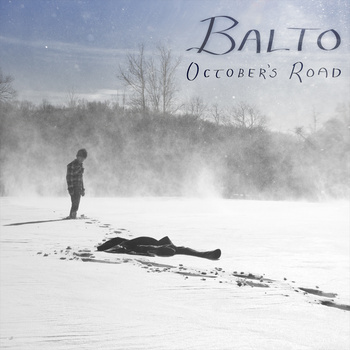
Boy do I have a Monday treat for you readers. Today’s musical delicacy comes from the journey of Daniel Sheron and his experiences in Siberia. Inspiration can come from anywhere. Sheron’s came from the backdrop of snow-covered railways and benighted cities. His music tells the stories of those he encountered in Siberia and the changing scenery that composes the country. It is, as he describes, Trans-Siberian Americana, an original genre that combines traditional harmonies withpassionate lyric. With Fleet Foxes-esque harmonies and the folk prowess of a troubadour, Sheron and his band, Balto, put an American spin on the Siberian experience.

As the band’s page on Bandcamp.com states, “On December 15, 2010, six people entered a basement in Brooklyn, New York and emerged that night with an album that no one had expected. October’s Road.” And, like the Siberian Husky sled dog that the band is named after, Sheron and his band lead listeners through a triumphant first album, woven with melodic instrumentation, apt lyrics and smooth vocals.

I will profile the first song on the album which is available for free on (http://balto.bandcamp.com/album/octobers-road). The entire album is only $4 and is totally worth the money if you are a fan of Americana/Folk (with a Siberian twist). The opening track is a wonderful example of the concoction that Balto effortlessly creates.

The beginning harmony is inviting and cozy. The vocal seeps into strings and then Sheron’s vocal which is sweet and genuine. It is a perfect folk voice. “The Railyard” moves strongly with the backing guitar and other strings. At around 1:40, the harmony is rich and beautiful. The song is five minutes long, but it feels much shorter than that (which is a great thing).

Check out the rest of Balto’s debut album by following the link to their Bandcamp above. You can also visit them on Facebook at facebook.com/baltoamerica or an twitter at @BaltoOnTheRails.

The band is New York based and their next shows will be on April 5th at Arlene’s Grocery and April 10th at Rockwood.

Ari Hest: The Definition of Hard Working

16 Feb

Ari Hest knows the true meaning of hard work. After achieving many artist’s ultimate goal of releasing an album on a major label (The Break-In in 2007 on Columbia Records) he dropped Columbia and decided to gain more control over his art. This fearless act allowed him the freedom to release unadulterated music. And, in 2008, he embarked on the ambitious 52 project, where he recorded one song every Monday of the year and, at the end of the year, had fans vote for the favorite 12 songs for his 2009 album Twelve Mondays.

Understand something. Hest is an old-fashioned folk artist whose sultry baritone echoes. His lyrics are cogent and interesting, spanning from political commentaries to original love pieces, and he has expanded his guitar-wielding repertoire to include piano and strings. I tell you this because his 52-song salute was not just slouchy, pablum recordings. Each was fresh and original. So, what happens when you give a prolific performer like Ari Hest some time to actually work on a full-length album? Well, this!

Sunset over Hope Street is Hest’s first release in four years. It is a wide sampling of Hest’s fine content. As one can gather from the title, the album is not an ode to optimism, but Hest’s heartfelt songs do not overrun listener’s with clichéd pessimism. The album is realistic and candid, two concepts that Hest deals with in his music.

“Business in America” provides realistic commentary on how America often forgets about the poor. Hest croons, “It isn’t what you are it is what you got. Pay no attention to the dying man, if he ain’t got cash we won’t lend a hand.” The beat is constant and the picked guitar leads the lyric. It is catchy and informative.

“How Would I Know” adds Hest’s personal touch. He opens up about uncertainty about a relationship and what will happen in the future. It is somber and melancholic and held together by excellent singing and melody.

Hest’s album is most certainly worth a listen. It’s diversity is its strength and Hest continues to expand his music and lyrics.

The Idle Race – Bands at Bauska Castle

2 Feb

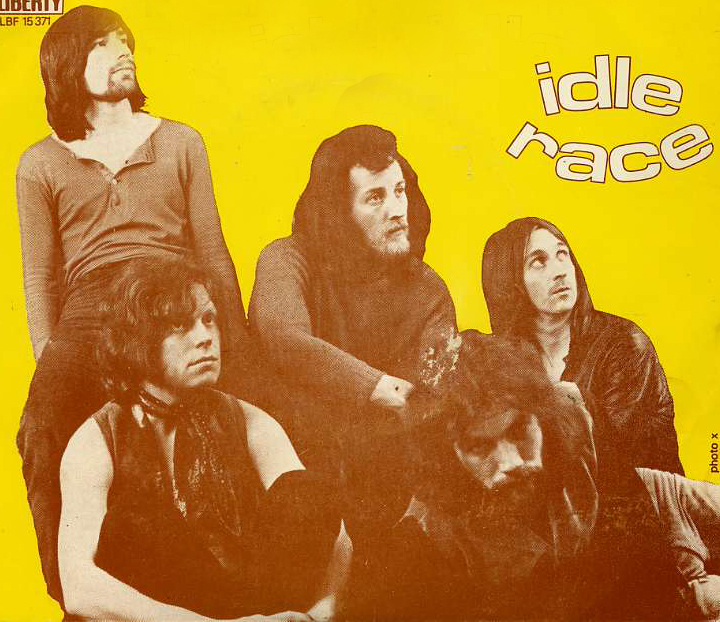
I started the section “The Bands at Bauska Castle” as a way of highlighting underrated and under-appreciated bands of the 1960s and 70s. Many of my categories have to do with crediting musicians who portrayed brilliance at a time where musical brilliance was actually commonplace. Hence why many bands remain unknown even though their music was excellent. Today I want to feature an eclectic 60’s band that found themselves caught in the trap of bad luck. They are The Idle Race.

There were many incarnations of the band that became known as The Idle Race and this constant transformation may have been why they did not gain the popularity they deserved. The band also did not release much material. But, in my opinion, I think the Idle Race remained critically acclaimed but unpopular among the masses because they were playing music that was five years before their time.

The band, who originally were known as Mike Sheridan and The Nightriders, failed to break the charts even though a young Roy Wood played guitar and composed. Wood is best known for his work with The Move and Electric Light Orchestra (who will come up later). After not gaining success with The Nightriders, Wood left and joined the Move in 1965. This prompted Mike Sheridan to leave as well. Left in the band were rhythm guitarist Dave Pritchard, bass guitarist Greg Masters and drummer Roger Spencer. This core remained together and went searching for a new leader. After a short stint with guitarist Johnny Mann, the core three put out an advertisement for a new guitarist in 1966.

The guitarist that won the job was a young prodigy named Jeff Lynne. Anyone connect the dots? Lynne and Wood went on to form Electric Light Orchestra where they became incredibly popular playing similar experimental music that The Idle Race played years earlier. Lynne inspired himself. I am getting ahead of myself.

The band wanted to showcase Lynne’s vocal and guitar talents so they changed their name to The Idle Race. Wood, who had become quite successful with The Move, helped get them a record deal with Liberty Records. They released two LPs that did not do well and Wood convinced Lynne to join The Move which dissolved into ELO.

But with The Idle Race, Lynne released some awesome material that is seemingly always overlooked by 60’s rock writers. I would like to highlight two songs from different albums.

“I Like My Toys” is a psychedelic pop piece off of The Birthday Party (1968), the first album released by the Idle Race. It sounds like an esoteric nursery rhyme. It is also somewhat disturbing if you listen to the lyric. It is about a 16-year-old who is obsessed with toys and proclaims that he “is not well.” It almost sounds like Pink Floyd’s work with “Bike” and “Free Four.” They are relatively effervescent songs with disturbing undertones. The song is simple but very different. Listen to some of the keyboard and guitar elements. Doesn’t it sound a bit like ELO.

In 1969, The Idle Race released Idle Race and off of it came “A Better Life (The Weatherman Knows).”

10 years later, Lynne released “Need Her Love,” and minus the 70’s style effects the songs are very similar. You can hear a lot of ELO in the above song. It may have just not been popular because it was before its time. A beautiful song by Lynne and Idle Race.

“Summercholy” by Britta Pejic.

11 Jan

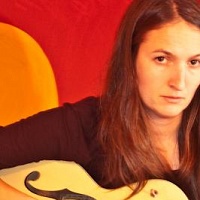
We at the Music Court would like to welcome Britta Pejic into our humble blog castle. She comes with acoustic cheer, eccentric lyric and folky voice.

This Maine-based singer/songwriter released her debut solo album Backyards That Weren’t There Before in 2010 and is beginning the gain recognition for her talent. She has been compared to Edward Sharpe and The Magnetic Zeros, but I do believe her voice is quite different than Sharpe vocalist Jade Castrinos. While Jade’s voice is accented and slightly esoteric, Pejic’s pipes are smooth and understandable. She is a classic storyteller and her lyric does her justice. Her voice does not overpower and instead highlights her guitar and story. This is a positive trait for an aspiring troubadour.

Track four off her new album is a creative song entitled “Summercholy.” While I am currently experiencing a blend of wintercholy, this interesting piece is perhaps the strongest off her easily accessible album.

She creates great noise from a lone acoustic and her voice. The rhythm guitar chugs along with the riff and the words flow over the guitar effortlessly. Pejic creates a great balance. If you like what you hear travel on over to the link provided and buy the CD. Also included is her website.

CD: http://www.cdbaby.com/cd/brittapejic

Britta Pejic: http://brittap.com/