
Archive | Musical Interludes (Melodic thoughts from the Jester) RSS feed for this section

The 27 Club – Alan “Blind Owl” Wilson

18 Jul

tumblr_mig2vihtwq1rx4o78o2_500

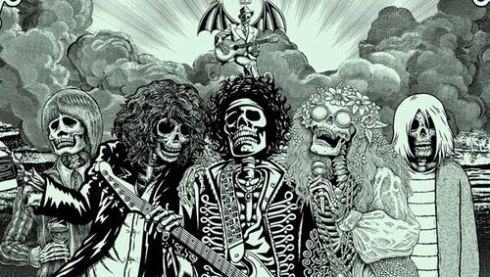
When actor Anton Yelchin died in June in a freak accident many immediately linked the death to the portentous 27 club striking again, as the actor was also a musician – a guitarist for a band called The Hammerheads. This is the typical inquiry when a musician dies young; was he/she 27 years old, and, if he/she was, it is the 27 club’s reaper coming with scythe in hand to steal another young musician from this world.

Today, I enter the Stygian realm of 27. Thankfully, I am neither a musician nor talented, and thus I should be spared by the 27 club; so, my 27th birthday can be met with more joy, despite the fact that I am getting closer to 30, which I would always consider so “adult” and “old” when I was younger. Yes, older readers are probably scoffing at my naive, doltish complaints. In all seriousness, though, it’s good to be 27 – I get to espouse on deep thoughts of the world, and, if I say anything dumb or trite, I can always use the, “well, I’m still learning” excuse.

27, though, is synonymous with the 27 club if you are a fan of music, and, thus, I felt the need to do a post on this star-crossed club. However, instead of completed a wide scope of the entire 27 club, I want to focus in on a particular musician whose death pre-dated the Mt. Rushmore of the 27 club (Jimi, Janis, Jim, and Kurt). In fact, Alan “Blind Owl” Wilson died only two weeks before Jimi Hendrix in September of 1970, a year that fell in the middle of a stretch of time where the 27 club took so many wonderful musicians (1968-1972).

Before we get into the fascinating story of Alan Wilson, let me qualify this entire post by writing that there is no special link with 27 and death for musicians. Yes, coincidentally, many talented musicians died within a short time of each other at the age of 27, but, when you do a wide scientific study, it is pretty obvious that more musicians die closer to the national average for humans than do when 27. Many musicians unfortunately die young, though, because of the lifestyle they lead – drugs, alcohol, lack of sleep, constant touring, violence, accidents, and, in some cases (like that of Mr. Wilson), debilitating depression. For example, Tupac died at 25, Otis Redding at 26, Hank Williams at 29, Sam Cooke at 33, and Buddy Holly at 22.
Sept3

Canned Heat may be the most underrated band of the 1960s. The band, which was put together by Alan “Blind Owl” Wilson and Bob “The Bear” Hite, appeared at both seminal 60’s music festivals – The Monterey Pop Festival and Woodstock – and played a style of psychedelic blues music that was adroit and foundational. It is not a lie that Canned Heat provided tremendous inspiration for several blues acts during one of the most formative eras of rock n’ roll. The band housed a slew of blues-related acts in the late 60s (Jefferson Airplane and The Grateful Dead included), and became a key starting point for tremendously talented blues musicians like Harvey Mandel and Walter Trout. Founding guitarist Henry Vestine is ranked 77th in the top 100 guitarists of all time list from Rolling Stone Magazine.

Unfortunately, Canned Heat suffered two huge losses with the death of Alan Wilson in 1970 and then Bob Hite in 1981 (at the age of 38). The band still performs today with originals Larry Taylor and Adolfo de la Parra. Harvey Mandel performs with them as well, and he is pretty much an original, joining the band in 1969 and playing with them (his third performance oddly enough) at Woodstock.

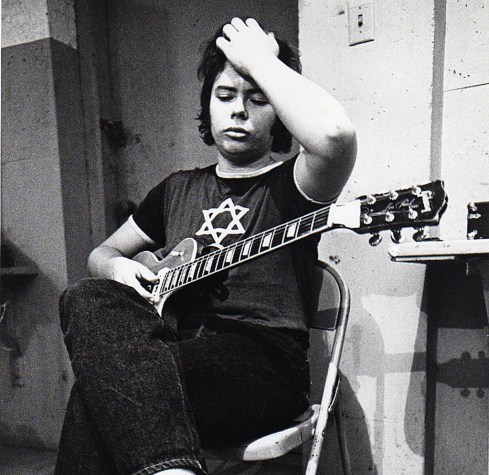
Let’s talk about Alan Wilson. Wilson, who got the nickname “Blind Owl” because he had terrible sight and was erudite, majored in music at Boston University and focused his attention on blues music. He particularly enjoyed the music of pioneer Skip James, and he emulated his high vocals in his own singing. With Hite, Canned Head was founded, and the band released a string of excellent album starting in 1966 – Vintage Heat (1966), Canned Heat (1967), Boogie with Canned Heat (1968), Hallelujah (1969), and Future Blues (1970). The albums featured such special guests like John Mayall, Dr. John, and Sunnyland Slim.

The band’s hit “Going Up The Country,” which sampled the quills of Henry Thomas’ “Bull-Doze Blues,” became the anthem of Woodstock; it is featured in the Woodstock movie.

In September of 1970, Wilson was found dead on a hill behind Bob Hite’s home. His autopsy revealed that he died of an accidental drug overdose. Wilson was hospitalized and treated for significant depression earlier that year after a suicide attempt, and some think the drug overdose was indeed a suicide.

It is worthless playing the game of what could have been, but if Bob Hite and Alan Wilson both stayed alive for longer, I believe Canned Heat would have released several more albums with the two leads at the helm, and perhaps would have gone done as one of the best blues bands ever.

Enjoy “Going Up The Country!”

Summer Schedule and Summer Tune

1 Jul

dog at beach

Much kudos to Toria Munoz who has kept the Music Court afloat through the month of June. Summer pun totally intended. Summer at the Music Court has come to mean more consistent posting, and I look forward to bringing you the best of new and old music content to help line your steamy summer days. Toria will also help heat up your summer with excellent new music.

So, what can you expect during the summer?

  • Artist Profile (New)
    • There are a plethora of excellent new artists that are well deserving of praise and recognition. The Music Court plans to do just that. Stay tuned for artists that should help fill your summer playlists.
  • In The Jester’s Ear
    • Sometimes I hear a song – new or old – that I need to share with you all. This section allows me to do just that.
  • The Evolution of Song
    • Have you ever heard a song and thought to yourself where it came from? That happens to me a lot. We have already fully analyzed songs like “Goodnight Irene” and “House of the Rising Song.” There are many more songs to assess, and we will do so over the summer.
  • The Spirit in the Sky – One-Hit Wonders
    • Norman Greenbaum’s “Spirit in the Sky” is perhaps the best example of a one-hit wonder. We will explore the wide world of one-hit wonders in this section.

Before we begin the circulation of new posts over the summer, I feel like it is necessary to help you enter July with a song that I have always associated with summer.

When Mungo Jerry laid down this track I don’t know if the band could have anticipated that it would become a summer anthem. There is something so uniquely uplifting about the song, though, that represents the carefree emotion associated with the season. The opening riff sings with an effervescence akin to a ice-cold glass of water on a 95-degree beach day. Both the vocal and lyric possess an odd, warped sweetness that is both humorous and ridiculous. That said, the song is still such an earworm that its attractiveness is undeniable. Enjoy the perfect pop piece, and I look forward to sharing some more content with you throughout the summer of 2016!

Native Gold Presents Dualistic Sound In Track Fickle

28 Jun

Native Gold brings their alternative and electronic sound right to the forefront of listener’s ears when listening to their soon to be released EP A Man We All Admire. Fickle sounds very similar to Frou Frou, Menomena, and Radiohead all wrapped in one group. With heavy electronic and static tones to their music, qualities of those groups all seem to find a way through their overall sound to music aficionados. With a progressive and alternative rock feel to the track Fickle, Native Gold presents their sound in a dualistic nature to listeners. Other tracks on their EP, A Man We All Admire, sound equally synthesized, simply highlighting their carved out tone for the continuity among the tracks. An emphasis on the words and meaning of overall fickleness makes the song haunting and intentionally melancholic. Native Gold will bring listeners in another world with their evolving, yet otherworldly sound.

Eagle |Stallian’ & ‘Quilla Team Up For Get It Right

27 Jun

Produced by Eagle |Stallian’ & ‘Quilla sets the track Get It Right into a synchronized motion of lyrical and electronic genius. Initially carrying the elements of dream pop and electronica, Get It Right exhibits the characteristics of a top EDM song. With powerful lyrics such as “waiting for the good life, waiting for the perfect sign”, it’s quite clear that Eagle | Stallian’ & ‘Quilla mixes supernatural thoughts with patterns in life. Additionally, the lyrics of “we’ll get it right this time, we’ll get it right, you and I” yields to the thoughts of romance, unrequited love, or when life’s situations get complicated. In a saturated world of electronica music, it’s sometimes hard for artists to stand out and Eagle | Stallian’ & ‘Quilla do a perfect job of standing out to the top tier of a hard genre to make it in. Eagle | Stallian’ & ‘Quilla lyrics balance the perfect meaning between life and motivation to push forward in low points within your life. With top quality production from Eagle Stallion and the breathtaking vocal talents of Eagle | Stallian’ & ‘Quilla, the EDM world should brace itself, this artist is prepared to make a long lasting imprint.

Digit + Stas Carries You In A New Atmospheric World With Doors

24 Jun

Presenting the track Doors off of the soon to be released EP Violet, with upbeat and synthetic sounds, listeners are brought into an atmospheric world of Digit + Stas. Continuing the synthetic sound, the acoustics of Digit + Sound are also paired with symphonic undertones. When reflecting on how one would place Digit+ Stas’s sound, it falls halfway between the spectrum of Lana del Rey and the dark side of Sia. Nastasia Avrutin delivers her strong vocals throughout the duration of the track, clearly showing the emotion and tone within her music. With an eclectic background working in the environments where musicians come to perform in Brooklyn, one can infer that Nastasia has been continuously creatively inspired.