Archive | Musical Interludes (Melodic thoughts from the Jester) RSS feed for this section

A Music Review of Oscar

27 Feb

At around 10:30 p.m. yesterday I wrapped up my viewing of the Oscars. I bidded my family and the downstairs television adeiu, climbed upstairs, prepared for bed, and then sat in bed for another hour until Billy Crystal wished the audience a good night. Yes, if I truly wanted to end my watching of the show I could have easily not turned on the television in my bedroom, but I cite this otherwise useless mention of the movements of my previous evening to prove a point. The Oscars, even without having anything invested in them, is intriguing and entertaining – enough to make you watch (even with an early-morning train in the morning).

I was happy to see The Artist pick up most of the large awards (including the Best Picture award), because this ode to pre-sound flicks demonstrated a good-hearted nature and an ode to film itself (which is what the Oscars represent). The Artist also won for Best Original Score and Ludovic Bource, the composer of the film’s music, definitely deserved the award.

On Friday I predicted the winner of the Best Original Song category and, while there were only two choices (so I had a decent chance of picking the winner), I accurately picked “Man or Muppet” as the winner. And while I am happy for Kermit and Miss Piggy, I am most happy for this guy.
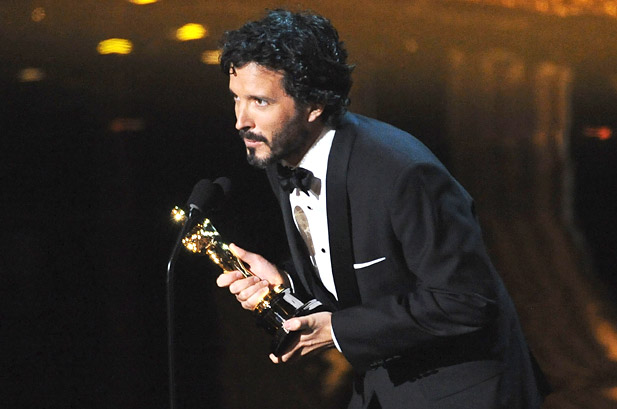
Bret McKenzie


As you can probably tell from the suit and the Oscar, Bret McKenzie won something last night. He was tasked to write music for the 2012 Muppets movie, and, as musical supervisor, he penned “Man or Muppet” and another four songs for the soundtrack. So why I am happy for Mr. McKenzie, besides the fact that we are both human and he achieved a feat of accomplishment. Bret McKenzie was one-half of “Formerly New Zealand’s fourth most popular guitar-based digi-bongo acapella-rap-funk-comedy folk duo,” The Flight of the Conchords. The other half was Jemaine Clement. 

My friends and I first listened to Flight of the Conchords’ unique brand of folk/comedy when we were in High School. Their purposefully awkward interplay, catchy riffs, hilarious one liners, and surprisingly good voices, had us repeatedly watching Youtube videos of their performances. And while watching those videos I just knew that one of the duo would win an Oscar for a song about muppets. Just knew it. To celebrate Mr. McKenzie’s Oscar victory here is a song about business time. I’m sure he was wearing his business socks!

On to another Oscar note. Esperanza Spalding, who has recently come into notoriety with her Grammy for Best New Artist, performed a beautiful version of “What A Wonderful World” during the In Memoriam section of the Oscars. Spalding, who plays a unique brand of soul/jazz/fusion, is proficient on bass and in vocals. Listen to the version of the classic – which she performed with The Southern California Children’s Chorus – below:
Man, Muppet, and Rio – Oscar Music in 2011

24 Feb

The One Ring to Rule Them All...Oh...That's not the ring from Lord of the Rings?

Ah, the Oscars, the culmination of the past year in cinema, adorned with obsessed fashion coverage, long-winded thank you speeches, and Billy Crystal (as much a part of the Oscars as the Oscar statuette itself). The awards show is easily bashed, but, let’s be real, it is the true acting award, and it’s hard not to take a peak at the telecast. The 84th Oscars will air this Sunday and it is very likely that an ode to movies created before the Stock Market Crash of 1929 may win Best Picture. While I have not seen “The Artist” (and trust me, I want to), I have heard from reliable sources that it is not only beautiful, but also it, even without a spoken word, makes you smile throughout.

But I’d like to focus this post on the music of the Oscars. Have you ever had a good idea a little too late? I had one of those earlier today. I would love to do a series on the Best Original Song category through the years, presenting my pick of the best original song winners of each decade, but I arrived to the show just before they announced Best Picture, so to speak. There is just no time to do this feature this year. Next year, though, watch out for it around this time (hopefully a week or two prior).

I will, though, feature the nominees for Best Original Song of 2011, and I will provide you with a little teaser of the string of posts I will do around a year from now. This year there are only two nominees for Best Original Song. The fight is between an animated animal party movie and The Muppets. “Real in Rio” vs. “Man or Muppet.”

Both songs come from light-hearted kids movies and feature colorful characters. “Man or Muppet,” despite how idiotic it seems on the surface, does present the conflict of identity and I like how the song actually does have some meaning, so I am going with that as the winner (and I think it will win). No offense to both of the songs, but this is a category that has seen some pretty awesome songs in the past, and this year’s small stock is weak.

The category was not an original Oscar award. It was installed at the 7th Annual Oscars in 1934, where “The Continental” by Con Conrad and Herb Magidson took home the prize for their song that appeared in the movie “The Gay Divorcee,” a movie that ends in dancing and features Fred Astaire and Ginger Rogers (one of the 10 movies they made together). Was this the best song of the 1930’s to win the award for Best Original Song? If you are up on your movie release years then you know this answer is clearly no. While it is a good song, and so is the 1936 winner “The Way You Look Tonight,” written by Jerome Kern and Dorothy Fields, which was also featured in a movie featuring Fred Astaire and Ginger Rogers (“Swing Time”), it is not the best of the decade.

The 1939 Academy Awards featured a decent year of movies (I’d say). Best Picture went to a small featurette about the Civil War called “Gone with the Wind.” How about that movie starring that Iowa kid who was in a lot of Westerns. What’s his name again? John Wayne in “Stagecoach.”

And then there was the winner of the Best Original Score and Song category. A movie about a girl who just wanted to go home. Yeah, you know it.

The Left Banke Ask Renee To Walk Away Again

22 Feb

Yesterday I mentioned the Left Banke in my brief discussion of bands who inspired progressive rock. Today, I not only want to explore this statement a little further, but also I want to share some excellent news. Let’s begin with some history of one of the pioneers of progressive rock.

Baroque Pop hit its mainstream success in the latter-half of the 1960s and bands like The Beatles, The Zombies and The Beach Boys sampled its fusion of pop and classical music. But one of the originators of this style of music, The Left Banke, also played it like no other. The genre in itself demarcated a different style of music that would become increasingly popular after the psychedelic movement met its mainstream end.

Progressive rock, a genre of music defined by (as I said yesterday) “creative arrangements, unusual blends of genres (like Jazz/Rock), eclectic (almost baroque) instrumentation, and classical constructions,” was clearly engendered by the promotion of baroque pop (among other things), and when The Left Banke, a band formed in New York in 1965, released “Walk Away Renee,” but more so “Pretty Ballerina” in 1966, a true pre-prog-rock staple was introduced.

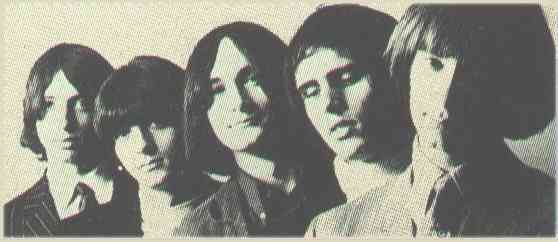
The Left Banke’s founding roster included Michael Brown (keyboard, songwriter), George Cameron (guitarist), Tom Finn (bass), Warren David-Schierhorst (drums), and vocalist Steve Martin Caro. After some initial recordings David-Schierhorst was removed, Cameron switched to drums, and Jeff Winfield was brought in to play  guitar.

“Walk Away Renee” and “Pretty Ballerina” were released in 1966 in July and December, respectively. The song was written by Michael Brown (who was 16 at the time, by the way), and was written about Tom Finn’s girlfriend, who Brown was enamored with. Good thing for all. See “Layla” for another ‘I want your girl’ song that turned out to be successful. It was a huge success.  It spent 13 weeks on the charts with a top spot at #5 and several artists have covered it.

We will talk about “Pretty Ballerina” in a second. Why did The Left Banke not go on to achieve tremendous success. Well, first off, I think their music would have succeeded more in the later 1960s and early 1970s. They were bellwethers and sometimes those individuals who lead get ultimately forgotten. Also, there were some serious internal issues that ripped apart the band. Brown recorded a single without the band while using the band’s name The Left Banke. He used session musicians with Bert Sommer on lead vocals. The band legitimately split into two Left Banke’s. The radio stations were confused and pulled the song. In 1967 the band reunited and recorded some more material, but, Brown left the band soon after. The band (Cameron, Martin, Finn) moved on, brought in Emmett Lake, and recorded their second LP (some songs featured a young Steven Tyler doing background vocals).

This, my friends, is “Pretty Ballerina,” a song written by Brown, sung by Martin, and is also about Finn’s girlfriend. Man, this young dude was obsessed. Talented guy obsessed with a girl. Heard it before and will hear it again.

First off, it is clearly of baroque sentiments. The strung-out strings, rhythmic keyboard, and orchestral core (with Oboe!) help make this song what it is. It is beautiful. It is subtle, simple, and Martin’s voice is ethereal and heavenly. But there is something else in this song below the surface. While it is superficially happy, I always feel weird listening to the song. Its short length, repetitiveness, and dream-like quality, almost suggest something oddly dark in it. It’s just a strange feeling and I get that it may be sparked by the esoteric nature of the song. It is my favorite from the band and one that still is original and independent today.

Now for the Good News:

George Cameron and Tom Finn reunited for two shows at Joe’s Pub in New York City in March of 2011 and have announced that they have reformed the group. The group consists of Cameron, Finn, and other musicians. How cool!. They will be performing at BB Kings Bar and Grill in NY on April 29. They will then perform two shows in Maryland (Rockville – Parilla Performing Arts Center on May 5, and Annapolis – Rams Head on Stage on May 6.)

Considering my location (NY), I will be attending the BB Kings show and I’m exciting to see two 60s legends perform on stage. If you plan on attending the show, let me know, and we will share some drinks and enjoy some quality music.

Check out The Left Banke’s official website for information on the band and the shows: www.leftbankeband.com

President’s Day Jam

20 Feb


Paste Magazine had a clever music-related idea for honoring the presidents on this President’s Day. They took each president’s term and matched it with a song that correctly related to said president. You can view all of the pairings here.

A fun commander-in-chief music game? Count me in. What else am I supposed to do on my day off? Now, of course, many songs can fit different presidencies, but I think the author did a good job establishing fun pairings. There were a few cop-out choices. Picking a song about specifically about the president to describe his candidacy is a little too convenient. But seriously, what better song describes President James K. Polk than the They Might Be Giants’ classic?

I don’t know what’s funnier; the song itself or the kids dancing.

For President Teddy Roosevelt, the writer chose an Elvis song, “Teddy Bear” because of obvious reasons (the Teddy Bear was/is important). But, come on, Teddy is known for being a presidential bad-ass; a big-game hunter and environmentalist who met adversity with pugnacious fortitude. Teddy Bear? Come on. He deserves something a cooler than that. Here’s my choice for the U.S.’ brash 26th president and one of our biggest patriots.

Pretty much a no-nonsense patriotic tune about the United States. It would obviously be anachronistic in Teddy’s time, but, I think it suits presidential passion well.

Best choice on the list?

Guess the president? Haha. I also liked the choice for President Obama. The author mentioned the temptation to pick “A Change is Going to Come” by Sam Cooke, which he did use in his campaign. I would also have been tempted by this particular version of “We Shall Overcome”:

What do you think are some good songs that represent presidents? Comment!

The Music Court’s March Madness Is Back!

17 Feb

Last year, The Music Court celebrated the College Basketball March Madness tournament by forming its own unique March Madness-themed poll that had nothing to do with college basketball. Instead, we set 16 albums against each other (all released in 1967) in a battle of superiority. How did it work?

I did my research and (in completely and obviously biased fashion) picked what I thought were the top 16 albums of 1967. Feel free to search March Madness in the search bar for a glimpse at how last year’s competition progressed. It worked like a region in the March Madness poll. The 1-seed faced the 16-seed and so on. Readers (you) voted on your favorite album each round and the match-ups naturally became more difficult as the competition progressed. At the end of the competition, expectedly, the #1 seed, Sgt. Peppers Lonely Hearts Club Band took home the top Music Court prize and the title of “Best Album of 1967.”

The poll idea was mainly an experiment. In order for something like this to work, I need help from all of you. The response was good enough to keep this March Madness poll annual. And, as you can see by the picture above, we are traveling back in time one year (from 1967) and reproducing the idea. The Beatles may have taken the title of best album of 1967, but what artist released the best album in 1966. Was it still the Beatles with Revolver?

Starting a little under a month from now, I will post up the initial match-ups and urge you to vote. I hope that we can produce an equally awesome performance and I am looking forward to getting the show on the road. I compiled the list today, and, although we are not starting with the first match-up right now, I do have something related to share with you all. Oh, if you are confused about all of this March Madness mumbo-jumbo and need a good description, do not worry, I will provide one in the first poll post soon.

When I was compiling the list of albums earlier today, I initially listed 19 albums. I needed to get the number down to an even 16, and after some inner deliberation, trimmed the fat, so to speak. The 17-19 best albums of 1966 may have just missed our list, but they are still excellent albums that deserve recognition. If you have been reading the Obscure Classic Rock section, you can appreciate how difficult it was to succeed in music during the mid-60s because of the high level of talent and competition. Sitting at #17 are The Fugs and their self-titled second release.

This folk/psychedelic act named after Norman Mailer’s euphemism for a certain four-letter word that begins with F in “The Naked and the Dead”, featured Beat/Hippie crossovers Ed Sanders and Ken Weaver, and Beat poet Tuli Kupferberg. The songs certainly reflected the burgeoning 60s hippie counterculture, and their satirical protest songs are humorous, poignant and original. This particular album has my favorite Fugs song, “Kill for Peace,” a clear contradiction and Kupferberg composition. It is a ditty that inspired future artists like Country Joe.