Tag Archives: Music

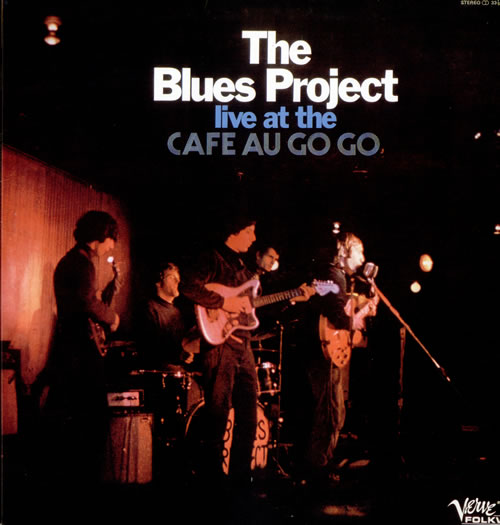
Live at The Cafe Au Go Go – The Blues Project

25 Apr

The+Blues+Project+-+Live+At+The+Cafe+Au+Go+Go+-+white+label+-+LP+RECORD-529277

During a four-day stretch of concerts in November of 1965 at the revered Cafe Au Go Go, a band of New York-based blues musicians recorded its first album. The club, which was the first New York venue for the Grateful Dead, also featured an often weekly collection of uber-talented blues artists entitled the Blues Project. I mention the Dead because the Blues Project was known as the New York response to the Grateful Dead, which was also a collection of incredibly talented blues musicians. Unfortunately, the Blues Project lacked the staying power and fell into 60s music history – although two members did form Blood Sweat & Tears. I bring the band back today on the Music Court because the debut live collection of covers is a sparkling example of true 60s blues music that engendered the propagation of the genre stateside.

The Blues Project was a jam band at its finest. The album was actually a cut version of several longer covers of famous blues songs like “Back Door Man” and “Goin’ Down Louisiana.” These covers were fresh and inspirational, as several British blues musicians would also come to cover these songs with similar aptitude. The big three members of the Blues Project were guitarists Danny Kalb (also vocals) and Steve Katz and organist Al Kooper. Tommy Flanders kicked in some vocals, and the band also included Andy Kulberg on bass and Roy Blumenfeld on drums. Al Kooper actually joined the group after its failed audition for Columbia Records; Kooper was a session musician and liked what he heard. It didn’t take long for the band to secure a record deal with Verve Records and record its first album. 

So, let’s talk a bit about Live at the Cafe Au Go Go. One of the interesting components of the album is that it blends classic 60s folk with pre-60s blues. For example, The Blues Project performs a version of “Violets of Dawn,” a piece by Greenwich Village folk staple Eric Andersen.

The piece is quintessential psychedelic folk, which was developing at the time with bands like the Byrds. The mellow song features a bright guitar that provides a consistent lead while the percussion and bass hold down the subdued rhythm. It’s the type of song that does not stand out to the listener but easily flows like a narrow stream. It’s hard to believe that the next track on Side 2 of the album is a version of Willie Dixon’s “Back Door Man,” which sounds like this:

Just a killer version of this classic. It moves with vigor: effortless percussion, whining blues guitar, efficient bass, and fitting vocals. It is gritty and more true to real rock n’ roll blues. It also demonstrates The Blues Project’s ability to successfully swap between folk and rocking blues with ease. A truly talented band that deserved more listerners and success.

 

On Your Mark, Get Set, Go, Miko and The Musket

22 Apr

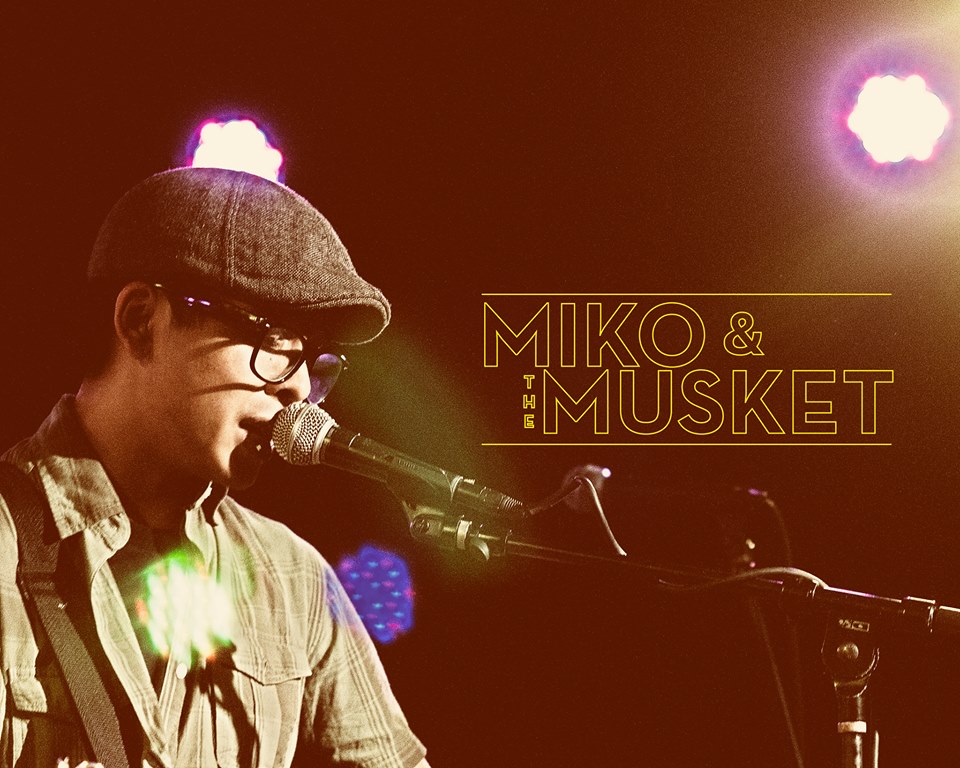
Miko & The Musket

While Indie singer-songwriter extraordinaire Miko de Leon delicately croons for his listeners to “slow it down” in the single “On Your Mark,” this proves quite difficult when you do not want the infectious rhythm to end! But at least when the song ends you can always hit repeat, which I’ve done several times in the last hour. This is the case for most of the music released by de Leon’s band Miko & The Musket. The 7-piece Indie band exceeds what one expects from most Indie bands, for instead of falling into a consistent sound, the band provides diverse instrumentation and vocals that provide a diversity of sounds much like a variegated strobe light in a dark room. There is such richness in the multifaceted vocals, and this is only accentuated by the folk/funk/pop rhythms evident in each piece. Thus, in a sense, Miko & The Musket is genre less, a fascinating combination of a slew of sounds and rhythms that form a pleasant amalgamation of sound. This is perhaps best portrayed by the single mentioned above, “On Your Mark.”

“On Your Mark,” combines a fresh funky rhythm with creative folk harmonies. The song begins with an Americana funk sound much like that of Rusted Root. The percussion almost takes on a World music quality, and the band seems to ride the wave of many different types of rhythm. de Leon’s voice is like whipped cream: light, fully, and tasty. He blends well with his supporting vocalists – Molly McAdoo and Lannon Killea – who both provide fun fills – much like UK Indie folk. There are just so many catchy qualities of this piece, and it is difficult to not sing along or at least bop your head to the rhythm. The song falls off towards the end and quite literally slows itself down, but, much like the style of choral pop bands, rises back up into a culmination of sound and instrumentation.

Great piece by an up-and-coming Indie powerhouse in New York. Check out more about the band on its website, Facebook, and Twitter.

A Seder Plate of Music

14 Apr

two-options-for-passover-seder2

Happy Passover! I write this as my stomach prepares for a night of hedonistic gluttony. While one of the central tenets of Passover is the prohibition of leavened items, the food is still absolutely sumptuous. Passover is perhaps my favorite Jewish holiday. Like all holidays, it presents the opportunity to see family, but Passover has a unique component – the seder. The Passover seder encompasses the annual retelling of the Jews’ biblical exodus from Egyptian bondage, and, like most elements of any good religious story, there is a great deal of symbolism and purposeful repetition. I am partial to storytelling, and, for Jews, this is one of the most epic tales of survival, revenge, and escape. With the recent release of Noah, it will not be long before the tale of Moses is offered in IMAX 3D.

So, in celebration of the first night of Passover, I thought I’d be a bit creative with a post before I start noshing on matzoh and hard-boiled eggs. Perhaps the most crucial element of Passover is the seder plate, which features six items – variations of food, of course – that are all symbolic of an emotion felt by the enslaved Jews. I wonder what song might fit each item?


1.) Maror and Chazeret

Maror and Chazeret are bitter herbs. In the Ashkenazi tradition (Eastern European Jews), horseradish or lettuce is used. As one might guess, Maror and Chazeret are used to symbolize the bitterness and terror of slavery. Unfortunately, slavery persisted well beyond Egypt, and the work songs of African Americans in bondage demonstrated just how awful slavery was (and still is). “Trouble So Hard” by Vera Hall is an excellent example of a bluesy work song from the early 20th century, which represented the troubles of African Americans during slavery.


2.) Charoset

Charoset is a sweet mixture of nuts, apples, cinnamon, and red wine, which represents the mortar that Jews used to build houses in Egypt. While the sweetness seems slightly paradoxical, it tastes a whole lot better than mortar! What best represents the dirty work of construction? How about a little late Rolling Stones?


3.) Karpas

Karpas, traditionally parsley or celery, is dipped in salt water to represent the tears of Jewish slaves in Egypt. Get the sense this is not the most optimistic holiday in the world? Crying. I don’t need any more of an excuse to use Roy Orbison’s operatic voice for the purpose of this post! The end of this song is one of the greatest vocal climaxes in any song ever – just saying!


4.) Z’roa

Sacrifice. The Z’roa is a roasted lamb or goat shank bone that represents the traditional Pesach sacrifice. It is not eaten. It is just on the plate to represent the sacrifice. A song to represent animal sacrifice? Elton John – “Sacrifice”? No. This is tough, and the food is calling my name. We go with Evanescence.


5.) Beitzah

The Beitzah also represents sacrifice (the festival sacrifice), but it has come to also represent mourning, as eggs are traditionally the first things served to mourners after a funeral. Let’s go with the latter option for our song. Unfortunately, mourning is an inevitable human emotion and thus several songs are written about the subject. Eric Clapton just happens to have one of the most heart-wrenching of the bunch.


Gosh, perhaps we shouldn’t say HAPPY Passover. Well, in the story the Jews escaped slavery! Jews have a history of powerful persistence, and no matter the adversity (and it continues to exist), Jews continue to persevere, and this holiday is an example of this. Enjoy the festivities if you celebrate!


A Lazer Gun Show from Brisbane

11 Apr

Hey Geronimo


In his epic War and Peace, Leo Tolstoy wrote “The strongest of all warriors are these two — Time and Patience.” This was particularly apt because it took an inordinate amount of time and patience to write this work, which eclipsed 1,000 pages! I mention Tolstoy’s quotation because I have not posted on The Music Court since February. It’s weird typing these words, greeted once again to the blank “Add New Post” canvas. When I started the Music Court several years ago, I made you – the reader – a promise that I would never produce rushed, unimaginative content. Every post would be structured with care. You have responded favorably by helping us reach nearly one million views since our creation. Over the past few months I was simply unable to concentrate on writing keen posts for the blog. Thus, minus the excellent contributions from our concert reporter, Mimi Hong, I have let the blog sit (and my emails pile up). I am excited to write that I am back, and to celebrate my first post since April and thank you for your patience, I have an excellent Indie Pop single for you to check out from a band hailing from Brisbane, Australia! 

Famous Apache Indian leader Geronimo once said, “While living I want to live well.” If I might be so bold, I’d like to add a component to this quotation – “live well” … and listen to great music. It should come to no surprise then that Hey Geronimo, the subject of today’s Music Court feature, is creating some top-notch, effervescent Indie Pop music that you should listen to … right now!

This sub-three minute jitterbug infuses upbeat rock elements with staccato beats and carbonated harmonies. These elements are all wrapped up into a loaded firework and shot off into the sky to explode with wild colors and shapes. And, like a firework, the music attracts the listener’s attention and doesn’t let go. Instead, it explodes in the ears of listeners like pop rocks. There is just so much energy in this song. The spacey electronics to the crashing drums are both incredibly effective. It’s an excellent release from an up-and-coming band.

Hey Geronimo released its sophomore EP back in November and has since been touring the new EP (Erring On The Side of Awesome) throughout Australia. The band has found permanent residence on several music charts seemed primed for break-out global success.

Follow the band on Facebook or Twitter. You can also check out its website.

Song of the Day – Working Class Hero

20 Feb

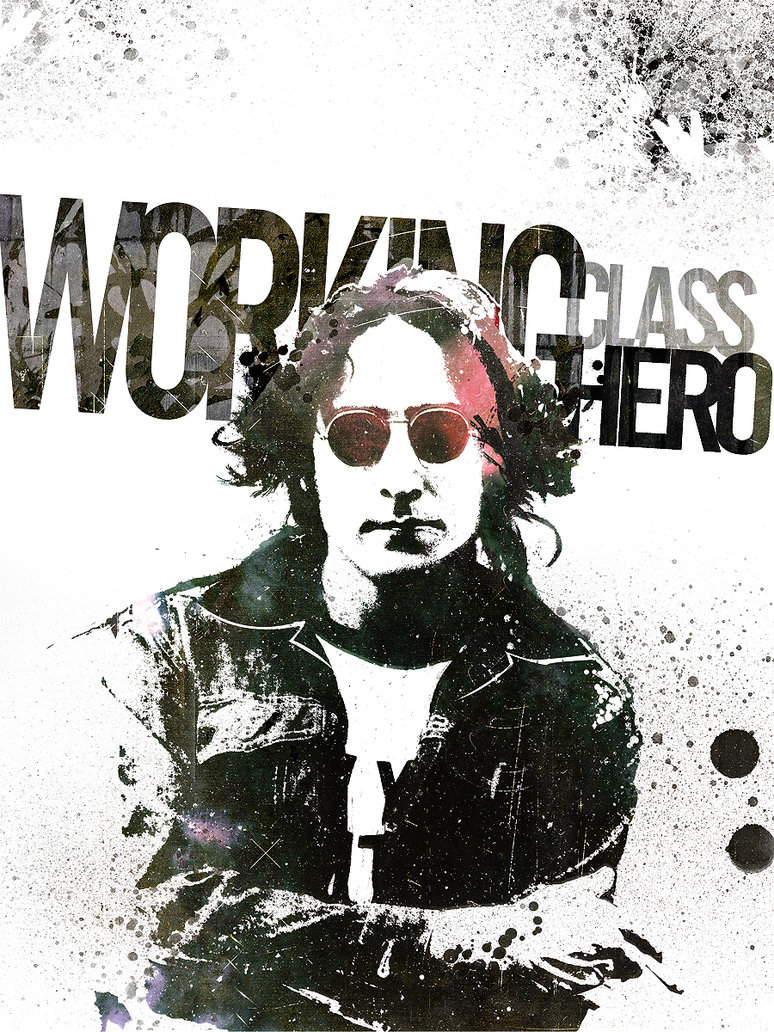
Working_Class_Hero_by_vhm_cain

OK. I’m here. I’m typing. This is a good sign. I have been immersed in a lot of work lately, and thus have not had the opportunity to post to my beloved Music Court in a few weeks. I do very much hate falling into long posting droughts, and for more than four years I have prided myself on posting at least once a week (every week). Unfortunately, as they say with going to the gym, when you fall beyond 3-4 days of not posting (going), it is hard to pick back up again. You see, one of my main tenets on the Music Court is not dreck content. Meaning, I will not post for the sake of posting. I’m afraid today’s post falls into that blasphemous category. But, I had to prove to you all that I am alive and well!

Although this post is rather impromptu (and I promise I will be back posting regular content soon), I figured I might feature some John Lennon. This song came up on shuffle the other day as I was driving home from Connecticut, and I just spent the few minutes of mindless driving listening to the lyrics of the piece. Yes, I have heard it several times before, but often times you hear a song and do not truly listen intently to the lyrics. I am continually struck by two elements of this piece. One, this is one of Lennon’s angriest songs – perhaps his angriest. His use of imprecation is at an all-time high and once you get past the fact that he once sang “Love Me Do,” you realize just how incredibly diverse he was as an artist. While the song may seem a bit strange coming from the deep pockets of John Lennon, he accurately represents the utter droll of middle class monotony and subtle, tortuous mayhem. Look, Lennon was a tremendous song writer. Tremendous is an understatement. But this song is perhaps the apex of his melancholy look at the machinery of the “working class hero.”