Summer officially ends on Sunday. I don’t know about you, but I intend on holding on for dear life. The thought of another New York winter is … well … cold and the antithesis of pleasant, sunny, and all those summery adjectives. What I need is some music to help me ward away the chill in the air and focus only on the chill of cold beer, warm sunshine, and a beach somewhere. I need some mental transportation music. Thankfully, I have Joe Moorhead.
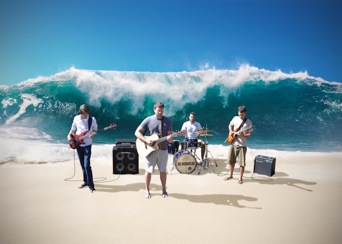
Moorhead, an acoustic-guitar wielding, laid-back, tropical musician originally from Cleveland, Ohio – there is an ironic contradiction blatantly noticeable in that appositive – provides the summer grooves you need to keep the spirit of warm weather alive during cold months. His band is your quintessential college quartet, and they can be seen playing college venues and festivals throughout the United States (Tour Schedule).
All of the tracks, which can be heard on Moorhead’s website, can best be described as fun. The tracks, like Moorhead, are relaxed and comfortable. They are perfect for swinging on a hammock while enjoying the sweet heat radiating off the orange sand and … uh, yeah, sorry, back to my desk. It’s easy to get lost (in a good way) in the excellent tunes. Here is the first single off the new album Tides are Rising (released last month), “Sunshine Driving”
The piece starts with a toe-tapping blues riff that echoes a groovy Dave Matthews-like jam. Moorhead’s vocal is loose and easy. The hip verse turns into an island chorus. It’s a strange made-up adjective, I know. The best way I can describe it though is a melody concoction you are most likely to hear while on an Island. It’s an interesting juxtaposition with the blues guitar. Great piece.
Add one more notch on Brantford, Ontario’s belt. The city is the birthplace of Wayne Gretzky and Phil Hartman, and it is where Alexander Graham Bell invented the telephone. It also houses the six members of the rising Indie/Rock band Racoon Wedding. Racoon can be spelled with one C or two. I thought I’d obviate the spelling lesson.
Racoon Wedding is the music equivalent of what I would expect a raccoon wedding to be like: electric eccentricity, amicable drunkenness, poppy humor, and, most importantly, horn-fueled raccoon love. So, yeah, that odd comparison holds true for the sextet from telephone city.
Come tomorrow with the release of the new LP, Racoon Dead on the Side of the Road, the band will have successfully depicted the joy of raccoon passion and friendship (which the name of the band implies) and the harsh inevitability of death at the hand of a metal box traveling at speeds no raccoon can match. Who knew that they were a concept band?
All kidding aside, I’ve grown attached to the bluesy, Dr. Dog/Kay Kay and the Weathered Underground quirkiness and musical whimsicality of Racoon Wedding. With some bands (and I could feel this prior to watching the buddy/buddy bacchanal video below), you just know that friends are making music. And not like friends until some success presents itself and then “I’m going solo” becomes an overplayed comment. Friends who are friends who happen to make good music and have fun doing it. This comes through in the tunes, and it is one heck of a positive with Racoon Wedding.
The band is haphazardly touring throughout Ontario, but I do hope this post helps give them some more play in the States. Fraternal harmonies, New Orleans horns, and pop rhythms, when mixed effectively tend to engender popularity, and I predict good things for Racoon Wedding in the future.
The opening piano riff plays like a more bluesy version of a Jukebox the Ghost piece. The lead vocal is course-grained with a hint of southern cooking. The harmonies come from all angles and are extremely effective. Throw in some drunken horns (in the best possible way) and a taste of jazz/ragtime/period drums and you have a great song. Make sure to check out the rest of the album. Here is some information
Robert Johnson, Charley Patton, Son House, Ma Rainey, Big Bill Broonzy – Names that are forever linked with their god-like status among the propagation of American Blues – an extensive genre that had an indelible impact on the future molding of rock ‘n’ roll.
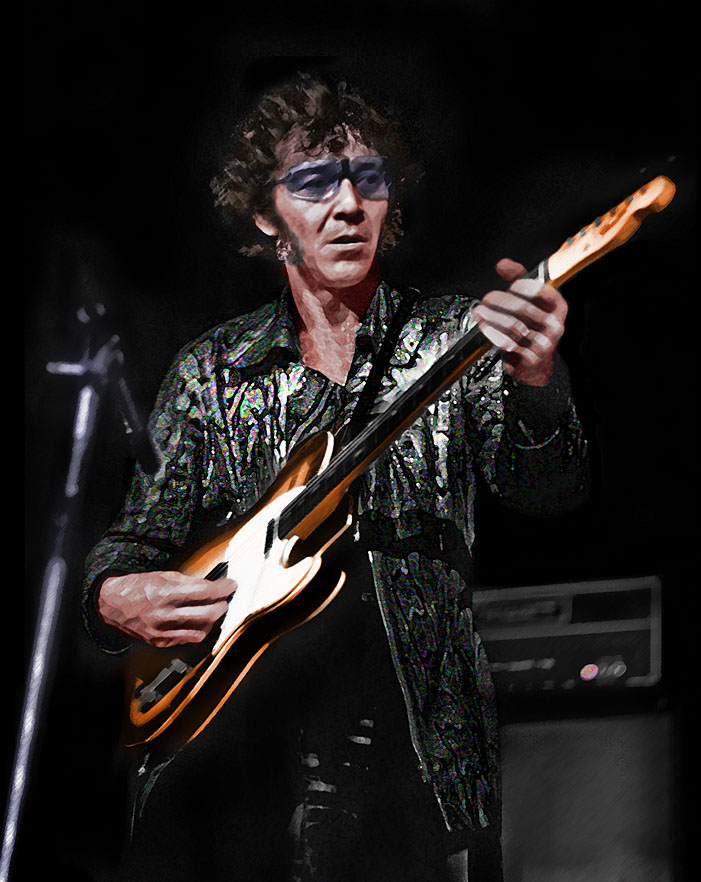
On the other side of the pond, British jazz musicians and fans became ensconced with the Blues music of musicians like Ma Rainey and Fats Waller, acquiring much of these tunes from African-American GIs stationed there during the Wars. After the Skiffle craze died down in the 1950s, many Skiffle-influenced musicians turned their attention to pure Blues music. Muddy Waters had a shocking electric (literally) visit to England where he shocked Brits with his amplified electric blues. Some were appalled by his lack of reverence for the classic style, but the youth ate up this edgy playing. Among them was a guitarist by the name of Alexis Korner, who, like the Blues ancestors above, would spark a focus on Blues in Britain and influence a slew of rock ‘n’ roll’s greatest musicians. Thus, he too should be considered a true Blues god, and it should come to no surprise that he is often given the moniker of the “Father of British Blues.”
Korner’s elaborate music history is extensive and impactful. It is not easy to keep the plenitude of anecdotes to a minimum, but for the sake of the reader I shall limit my focus to a few stories. Like, for example, in 1969 while touring with a new band, Korner was jamming with a little-known singer named Robert Plant. Jimmy Page, who often performed with Korner at the Marquee Club, was intrigued by Plant’s voice and asked him to join The New Yardbirds…who would soon turn into a rock band called Led Zeppelin with Page and Plant at the helm.
But I am getting ahead of myself. That was in the late 60s. Korner’s career (even though he dabbled in Skiffle) really began in 1961 when he founded Blues Incorporated with Blues harmonica extraordinaire Cyril Davies. Blues Incorporated (like The Yardbirds, John Mayall & the Bluesbreakers, and Cyril Davies’ All-Stars) was an early example of a “supergroup.” But, in truth, it was just a platform for talented blues musicians to play music. Blues Incorporated, though, has the special mark as the first electrified Blues band in Britain. The band secured a residency at the Marquee (mentioned above) and even established an R&B Night at Ealing Jazz Club.
Remember what I said about the youth loving electrified Blues music? Well, where do you think they went to hear this music? And who do you think inspired them to pursue this music? So when I tell you that Korner played with musicians like Jack Bruce, Ginger Baker, Mick Jagger, Jimmy Page, Robert Plant, Paul Jones, Eric Burdon, and many, many others, you should not be too surprised. Most of the early Blues musicians in Britain are linked with Alexis Korner in some way. He is like the Kevin Bacon of British Blues. And when Cyril Davies left Korner to form his All-Stars he played with musicians like Nicky Hopkins and Long John Baldry until he died far too young in 1964. The All-Stars were led by Baldry who created Hoochie Coochie Man, featuring a singer named Rod Stewart. Page also had a few All-Stars jam sessions, adding individuals like Jeff Beck, Eric Clapton, Bill Wyman, and Mick Jagger to the mix.
But back to Korner for one more story before I urge you to watch this documentary about him.
Blues Incorporated was asked by BBC radio to broadcast a session in the early 60s, but the producer only had room for six musicians. The seventh member of the group with a singer named Mick Jagger. Jagger was asked to gather some friends and play the normal spot at the Marquee. The friends he gathered were Keith Richards, Brian Jones, Ian Stewart on piano, Dick Taylor on bass and Tony Chapman on drums. The band went by the name of Rollin’ Stones after a Muddy Waters tune.
Cyril Davies on vocals and harmonica. Alexis Korner playing a mean acoustic guitar. Released in November, 1962.
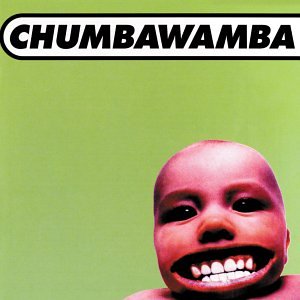
If you were cognizant in the late 90s, this creepy baby is implanted in your mind
Oh yeah, the “I get knocked down” song. I remember that one. Wasn’t that by Chumbawamba, or something like that? I guarantee that if you are a product of the 90s (like me) you took one look at the purple baby with the huge mouth and thought of taking a “vodka drink” and a “whiskey drink.” Chumbawamba’s 1997 classic “Tubthumping” left an indelible mark on our impressionable minds for better or for worse. While some argue that the song is trash, I’m here to defend its merit as one of the better one-hit wonders.
First, Chumbawamba. Did you know that the band was active for 30 years before breaking up in 2012. 30 years. Yes, that means the British punk band had been together for 15 years prior to the release of “Tubthumping.” Many forget – or didn’t know – that Chumbawamba was a protest band at heart. Most of the band’s music focused on issues like animal rights, class struggle, and feminism, etc. – the word “tubthumper” is used to describe someone who often jumps on the bandwagon with populist ideas. Thus, the band’s cumulative lyric is far more deep than “He sings the songs that remind him of the good times. He sings the songs that remind him of the best times.” But, it is the simple lyric of the late 90s mega-hit that helped draw so many listeners in.
As a group of talented musicians, though, they could not resist the temptation to sample a few Easter eggs for the careful listener. The “Danny Boy” reference is explicit, but at the end of the song the trumpet samples Clarke’s “Prince of Denmark’s March.” But, let’s be honest, the reason the song gained such immense popularity was because of its repetitive, punk-fueled chorus that proved to be beyond infectious. I can’t imagine many who have not hummed the beat to themselves during the reading of this post.
And that is why “Tubthumping” should be praised. The song has tremendous lasting power. Some may consider that feature to be a grand part of its “annoying” factor, but I think that earworm power cannot be overstated. Plus, come on, it’s not like many songs today that lay down a simple percussion track and a catchy synthesizer riff to maximize catchiness and listens. There are legitimate elements to “Tubthumping.” Enjoy!
It should come to no surprise that musician Topher Mohr grew up in Michigan. His eclectic music, which aptly pieces together elements from several genres suggests inspiration, and what better motivation than the elaborate music history of Detroit? While Mohr is impossible to pigeonhole, his music did spark a thought. If Michael Fitzpatrick (of Fitz and the Tantrums) is today’s modernizer of old-school Motown hits than Topher Mohr is reviving the old art of tender crooning. It seems like a lofty proclamation until I introduce you to:
His gentle voice is soothing but subtly strong and passionate. His vocal is saturated with emotion, and the soaked feeling is easily identifiable in his airy guitar plucking. While Mohr does not have the dark, coffee-roasted voice of the traditional old-school, five-pack-a-day crooner, he does, however, revive the old sound and modernize it. It’s exciting to listen to him make an old standard like “Fly Me to the Moon” ring with a contemporary flair.
Beyond his black-and-white performance of “Fly Me to the Moon,” Mohr released his new LP Phlotilla earlier this year. Prior to the LP release, he toured the world with his friend Mayer Hawthorne, another artist who features an eccentric style of music creation. Mohr’s album focuses on vintage pop, and “Ruthless” stays true to the genre.
The rhythm is similar to Fitz’ Motown-inspired hits, but Mohr combines the rhythm with a Maroon 5 meets the 1980s melody. This combined with Mohr’s versatile vocal creates an intriguing hit that even has room for a clean guitar solo! It’s a moving piece and one of the strongest on the new album.
Find out more about Mohr (yes, I went there) at his Website. You can also check out his Facebook and Twitter.


 The Music Court