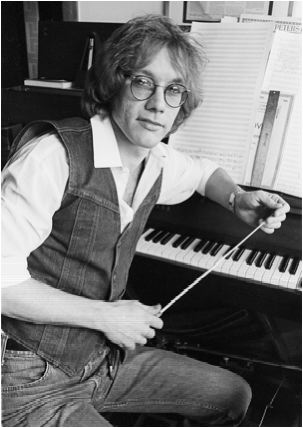
In yesterday’s post, Aaron mentioned Warren Zevon and included an embedded video of Zevon’s most well known song, “Werewolves of London.” The sardonic and hilarious song was released on Zevon’s breakout album Excitable Boyin 1978 and it reached the #21 spot on the American Top 40 charts in mid-1978. “Werewolves of London” was Zevon’s only appearance on the chart, but let’s ignore popularity charts and just discuss the wonder that was Warren Zevon and the utmost joy that others will always have when they listen to “Werewolves of London” and any of his other lyrical masterpieces.
Zevon’s grasp on lyrics was strikingly apt and vivid. David Letterman, who was Zevon’s good friend before Zevon died of cancer in 2003, described his music as “evocative,” and I think that is a good adjective to use. Zevon’s folk was not classic, but edgy. His lyrics were unconventional and enjoyably morose. He also had the ability to turn off the playful and upbeat hits and bathe listeners with soft melody and heartbreaking lyrics. The man truly had it all and his talent is often overlooked. And it is a shame that Zevon had a life-long aversion to doctors. He died at the young age of 56.
“Enjoy every sandwich” comes from Zevon’s last appearance on Letterman. Like I mentioned, he developed a close relationship with Letterman and band-leader Paul Shaffer. So much so, that Zevon would often fill in for Shaffer when Shaffer was unable to perform during the show. On Zevon’s last appearance on Letterman, when his sure-death prognosis was already known, Letterman asked him if he knew more about life and death now that he practically knew that death was an immediate certainty. Zevon said, “enjoy every sandwich,” a simple, but profound response that fit his character well. Zevon was Letterman’s only guest for the full hour and he performed several songs. The day after Zevon’s death (months later), Letterman annouced the sad news to the national audience:
I’ve written about Zevon before on this blog. The Wind, the last album he recorded prior to his death, is a tour de force. Zevon performances are invigorating and “Keep me in your Heart” is a tear-jerker. But, since I have already written about those songs before, I want to feature “Werewolves of London,” a song that has a “surprising fact.”
The song has been covered SEVERAL times, but that is not the surprising fact. Accompanying Zevon on the song is bassist John McVie and drummer Mick Fleetwood of Fleetwood Mac fame. I always thought that was an interesting tidbit of knowledge. To finish off this Zevon post, I am going to include a cover of “Werewolves of London.” Take it away Adam Sandler:
When Rod Stewart received his first guitar from his father, he first developed hard-earned calluses from playing “Worried Man Blues.” The folk classic sparked the musician inside of Stewart. Now, obviously, Stewart did not stake his claim as a guitarist, but the song helped engender Stewart’s burgeoning musical creativity. I mention this little story because “Worried Man Blues” is another example of a traditional folk song lost to time; a deracinated ditty, a matchless melody. Okay, you get the point. “Worried Man Blues” was first propagated by the Carter Family, but its roots are forever lost in the vast annals of time. Please excuse my corny hyperbolizing. Let’s explore the evolution of this folk smash.
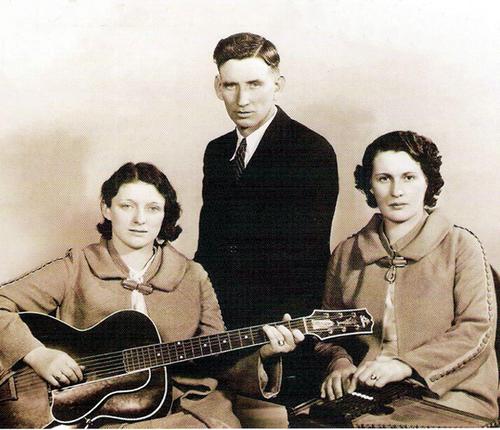
Like I said in the previous paragraph, “Worried Man Blues,” came from somewhere, but past the first recording of the song in 1930, we do not know much about its history. What one can delineate from written record is this: A.P. Carter, the tall, lanky male member of the original Carter Family was known for traveling throughout the country and collecting old songs, especially in the Appalachian region. In 1928, he met Lesley Riddle, a one-legged blues musician, and Riddle joined Carter on his country-wide blues excursions. Carter would write down the lyrics of songs they picked up, and Riddle would memorize the melodies. It is possible that “Worried Man Blues” came from these trips. But it is also possible that Riddle had nothing to do with the old-time piece. Carter did pick up the song and in 1930 he recorded “Worried Man Blues” with his wife Sara Carter and his sister-in-law Maybelle Carter. Here is the recording.
If you have heard the piece before performed by more recent artists you might notice that there is a distinct different. In more modern versions, the opening line of every verse is repeated three times. But in the Carter Family version (and in the later mentioned Guthrie version – which we will get to), the first line of each verse is only repeated twice. The melody is also slower than some other versions. Each version does practically have the same melody and chord structure (G with variation, C, D – easy to play on the guitar or banjo, you just need to figure out the picking pattern) The lyric is where the differences really shine. I am going to paste the full Carter Family version so we can have a solid FIRST lyric for reference.
LYRIC By CARTER FAMILY
It takes a worried man to sing a worried song
It takes a worried man to sing a worried song
I’m worried now, but I won’t be worried long
I went across the river and I lay down to sleep
I went across the river and I lay down to sleep
When I woke up, put the shackles on my feet
29 links of chain around my leg
29 links of chain around my leg
And on each link an initial of my name
It takes a worried man to sing a worried song
It takes a worried man to sing a worried song
I’m worried now, but I won’t be worried long
I asked the judge, what might be my fine
I asked the judge, what might be my fine
21 years on the R.C. Mountain Line
The train arrived, 16 coaches long
The train arrived, 16 coaches long
The girl I love is on that train and gone
It takes a worried man to sing a worried song
It takes a worried man to sing a worried song
I’m worried now, but I won’t be worried long
If anyone should ask you who composed this song
If anyone should ask you who composed this song
Tell ’em ’twas I, and I sing it all day long
I love this last little passage, which, by the way, is completely original to the Carter Family version, and it doesn’t appear again often (if ever) in more modern versions. It sort-of has a mark of irony, since we are now asking 81 years later who first sang this song. I guess it was I, and I sing it all day long. Old folk/blues pieces with unknown origins are kept alive by popular recordings and kids, who, like Rod Stewart, pick up a guitar, pluck the simple chords, and sing about being a worried man singing about being worried all day long. This timelessness is genuine. After the Carter Family recorded the song in 1930, Woody Guthrie picked up the classic and took it on in 1940. Here is a version from volume two of the Asch Recordings (1944).
Guthrie’s version immediately just sounds different, especially with the slightly out-of-tune, but stylish acoustic guitar. The all-male vocal backing obviously differs from the Carter Family. The main difference, though, is that Guthrie, unlike all other versions, does not begin with the chorus. He dives right into going across the river and lying down to sleep. Guthrie maintains the two repetition of the Carter’s, but, starting with verse two, stuff begins changing.
In the game of lyrical telephone (like I mentioned in previous blues evolution posts), some of the first things to go are numbers and places. In this case, Guthrie mentions 21 links of chain, as opposed to the Carter’s 29 links of chain. Then, on the next verse, the protagonist of the song is sentenced to 21 years on the Rocky Mountain line. In the Carter’s version, the protagonist is spending 21 years on the R.C. Mountain line. What is the R.C. Mountain line? Railroad Company? Perhaps. It may be referring to the Rocky Mountain line, but, supposing this song was first learned from Appalachian blues artists, it is most likely referring to a rail line in the east.
Guthrie’s train is 21 coaches long (he has an obsession with the number 21) and the Carter’s train is 16 coaches long. Also, Guthie ends the song with a completely independent verse that he seemingly made up. It goes:
Twenty-one years Pay my awful crime Twenty-one years Pay my awful crime Twenty-one years And I still got ninety-nine
It is a neat, different version of the song, perhaps inspired by other versions he heard outside of the Carter’s 1930 recording, or, Guthrie may have just taken creative liberty. A group that took complete creative liberty was the Kingston Trio, who recorded a completely different version of the song – only keeping the chorus – in 1958. It is sped up (in typical Kingston Trio fashion) and repeats the first line of the chorus three times. Hmm…interesting. (The first song is “Worried Man Blues”)
This is actually the first version of the song I became familiar with. It’s just completely different, but still enjoyable.
I would like to leave you all with one more version of the song. This one performed by folk perfectionist Pete Seeger and the great Johnny Cash (1970). Pete Seeger is awesome. There is just no way around that statement. He is a classics man and he performs the songs with such enjoyable passion. I also love when Cash performs old folk songs (see the last blues evolution I did). This version also repeats the lines three times. It does, though, follow the classic version pretty well. It also features a Seeger monologue and, hopefully without being too sententious, I want to post his statement for I think it is rather apt for this post.
“These old songs are never going to die out. This song is the whole human race. I crossed the river, laid down to sleep, and woke up with shackles on my feet. Across the river we thought we solved all of our problems. You have that revolution. You get that home. You get that job. You think you solved all of your problems. You crossed that river and found you got shackles on your feet. And who’se the judge. Is it some old guy, 74 years old, with black robes. It might be the young judging the old or the old judging the rich. But no matter what mistakes we ever made, there is still a last verse that holds out some hope.” – Pete Seeger
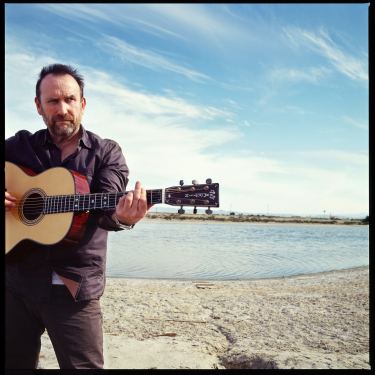
Not often does an artist succesfully travel from an accomplished band into the world of solo recordings. Colin Hay is an exception to the rule. The one-time lead-vocalist of the men down under, Men at Work, has released several solo albums since the late 80’s and his status as incredible singer/songwriter goes unquestioned. His Scottish/Australian vocal flavor, tremendous range, and passionate lyric and guitar work makes Hay an acoustic force and he releases great content time and time again.
Many may know Hay from the TV series “Scrubs,” where he contributed music to a series of episodes and made on-camera performances. If you are a “Scrubs” fan you will certainly recognize this song:
My favorite song by Hay is “Beautiful World.” I love it because of its sincere simplicity and imperturable message. The song also provides some apt lyrics that are timeless. He describes how there are great negatives in the world, but one must learn to appreciate the niceties of life because, hey, “perhaps this is as good as it gets.” He also uses lapsang souchong in his lyric, and anyone who uses this popular tea leaf in a song succesfully deserves some credit. The song’s melody is soft and Hay gives it just enough of a taste of smokiness. That actually sounds like lapsang souchong tea. So, listen to this song while enjoying some tea.
Another recording I’d like to share with you from Hay is a cover of “Norwegian Wood” he recently recorded at a session with Rolling Stone magazine. It’s so beautifully stripped down and it’s bare acoustic style is inviting. I could listen to Hay sing and play guitar for hours. It is that relaxing. Enjoy and have a beautiful day in the beautiful world.
Hay’s new album Gathering Mercury was released earlier this year and it definitely deserves a listen. Check out more from Hay at his website
Matt Kiefer cares about music’s honesty. What is musical honesty? Artists are quick to go into studio and process songs like a frozen McDonald’s hamburger. It is easy. There are little mistakes. But musical honesty occurs when an artist refuses to let the “studio” do work for them. Kiefer, a musician and recording engineer from Pittsburgh, does find himself in an interesting situation because he is a recording engineer. If anyone knows a screw up, he does. He explained to me that he once would record several versions of each piece in meticulous fashion. But now, he thinks authenticity is most important.
“Of course I want the songs to sound perfect for the listener and capture the best possible performances but I also think those live takes and occasional mistakes sometimes add to the beauty or naturalness of the song,” Kiefer explained in an interview with The Music Court. “I used to stress over little things and take 5, 6, 7 or even 10 takes of a track to assure that the performance was spot on..But now I only take 2 or 3 takes at most and just keep the best ones. On the EP you’ll hear some occasional string smudges and stuff like that, but I think it feels more real to the listener…Like im sitting there playing it right in front of you. I’d rather give people something honest and that will translate perfectly live rather than “studio magic” up some polished manufactured piece that falls apart or doesnt translate the same way live. I like my recordings to say: “I’m not the best musician, I screw up like everyone does…But I mean well!” I really just want to seem human.”
Kiefer’s worldly pieces do feel human and one can feel the love that Kiefer has for melody and quality. In the instrumental “Lucky Vegas,” Kiefer’s fluffy guitar transforms into a more pleading sound with the culmination of the creative drum beat that changes throughout the piece. It is fresh and original. “New York Puppy” provides a similar, but deeper feel. The song moves with the guitar’s efficiency. Kiefer will be releasing a free EP soon, but before that release check out his Reverbnation for songs. Follow Matt on Twitter: http://twitter.com/#!/realmattkiefer
Like I wrote earlier, I had a chance to do some Q+A with Kiefer. Here are Kiefer’s insightful answers.
1.) When did you first start recording and writing songs?
I first started writing songs when I was about 12 years old when i started playing guitar and really started listening to punk rock. Bands like The Ramones, Rancid, and The Smiths were all I was listening to at the time and all of their songs were just a few chords and really easy to play so I dabbled with their songs a bit and eventually started learning how to pick the chords up by ear and pretty soon I was figuring out and jamming along with all my favorite records and albums. As far as recording music goes, I worked my ass off cutting grass and selling it when I was about 15 and bought a little four track tape recorder from the pawn shop (that I probably paid way too much for, come to think of it now) and started making demo tapes in my bedroom with a crappy pawn shop mic and crappy old cassette tapes I’d find in my dads dirty dank basement. I remember I would sit on my bed all day and record hundreds of ideas that I’d come up with and just listen back to them thinking I had hundreds of songs…when all i actually had were just the same riffs and chord progressions in different keys! (laughs)
2.) What were your big music influences when you were growing up and how did this shape you into the artist you are now?
Growing up I listened to a lot of punk rock and a lot of 80’s soul and RnB. The punk bands were introduced to me by kids Id cut school to skateboard and get stoned with and new bands I’d find out about going to shows around the city. My dad used to play a lot of Journey, Alabama, Prince, The Jacksons, 80s Pop, & Jimi Hendrix records throughout the house so I think naturally I ended up being influenced by the old school stuff hearing it all the time. The focus with all those classic groups was strong melodies, so i think my sense of, or intent of wanting to be super melodic with anything I do probably stems from them.
3.) Okay, give me the rundown of what you have been recording. Just solo tracks? Have an album in the works?
Well, right now im recording an EP that will be for download absolutely FREE in the next couple of weeks on various music sites on the net. Im calling it “The FREE-P” and expecting to have it up for download by the end of September.. So far its just me and a bunch of acoustic tracks layered on top of each other… but I’ve got some great friends who are layering keys and strings on the EP as well as playing drums and various other instruments for me. But the majority of the work is just me in my home studio. So look out for that! After that I’ll be right back in the studio working on a full album slated for release around the end of this year. The album will be a mix of chill melodic acoustic tracks and also a full band feel at times ala Red House Painters/Sun Kil Moon. I really want to release a very strong collection of music this year.
5.) I’ve noticed that you put a lot of effort into melody. “Lucky Vegas” is an instrumental and “Be Honest” has a melodious long folk opening. The melodies are fantastic. Talk with me about them?
Thank you! I’m glad people appreciate the melody! I definitely put a lot of focus on making sure the melodies are strong but still accessible to the ears of everyone. I can respect great musicians like Steve Vai and Joe Satriani, who are very melodic in their playing, but I cant force myself listen to their music for more than 5 minutes without feeling like their songs are just completely ‘masterbatory!’ (Laughs)
Instrumental music is something that I’ve listened to for many years and is really all I listen to these days besides classic Oldies and 80’s pop. When writing Lucky Vegas I was sitting in my hotel room on the Vegas strip at the Monte Carlo Hotel on the 43rd floor just staring out the window at 3 a.m. trying to write a melody that captured how I felt looking at all the lights and the people and the experiences I had in the city that week and the plane ride there. That song kind of wrote itself actually. That’s usually what happens. I start with a simple melody and it takes off from there and then two hours later I have a 3 or 4 minute piece of music that im in love with and describes a feeling or emotion or memory for me.
Be Honest was kind of the same process. It is a song I wrote a few years back about a failed relationship and the bitterness that comes along with the ending of it. Whenever I use lyrics in a song I always want the melodies of the instruments to be just as strong, if not stand out more. I kind of put my lyrics and voice second to the instruments. In this particular song I layered a bunch of guitars on top of the main guitar in an attempt to really add an atmospheric feel without turning on 15 pedals and making it sound like a My Bloody Valentine tune. I think it worked out the way I wanted it too, doesnt feel too cluttered! (laughs) Originally the intro was about two bars long then the vocals dropped in, but I really was digging the feel of the harmonies & the visuals I got in my head from of all the guitars after I wrote them so I decided to just let it ride a little longer and really build up something in the listeners head to the point where you feel like “Whats coming after all this?” Really wanted an epic intro to the lyrics, especially for first time listeners hearing my music for the first time.
6.) What is your favorite part of recording songs?
I can’t say there is a part of recording songs that i would call my favorite… To me the whole experience is absolutely enjoyable. I like the engineering aspect of miking instruments up, getting good tones, playing around in Pro Tools, breaking the recording “rules,” getting cool sounds and so forth. I also really enjoy the experimentation that comes along after I get the bed or main guitar track and vocal track recorded. Adding harmonies, taking them away, extending and building off of parts, adding new instruments… I also really enjoy listening back to the finished product & figuring out what I could do to change the song and make it better or breathe a little more. The way a song sounds once its recorded, mixed, and mastered usually sounds way different than when I originally wrote it. What I like about that though, is at the heart or core of all those layered melodies and different instruments is really just a very simple song I can play on the acoustic guitar and sing along with all by myself and still have them same impact.
7.) I always ask this, so bear with me, if you had a chance to have record a session with three musicians (alive or dead) who would they be and why?
Hmmmm…thats a tough one! There’s so many great musicians that I would love to collaborate with! I think I’d definitely like to get Prince in the room with me because I know he is gonna write some real crazy sh*t and probably bring the funkiest vibe with him.
Jeff Tweedy from Wilco would be pretty cool too. He seems like he lost his mind long ago and had it replaced with lots of insight and also knows how to make 50 incredible and timeless songs out of the same 6 chords over and over. Last, we would need someone who can throw down on the rhythm section so I’d probably ask Jeff to call his drummer Glenn Kotche. Dude is absolutely nuts on the skins and extremely innovative with some of the different rhythmic instruments he’s invented! I definitely reccommend Googling or youtub’ing him and watching his videos. Im always humbled anytime I get the chance to accompany musicians who are better than I am. Whether they are famous (never), strangers, or just my friends who are great at what they do. I think no matter how good we may believe we are, theres always something big or small we can learn from someone else.
8.) Future plans and aspirations?
Future plans are definitely focused around getting this EP out this month, and getting an Album out before the years end. From then on its gonna be back to touring either solo or with a full band. Whichever makes more financial sense! (laughs)
As we speak, I’m auditioning new members for a full ensemble to play out. We are gonna really bring something diverse to the live shows. Id like to have a set that incorporates a lot of loud, wet, atmospheric and distorted full band sounds and then we switch it up and pick up the acoustics and pianos a few songs later. Lots of ups and downs and something that really takes the audience for a ride for 45-60 minutes. Bring out some crazy lights, Projector screens and visuals and really talented musicians to really help bring these songs to life. The biggest and most attainable goal of it all though is just to keep writing songs that speak to me and keep me inspired and just hope other people can relate as well.
I am a little late on this profile of JF Robitaille. He released the EP that I just acquired in 2006. Robitaille released his first full-length LP around a month ago, so I am comforted in the fact that I have not missed material in between, but I do still have to pick up the new album. I am a firm believer, though, that it is never too late to get into any musician (most of my favorite artists stopped recording music prior to my birth) and I follow my mantra today with the Canadian singer-songwriter JF Robitaille.
The Blood in my Body (EP) was Robitaille’s first release as a solo artist and its rich six-song bounty provided listeners five years ago with the same folk joy that it provides listeners with today. I am living proof. Robitaille is an up-and-coming singer-songwriter, already achieving comparisons to genre masters Nick Drake and Leonard Cohen. His smooth voice, creative lyric and acoustic verses certainly plant him in the cabbage patch of singer-songwriters. But in order to sprout higher than others the music needs a sticking factor, a charm that makes listeners want to listen to songs on repeat. Many cannot get over this hump. Robitaille has the talent to do just that.
(Song starts at 30 second mark)
“Morning After Morning” is a simple piece. Basic chords picked by Robitaille while the rhythm section keeps linear heartbeat-like percussion. Yet, and I’ve said this a good amount of times on The Music Court, simplicity is not a bad thing when the song’s tight structure is intriguing. “Morning After Morning” keeps your attention.
“New York” is not even two minutes long. It is also a much more frantic piece. The choral harmony is quick, but enjoyable. It is also fly-trap catchy. It is a good sticky though. The verses are carried by shortly stroked chords and fast-paced drums. The lyric is also noticeable.
“I died while I was dreaming,
For a second I stopped breathing and I woke up on the quiet side of town.
Didn’t sleep that year at all.
A haze of cigarettes and alcohol, this dust had settled in my eyes.”
The diction certainly hits hard even in this short piece.
Check out some more of Mr. Robitaille’s music by following this link to his website