Tag Archives: Music

Bhi Bhiman has both Rhythm and Reason

21 May

10407351_10152660088576121_1340791084561172187_n

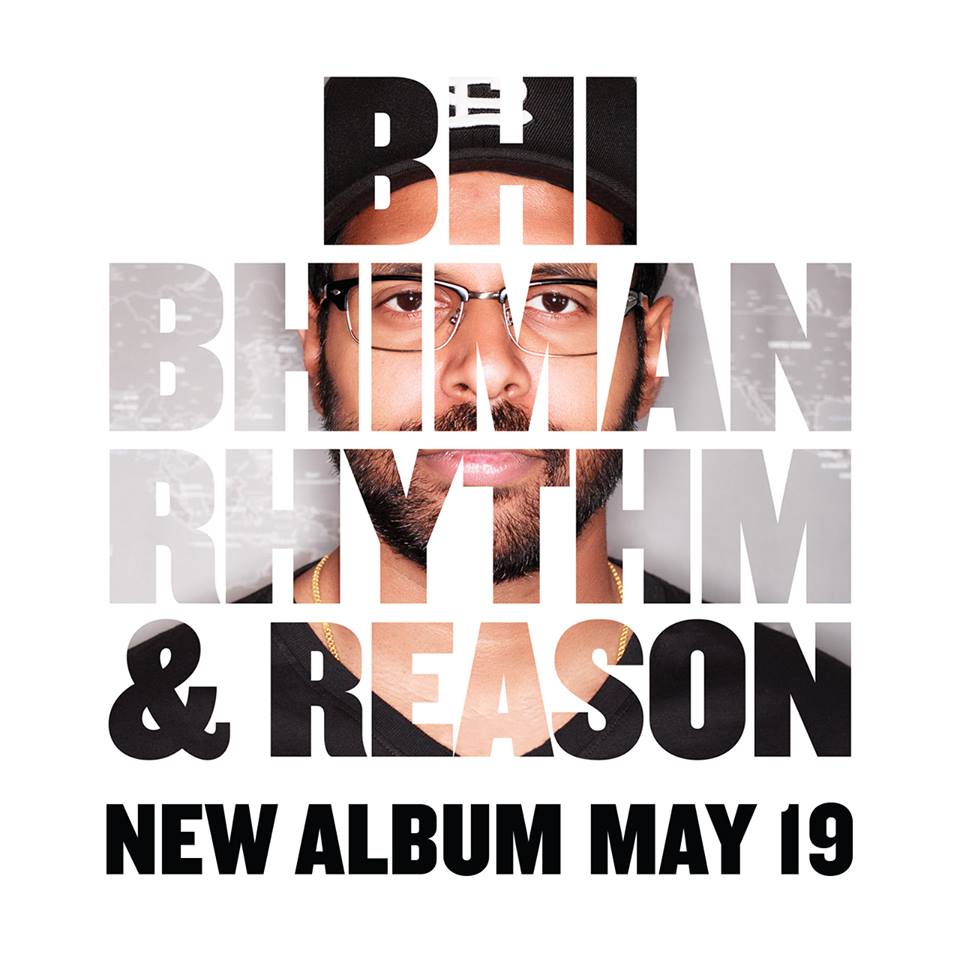
Back in April of 2012 I came across a magical cover of Gnarls Barkley’s “Crazy” done by a Sri Lankan-American folk-rock singer/songwriter named Bhi Bhiman. To say I was hooked is an understatement. Bhiman’s powerful vocals blew me away, and I spread the word about Bhiman to whoever was listening. It is now 3 years later – somehow; gosh, time moves by quickly – and Bhiman just released his new album Rhythm & Reason, which is a continued testament to how amazingly talented he is. Thus, on the heels of this release, I will make an impassioned plea to many wonderful people who read this blog consistently. Spread the word of Bhi Bhiman. Simply put, more people need to know about this voice.

Bhiman released a self-titled album to much critical fan-fare in 2012, and it featured several tracks that accentuated his deep croon and acoustic stylings. His new album is similar in its intentions: blow you away with well-written folk rock tunes that are sung with ardor and boldness. The tracks move gracefully, blues-tinged and melody-soaked; each featuring Bhiman’s unique stylings. One such song is “Moving to Brussels,” which, while itself is a classic Bhiman track, was recently provided with a humorous video with a cameo from Key & Peele star Keegan-Michael Key.

Key plays a good J.K. Simmons impression with his volatile music lesson for Bhiman. The “Whiplash”-inspired video is hilarious. It does speak for itself, so I will let it do so … play the video now! It doesn’t hurt that “Moving to Brussels” is an energetic folk hit that moves with an infectious effervescence that draws you in. Key doesn’t hurt.

And, if you need some more Bhiman convincing, here is my favorite track by the musician. It is called “Crime of Passion” and while it is not from the new album it is still worth a listen, or two, or three!

Earworm for Wednesday – Saint Motel “My Type”

29 Apr

st.motel_

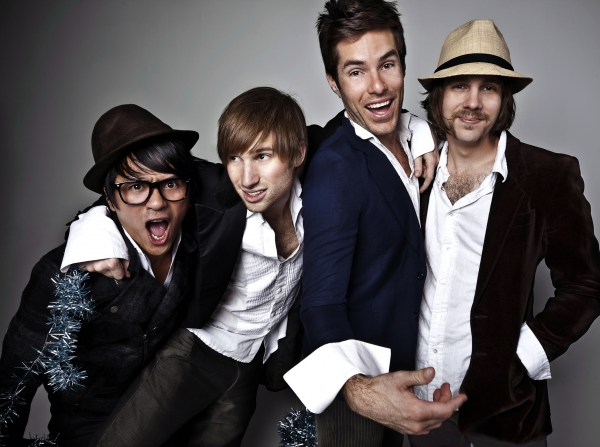
The four dapper looking fellows in the photograph above represent the eclectic pop quartet called Saint Motel, a musical variety act, fit with catchy pop of undefinable delineations. Try to evince the band’s genre. It’s difficult. The band goes from funky, horn-blazoned Mad Men-inspired pop/rock to more Walk The Moon-style alternative rock. That is diversity. And, the best part of it all is that the band is clearly enjoying the fruits of its talents, performing this past Coachella on the main stage and making its rounds on Jimmy Kimmel. The band, which signed to Elektra records in 2014 and released its fourth EP in August of that year, has also toured with super-acts like Imagine Dragons and the Arctic Monkeys. Put simply, St. Motel is one of the next big things of pop music, and its extraordinary throwback to upbeat jazz bars with the finest whisky sensibilities – “My Type – is a testament to the band’s emergence as cool and fun.

“My Type” starts with a tremendous horn riff that falls into a disco-like beat straight out of the Tramps’ disco inferno, fit with a range of percussion instruments. The vocal is such a spot-on throwback to everything good with disco/jazz/soul music that one cannot help but smile. The song has a movie quality to it. It sounds straight out of the pictures; it is almost like it was particularly made for it, and the music video suggests something similar. The song is just “my type” and it strikes me as the type of many others. On a completely different musical note, check out “Cold, Cold Man” which is more true Indie/pop with dreamy keys.

You can find out more about the band on its website

Rocky and the Goldstein: Living a Chassidic Country Dream

11 Apr

10930080_918542528164576_9142832561259002443_n

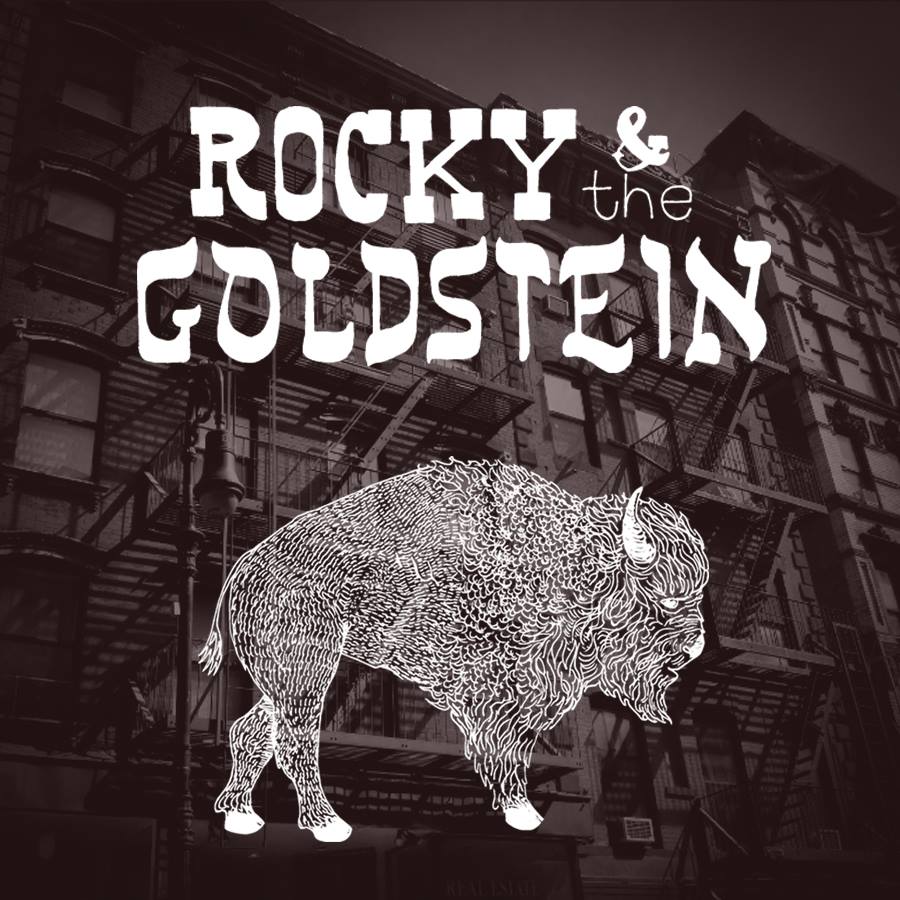
Move over Ray Benson, there is another country musician and member of the tribe who has rolled into town with a guitar strapped around his neck and yarmulke firmly on his head. Yes, Rocky Goldstein is about as unique as you can get as a musician. As titled, he is a Brooklyn Chassidic (type of Judaism) Country Musician, which, while it seems slightly peculiar, is actually pretty apt. When you consider the tenets of good country music – pleading tales of existential journeying and other dig-into-your-soul storytelling – it fits the Jewish story quite well. As we conclude another Passover, the Jewish holiday that celebrates the exodus of the Jewish people out of Egypt (the age-old tale of they tried to kill us but they didn’t succeed), I bring you Rocky Goldstein’s eclectic country tunes, and I am enlivened to do so, not just because I too shared bitter herbs and charoset at the seder table this Passover, but because Rocky & The Goldstein, the official name of the band profiled in this post, is an exciting band who, faith aside, plays fresh country/folk tunes that all should hear.

I had an opportunity to email Rocky a few questions for this post, and when I asked him about his musical journey, he immediately mentioned musicians like Neil Young, Bob Dylan, and Merle Haggard and how he can, with his music, “relate to the struggle and, of course, the joy” that these artists evince in their own tunes. That is what music is, right? A combination of these emotions that reflect the artist’s own life, which is what Rocky echoed to me in the interview. This mature foundation creates a well-rounded approach to music that Rocky, and the people who support his tunes reflect.

10959503_932220846796744_6730102897552099629_n

Rocky is for all intents and purposes a solo musician, but Rocky & The Goldstein is made up of a select supporting cast consisting of the producers of his self-titled EP, Thomas Bryan Eaton and Alex Korinzer; Rocky’s writing partner Isaac Schapira; and fiddle player Craig Judelman, who can be heard prominently on the album’s initial track.

When I asked Rocky about the foundation of his sound, he recalled his exploration of Judaism and trip to Israel that sparked his musical inclinations.

“I played a few shows in New York and then went off to Israel for a year and half to learn in a Yeshiva, which is a Jewish higher learning institute. There, I met my good friend, Isaac Schapira. We both talked about our love for country music and started writing these mock American pride songs. Eventually, we decided to start writing songs about the experiences of what we were actually going through.  He really helped me hone in on writing lyrics with a clear message as opposed to cryptic, subconscious prose.” 

This prose and sound, as stated above, might be viewed as a bit odd, but when I asked him how a nice Jewish boy from Long Island gets into country music he explained a natural progression to the genre.

“Country music in particular always had these themes of self-deprecation, regret, and life lessons with religious undertones. Jewish identity is often defined by these characteristics. As I became more observant in my Judaism, I found songs like “Less of Me” by the Statler Brothers or “In my hour of darkness” by Gram Parsons to be songs I could relate to. They spoke about the struggle of going on a spiritual journey and the tribulations that came along with it.”

Let’s listen to some tunes.

“A Dream,” the initial track on the EP, features a traditional Jewish folk fiddle followed by Rocky’s grainy vocal that carries the piece. The guitar is plucked with upbeat intensity and the fiddle is never to far behind. I particularly enjoy the song’s simplicity, which, in my mind, is what makes good country music. It is vocal and strings mixed with light percussion, which acts like a perfect pairing.

“The Sun” is an ode to the singer/songwriter. Much in the vein of classic musicians like Paul Simon and more modern musicians like Vance Joy, Rocky’s vocal is smooth and tender and it carries the piece. The fiddle is such a great touch and it adds to the song’s dulcet sound. Using a culinary allusion, it simply tastes good, which makes sense, because when I asked Rocky to imagine a situation where he gets to dine with two musicians who inspired him, Rocky picked legends of the pen and harmony Leonard Cohen and Paul Simon, a classic dinner of “melody” and “lyric.” Asked what he’d get, he figured he’d go simple, “a beer or a coffee and maybe a knish, as long as it’s kosher,” of course.

 You can find the self titled EP on rockyandthegoldstein.com and purchase at http://www.cdbaby.com/Artist/RockyandtheGoldstein. Feel free to like him on Facebook.

Halftime at the Super Bowl – The Creation

31 Jan
carol_channing_1972_01_16

Carol Channing at Super Bowl VI

Halftime at the Super Bowl has transformed into the pinnacle of music stardom. You know you have made it when you grace the over-produced light-show of the Super Bowl. Well, my guess is you are aware that you have made it far before the Super Bowl. Acts like Bruno Mars, Beyonce, Madonna, and the Who have performed at the grand American affair since 2010, and pop songstress Katy Perry will team up with Lenny Kravitz in Arizona tomorrow (hopefully after a Seahawks smash-down first-balf of football – sorry Jets fan here). But was the Super Bowl halftime show always such an illustrious affair? Did you know the first Super Bowl halftime show was performed by none other than the University of Arizona Symphonic Marching Band?

So, when did the Super Bowl halftime show become must-watch television? Well, keep in mind that the Super Bowl has grown as an event as the NFL has grown in popularity. For many years, though, the Super Bowl was a themed affair with marching bands and cheer teams. In 1993 the NFL (and its sponsors) learned how TV ratings generally increase when you shove a superstar in front of the cameras and say sing. It was the King of Pop, Michael Jackson, who turned the production into, well, a real production. After MJ’s 1993 show at the Rose Bowl, the Super Bowl started to attract some major talent, and today it is arguably the most watched event and easiest way for artists to get their music to oodles of drunk and overstuffed viewers.

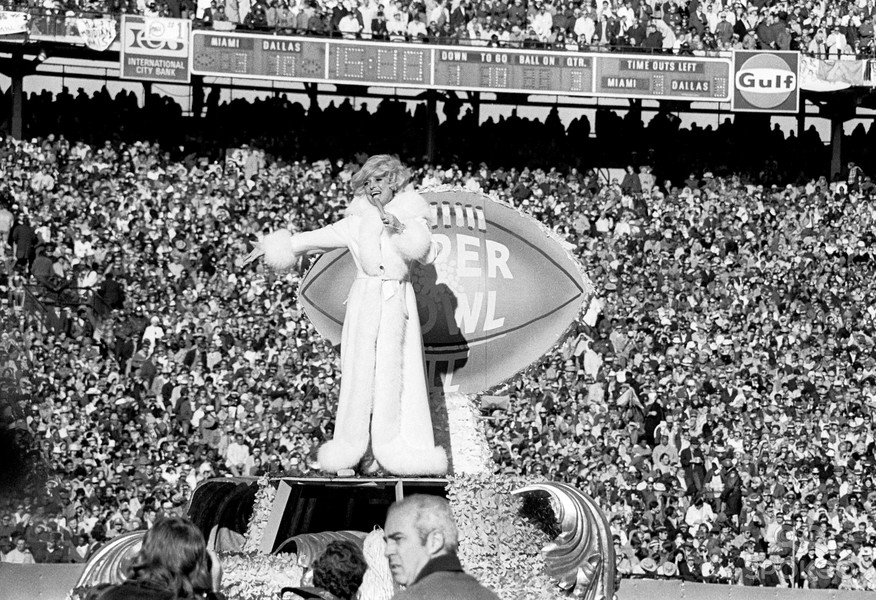
Way before MJ, before the Super Bowl halftime show transformed into the massive spectacle we will all view tomorrow, there was one famous performer who graced the Super Bowl stage, becoming the first true singer to be featured at a Super Bowl (minus Carol Channing, who is pictured above at this Super Bowl). Before the King there needed to be a Queen.

Super Bowl VI – Jan. 16, 1972 at the late Tulane Stadium. As a salute to the revered Louis Armstrong, who passed away in June of 1971, Ella Fitzgerald played an excellent set. I don’t have a video of the SB, but here is Ella with Louis performing “Summertime”. Check it out and enjoy the big game tomorrow!

In The Jester’s Ear – Say It Mowgli

19 Jan

large

Rudyard Kipling, the author of the Jungle Book series and creator of Mowgli, the feral child protagonist of the novel and namesake for the California-based alt/rock band, once said, “I always prefer to believe the best of everybody, it saves so much trouble.” Before I even get to the song that is currently in my ear, I want to focus on Kipling’s quotation and the purpose of me placing it in the post. The 7-member Mowgli’s pair their wall-of-sound blend of Indie/Pop with a campaign to “Be a Mowgli” and do good deeds for other individuals – a social network of kindness. The Mowgli’s truly believe the best of everybody. The band also creates some tremendous tunes.

A few years old and only growing in popularity, The Mowgli’s employ a Grouplove-like Los Angeles sound that combines melodies and vocals together into incredible amalgamations of sound. “Say It, Just Say It” is a quintessential example of the band’s draw. The song begins with a chorus of voices – much in the same vein of Edward Sharpe and the Magnetic Zeros – over a smiling guitar riff. The band plays an infectious type of power indie/pop that bands like American Authors and Young Rising Sons has found recent success with. The Mowgli’s, though, just have so much people power, and it has developed such tremendous unity, almost like Polyphonic Spree. It’s like a family band. And the music is awesome. I love listening to it, and it is currently in my ear (and will be for a while).