
Archive by Author

Art Decade Transforms Symphonic Rock

27 Jan

Art Decade

Whenever I first hear a band that does not conform to the bromidic classifications of a normal rock genre, I immediately explore some category to place the band in, although such a fastidious task is often misguided. Not all bands fit any category though. Such is the case for Boston-based Art Decade, the spawn of the Berklee School of Music mixed with pop overtones.

Art Decade is different, and I like change. Different, though, is only one part of new, exciting music. The tunes need to be good. Fortunately, Art Decade has this covered. On my first listen through their debut album, Western Sunrise, I was immediately shocked by the maturity and complexity of the compositions, but this confusion was satisfied when I observed the talent producing the music (more on this later).

Art Decade is to the 21st century what Electric Light Orchestra/Queen was to the Classic Rock genre. ELO and Queen were some of the pioneers of Symphonic Rock bands of the 1970s. This sub-genre evolved from the Progressive Rock movement (encompassing such bands at the Moody Blues and Emerson Lake & Palmer). Symphonic rock, though, took the sound of Prog/Rock and focused attention to modeling classical compositions and instrumentation and musical complexity. ELO, led by the venerable Jeff Lynne, took this concept and added pop melodies. Thus, the music was intelligent and accessible. Queen also emerged from Prog/Rock and added its own flavor on Symphonic Rock.

Flash forward to the late 20th century and early 21st century, and power/pop bands like Fun, Muse, Guided By Voices, Fountains of Wayne, and Keane bathe listeners with a wall of pop rhythms. Fun, specifically, focuses on creating a world of theatrical pop, an ode to the upbeat sounds of ELO and Queen.

Art Decade has combined Symphonic Rock and Power Pop into an amalgamated super genre of Classical Rock/Pop, which, although some may label it as Indie, is far more compound. The music is multifaceted and intelligent. It is effervescent and enjoyable. It has elements of hard rock, classical music, pop, and a whole lot more pushed into tracks, like a clown car of material – 15 clowns get out and you are wondering how the band fit so many elements into their music. And its clean. It is so tight and well manufactured. It is skillful.

It also makes sense considering that Art Decade’s guitarist/vocalist/arranger Ben Talmi grew up on a diet of classical music and attended Berklee School of Music.

“A strong musical education can do many things to a musician, oftentimes people become jaded with their acquired musical knowledge, becoming frustrated with the state of popular music and its general lack of musical depth,” said Talmi in a press release for Art Decade’s debut release. “Others are unable to escape the education and end up producing very indulgent and selfish music. I truly hope to take what I have learned and apply it in a very mature way.”

“Western Sunrise” is a multifarious piece that implements several classical elements into waves of remarkable instrumentation and mellifluous sounds culminating in a repeated diapason; all wrapped up neatly by a powerful vocal and music video that plays with the ocean motif and a colorful, pointillism-like construction. Oh, and it’s accessible for all ears. The song features so many elements that at some points I think I am listening to Trans-Siberian Orchestra and at other points I think I am listening to Keane. The music oscillates with such precision. I must credit the entire band for this magical composition.

Here is the Pt. 2 of “Western Sunrise,” another sprawling symphonic piece that flows with creative strings, vocals, piano, and other instrumentation. In some ways I am reminded a bit of Paul McCartney’s work with Wings. 

I am excited to hear more from Art Decade, a band that I’m sure you all will be hearing more about in the future.

Check out their website, Facebook, and Twitter.

Born Under a Bad Sign – Albert King

23 Jan
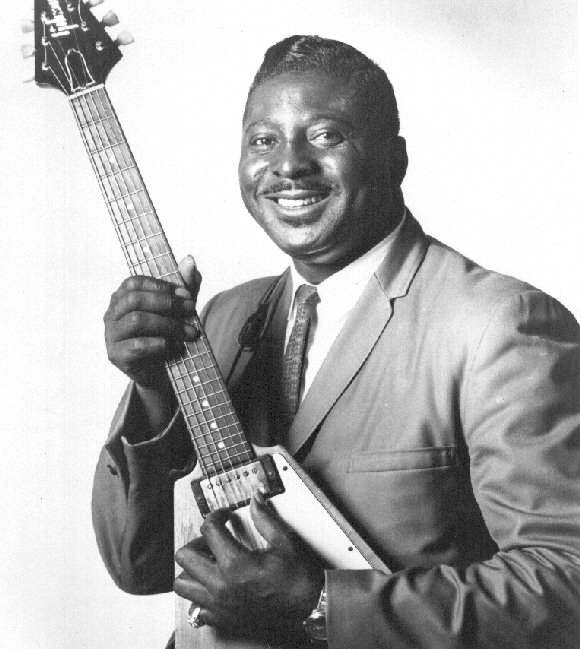
Albert King

Albert King

When the Rock n’ Roll Hall of Fame announced 2013’s inductees, one name stuck out to me as well deserving of the honor. That’s not to say that I am not happy for Rush, Heart, and the other bands and artists who are being inducted, but The Velvet Bulldozer stands out. Albert King (one of the 4 kings of blues guitar) will be posthumously inducted into the Hall, and, if he was still alive today, I’m sure he would accept it with amicable poise.

Before we talk a little bit about Albert King’s impact on music, it is important to know that King was a true musician. He was a wonderfully kind individual and when he hit the stage he put all things aside and just played music. He loved music. He loved the guitar. His passion for melody and harmony was apparent in his playing, and his infectious, friendly personality made him beloved on and off the stage.

King’s career traversed the 1960s. He first played professionally with The Groove Boys from Arkansas and then moved around the midwest during the 1950s hooking up with various musicians and labels. What remained consistent was his Flying V guitar (as you see above) which, like George Harrison, he named Lucy.

In 1961, King landed his first major hit, “Don’t Throw Your Love on Me So Strong,” which reached number 14 on the Billboard R&B chart. He released his first album The Big Blues in 1962. Ike Turner played piano on the studio version of “Don’t Throw Your Love on Me So Strong,” which is track seven on the album. Listen to it below:

Classic electric blues. King’s voice is velvety with excellent vibrato. His guitar skill is evident. The man knew how to get feeling out of his Lucy, and his clean, bright and whiny playing style has been imitated by those he has inspired (Derek Trucks, Joe Walsh, etc.).

After the release of The Big Blues, King’s popularity continued rising in the Midwest and, in 1966, he rode that popularity to Stax records where he signed in 1966. There, with the widely influential Booker T & the MGs, he recorded premier blues tracks, including his most famous track, “Born Under a Bad Sign.” The track, also the name of his first album with Stax, helped propel him to all of America and other countries.

“Born Under a Band Sign” is a unique song because of King’s unique guitar, which bathes ears with an authentic twang. The looping bass line carries the song, and the horns further accentuate the song’s comfortable bluesy power.

Rollin’ With Skinny Lister

21 Jan

Skinny Lister

It may have taken until this month for Skinny Lister’s debut LP Forge and Flagon to be released in the United States, but this patriotic British Indie/Folk quintet has gone from an authentic pub band to the ‘hardest working band in the UK. And staying true to their debut album’s name, the band just continues to blow away crowds with their punky, effervescent folk hits that flow just like the everlasting quantity of wine from a metal flagon. In 2011, Skinny Lister played more festivals than ANY band in the UK, and don’t expect them to be slowed down by languor or travel hangovers. No, Skinny Lister will forge ahead with a vivaciousness unique to only the best of those perpetually touring acts. Why? Because they love it!

In 2012, Skinny Lister went from performing at SXSW to earning a spot on the Vans Warped Tour, where they played three times a day. To support their new release, the band is opening for California-spawned Celtic Punk band Flogging Molly during a 19-date tour that will traverse the States. I have the privilege to attend the NYC show, which I will do with much delight, and then with fervid enjoyment (like Skinny Lister’s musical attitude) write a review for you all. Check out the concert schedule.

Let’s get to Skinny Lister’s debut. Often bands who are constantly touring fall into the trap of ‘studio lassitude.’ It’s almost a natural katzenjammer when one considers a restive tour schedule. This is NOT the case for Skinny Lister. The music is catchy, crisp, edgy, and excellent. The music is fresh. It is bubbly and brainy, smart and sassy, powerful and…well…powerful! The music is also ubiquitous. It can be enjoyed by those that like to dance, rock out, or just sit with a cup of joe and nod at good folk music.

“Rollin’ Over” is an energetic piece fused with speedy percussion, spirited instrumentation, and fastidious harmony. From a musical standpoint it is tightly spun, a perfect example of punk-infused folk-pop, but from a pure enjoyment standpoint the music is playful and sprightly. It is almost a guarantee that large groups of audiences will repeat “roll back to your side” ad nauseam. The additional vocal harmony at the end is much appreciated. Great track.

“If the Gaff Don’t Let us Down” moves in a similar manner, but it plays more like a tame Flogging Molly or Great Big Sea track. It is an ode to England, and the lyric attests to that fact. This should be added to the British tourism board. It is a sea jig with the best of them, and it makes me want a London Pride in a pub overlooking the river Mersey.

I can’t stress this enough, drink in Skinny Lister. You will be hearing a lot more about them in the upcoming weeks and months.

Check out Skinny Lister’s website, Facebook and Twitter

The First of the Rock Hop Era – Augustus Caesar

17 Jan

caesar

Augustus Caesar’s name suits him well. As the progenitor Augustus was the first Roman Emperor, today’s version of Augustus Caesar uses an electric guitar to reshape collaborative sound. Caesar has molded a modern form of metal and hip/hop that is a refreshing reboot of rap/rock, which hit it mainstream in the 90s.

One of the main triggers for this eclectic combination was Run D.M.C.’s collaboration with Aerosmith. The two groups reworked Aerosmith’s “Walk This Way” into a rock/rap hit. That was in 1986. This genre splice expanded to bands like the Beastie Boys (a hardcore punk band turned hip/hop experimental act) and Rage Against the Machine. As popular as the genre became in the mid-to-late 90s, when it hit the corruptible grasp of the mainstream it was compacted and commercialized and it quickly fizzled out (there are still Alt/Metal and NuMetal bands, it’s just not nearly as popular).

Now, more than a decade after the rap/rock bubble burst, Augustus Caesar has restored the collaboration into a more modern hip/hop version of rap/rock. Let’s take a listen to how it sounds.

The more modern elements are immediately heard with the effects. The song itself is drenched in heavy sound. It’s like a rainstorm of percussion-driven production where the thunder is a sick guitar riff. Yes, sick. The riff is an ode to tap-guitarists like Eddie Van Halen, and it’s sick. Augustus’ rap is also refreshing. I find that many rappers are vocally confusing, but Augustus enunciates well.

“Hope” is ostensibly lighter, but in some ways this piece hits harder. The hip/hop beat is set over a whining guitar riff that cries elegantly. The chorus follows the riff, an audible echo over the riff that is directed by the lyric. The piano riff calls out Brit/Pop, which makes the song more multi-layered. It is fun to peel back this onion and experience the song’s intricacies.

Learn more about Augustus Caesar! Visit his website, Facebook, and Twitter.

New Music Court Writer – Joshua Drew

16 Jan
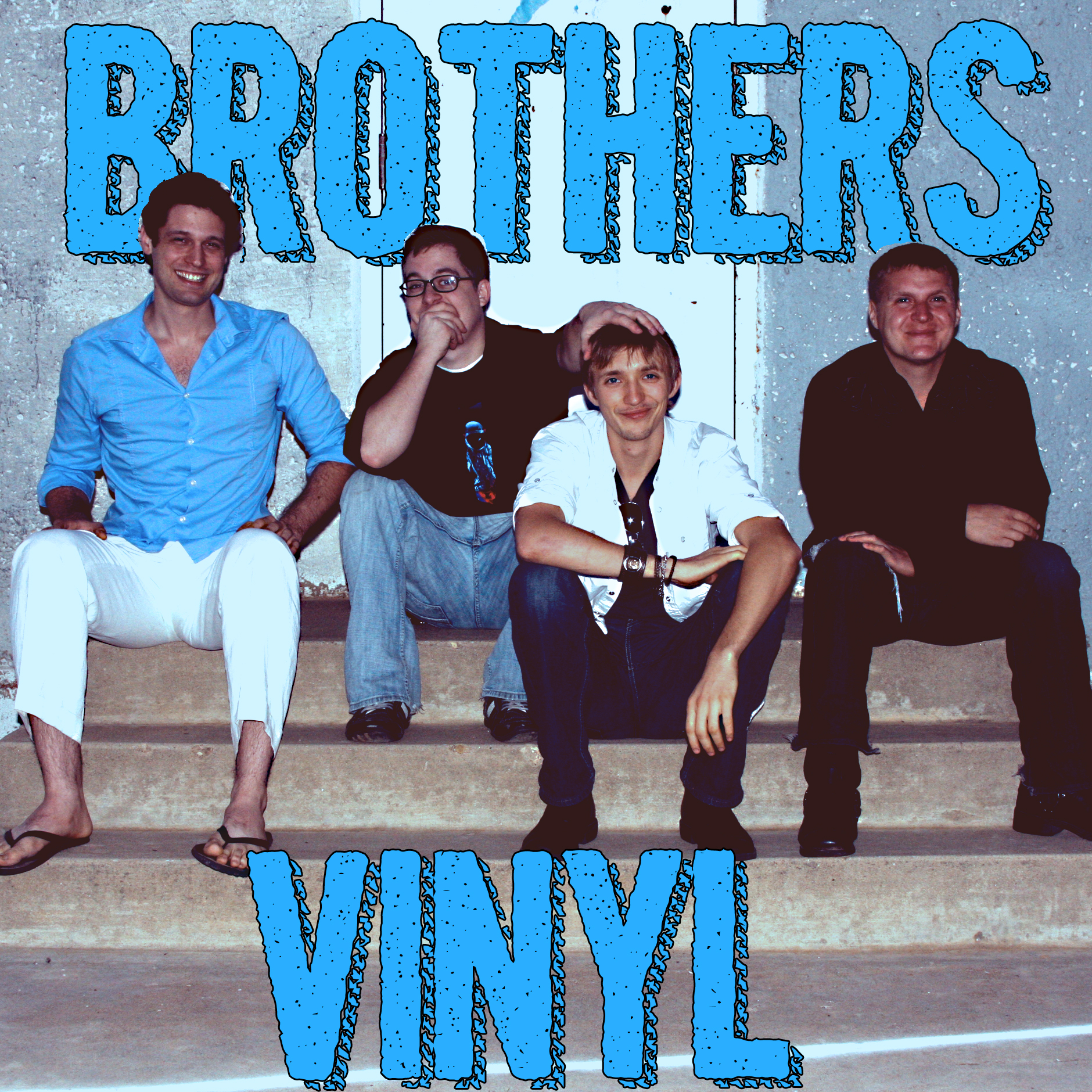
Joshua's Band - Brothers Vinyl

Joshua’s Band – Brothers Vinyl

Music Court readers rejoice. Today we add another contributor to the blog. His name is Joshua Drew, and I will let him introduce himself below. His first post will be released Friday, and I can assure you it will be good. You can look for Joshua’s posts on Fridays.

Here is a little about Josh:

“My name is Josh Drew, I am an Economics graduate from the University of South Florida and a musician in the “Live Music Capital of the World,” Austin Texas. My relationship with music has been a wild one that began with my father’s Queen, Talking heads, Alabama and Pink Floyd records. My mother was always on the lighter side with Disney Compilations, Celine Dion, Savage Garden and Elton John records, so it is no strange coincidence that I developed an eclectic taste for sound.

I began playing music in my late teens as a drummer, and I have never let go. As someone who bought every edition of Rolling Stone for over 10 years, I have always wanted to make a louder voice for myself in the music community and start sharing my experiences, opinions and any advice I can offer to listeners and readers.

The Music Court is a place where I can be open to write how I feel about the current state of music – a constant twist of optimism and dread – without having to hold back. It is a welcome place to let my tastes become more vibrant and my stories take flight – a solid home to share my future with those who are here to grow.”

Help me introduce Josh to the Court.