Archive by Author

Canterbury Tales – The Wilde Flowers

8 Dec

A wildflower is a flower that grows without any manipulation – it simply sprouts up, nature its gardener. Well, in a way the aptly named The Wilde Flowers also grew  in the wild; the first band to feature an agglutination of jazz-influenced musicians who would end up dispersing, like seeds, and forming other, more popular acts, that would define the Canterbury Scene, a convenient term used to describe progressive musicians who, to stay with the flower theme, sprouted up in and around Canterbury, England.

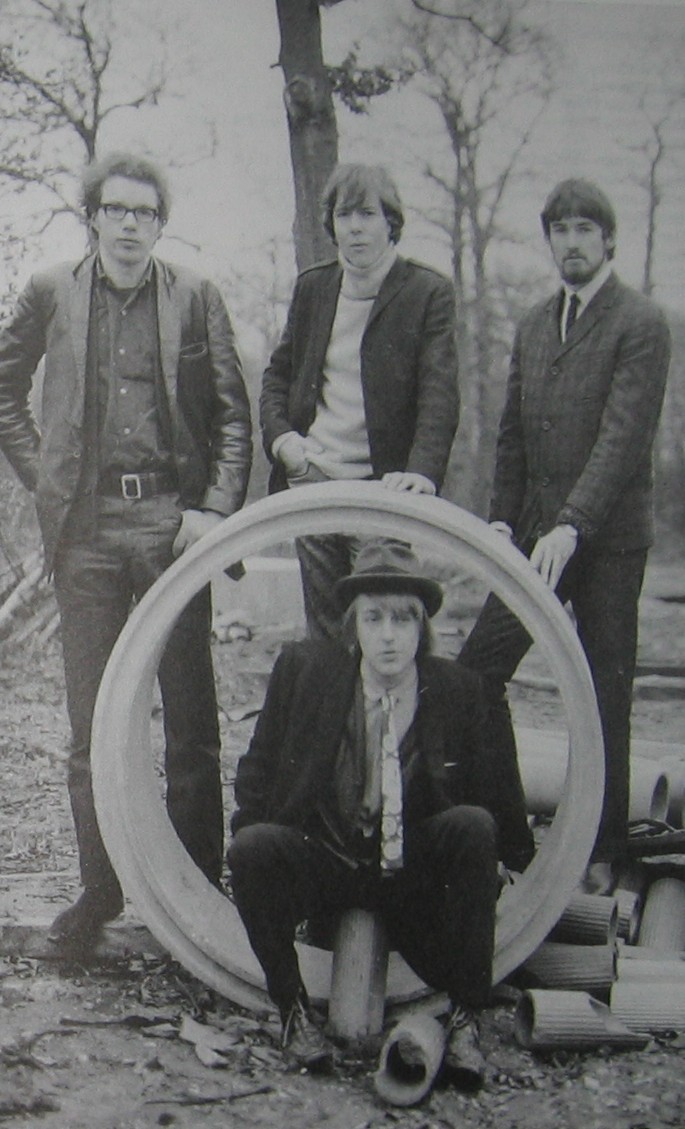
Progressive rock is today viewed as a popular 70s creation. Those who support that claim cite the peak of its success with bands like Genesis, ELO, Rush, and, of course, Pink Floyd (who kind of hovered above any genre specification). And like in many musical situations, the underground roots are buried and forgotten. I hate not giving credit where credit is due. So, today, I wish to highlight The Wilde Flowers, a band that featured a progressive group of musicians – who would later form bands like Caravan and the Soft Machine (two of the earliest progressive rock bands). Yes, in many ways, The Wilde Flowers were the predecessor of the predecessors.

Let’s start with this cover of blues/jazz pianist Mose Allison’s “Parchman Farm.” This is perhaps my favorite cover of the song because (besides from just being plain jazz cafe cool) it is so obviously influential. The low-key, almost droning vocal, constant drumming and repetitive bass riff, the sweet horn – it’s all so fresh, original, and inspirational. We are talking about an era in the mid 1960s (the band was around from 1963-1967) that Jazz music was put to the wayside, in favor of the blossoming folk, psychedelic, and hard rock scene. The Wilde Flowers brought Jazz back and combined Jazz sentiments with the popular rock sound. They were exploring the foundations of progressive rock prior to progressive rock had foundations.

So let’s look a little bit into the band’s history.

The band, like mentioned above, lasted for around four years and featured several musicians who would go on and play in other progressive rock bands. In many ways, my father put it best. The music scene of the 1960s was quite incestuous. Musicians played in one band and then founded a more popular band and then left and went to another band (i.e. Eric Clapton, Ronnie Wood – the list goes on and on). The Canterbury scene is no different. We start with our originals.

Brian Hopper (guitar, sax, flute, vocals), Hugh Hopper (bass), Robert Wyatt (drums), Richard Sinclair (guitar, vocals), Kevin Ayers (vocals and by the way Kevin Ayers released an album in 2007 entitled Unfairground which is downright excellent). Let’s also add Daevid Allen to this list. While he was not part of the band, Allen, an Australian-born music-lover, formed the Daevid Allen Trio with Robert Wyatt and Hugh Hopper prior to the inception of The Wilde Flowers. He is a big reason why Wyatt and Hopper were introduced to so many jazz/blues records.

Back to the Wilde Flowers. The group originally played soul/blues covers (Booker T, Ray Charles) but moved towards Jazz and naturally (albeit almost accidentally) the two genres fused.

The band released a demo in 1965 and in March of that year Kevin Ayers went with Daevid Allen to Ibiza (classic Beat fashion – keep traveling – he’s going to form the Soft Machine in a bit). Wyatt started singing lead vocals until, for a bit of time, Graham Flight was brought in during the summer of 1965 to sing – but would then leave after five months. I guess you sort of see how the rest of this band’s history is going to look. Heck, they may have eventually seen success if they all stayed together. Several bands were founded by ex-members of The Wilde Flowers. They were like the Yardbirds or Bluesbreakers of Prog-Rock.

In the same year, Sinclair left for college (he will form Caravan soon) and Wyatt would leave to join the Soft Machine soon as well. Richard Coughlan (no recordings available) came in to play drums and Pye Hastings to play guitar and vocals.

In 1966, Hugh Hopper left to join the Soft Machine (Dave Lawrence took his place). In 1967 the group was discontinued after Brian Hopper (last original member) joined the Soft Machine and many of the other stragglers joined Caravan. And, trust me, more bands would be formed. But for the short time this extremely talented (now supergroup) was together, they created some different music.

“Never Leave Me” is one of my favorite Wilde Flowers originals. It is heavy-drummer piece with a curious vocal, jazzy guitar, and neat vocal. It is a mixture of a whole bunch of stuff – and it wouldn’t be Wilde if it wasn’t, now would it?
 

The Best Songs of 2011 – A Brief Preview

6 Dec

Yes, it’s Tuesday, and despite my intention of profiling another obscure classic rock band, I just simply do not have the time. But that’s alright. I do have the time to provide some excellent news. Excellent news if you enjoyed the post stylings of last year at around this time.

Last December saw the inception of the Top 10 songs of the year list. Click here for the rundown of the top 10 songs of 2010. I wasn’t sure if I was going to have it become an annual end-of-the-year event, but, because of a great response from you fantastic readers, I have decided to bring it back…with different songs obviously. So, starting on Tuesday, Dec. 20 (supposing everything goes according to plan) I will start profiling the top 10 songs of 2011 (my opinion of course). This year saw the release of some excellent albums and songs and I look forward to sifting through potential list makers and picking the top 10.

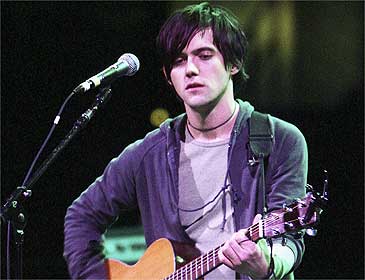
As you may have taken from the picture at the top of this article, I do plan on previewing the list with a song. Will “Shell Games” by Bright Eyes, a song off of their February (oh how it seems so long ago) release The People’s Key, the band’s first in four years, be on the top 10 list? I’m honestly not sure. But it is a great song released in 2011 so I wanted to profile it for your listening pleasure.

Bright Eyes is led by the pained croon of Conor Oberst and his catchy melodies and lachrymose lyrics propelled Bright Eyes to Indie fame before the Indie genre was even in diapers. “Shell Games” moves to the tune of an obsessive piano, 80’s synth, heavy drums, and a distinct melody. It provides the Bright Eyes flavor we have all come to enjoy – a dark infectiousness. And the lyric. Goodness.

“I was dressed in white, touched by something pure
Death obsessed like a teenager
Sold my tortured youth, piss and vinegar
I’m still angry with no reason to be

At the architect who imagined this
For the everyman, blessed Sisyphus
Slipping steadily into madness
Now that’s the only place to be free”

His scholarly and literary lyrics depict a tortured bibliophile, a somewhat bookish musician who combines quasi-existential philosophy with rhythm. Intelligent music that is also enjoyable. I love that.

With the Dust Finally Settled, Who Wins The X Factor?

2 Dec

Warning: If you have taped the X Factor and have shielded yourself from any entertainment media outlets as to prevent yourself from seeing the top 5 then close this page! Also, if you have no interest in this highly entertaining, but somewhat contrived and most definitely hyperbolic mega-reality talent competition, then might I suggest reading about Dantalian’s Chariot (The Music Court’s Obscure Classic Rock post from Wednesday). Or, come along for the ride with me. I promise I will make this look at the X Factor’s final five accessible.

Well folks, we are down to our top five contestants on Fox’s The X-Factor. The show, which will reward the winner with a $5 million dollar prize and a super recording contract (and the heavy burden of attempting to not fall into competition winner obscurity, a plague that most singing competition winners have fallen victim to), has been thoroughly entertaining up to this point. Seriously. It has provided this authentically peculiar flavor, marked by waves of emotion, gaudy performances, and dueling judges. Personally, I think the best part of the show is the interaction between the judges, who “apparently” are not putting on an act just for the show. I put the word apparently in quotes because, despite contestants saying that the judges do legitimately fight off-camera, I am weary of believing anything I see on reality television. Real World: X Factor.

The basic premise of the show at this point is that the judges have their own specific groups of contestants. Arrogant but lovable Simon Cowell mentors the girls, king of the annoying head-shake, must similar to Night at the Roxbury, record-producer L.A. Reid advises the boys, insanely good-looking but candidate for mental analysis Nicole Scherzinger mentors the over-30s (now down to only one contestant), and a surprisingly sober and cogent Paula Abdul mentored the groups, all four of which have already been eliminated from the show. The judges all want their disciples to win. Obviously. Yet, they also vote for who gets eliminated when the two contestants with the lowest number of votes have to sing for their survival. This has been slightly altered over the past two weeks. The contestant with the lowest number of votes has been booted from the show without a chance to redeem themselves, and the contestants with the second and third least number of votes sing for survival. ANYWAY, we are down to the top five and I want to pose the question to all of you, who will win?

You know what that means? POLL TIME!!! Ahh…YEAH! Are you excited. No. GET EXCITED! Okay, I’ll stop. Let’s make this a poll with a large population sample. Spread this around. The more you get other people to vote, the more interesting this brief study will be. Below I will list off the final five and give a short sentence analysis. If you haven’t watched the show before, judge them on their performances (you can go on youtube and find more than the one I will post)

Chris Rene

Rene, in my mind, will be a succesful artist without even winning the show, which I think he will win. He is a multi-talented singer/songwriter/rapper and is able to cajole an audience with his elegant swagger, passionate voice, and sincerity.

Melanie Amaro

Amaro was/still is a favorite to win the show. She is the resident Whitney Houston (every show has to have one). She is true to her roots (recently paying homage to her Latin American heritage by randomly starting to talk in her true accent – which sounded like Miss Cleo. Seriously, click that and you will see the Youtube video of it.

Josh Krajcik

The last contestant in the over-30s, Josh Krajcik is a tremendous singer with rock roots. His performance of “Wild Horses” was majestic. He captures such emotion in his croon, but is also able to cut loose during rockier performances.

Marcus Canty

The always smiling Canty is so likeable that it’s hard not to cheer for him. He also puts a lot into his performances which perhaps covers up some vocal blemishes. Whatever the case may be, something has gotten him into the top five, and while I believe he may be the fifth placeman when all is said and done, I will still cheer for him.

Rachel Crow

And last, but certainly not least, Rachel Crow, whose cuteness can actually detract from her epic youthful voice and energy. She continues to easily slide by every week and, who knows, she may have a big enough fan base to propel her past the favorites.

There you have it. Who is going to win. Vote below! I’m also eager to here your opinions on why you think your favorite will win. Comment on this post and let’s talk.

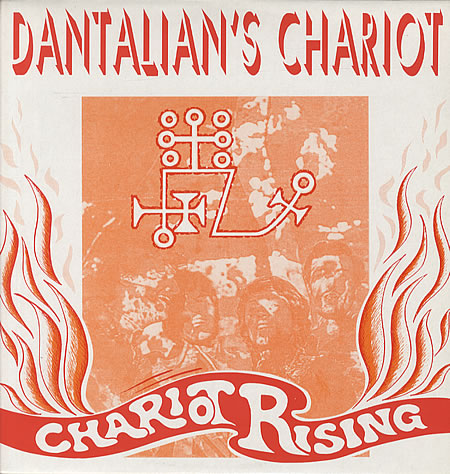
Take a Ride on Dantalian’s Chariot to the World of 60’s British Psychedelia

1 Dec

When the psychedelic movement presented itself in Britain prior to 1967 it was back-shelfed by numerous radio stations and simply not played. It was a crucial part of the burgeoning underground culture and spacey, experimental sounds were initially only played by DJ’s like John Peel on Radio London. The British youth was drawn to psychedelic music’s distinct flavor and caught on quickly, sparking psychedelic clubs to open to accommodate individuals who wanted to tune in and move on from the now tired merseybeat/R&B movement. In 1967, psychedelic music traveled from the undergrounds into the limelight and several bands, who may/probably were not playing psychedelic music, started experimenting with odd sound effects, zany vocals, and different instrumentation. One such band was Dantalian’s Chariot, a band more known for its members than its medieval witchcraft inspired name.

Dantalian’s Chariot was founded by George Money, better known as Zoot Money. Zoot was the bandleader and keyboardist for the early 60’s Big Roll Band, which toyed around with rhythmic blues and jazz, garnering success in London clubs, but little album support (even though they were signed by Columbia). This is a solid genre foundation for psychedelic music. But psychedelic fusion, not the pop psychedelia that became pervasive in 1967.

In 1967, Zoot formed Dantalian’s Chariot, which was made up of Money, who would later play with the Animals, drummer Colin Allen, who would go on to play with John Mayall and the Bluesbreakers, skilled bassist Pat Donaldson, and a 25-year-old guitarist Andy Somers (prior to changing his surname to Summers) who, of course, is a member of the Police. So Chariot was one of those bands that would be considered a super-group lineup today, but not in 1967. And even though this psychedelic band was only around for a year and released only one album Chariot Rising under the Chariot name, their music is still worth a listen.

“The Madman Running Through The Fields,” the only single released by the band, is your classic piece of ’67 psychedelic music with its Byrds-like electric guitar, tape delay sound effects, and ending poetic psychedelic breakdown. Plus, go to the vocal part at around 50-55 seconds. Tell me that doesn’t sound like a Sting-like vocal outburst. Come on. A little? But still, as enjoyable as this piece is, it still falls into the trap of being like so many like it. Show me something Zoot.

“This Island” is my favorite song from Dantalian’s Closet. Yes, the sitar was becoming overused in ’67, but the mellifluous ocean sound mixed with western harmonies and strung out keyboard combine to make this song a wonderful example of pre-progressive instrumental. It is a quiet, reserved, unassuming piece and I love it for that.

For The Beginning of The Holiday Season

28 Nov

Santa took advantage of the great deals

Merry Christmas? Not quite. It certainly seems like it though. If it seems that Christmas is mentioned earlier and earlier every year, it is because it is. This is especially true this holiday season. Retailers just couldn’t unpack the holiday decorations fast enough. FINALLY (exhale) we all stuffed ourselves during Thanksgiving and the stores opened during the night for Black Friday discount sales. If you need any proof why retailers wanted Black Friday, the unofficial start of the holiday season, to come as fast as possible, the only statistic you need to peek at is $52.4 billion. That is how much money was spent this holiday weekend. Merry Christmas indeed to America’s struggling economy. Sustained consumer spending is good. It makes up around 70 percent of our economy. We need to go out there and spend our cash. I’m not advocating profligate spending, but hoarding cash only hurts the already hurting economy. This is why holiday shopping couldn’t come soon enough. Black Friday has passed and we have now progressed to Cyber Monday/Week (where discounted items are available online). So many deals. Man, I wish I played video games because I would totally buy a PS3 for $200. Maybe I will take advantage of some music deals.

Hey, I have a special Christmas-related Cyber Monday music post for you all tonight. To kick off the holiday season I want to share my favorite Christmas song with all of you festive readers. I really have my pick of the litter with Christmas songs. You know there are a lot of versions of Christmas songs when a radio station (106.7 on Long Island) can play Christmas music straight from the end of Thanksgiving to Christmas ad nauseum. It is my mother’s favorite station every holiday season.

“Grandma Got Run Over by a Reindeer” is an enduring classic; the zenith of novelty Christmas songs, in my opinion. It is zany, light-hearted (well not for Grandma) and downright humorous. It is a perfect Christmas joke. Everyone may be singing Jingle Bells and Silent Night, but I will be rocking out to the Randy Brooks written classic, made famous by Dr. Elmo and Patsy Trigg Shropshire in 1979.

So what is it about this song? Is it the country folk easiness of the melody, the allegiance to grandpa, or the witty lines “They should never give a license, To a man who drives a sleigh and plays with elves?” It is all of the elements I’d say. And all things considered, it is a Christmas sing-along for the whole family. But watch out grandma and don’t drink too much eggnog.