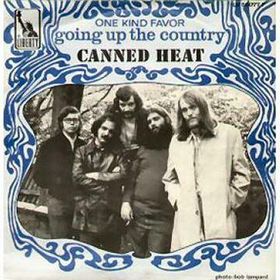
If you have been viewing this blog for a while, you know that a post about “Going up the Country” by Canned Heat has become synonymous with my trips up to Binghamton. What started as a quick and short post just to alert readers that I was driving four hours north to Binghamton (and could not post that day because of it), became a tradition, a sort-of good luck charm, declaring safe passage up to Binghamton University. I graduated from Binghamton last Spring and I am now settled into the world of commuting, but, as the title of this post suggests, I will be visiting the Ol’ Alma Mater this weekend, and therefore “Going up the Country” returns.
Canned Heat’s “Going up the Country” struck it big because of its appearance in the Woodstock movie. Because of its bluesy and rhythmic bustle, and apt message (for the journey to Woodstock was a trip up the New York country), the song became that Woodstock song. Alan Wilson’s trademark high-pitched and possessed croon just assisted in the song’s overall aura.
I have posted about this song too many times. How can I possibly make this any different? Well, hmm, today I believe I will do my favorite cover version of the song.
Here is “Going up the Country,” the 50’s shuffle version.
The band is Kitty Daisy & Lewis and this country/rock-a-billy/all-around twang sibling throwback play music in London. This version of the song has gained over one million views on YouTube, which is a pretty extraordinary feat. It moves. It’s cool. A well-put together and filmed cover.
But my favorite version (that is not the original) is not a cover at all. Instead, it is actually what the song is based on (or completely stolen from, matters who you ask). Alan Wilson is listed as the writer of the song, but Henry Thomas recorded the song with different lyrics in 1928. So, yeah, it’s stolen (not the lyric, but the entire melody) “Bull Doze Blues” is “Going up the Country.” Enjoy the quills!
Have you not voted in the poll “What is the Catchiest Song Ever” yet? Click here to cast your vote!
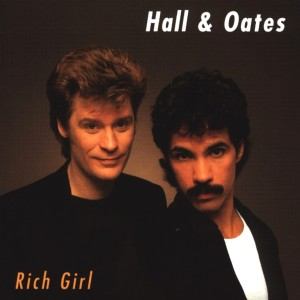
I was not surprised to see that the winner of the poll was that exceptionally catchy song “Other.” No, other is not a song, just an option. There are so many catchy songs out there and everyone has a different musical palatte. The list that I provided did have some masterpieces of catchy theater, so some of the songs did receive votes. Among the top vote getters was “Rich Girl” by Hall and Oates, which gets my vote for catchiest song ever. Why? Because you’re a rich girl, and you’ve gone too far, cause’ you know it don’t matter anyway. You can rely on the old man’s money, you can rely on the old man’s money. Over and over and over again! AHHHHH get it out of my head!
So why is this song so damn catchy. First, let’s explore what the song is about. Easy, right? A rich girl who’se gone to far but it doesn’t matter anyway. Stop! According to Daryl Hall, the song is actually about an ex-boyfriend of his girlfriend at the time. The guy’s father was rich and he acted strange and Hall thought that this person could do whatever he wanted because his dad would get him out of anything. He can relay on the old man’s money. But, he’s a rich guy didn’t sound good, so Hall changed the sex of our wealthy individual and, well, people have been singing about the rich girl ever since.
The song has some immediate things going for it. First off, it’s only a little under 2:30 in length. Catchy songs should be short. The point of a song like this is to barge into your mind, lay eggs, and leave quickly. Then, after it is gone, the eggs hatch and a million tiny memories of the song get stuck up there and you are forced to think about Daryl Hall singing about the rich girl all day. Not a very pleasant or accurate description, but this is how it seems to happen to me.
The song begins with the chorus over an east-to-follow staccato piano rhythm. In 20 seconds Hall has repeated the chorus twice and has implanted the lyric into the listener. Following the introductory chorus is an exceptionally simple guitar riff that leads into what can I guess be considered the bridge (there is really no verse in this song and perhaps that even adds to its catchiness). The bridge portion is marked by vocal harmonies and longer phrasing. Hall’s voice is exactly the “catchy” kind, according to the study of catchy songs that I mentioned in the poll article. According to the article, a male vocalist with a higher, passionate voice attracts listeners. Hall has that voice. It fits the mold perfectly. The sing-songy classic keeps up the pace until it ends. But does it really end? Or are you humming it to yourself at your desk right now? Yeah, that’s what I thought.
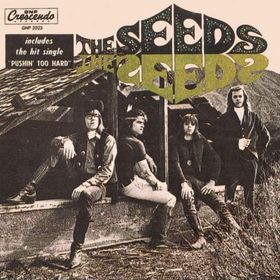
The Seeds is a band that teeters on the line between obscure and known. I’m not sure where to place them myself. While I do think it is safe to say that many have not heard of this garage rock pioneer, the band may be a little too known to be classified in this obscure category. I’m arguing pedantic semantics with myself. The reason I want to include The Seeds in this Tuesday’s “Obscure Classic Rock” is because I featured David Peel and the Lower East Side Band last week. As you may remember (and if you don’t click here to view last week’s post), I labeled Peel as an inspirational pre-Punk force. The Seeds, with their blend of angsty garage rock and bouncy beats, do fit the description of a band that planted the seeds for Punk rock. Pun very much intended. So for the second week in a row we focus on a pre-Punk performer, but this time we enter into an earlier realm of mid-60s rock n’ roll.
When you explore the premiere early roots of Punk rock bands like the Kinks, the Who, and the Small Faces are mentioned. These are bands that started developing the fast-paced, strained pop sound that Punk became known for in the 70s with the Sex Pistols and the Ramones. The Kingsmen’s version of “Louie, Louie” (1963) is aptly cited as the first proclamation of Punk. The song even sparked an ill-informed FBI investigation over the non-existent obscenities that are not in the song. When I look at the early stages of Punk music, though, I quickly look at the impact of Mick Jagger. His carefree, over-sexualized, Elvis-on-acid-inspired on-stage pelvic movements clearly inspired performers like Iggy Pop and a little-known singer named Richard Marsh, better known as Sky Saxon of The Seeds.
To some, Sky Saxon is a cheap Mick Jagger impressionist, but I think he something much more than this. Saxon formed the Seeds with keyboardist Daryl Hooper, guitarists Jan Savage and Jeremy Levine (who left the band because of personal reasons shortly after the first recording session) and drummer Rick Andridge. Sky is credited as the bassist and in one of the videos below he is playing an egg-shaped fire-red bass guitar, but he did not play bass during recording sessions. Instead, Hooper, much-like Ray Manzarek did with the Doors, played a keyboard bass.
The band released their first single “Can’t Seem to Make you Mine” in 1965 and it became a regional hit. The band, even though remaining most popular in southern California, reached the top 40 with their 1966 song “Pushin’ Too Hard.” After this release, they hit moderate success with a few other singles, but their popularity slid and by the end of the 60s the band was transformed with new members into Sly Saxon and the Seeds and then broke up in the early 70s. We are going to look at the band’s top two singles in this post. Both of these songs can be found on the Seeds’ eponymous debut album released in April of 1966. The album has aged well and it is now looked at as early Punk inspiration and proof that Punk existed before the 70s.
Simple repetitive melody, possessed vocal (Sky seems drugged), neat and concise keyboard solo. It’s pop. I’m not sure if we can hear Punk in this early release (even though Sky Saxon just looks and sounds ahead of his time.) The song is not grungy, but instead pretty organized and easy. It is like cool and collected garage rock mixed with sunny California pop. Keep this sound in mind and let’s move ahead a year.
What a change. Throaty-punky vocal. The guitar has the traditional 60’s twang. The keyboard is one of the most understated and interesting parts of the song. It fits, but it doesn’t fit. I can’t seem to place that quiet, even subtle sound. The tune, which clearly provides a great example of fuzzy and raw garage rock, has a rhythm that resembles Punk. I hear Protopunk in this release.
Sky Saxon’s future would involve joining a religious group in California called YaHoWha for many years. The band reunited in 1989 to headline “The Summer of Love” tour (which also included Arthur Lee and Love). In 2003, Saxon and Savage toured with other members, but Savage had to depart midway through the resulting tour. Saxon continued performing, recording and writing up to his passing on June 25, 2009.
If you click on Sky Saxon’s name above you will be linked to his official website. A tribute album featuring covers of Saxon’s songs by performers like Iggy Pop, The Bangles, The Chocolate Watchband, Strawberry Alarm Clock, The Electric Prunes, will be released soon (perhaps by the end of the year) so definitely keep tabs on what will most definitely be a must listen when released.
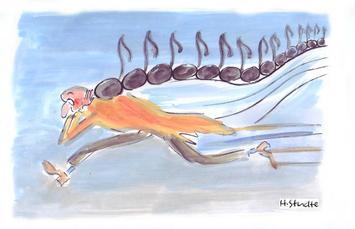
Have you ever asked a friend to hit you over the head with a hammer so the particular song that has been stuck in your head for the last week can finally be removed? By way of concussion, naturally. Then your friend laughs and goes no, I know a better way, and he/she starts to sing another catchy song thereby getting that song stuck in your head for the next week. Electric Light Orchestra describes the phenomenon I am speaking of in the title of their hit song “Can’t Get you Out of My Head.” Seriously, right now I am listening to “Band on the Run” and that incredible guitar riff will now be stuck in my head for the rest of my Friday. Perhaps the Beatles were really talking about getting a song stuck out of their heads when they wrote about Maxwell’s silver hammer.
Some songs are damn catchy and when you listen to them they stick to you like a bug trap. But what makes a song catchy? Recently, York University music scientists released a study that investigated the psychological catchiness of the most glue-like songs. They found that higher male voices that emit vocal energy, phrase length and pitch complexity all contribute to a song’s ultimate catchiness. Using their findings, the scientists released their top 10 list of most catchy songs ever. Here is what it looks like:
“We are the Champions”, Queen (1977)
“Y.M.C.A”, The Village People (1978)
“Fat Lip”, Sum 41 (2001)
“The Final Countdown”, Europe (1986)
“Monster”, The Automatic (2006)
“Ruby”, The Kaiser Chiefs (2007)
“I’m Always Here”, Jimi Jamison (1996)
“Brown Eyed Girl”, Van Morrison (1967)
“Teenage Dirtbag”, Wheatus (2000)
“Livin’ on a Prayer”, Bon Jovi (1986)
It’s the final countdown, da da da da, da da da da da, da da da da da, da da da da da da da, doo doo doo – wait – sorry – I forgot I was posting.
What do you think of this list? Is “We are the Champions” the most catchy song ever. It is a burst of vocal, tribal energy and, yeah, it’s exceptionally catchy. But what about the other songs? Hmm…I think I can think of better ones. So I want to investigate. It’s poll time. I need all of you this time. Let’s figure this out. Is “We are the Champions” the most catchy song ever, or is there another song that has you? I am going to include my list of top catchy songs in the poll below and feel free to choose other and vote for another song if you disagree.
I refuse to RickRoll you. I was thinking about it, but then I decided to do something even more cruel. I’m going to post all of the songs for your listening pleasure. Happy voting!
My initial reaction to the news of Steve Jobs‘ death was my typical reaction when I hear that a well-known celebrity/icon has passed away. I watched as Anderson Cooper interviewed tech junkies, newsmen, and CEOs of other companies. I listened to them swoon over the man that was Steve Jobs. I, myself, said that the news was terrible, talked to my father about the death sentence that is pancreatic cancer (seriously, if there were any doubts, Steve Jobs died from it – Steve ‘I Molded Your Life” Jobs), and then moved on to my dinner of avocado and ricotta soft tacos (which were excellent). My family reflected briefly on how we must all not sweat the small stuff and realize that, in the end, the only thing one truly has is their body and health. And then we ate dinner and stored the thought of death back into the locked, fire-proof safe in our minds.
This morning I had a moment to reflect on the passing of Jobs. The tremendous outpouring of grief on social networking sites was astounding. I have actually never seen such a universal mourning in the recent modern age. Facebook and Twitter exploded with messages of “rest in peace” and small anecdotes of how Jobs’ inventions impacted their lives. It was just one man’s death, though, and I initially thought that such a reaction was weird, perhaps slightly misguided. It was almost too uniform, too trendy. But then I realized that in this odd way the reaction to Jobs’ death was caused by the man himself. Steve Jobs and Steve Wozniak’s Apple circuit board pretty much sponsored the rapid development of the personal computer. Jobs’ intuition could be looked at as a reason for why I am typing these words on a keyboard today. Jobs helped turn science fiction into reality.
Think about the last fifteen years. I am 22 years old. I remember fooling around with simplistic games on my bulky Apple computer in the 90s. The computer evolved and flourished and new features were added. It became a true constant in our lives. People had such a personal reaction to the news of Jobs’ death because personalized computer technology is so important to the masses. We, as humans, need interaction and connection, and while it does seem that people trap themselves into a closed, cold world when using these products, these high-tech phones and music storage devices do connect people to their loves and interests. So, in a sense, when the CEO of Apple passed away last night, people held a momentary personal funeral for a person who helped make their expansive technological world possible.
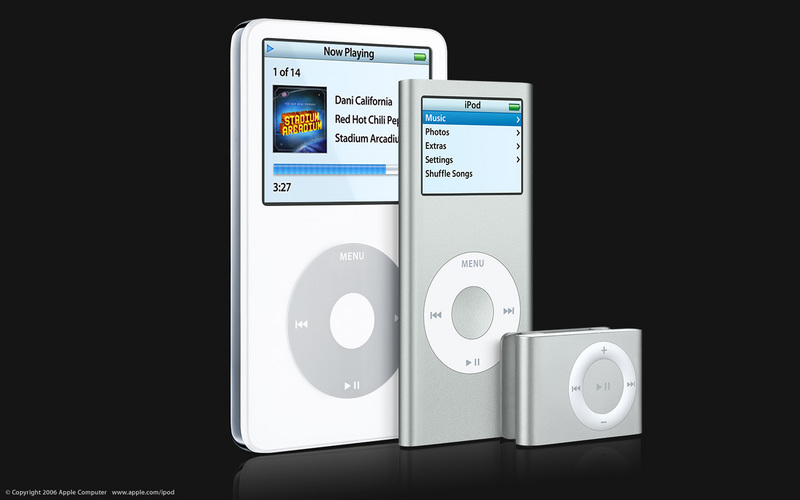
The iPod has revolutionized music. It was the next step in the evolution of listening to music. We can now carry gigabytes of music with us in little pocket devices for personal enjoyment whenever, wherever. Such an ability was a dream only relatively a few years ago. This remarkeable transformation was heralded by Jobs and Apple. I have become so accustomed to my loaded iPod that I often forget about those times with my skipping walkman in the backseat of my family’s old SUVs. Seriously, do you remember when the songs would skip when you hit a bump on the highway?
Today, as I pump my iPod during my noontime city walk, I will think of the advancements sponsored by Jobs and quietly thank him for improving technology for such a wide range of individuals. I am sure many people are doing the same today.