
Archive by Author

Peel the Lower East Side and Enjoy Pre-Punk Punk

4 Oct

So let me introduce to you, the one and only David Peel. Wondering why I just quoted “Sgt. Pepper’s Lonely Hearts Club Band?” You will find out in due time (even though the reference doesn’t link up perfectly because McCartney wrote these lyrics even though the lyric is credited to the Lennon/McCartney songwriting duo). I’m being pedantic. Let’s move on to the first post in the new category Obscure Classic Rock.

I want to first share with you all how I heard about David Peel. Don’t worry, this is not a long, fireplace story. Actually, my father told me about David Peel last night. This is one thing I love about 60s/70s music. At times, the list of acts seems endless. It’s not, obviously. There is a fixed number. But I have done a good amount of research on 60s/70s music over the past 4-5 years (starting when I was a senior in High School), and, I’m still learning about influential acts that I had never come across previously. And that is awesome.

My dad recalled how he used to go down to Greenwich village in New York City with his buddies back in his teens (early 70s) and he would often see David Peel (born David Rosario) performing with the Lower East Side Band (apt name). Peel would sit down and talk with my dad and his friends occasionally. My dad remembers him as a nice, intelligent guy, who sang songs about marijuana and revolution. Revolution, specifically the recent Wall Street Occupation, is why Peel was brought up in conversation.

David Peel and the Lower East Side Band. Ever hear of them? No? Well did you know that they are often cited as early progenitors of punk rock? Also, did you know that Peel became incredible friends with John Lennon and Yoko Ono (there is your answer for the opening segment)? Lennon had good taste. Well, so did Peel!
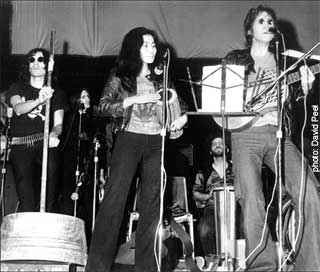
David Peel (left) performing with Yoko Ono and John Lennon. Don't Lennon and Peel sort of look alike? More on this later

John Lennon once compared Peel to Pablo Picasso. A bold proclamation, indeed. Well, similar to Picasso co-founding the Cubist movement, Peel definitely had a hand in providing some inspiration to the emerging genre of punk.

Peel and the Lower East Side band first recorded music in the late 1960s. They created a blend of “street rock” that targeted topics like marijuana and the police. It was fresh and attractive to the counterculture movement. Songs like “I Like Marijuana” and “Oink Oink” were obviously scorned by authority, but enjoyed by the youthful population that gathered in Greenwich Village. Peel and the Lower East Side band was actually among the first bands to regularly perform on cable TV in Manhattan. He appeared on the public-access cable TV channel of Manhattan Cable Television. He also performed at the first Smoke-in concerts at Central Park.

It was in front of a crowd at Washington Square Park in 1971 when Lennon first saw Peel. He was quoted saying, “He was shouting: why do you have to pay to see stars? I was embarrassed. I thought surely he must know we are here. Yoko and I love his hair, snazzy tight trousers and Hai Karate aftershave.” They quickly became friends and Lennon signed Peel to Apple Records where he promptly released The Pope Smokes Dope in 1972. The record was banned in nearly every country in the world, except for the US, Japan and Canada. I don’t believe this record was playing in cafes outside the Vatican. The fervor that Peel engendered is funny. It’s very…punk! And the music backs that statement up.

I mean listen to this. “Oink, Oink” was recorded in 1968. It is like Beach Boys meets the Ramones. And this was recorded when Dee Dee Ramone was 17 years old. Punk music is rooted in US garage rock and the New York underground (bands like the Velvet Underground). Peel, like Lou Reed, sang about drugs and unsavory NYC practices. In 1969 Protopunk was founded by MC5 and the Stooges (Michigan-based bands), but I do believe that Peel was a true predecessor of the burgeoning movement and, unfortunately, he does not get the credit he does deserve.

Peel and Lennon stayed close friends, Peel adopting Lennon’s thick-glasses style, and Lennon sampling Peel’s leather coat look (similar to retro Cavern Club Beatles). The two looked so much alike that Bob Dylan actually called a picture of Peel, John Lennon, and, because everyone takes what Bob Dylan says as the truth it seems, the FBI was also fooled. A picture of Peel was in Lennon’s FBI file. Lennon did help Peel become well known and he has performed with musicians like B.B. King, ELP and Alice Cooper. Peel still records music today and his full discography can be acquired. I suggest checking him out more. He is a punk visionary. And he recorded an album entitled The Pope Smokes Dope. I mean, come on.

A Quick Hello and Preview and A Salty Dog to Ease the Nerves

3 Oct

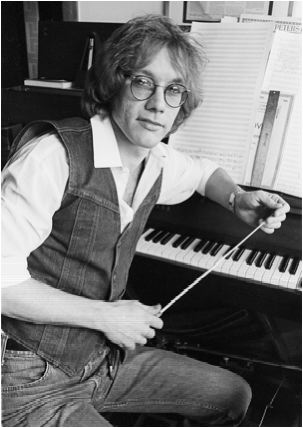
Did you enjoy the waving pencil? I thought the black-and-white image was fitting. Hope all is well. I know the new posting schedule that I posted back in August does not see me posting on Mondays, but I felt the necessity to catch up on a few things. I feel like I haven’t posted in forever, and I am definitely going through music withdrawal. I have been busy, both with work and a pesky sinus infection that I am just getting over.

I did want to post today to preview two new sections that I will be adding to the blog in anticipation of the New York autumn. The Manic Monday Music Machine, along with being a terribly forced example of alliteration, will see me returning to Mondays every-other-week to preview some songs that I just happen to think you should check out that week. So, you will have two posts on some Mondays! By the way, hasn’t Aaron (peepirate) done a great job thus far. I hope everyone is enjoying his music selections and words as much as I am. Also, like always, I do want to give credit to our psychedelic savant, Okocim, for blowing our minds every Sunday with his kaleidoscopic adventures.

Every Tuesday throughout the Fall (unless I encouter a significantly busy day) will feature the new category Obscure Classic Rock. This is a bit of a spin-off of the 60’s Band of the Week. At my astute father’s request, I will focus my attention every Tuesday on my true music love, 60s/70s rock oddities. There are hidden gems and I can’t wait to share them with you.

Now, because I cannot possibly leave you all without providing some goodbye music, here is a song that popped on my iPod today while I took a walk around New York City during my lunch break. Not unknown, but still incredible. Here is “A Salty Dog” by Procol Harum. Enjoy.

Enjoy Every Sandwich – Warren Zevon and his Werewolves of London

28 Sep

In yesterday’s post, Aaron mentioned Warren Zevon and included an embedded video of Zevon’s most well known song, “Werewolves of London.” The sardonic and hilarious song was released on Zevon’s breakout album Excitable Boy in 1978 and it reached the #21 spot on the American Top 40 charts in mid-1978. “Werewolves of London” was Zevon’s only appearance on the chart, but let’s ignore popularity charts and just discuss the wonder that was Warren Zevon and the utmost joy that others will always have when they listen to “Werewolves of London” and any of his other lyrical masterpieces.

Zevon’s grasp on lyrics was strikingly apt and vivid. David Letterman, who was Zevon’s good friend before Zevon died of cancer in 2003, described his music as “evocative,” and I think that is a good adjective to use. Zevon’s folk was not classic, but edgy. His lyrics were unconventional and enjoyably morose. He also had the ability to turn off the playful and upbeat hits and bathe listeners with soft melody and heartbreaking lyrics. The man truly had it all and his talent is often overlooked. And it is a shame that Zevon had a life-long aversion to doctors. He died at the young age of 56.

“Enjoy every sandwich” comes from Zevon’s last appearance on Letterman. Like I mentioned, he developed a close relationship with Letterman and band-leader Paul Shaffer. So much so, that Zevon would often fill in for Shaffer when Shaffer was unable to perform during the show. On Zevon’s last appearance on Letterman, when his sure-death prognosis was already known, Letterman asked him if he knew more about life and death now that he practically knew that death was an immediate certainty. Zevon said, “enjoy every sandwich,” a simple, but profound response that fit his character well. Zevon was Letterman’s only guest for the full hour and he performed several songs. The day after Zevon’s death (months later), Letterman annouced the sad news to the national audience:

I’ve written about Zevon before on this blog. The Wind, the last album he recorded prior to his death, is a tour de force. Zevon performances are invigorating and “Keep me in your Heart” is a tear-jerker. But, since I have already written about those songs before, I want to feature “Werewolves of London,” a song that has a “surprising fact.”

The song has been covered SEVERAL times, but that is not the surprising fact. Accompanying Zevon on the song is bassist John McVie and drummer Mick Fleetwood of Fleetwood Mac fame. I always thought that was an interesting tidbit of knowledge. To finish off this Zevon post, I am going to include a cover of “Werewolves of London.” Take it away Adam Sandler:

Lady Madonna – From Fats to McCartney to Fats

22 Sep

In 1968, The Beatles released “Lady Madonna,” a short, fast-paced groove about an overworked mother. It was written primarily by Paul McCartney, but credited to Lennon/McCartney. John Lennon did help with some of the lyric. In typical Beatles’ fashion, the song reached #1 in the UK and #4 in the U.S., and interestingly, was the Beatles’ last release on Parlophone. The Beatles would release “Hey Jude” on Apple Records a few months after “Lady Madonna.” Has anyone ever suggested that perhaps the Beatles were just too good. Perhaps they were all truly musical aliens, intergalactic hit machines. Well, some band had to be the greatest band to ever play, right?

Anyway, I mention Lady Madonna in this version of “Great Moments in Music Cover History,” not because it’s a cover (which it is not), and not even primarily because it spawned several covers, but because it was inspired by a musical legend, Fats Domino.  Yes, so I should perhaps title the category as “Great Moments in Music Inspiration History,” but you’ll all see how the covers fit into this in a few words.

  “‘Lady Madonna’ was me sitting down at the piano trying to write a bluesy boogie-woogie thing,” said McCartney in a 1994 interview.  “It reminded me of Fats Domino for some reason, so I started singing a Fats Domino impression. It took my voice to a very odd place.”

You can hear the blues piano inspiration in this song and Fats Domino was such a champion of the burgeoning rock/piano genre. McCartney was also inspired by Humphrey Lyttelton‘s “Bad Penny Blues.” The beginning piano riff is somewhat similar to the piece. Take a listen:

The reason this fits into the cover category is because Fats Domino actually covered “Lady Madonna.” It’s sort-of like an ironic twist. McCartney thinks about how it would sound if Fats Domino was playing the piano, and then Fats gives McCartney the ultimate compliment and re-records the song. Here is the Fats version:

Not bad. The Fats flavor is cool. Plus, listening to Fats’ accent during the piece feels right. McCartney and Fats should perform this song together. That would be awesome.

Now, just for giggles, here is another cover of the song by…Elvis Presley! It is from a 1970 rare recording session (where he also performs “Got My Mojo Working”). He is obviously having a lot of fun with it. He doesn’t even know all the words.

It Takes a Worried Man To Sing a Worried Song – The History of “Worried Man Blues”

21 Sep
He’s Worried Now, But He Won’t Be Worried Long

When Rod Stewart received his first guitar from his father, he first developed hard-earned calluses from playing “Worried Man Blues.” The folk classic sparked the musician inside of Stewart. Now, obviously, Stewart did not stake his claim as a guitarist, but the song helped engender Stewart’s burgeoning musical creativity. I mention this little story because “Worried Man Blues” is another example of a traditional folk song lost to time; a deracinated ditty, a matchless melody. Okay, you get the point. “Worried Man Blues” was first propagated by the Carter Family, but its roots are forever lost in the vast annals of time. Please excuse my corny hyperbolizing. Let’s explore the evolution of this folk smash.


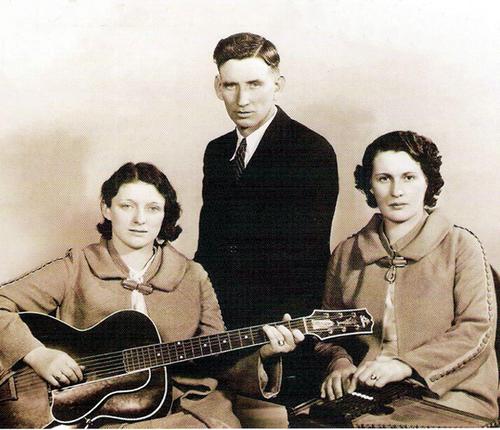
Like I said in the previous paragraph, “Worried Man Blues,” came from somewhere, but past the first recording of the song in 1930, we do not know much about its history. What one can delineate from written record is this: A.P. Carter, the tall, lanky male member of the original Carter Family was known for traveling throughout the country and collecting old songs, especially in the Appalachian region. In 1928, he met Lesley Riddle, a one-legged blues musician, and Riddle joined Carter on his country-wide blues excursions. Carter would write down the lyrics of songs they picked up, and Riddle would memorize the melodies. It is possible that “Worried Man Blues” came from these trips. But it is also possible that Riddle had nothing to do with the old-time piece. Carter did pick up the song and in 1930 he recorded “Worried Man Blues” with his wife Sara Carter and his sister-in-law Maybelle Carter. Here is the recording.


If you have heard the piece before performed by more recent artists you might notice that there is a distinct different. In more modern versions, the opening line of every verse is repeated three times. But in the Carter Family version (and in the later mentioned Guthrie version – which we will get to), the first line of each verse is only repeated twice. The melody is also slower than some other versions. Each version does practically have the same melody and chord structure (G with variation, C, D – easy to play on the guitar or banjo, you just need to figure out the picking pattern) The lyric is where the differences really shine. I am going to paste the full Carter Family version so we can have a solid FIRST lyric for reference.
 
LYRIC By CARTER FAMILY
 
It takes a worried man to sing a worried song
I’m worried now, but I won’t be worried long
 
I went across the river and I lay down to sleep
When I woke up, put the shackles on my feet
 
29 links of chain around my leg
And on each link an initial of my name
 
It takes a worried man to sing a worried song
I’m worried now, but I won’t be worried long 
 
I asked the judge, what might be my fine
 I asked the judge, what might be my fine
21 years on the R.C. Mountain Line
 
The train arrived, 16 coaches long
The girl I love is on that train and gone
 
It takes a worried man to sing a worried song
I’m worried now, but I won’t be worried long
 
If anyone should ask you who composed this song
Tell ’em ’twas I, and I sing it all day long
 
I love this last little passage, which, by the way, is completely original to the Carter Family version, and it doesn’t appear again often (if ever) in more modern versions. It sort-of has a mark of irony, since we are now asking 81 years later who first sang this song. I guess it was I, and I sing it all day long. Old folk/blues pieces with unknown origins are kept alive by popular recordings and kids, who, like Rod Stewart, pick up a guitar, pluck the simple chords, and sing about being a worried man singing about being worried all day long. This timelessness is genuine. After the Carter Family recorded the song in 1930, Woody Guthrie picked up the classic and took it on in 1940. Here is a version from volume two of the Asch Recordings (1944).


Guthrie’s version immediately just sounds different, especially with the slightly out-of-tune, but stylish acoustic guitar. The all-male vocal backing obviously differs from the Carter Family. The main difference, though, is that Guthrie, unlike all other versions, does not begin with the chorus. He dives right into going across the river and lying down to sleep. Guthrie maintains the two repetition of the Carter’s, but, starting with verse two, stuff begins changing.
 
In the game of lyrical telephone (like I mentioned in previous blues evolution posts), some of the first things to go are numbers and places. In this case, Guthrie mentions 21 links of chain, as opposed to the Carter’s 29 links of chain. Then, on the next verse, the protagonist of the song is sentenced to 21 years on the Rocky Mountain line. In the Carter’s version, the protagonist is spending 21 years on the R.C. Mountain line. What is the R.C. Mountain line? Railroad Company? Perhaps. It may be referring to the Rocky Mountain line, but, supposing this song was first learned from Appalachian blues artists, it is most likely referring to a rail line in the east.
 
Guthrie’s train is 21 coaches long (he has an obsession with the number 21) and the Carter’s train is 16 coaches long. Also, Guthie ends the song with a completely independent verse that he seemingly made up. It goes:
 
Twenty-one years
Pay my awful crime
Twenty-one years
Pay my awful crime
Twenty-one years
And I still got ninety-nine
 
It is a neat, different version of the song, perhaps inspired by other versions he heard outside of the Carter’s 1930 recording, or, Guthrie may have just taken creative liberty. A group that took complete creative liberty was the Kingston Trio, who recorded a completely different version of the song – only keeping the chorus – in 1958. It is sped up (in typical Kingston Trio fashion) and repeats the first line of the chorus three times. Hmm…interesting. (The first song is “Worried Man Blues”)


This is actually the first version of the song I became familiar with. It’s just completely different, but still enjoyable.
 
I would like to leave you all with one more version of the song. This one performed by folk perfectionist Pete Seeger and the great Johnny Cash (1970). Pete Seeger is awesome. There is just no way around that statement. He is a classics man and he performs the songs with such enjoyable passion. I also love when Cash performs old folk songs (see the last blues evolution I did). This version also repeats the lines three times. It does, though, follow the classic version pretty well. It also features a Seeger monologue and, hopefully without being too sententious, I want to post his statement for I think it is rather apt for this post.
 
 “These old songs are never going to die out. This song is the whole human race. I crossed the river, laid down to sleep, and woke up with shackles on my feet. Across the river we thought we solved all of our problems. You have that revolution. You get that home. You get that job. You think you solved all of your problems. You crossed that river and found you got shackles on your feet. And who’se the judge. Is it some old guy, 74 years old, with black robes. It might be the young judging the old or the old judging the rich. But no matter what mistakes we ever made, there is still a last verse that holds out some hope.”   – Pete Seeger
 
I’m worried now…but, I won’t be worried long.