French model and actress Lou Doillon is featured in Barney’s Fall advertisement campaign, which can be seen in the Madison avenue store’s windows. Ok … when did you turn into a fashion blog (like Hipstersleek, which you should definitely check out!) I haven’t. Doillon is a triple threat. Her career as a singer may soon trump her other two titles.
Doillon, whose father is French director Jacques Doillon and mother is British actress and singer Jane Birkin, quite obviously comes from an entertainment background. She started her acting career in 1988, where she played her mother’s daughter in Kung-Fu Master. Her modeling career has propelled her to more international celebrity status. But, as I claimed above, ultimately I believe her biggest strength is with her subdued music. Her 2012 album Places hit #3 on the French charts and helped earn her a French Grammy for Female Artist of the Year.
“ICU,” my favorite single off her debut album, secured the best position on the French charts among her three singles. It is restrained and melancholy, much in the style of Lana Del Rey. That is how I see Doillon. Her music, like Del Rey’s, maintains a clear cinematic sound that is echoed by her haunting vocals; not so because of ethereality but because of the tempered power of her deep vocal. You can think of her as a pop lounge singer, but I find her craft more artistic and personal.
It’s an impressive song. While simple, it is unique and intriguing. The listener is ensnared by her voice, and this is such a premium quality for a professional musicians. Doillon has a bright future ahead of her as an artist.
Robert Johnson, Charley Patton, Son House, Ma Rainey, Big Bill Broonzy – Names that are forever linked with their god-like status among the propagation of American Blues – an extensive genre that had an indelible impact on the future molding of rock ‘n’ roll.
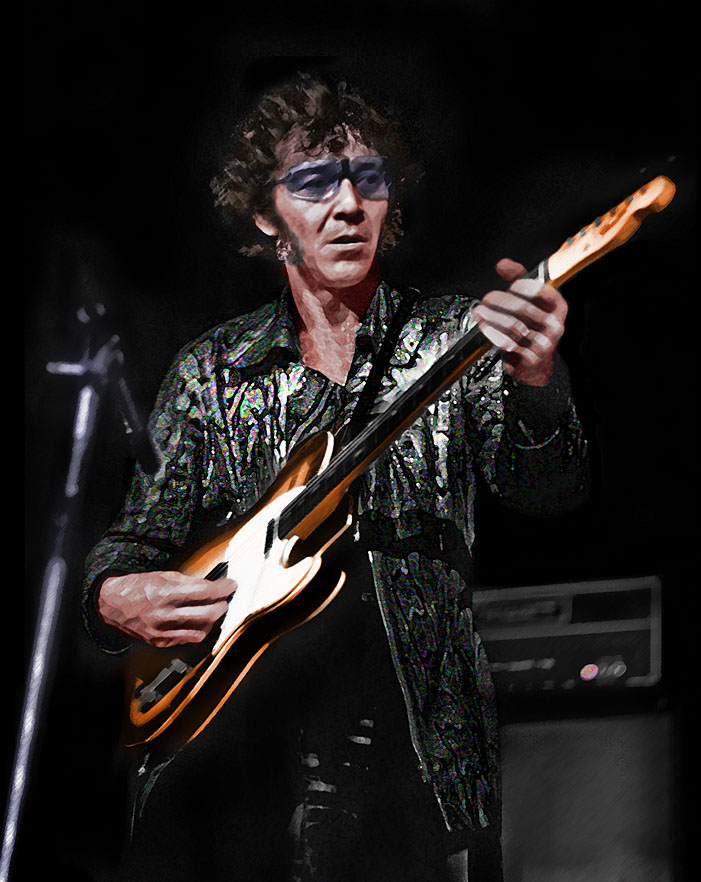
On the other side of the pond, British jazz musicians and fans became ensconced with the Blues music of musicians like Ma Rainey and Fats Waller, acquiring much of these tunes from African-American GIs stationed there during the Wars. After the Skiffle craze died down in the 1950s, many Skiffle-influenced musicians turned their attention to pure Blues music. Muddy Waters had a shocking electric (literally) visit to England where he shocked Brits with his amplified electric blues. Some were appalled by his lack of reverence for the classic style, but the youth ate up this edgy playing. Among them was a guitarist by the name of Alexis Korner, who, like the Blues ancestors above, would spark a focus on Blues in Britain and influence a slew of rock ‘n’ roll’s greatest musicians. Thus, he too should be considered a true Blues god, and it should come to no surprise that he is often given the moniker of the “Father of British Blues.”
Korner’s elaborate music history is extensive and impactful. It is not easy to keep the plenitude of anecdotes to a minimum, but for the sake of the reader I shall limit my focus to a few stories. Like, for example, in 1969 while touring with a new band, Korner was jamming with a little-known singer named Robert Plant. Jimmy Page, who often performed with Korner at the Marquee Club, was intrigued by Plant’s voice and asked him to join The New Yardbirds…who would soon turn into a rock band called Led Zeppelin with Page and Plant at the helm.
But I am getting ahead of myself. That was in the late 60s. Korner’s career (even though he dabbled in Skiffle) really began in 1961 when he founded Blues Incorporated with Blues harmonica extraordinaire Cyril Davies. Blues Incorporated (like The Yardbirds, John Mayall & the Bluesbreakers, and Cyril Davies’ All-Stars) was an early example of a “supergroup.” But, in truth, it was just a platform for talented blues musicians to play music. Blues Incorporated, though, has the special mark as the first electrified Blues band in Britain. The band secured a residency at the Marquee (mentioned above) and even established an R&B Night at Ealing Jazz Club.
Remember what I said about the youth loving electrified Blues music? Well, where do you think they went to hear this music? And who do you think inspired them to pursue this music? So when I tell you that Korner played with musicians like Jack Bruce, Ginger Baker, Mick Jagger, Jimmy Page, Robert Plant, Paul Jones, Eric Burdon, and many, many others, you should not be too surprised. Most of the early Blues musicians in Britain are linked with Alexis Korner in some way. He is like the Kevin Bacon of British Blues. And when Cyril Davies left Korner to form his All-Stars he played with musicians like Nicky Hopkins and Long John Baldry until he died far too young in 1964. The All-Stars were led by Baldry who created Hoochie Coochie Man, featuring a singer named Rod Stewart. Page also had a few All-Stars jam sessions, adding individuals like Jeff Beck, Eric Clapton, Bill Wyman, and Mick Jagger to the mix.
But back to Korner for one more story before I urge you to watch this documentary about him.
Blues Incorporated was asked by BBC radio to broadcast a session in the early 60s, but the producer only had room for six musicians. The seventh member of the group with a singer named Mick Jagger. Jagger was asked to gather some friends and play the normal spot at the Marquee. The friends he gathered were Keith Richards, Brian Jones, Ian Stewart on piano, Dick Taylor on bass and Tony Chapman on drums. The band went by the name of Rollin’ Stones after a Muddy Waters tune.
Cyril Davies on vocals and harmonica. Alexis Korner playing a mean acoustic guitar. Released in November, 1962.
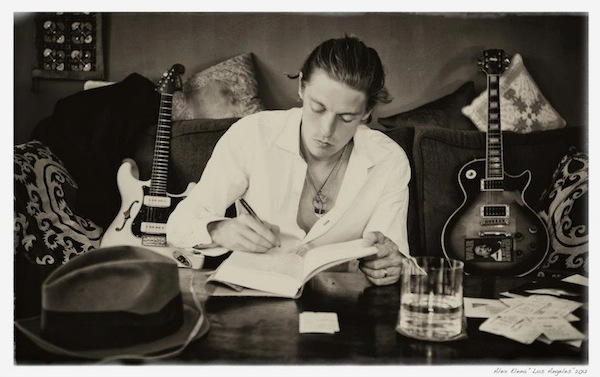
It should come to no surprise that musician Topher Mohr grew up in Michigan. His eclectic music, which aptly pieces together elements from several genres suggests inspiration, and what better motivation than the elaborate music history of Detroit? While Mohr is impossible to pigeonhole, his music did spark a thought. If Michael Fitzpatrick (of Fitz and the Tantrums) is today’s modernizer of old-school Motown hits than Topher Mohr is reviving the old art of tender crooning. It seems like a lofty proclamation until I introduce you to:
His gentle voice is soothing but subtly strong and passionate. His vocal is saturated with emotion, and the soaked feeling is easily identifiable in his airy guitar plucking. While Mohr does not have the dark, coffee-roasted voice of the traditional old-school, five-pack-a-day crooner, he does, however, revive the old sound and modernize it. It’s exciting to listen to him make an old standard like “Fly Me to the Moon” ring with a contemporary flair.
Beyond his black-and-white performance of “Fly Me to the Moon,” Mohr released his new LP Phlotilla earlier this year. Prior to the LP release, he toured the world with his friend Mayer Hawthorne, another artist who features an eccentric style of music creation. Mohr’s album focuses on vintage pop, and “Ruthless” stays true to the genre.
The rhythm is similar to Fitz’ Motown-inspired hits, but Mohr combines the rhythm with a Maroon 5 meets the 1980s melody. This combined with Mohr’s versatile vocal creates an intriguing hit that even has room for a clean guitar solo! It’s a moving piece and one of the strongest on the new album.
Find out more about Mohr (yes, I went there) at his Website. You can also check out his Facebook and Twitter.
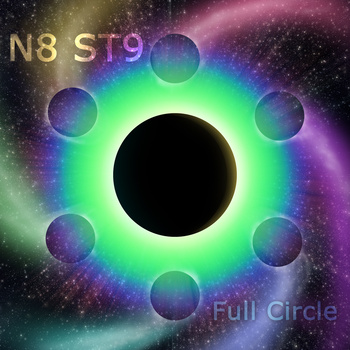
N8 ST9 (Nate Stein) has been on my radar for some time. The post-electronic artist mixes skilled instrumentation with dreamy electronica to create a delicate sound that, while heavy on the electronic percussion, is harmonious. Now, on the heels of his new album Full Circle, I believe it is a good time to introduce him to the readers of this blog. This aforementioned mixture is musically intriguing.
Perhaps most engaging about the new album is its vibe. Electronica and instrumentals sometimes conflict when haphazardly paired together, but N8 ST9 combines the two elements competently, thus creating a cool, euphonic atmosphere that surrounds the listener. The album is split between pure electronic instrumentals (like the two reviewed below) and pop-fueled tracks like “Light Up Myself,” which ST9 wrote for a close friend who is a recovering alcoholic.
Aside from the imprecation outburst to begin the song, “Light Up Myself” is a diverse song that has three distinct parts. The song begins with an ethereal guitar riff that transitions into a Paul Simon-esque verse with creative percussion, which continues even when the song shifts to a modern Indie rhythm. In only two minutes the song effortlessly shifts back and forth from different musical elements and inspirations. This is just accentuated towards the end of the song with the airy piano bridge fit with melodious vocalization. ST9 takes listeners through a musical parade, successfully evoking the ups and downs of his friend’s life.
The above two tracks are the diverse instrumentals I mentioned. “Intention for Bliss,” the opening track on the album, features the fluffy keys reminiscent of an Owl City song. “Watching” features more driving electronica (something I don’t usually go for). In this case, though, I am lured by the 80s beats that blend well with the melody ST9 successfully introduces to the listener.
It’s an impressive release for the young artist, and I am looking forward to listening to more of his music.
Back in 2011 when Los Angeles-based pop singer Novi released her debut EP Now I’m Here she raised eyebrows with her brazen, imprecation-filled single “Blackbirds.” Underneath the ribald lyric, though, was an artist ready to break out. NOVI, the moniker of Carolyne Neuman, is no stranger to success – her first release, “All the Way” was featured on One Tree Hill – but with the forthcoming release of her second EP Now I’m There I think it is about time that the country started learning more about NOVI.
Remember when Florence and the Machine first released “Kiss with a Fist” in 2008. The debut single went on to foreshadow the success of the band. I mention this track because I believe its brash nature best reflects NOVI. NOVI reminds me of a young Florence Welch – unconventional, fearless, and skilled. Those are three qualities that are particularly necessary if you want to succeed in the industry.
Now, NOVI’s music is different from Florence’s music. While Florence – besides from “Kiss With a Fist” – focuses on creating an ethereal atmosphere with her songs, NOVI mixes an in-your-face attitude with a touch of Lana Del Rey’s sun-soaked voice. The music itself covers the spectrum of effervescent and blunt to emotion-saturated and harmonious. One thing remains constant in all of NOVI’s music – it is good. Yes, this seems rather simplistic – especially in a review – but the music is diverse, stimulating, and, well, good. Let’s put it this way – once you listen to a track you want to continue exploring the esoteric world of NOVI. Let’s listen to two tracks from the new EP.
“Whisky and FireFlies” begins with an infectious whistle opening – much like “Good Life” by OneRepublic – and that bleeds into NOVI’s verse – which almost acts as a singing rap. The percussion carries the song into a Florence-like chorus. NOVI’s voice is deceptively good. The vocal play in the song is skillful.
“Make A Scene,” though, is where I see true star quality. While “Whisky and FireFlies” is a nice song, “Make a Scene” is a powerhouse – a true force that has mainstream and Indie attraction. The beat is ridiculous. The listener is fully drawn into the song from the start and NOVI helps suck the listener further into the piece with her eclectic vocal. The hook is potent. Featuring a Mika-like instrumental rise, the chorus is the song’s core. This is a 2:45 bundle of goodness, and, if it is any indication of NOVI’s future, much like Florence, it looks very bright.