Archive | Lyric of the Day RSS feed for this section

Lyric of the Day #69: Top 100 Lyricists #78

29 Dec

Good news, everyone! I cannot help but think of Professor Hubert J. Farnsworth whenever I say that (Futurama is quite awesome). But, if I was using that formula I would most likely be saying bad news, everyone, because whenever Professor Farnsworth says good news it is always bad news and vice versa. Okay, I’ll shut-up and get to the music.

As you can see from the title of the post above, after a month of inaction the lyricist section is back and will pick up strong from #78. Also, I am finally done with the list so there should be no more delays. Hopefully, the section will be finished sometime in the next year and a half! And, what is a better way to get back into the lyricist list than with one of the more creative lyricists, David Byrne of Talking Heads fame.

David Byrne was rejected from his middle-school choir because they claimed he was off-key and withdrawn. While Byrne has always been a bit of an odd-ball and, trust me, this comes out in his awesome lyric, saying the man is off-key is kind of like passing on Michael Jordan in the 1984 NBA Draft, it is just a bad idea. Luckily no one ever said anything bad about his lyric. After forming and dissolving The Artistics while he studied for a year at the Rhode Island School of Design, a move to New York sparked the beginning of Talking Heads, which was a pretty solid move. For our particular profile of Byrne’s lyric I would like to focus on his 17-year journey with Talking Heads. The new-wave, punk, avant-garde, and a list of more genres that the Talking Heads represented complimented Byrne’s quirky voice and abstruse lyric. Yet, however esoteric the lyric, Byrne, with his great band’s help, still made the music accessible and well-done. Two of Byrne’s most creative lyrics lie embedded into the 80’s music scene. Five years separated, Remain in Light released in 1980 and Little Creatures released on my sister’s birthday July 15 (10 years before she was born), are two great examples of classic Heads’ music and the lyrics are just extraordinary in every definition of the word.
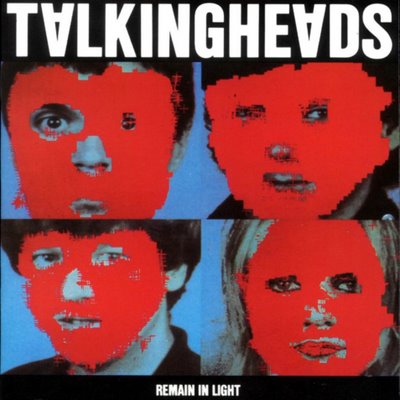
Let us begin with Remain in Light and Byrne’s hit song “Once in a Lifetime.” The lyrics are spoken throughout the verse portions of this song and reveal an interesting existential crisis. I believe the lyrics expose the classic qualms of a mid-life crisis and what it can get anyone thinking. Let’s look at some of these verse lyrics.

“And you may find yourself living in a shotgun shack
And you may find yourself in another part of the world
And you may find yourself behind the wheel of a large automobile
And you may find yourself in a beautiful house, with a beautiful wife
And you may ask yourself-Well…How did I get here?”

It is as if the character singing the song has just woken up from a long trance and is now absolutely confused with his situation. Byrne makes the character an everyday person as well by preceding every subject with the word “you.” He is saying that this can happen to anyone. The song can be taken as hilarious because of the questioning and comments that Byrne’s voice humorously goes over. For example the line “And you may tell yourself, this is not my beautiful wife,” is just, well, funny. Yet, underneath the humor is an unsettling consternation that appears when one looks over their life and realizes that their youth has dwindled and they are now “settled” into a situation. Byrne expresses this existential confusion well in this verse:

“And you may ask yourself
What is that beautiful house ?
And you may ask yourself
Where does that highway go ?
And you may ask yourself
Am I right ?…Am I wrong ?
And you may tell yourself
MY GOD !…WHAT HAVE I DONE ?”

The climactic point of the song when Byrne yells “What Have I Done,” is just spot on. Byrne’s lyric expresses existential conflict at its core and it hits hard and successfully. It is just as relevant in Byrne’s 1985 hit “Road To Nowhere” which became a huge success mainly because of its zany truth.
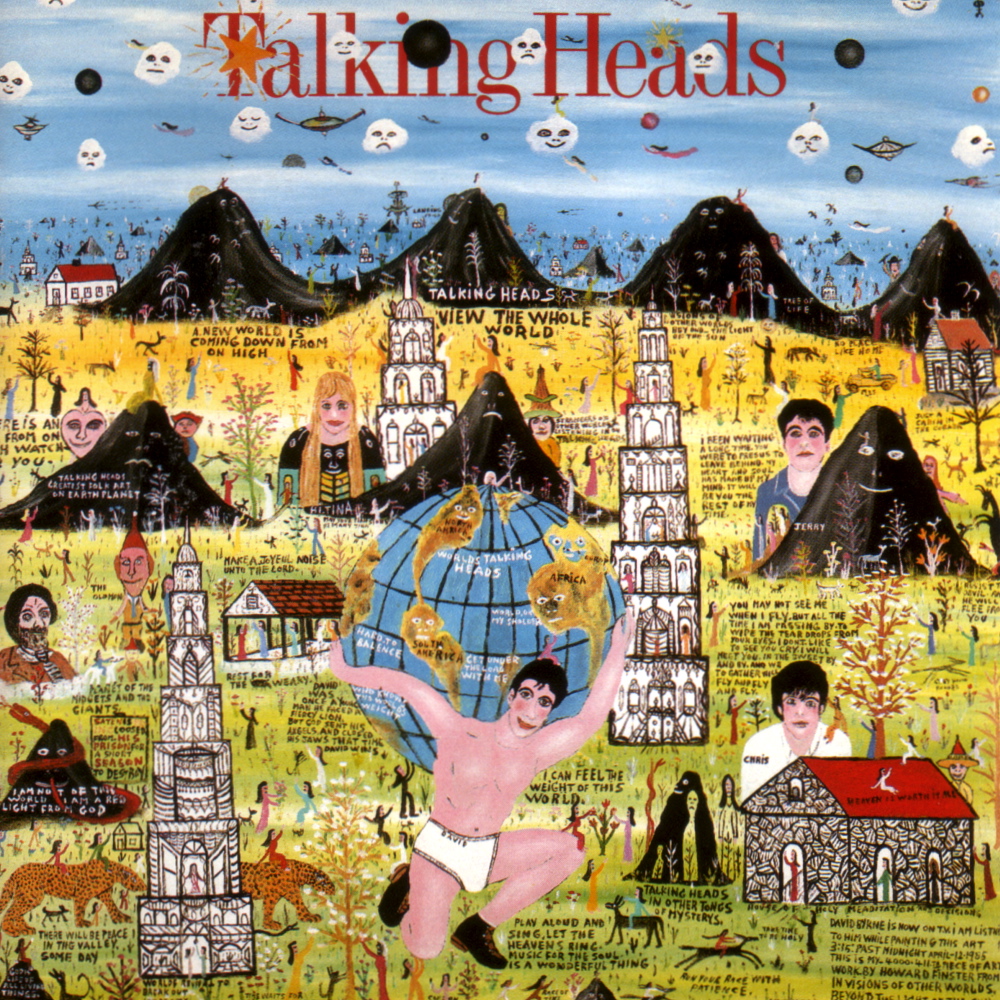
“WELL WE KNOW WHERE WE’RE GOIN’
BUT WE DON’T KNOW WHERE WE’VE BEEN
AND WE KNOW WHAT WE’RE KNOWIN’
BUT WE CAN’T SAY WHAT WE’VE SEEN
AND WE’RE NOT LITTLE CHILDREN
AND WE KNOW WHAT WE WANT
AND THE FUTURE IS CERTAIN
GIVE US TIME TO WORK IT OUT”

This fantastic beginning sung in full chorus is just genius. In it Byrne writes about everyone as a whole. We know where we are going but we don’t know where we’ve been. This can easily be taken as a statement on the inevitable end to the “Road” of existence. The future is certain, we just need time to work out the nitty-gritty of it. Classic Byrne lyric, smart and quirky, but, at the same time a little scary

“Road to Nowhere”
Lyric of the Day #68: Top 100 Lyricists #79

27 Nov

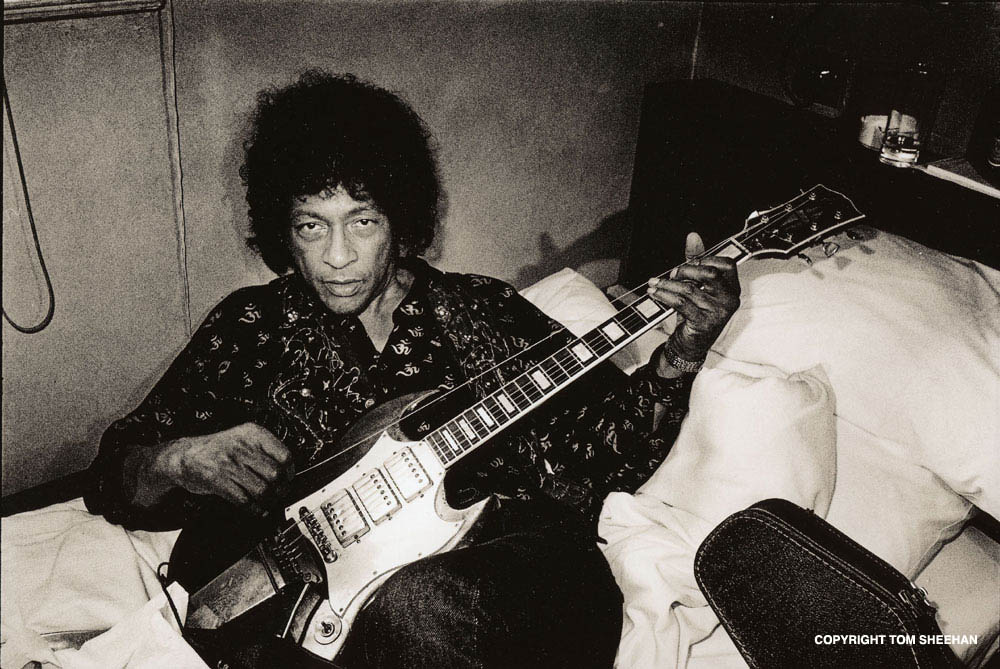
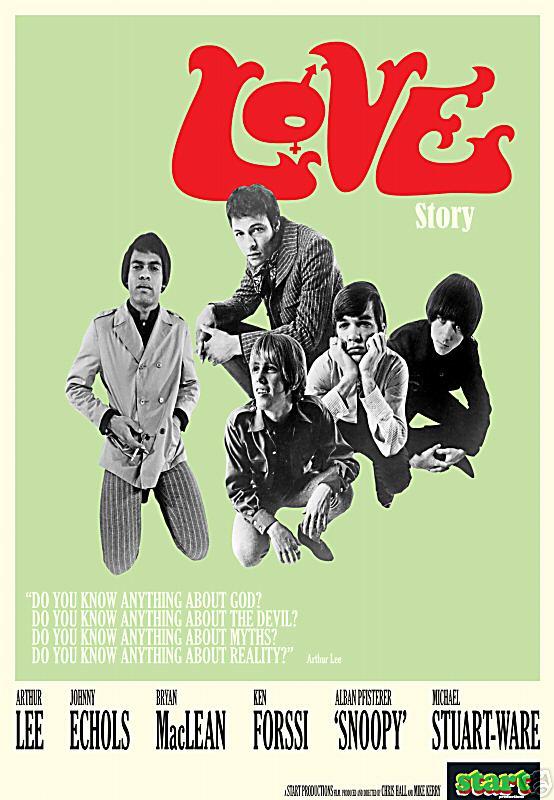
       I hope everyone has recovered from their Thanksgiving festivities and has started to lose the effects of their food hangovers. On black friday morning (well I guess since stores opened incredibly early this is sort of black friday afternoon already) I thought I would bring you a lyricist who would most likely laugh at the absurd superficiality of trampling savings. The #79 greatest lyricist of all time: Arthur Lee, frontman, multi-instrumentalist, and lyricist for the band Love.

       Arthur Lee was prophetic. On Da Capo, Love’s second album (which was recorded in 1966),  Love released a 19-minute epic jam entitled “Revelation” that took up the whole second side of album. This musical exploration was pre-dated a few months by Bob Dylan’s second side filler on Blonde on Blonde (“Sad Eyed Lady of the Lowlands”) and Frank Zappa’s “The Return of the Son of Monster Magnet,” which was released a little after Dylan on Zappa’s Freak Out. Still, Lee and Love were among the first to record these long jam songs. The Rolling Stones followed Love’s example and recorded “Goin’ Home” which resembles Love’s work. Now, of course, people say it was the Stones who inspired Love, while it was the other way around.

    On the same album the song “7 and 7 is” made a little splash as a single reaching a peak spot of 33 on the charts. But, its influence as a premier example of the “proto-punk” genre inspired future covers by such bands as The Ramones, Alice Cooper, and Rush.

     Travel to Love’s third album “Forever Changes,” which, while not gaining respect immediately, did like any famous dead artist and gained its respect after Love disbanded. The album is now considered #40 on Rolling Stone’s top 500 albums of all time. The ambitious album ended on the extended rock opera, “You Set the Scene,” which certainly set the stage for numerous future rock operas which began dominating the world of music a few years later.

    From jam sessions to “proto-punk” to rock operas, Love inspired numerous different genres of music by testing them out before they became popular. They were the musical guinea pigs and luckily now they, and the man at the helm Arthur Lee, are finally gaining the respect that they deserve. Oh yeah, I forgot the mention the reason why I am writing this profile. Besides Lee’s music which is a delicate mix of folk/rock, psychedelic rock, spanish pop, “proto-punk,” baroque pop, throw another genre in and he probably fits it, his lyrics are extraordinary examples of the dark lyrics that began flooding the airwaves during the late 1960’s. This is one thing that makes Arthur Lee so impressive.

    Lee, born Arthur Taylor, came from a musical father (Chester Taylor a Jazz Cornet player) and then, after his mother married him, Taylor was adopted by Clinton Lee and had his name legally changed to Arthur Lee. During his school years he excelled at basketball and music, ultimately choosing music as a career goal. Even before 1965, Lee was already recording folk/rock with his band The Grass Roots (not the Grass Roots that recorded “Let’s Live for Today”) before The Byrds started dabbling in the genre. Lee and his band eventually took a new name to a vote and Love was the popular choice. The band started touring and eventually Elektra Records signed them.

   When exploring Love’s music it is important to look at some of Lee’s lyrics that made the music great.

   In “The Red Telephone,” one of Love’s most known psychedelic pieces, Lee writes:

“Sitting on the hillside
Watching all the people die
I’ll feel much better on the other side”

    This simple three-line phrase displays Lee’s lyrical prowess. It is broad enough to symbolize anything, yet, specific enough that one understands what Lee is trying to say. His wry humor also comes out in the line, “I’ll feel much better on the other side,” which, while representing his own death, does it in a “grass is greener on the other side” humorous way.

    The best example of Lee’s mastery of lyrics comes in the last track of the album Forever Changes which is one of Love’s most creative tracks. The rock-opera “You Set the Scene” is not only an intricate mix of different styles of music, but it also represents the imminent death that Lee thought to be facing. The lyrics reflect this.

“This is the only thing that I am sure of
And that’s all that lives is gonna die
And there’ll always be some people here to wonder why
And for every happy hello, there will be good-bye”

     These lyrics just explain it all don’t they. But, as much as people may take them to be depressing they are not. The lyrics are factual. Lee does not lie. He knows the absolutes of life and it is explained in these lyrics. These existential lyrics explore the only thing that human beings can know. Death, and the Jets and the Mets failing, are the only two things in life that people can be sure of. Lee extends his exploration by also writing that when death exists there will inevitably be people here who attempt to figure out what happens after death, and, no matter what, when there is a hello, there needs to be a good-bye. It is so obvious, but, unlike many lyricists who attempt to explain these facts by hiding them under elaborate metaphors, Lee just comes out and plainly says them. This is why he is one of the better lyricists of all time.

Fun Fact: Lee’s composition, “My Diary” was his first to almost became a hit. It was written for R&B singer Rosa Brooks who performed and recorded it. The song included a man by the name of Jimi Hendrix (think you may have heard of him) on the electric guitar. Lee had seen him play with the Isley Brothers and asked for him. This is considered by many to be the first known studio recording of Jimi Hendrix playing guitar.

Check out “The Red Telephone” live in 2003: http://www.youtube.com/watch?v=RpsphN4Q5TM

Lyric of the Day #67: Top 100 Lyricists #80

17 Nov

Hey guys,

Amanda here, I’m a new blogger for the Music Court. I’m a college sophomore from Far-Rockaway N.Y. and I love writing and music. Booyah!

So this week’s next top lyricist is Tori Amos. You may not have heard of her, but trust me, she’s pretty awesome.

Tori Amos, born Myra Ellen Amos, is not only a gifted songwriter, but an incredible pianist. She was pretty much a child prodigy, playing piano at 2 and composing original pieces at 5. When I was 5, I was lucky if I could spell my own name right.

Tori’s career rose in the early 1990’s, a time dominated by alternative, angry, and dare I say, testosterone-fueled rock. She bravely countered the status quo, authoring songs that challenged gender roles and accepted social norms. Tori’s lyrics are potent and electrifying; unapologetically and unabashedly honest. She gained direct inspiration from her own romantic relationships, as well as from a brutal sexual assault she experienced early in her career. Amos is the cofounder of the Rape, Abuse and Incest National Network, or RAINN, a national crisis hotline.

At 46 and with a prolific, two-decade long career, Tori has made a permanent mark in the music world. One of my favorite songs is “Cornflake Girl”, from her fourth album Under the Pink:

Never was a cornflake girl
Thought that was a good solution
Hanging with the raisin girls
She’s gone to the other side

Yeah you might think a song written about cereal is a little obscure, and you’re probably right. But “Cornflake Girl” resonates with generations of woman. The song is about the internal resentment and tension between individual groups of women. To Amos, the “cornflake girls” are simple, narrow-minded and complacent (think of your Paris Hiltons and Tara Reids). On the other hand, the “raison girls” are creative and unconventional (think of your Alanis Morissettes and Regina Spektors). Just like the ratio of cornflakes to raisons in your cereal box, the raison girls are outnumbered by the cornflake girls. “Cornflake Girl” is a social commentary, but not on the pressure that women receive from men or the media, but from other women. Tori is a self- proclaimed “raison girl”, far too bold to conform to an accepted standard of female behavior.

My other top Amos song is “A Sorta Fairytale”. It was Tori’s most commercially successful song, and also, has a very bizarre cameo of Adrien Brody in the music video.

And I’m so sad
like a good book
I can’t put this
Day Back
a sorta fairytale
with you
a sorta fairytale
with you

The song’s about the ups and downs of love; a relationship that evolves from an idealistic, fairy-tale vision to something real and imperfect.

Tori Amos is an amazing musical artist, and if you haven’t already, I suggest you check her out.


Lyric of the Day #67: “One Man Wrecking Machine,” by Guster

10 Nov

Guster

“Here in the present tense
Nothing is making sense”

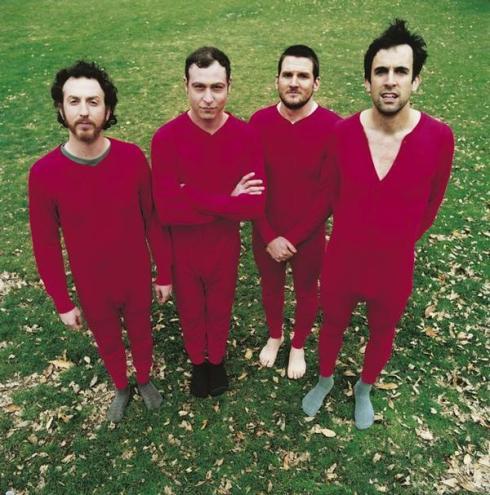
These lyrics are from Boston band, Guster, whose fame came as a college band and has spread forward in the world that has followed. Currently the song is playing on my IHome and I thought, well hey, I have not done a true lyric of the day in a while, so, for today’s post we will delay top lyricists for next week and you all can get a taste of one of Guster’s best songs.

The reason I love this song is partially in the lyrics above. I like Guster’s emphasis on the present befuddlement. Ha! That is such a funny word. I am sorry, it just is.

Looking at the lyrics another part that says a lot is:

“I want to pull it apart and put it back together
I want to relive all my adolescent dreams
Inspired by true events on movie screens
I am a one man wrecking machine”

These lyrics are a calling back to the innocent times of adolescent dreams, of the sweet freedom of college. If we say life is a movie then, as the character in this song is travelling through times, he is experiencing his life falling apart and himself, alone, as the one man wrecking machine. I always found these lyrics to be truthful and real and that is one of the reason I like Guster. What do you all think?

Lyric of the Day #66: Top 100 Lyricists #81

3 Nov


zack de la rochaI’d like to put a small disclaimer on this lyricist section. Tonight’s lyricist expresses emotions and opinions that are both strong and, well, very angry. He was the lead vocalist, lyricist, and activist in the band Rage Against The Machine, who is most definitely the most politically charged band to ever gain a load of airplay. This, of course, is a testament to their musical skill and the fact that most of the lyrics were rapped and hard to here (this excluding several portions of “Killing in the Name”) Yet, while this is the case, the keen lyrics of Mr. Zack de la Rocha just express a different look at great lyrics. They cannot all be self-reflective and pretty. Some must be angry, and Rocha’s lyrics are.

Born into a politically charged family, Rocha, was immersed with left-wing political causes from the moment he could talk. His childhood was spent dealing with his German-Irish mother and his father, who, after experiencing a nervous breakdown after divorcing Zack’s mother when he was one, became a glorified religious nut. It is safe to assume that in experiencing his odd family background and by living in Los Angeles some of this racial anger was able to brew and he was able to see how racist people actually are. This just extended into staunch campaigning for left wing politics and with this he was introduced to punk music which seemed to express exactly what he was feeling. Rocha became involved and his musical career began.

Let us focus on his excellent work with Rage Against The Machine where we certainly can read and hear the anger emitted from the music. But, it is important to see how skillful the lyrical craft is as well. Here are some lyrics from Rage Against The Machine’s “Bulls on Parade.”

“Weapons not food, not homes, not shoes
Not need, just feed the war cannibal animal
I walk the corner to tha rubble that used to be a library
Linin’ to the mind cemetery now
What we don’t know keeps the contracts alive an movin’
They don’t gotta burn the books they just remove ’em
While arms warehouses fill as quick as the cells
They Rally round tha family! With a pocket full of shells!”

Zack De La Rocha

What one first recognizes about these rapped lyrics are that they roll off the tonuge nicely and they flow perfectly. The rhyme is not forced and is rather smooth. It is a form of poetry, good rap, and Rocha certainly demonstrates this with his lyric. Now, to the message. I believe there is something special about his line about libraries. Rocha is saying that this “they” concept (being the government most likely) does not need to burn books, they just take them away, while warehouses fill up with guns quite quickly. There is something fundamentally wrong with society when violence replaces education and this is what Rocha is portraying. It is social critique, like good social music should be, unlike most rap which is unfortunately trite and juvenile.

Take a listen: http://www.youtube.com/watch?v=-58-36lSqG4