Archive | Musical Interludes (Melodic thoughts from the Jester) RSS feed for this section

A Song Will Lift As The Mainsail Shifts – When the Ship Comes In

29 Jan

b231dee06c5e4ca826ca9051f6ea1f2e-800x800x1

I started this blog back in college as a conduit for my musomania. It continues to live, albeit somewhat infrequently on my end – continued thanks to Toria whose posts truly carry the blog, and I anticipate the blog existing in whatever shape and form continually. I hope the content continues to be fresh and original, no matter its frequency, and that you get as much enjoyment reading as I do writing.

That said, in all of my years writing for the blog, I never (at least to my knowledge) comprehensively brought politics or current events (outside of music) onto these pages. This was, and still is, purely intentional; this is a music blog through and through, and I want to keep it that way. That said, I would be averse not to mention the current transformations in the U.S., and the vitriolic reactions on both sides of the coin responding to these changes. I will not use this blog as a platform to lecture on my political beliefs, but I will say I do maintain a shaken temperament as a witness to these changes. Instead, I will do what I always promised to do on this blog, and use music to convey my thoughts.

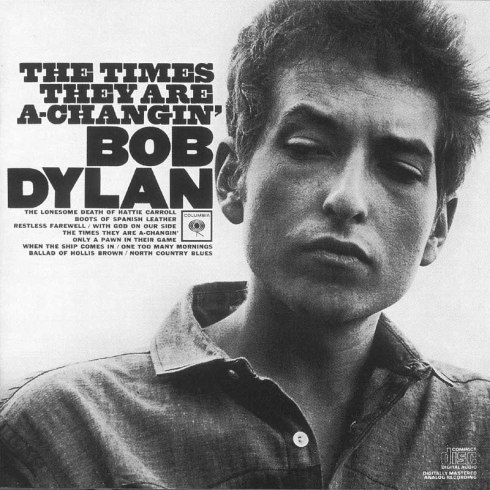
Bob Dylan’s “When The Ship Comes In” appeared on his third studio album, the politically charged The Times They Are A-Changin’, which Dylan released in 1964, buttressing his participation in the civil rights movement of the time. Yes, Dylan’s clear protest song on the album, the eponymous title track, may be more apropros for this post, but the third track on Side 2, “When the Ship Comes In” always held deeper significance for me, although the song was, according to Dylan’s biographer Clinton Heylin and musician Joan Baez, about how a hotel clerk refused Dylan admission to a hotel room because of his unkempt appearance. Dylan, who modeled the song after “Pirate Jenny”from Brecht and Weill’s Threepenny Opera (a big inspiration for The Doors as well), wrote about how he envisaged his enemies, “like Goliath” conquered.

For me, though, the song always held some added metaphorical significance, the “foes” representing the forces of jacobin injustice and antiquated policy.  The ship, who are pirates in Brecht’s lyric, are more benevolent conquerers in Dylan’s piece, as the fishes “laugh”, seagulls “smile”, and rocks “proudly stand” when “the ship comes in”. Heck, even the “sun” respects those on the ship, indicating that the most essential forces of nature shine upon this ship – a bit prescient considering our current situation. The ship comes in on a song, and then Dylan finishes the piece with two potent verses, which I will copy below:

Oh the foes will rise
With the sleep in their eyes
And they’ll jerk from their beds and think they’re dreamin’
But they’ll pinch themselves and squeal
And know that it’s for real
The hour that the ship comes in.

Then they’ll raise their hands
Sayin’ we’ll meet all your demands
But we’ll shout from the bow your days are numbered
And like Pharaoh’s tribe
They’ll be drownded in the tide
And like Goliath, they’ll be conquered.

The ship finds the foes sleeping and in a soporific stupor, and despite the foes’ attempted rapprochement, they are “drownded in the tide” and conquered. That they are sleeping is fascinating, as it was Socrates (through Plato) who evinced that society needs a gadfly to pester it when it falls into a somnific and obstinate state so society will wake up and notice that the times are changing. When I look out to the horizon I can hear the slightest melody as it lingers in the ocean waiting once again for the sands to “roll out a carpet of gold” because the “whole wide world is watchin'” and waiting for the hour that the ship comes in.
Music Under Sea Crafts Unique Sound Filled With Intrigue

25 Jan

Eric Frisch recently released his album entitled Music Under Sea and it definitely mixes the sound of alternative rock with indie pop. The soft sounds in the track Drift Away show a 50s and 60s pop music influence, comparable to The Hollies or The Mamas & The Papas. Frisch also cites bands like Real Estate and Best Coast as influencing his sound as well. Another quality that stands out amongst Music Under Sea is the production and how it sounds. Recorded in his New York Studio with two microphones, Frisch states that it sounds like the sound is underwater. In a world filled with so much autotuning and editing, the raw and minimal lo-fi sound of Music Under Sea draws listeners in even more. Overall, the songs, aesthetic, and name all fit together perfectly in Frisch’s musical puzzle.

King Ropes Mixes Its Influences Into Refined Sound

20 Jan

With the initial sounds of King Ropes sounding grunge rock, listeners can appreciate a light ambient dream pop sound to their aesthetic as well. The right amount of drumming and soothing lyrics makes listeners experience this album, Dirt to the fullest degree. Guitarist and front man Dave Hollier shows not only his wide range of lyrical writing, but also the naming of his tracks shows a reflective undertone as well. Hollier explains that Dirt mixes the “gritty stuff while balancing out the pretty sweet elements”. Carrying a vagabond and traveler’s vibe as well, the album began in Brooklyn, continued in Los Angeles, and ended in Montana. While Hollier carries the album, credit is also due to drummer Konrad Meissner, Dylan Trevelen, Ben Roth, and Adam Wolcott Smith. A mixing of all these talents and the influences Dirt was around from beginning to end makes King Ropes a band everyone should listen to.

For more listening:

https://kingropes.bandcamp.com/album/dirt

Top 10 Songs of 2016: The Lumineers (#4 and 5)

28 Dec


20151116_the_lumineers_shot_02_059_wide-de56fa91ebd422be6ddb197c109e2b6df79923ad.jpg

Track 2 and 3 on The Lumineers’ second LP Cleopatra are #5 and #4 on the Top 10 Songs of 2016 countdown. How convenient! Which song is #5 and#4? No matter. All I want to make sure I get across in this singular post is that The Lumineers are the big winners of this year in music and “Ophelia” and “Cleopatra” are song that demonstrate this adulation.

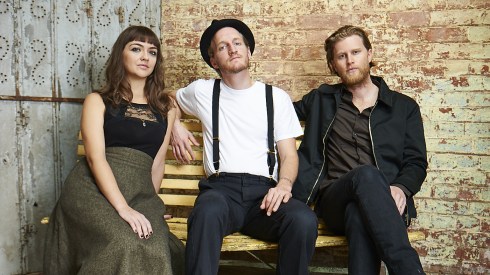
The Lumineers hit initial fame in 2012 with infectious folk/rock hit “Ho Hey” and since then have been staples on the folk/rock circuit. The band, which formed out of grief – percussionist Jeremiah Fraites’ brother died of a drug overdose at 19 years old and inspired Fraites and lead vocalist and best friend to Fraites’ brother Wesley Schultz to make music – spent a great deal of the time between albums touring. The Lumineers, who also feature cellist and vocalist Neyla Pekarek, demonstrate a more mature musical style on Cleopatra, and this is on display in both songs below.


Let’s talk about “Ophelia” first. The song starts with a somber piano riff that is akin to a country saloon (but perhaps I’m just watching too much “Westworld) and is carried by the lead vocal and subsequent harmonies. The strength of the song may lie in its brevity, pertinent considering the title character is from Shakespeare’s Hamlet and it was Shakespeare who advised that brevity is the soul of wit. The song bounces with the piano and finds its way snugly into your head, which “Cleopatra” does as well but in a different manner. “Cleopatra” is quicker, a swingy guitar instead of melancholic piano leading the rhythm. The consistent beat is toe-tapping and similarly infectious.

Both songs feature The Lumineers’ distinct sound – a clear folk/rock style with their unique brand of ditty-like catchiness and concise potency. The band has been quite omnipresent this year, and thus 2016 can be considered their year (in their genre of course). That said, they do not have the number one song, which we are nearing. #3 comes tomorrow.

Top 10 Songs of 2016 – #7: “Heathens” by twenty one pilots and #6: “I Wanna Prove to You” by The Lemon Twigs

27 Dec

#7: “Heathens” by Twenty One Pilots

21p-864x474.jpg

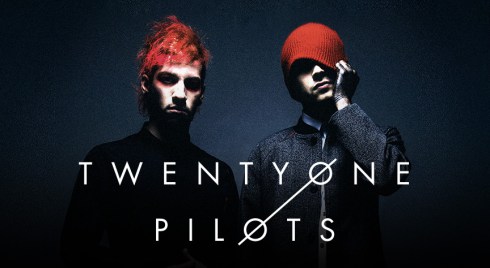
Enough cannot be said about the duo that has taken the music world by storm over the last few years. twenty one pilots, a 2-person musical juggernaut, has put the alternative in hip hop and the eclectic rock in rap rock. The band, which features multi-instrumentalist and vocalist Tyler Joseph and percussionist Josh Dun, is uniquely successful. I won’t lie and say this brand of rap rock has not been done before, but I will say that twenty one pilots does it better than anyone. The music is dexterous and infectious, a brilliant combination that allows the duo to bend musical barriers with each piece, avoiding trite foundations and instead revolutionizing their genre. That is impressive.

“Heathens,” which was featured on the Suicide Squad soundtrack, finds it way to #7 on our list because of its inventiveness. The song is a quintessential example of Twenty One Pilot’s aptitude for their burgeoning style; I do not hyperbolize when I call Joseph and Dun virtuosos. Some often fall into the trap of avoiding all music that even touches the supposed mainstream, but do not let twenty one pilot’s exponential rise to stardom deter you from this band; face it, sometimes the mainstream recognizes hip tunes.

The song is perhaps best analogized as a construction site. It begins with a melancholy piano riff set behind the double vocal – one Joseph and the other some juxtaposed electronic version of the lyric (alien-like). The drums pick up in the second play of the chorus and with it comes some growing keys, noticeable synth, and the creepy background noise of what seems like a distant frog ribbiting. The vocal continues with a few raps and then the song crescendoes into full synth and the ribbiting, a crunchy guitar, turned up to 11, albeit temporarily. Each part builds onto the song, and by the end there is an elegant, grungy structure.

#6: “I Wanna Prove To You” by The Lemon Twigs

packshot (1).jpg

Ok. I am sure that Michael and Brian D’Addario are tired of people telling them that they must have traveled by time machine to the present, taking and transforming the best parts of each decade from the 1960s in their music and style, but I just have to harp on this blatant topic for a moment. Holy Shmoly, The Lemon Twigs, the outlet for these uber-talented phenoms, is a band much like Kurt Vonnegut’s bug stuck in amber – time clearly is relative and can be experienced at one moment in 1966 with Pet Sounds, in another moment in 1979 with Breakfast in America, and in another moment in 2010 with Jukebox the Ghost, and in, well, now with The Lemon Twigs.

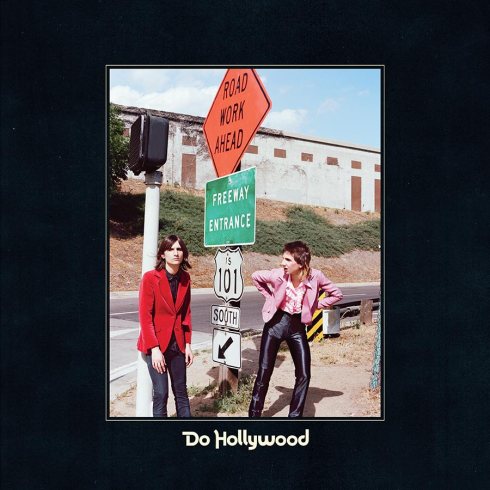
Let’s back up for a moment. The Lemon Twigs, as I stated, is the creation of two wunderkind brothers from my hometown of Long Island, NY. Spawned from a musical family, the brothers have been playing music all of their lives and released their official first album Do Hollywood earlier this year. On that album is our #6 song of the year, “I Wanna Prove to You,” a piece that features Danny Ayala and Megan Zeankowski, two musicians who play with the brothers when they are live. Just listen.

Immediately I think Queen, The Left Banke, Jethro Tull, Supertramp, Beach Boys – and then I stop. And you should too. It’s just so tempting, right? Whenever I hear a modern band, especially one made up of such young kids (let’s just say they were born in the heart of Bill Clinton’s presidency), play music tinged with old-school sentiment, I become giddy. However, just stop making comparisons and listen to the song. There is something special about it, is there not. The song is multifaceted and theatrical, featuring several stops and starts that are skillful. There is no simple structure like one finds with most young bands; instead, The Lemon Twigs embraces the complex and takes the listener on a journey of harmony and melody.