

Archive | Musical Interludes (Melodic thoughts from the Jester) RSS feed for this section

Behind the Christmas Music: The History of Rankin/Bass Animated Specials

11 Dec

download

You know the holiday season has begun in earnest when you turn on the TV and one of the classic tunes from Rudolph the Red-Nosed Reindeer or Frosty the Snowman starts up. Years after their first broadcast in the 1960’s, these adorable “Animagic” creations are etched in our collective pop culture memory. Here’s a little bit about the history behind the stop-motion music, and why these movies still command our hearts at Christmastime.

Rankin/Bass enjoyed mild success as a production company when it began in 1960, but they didn’t hit their stride until they put together the stop-motion classic Rudolph the Red-Nosed Reindeer in 1964. This film, an adaptation of the popular holiday song by Johnny Marks, includes folk singer Burl Ives as the voice of a narrating snowman who does his best to support poor Rudolph through his trying adolescence. With cheerful, playful songs like “We’re a Couple of Misfits” and “We Are Santa’s Elves,” Rudolph the Red-Nosed Reindeer became the longest-running Christmas special to ever air on television.

After Rudolph, Rankin/Bass enjoyed modest success with The Cricket on the Hearth, which is based on Charles Dickens’ Christmas book of the same name, and a Thanksgiving special titled Mouse on the Mayflower. But their next big success came in 1968 with The Little Drummer Boy, another adaptation of a popular Christmas carol. This special tells the story of a young boy who played his drum for the birth of Jesus when he had no other gift. The program’s lyrics were written by producer Jules Bass, and the Vienna Boys’ Choir sang the titular song. The Little Drummer Boy furthered the tradition of Christmas specials based around popular holiday songs.


\Frosty the Snowman came to TV audiences in 1969. This was the first use of traditional cel animation rather than stop-motion animation for a Rankin/Bass special, and for that it may have lost a bit of the Christmas cheer and sweetness. Singer and pianist Jimmy Durante voiced the narrator, who also sang the titular song. Frosty is also featured in many Rankin/Bass sequels, including 1976’s Frosty’s Winter Wonderland and the 1979 crossover with Rudolph, Rudolph and Frosty’s Christmas in July.


In 1970, Santa Claus Is Comin’ to Town featured the voice of actor and dancer Fred Astaire as the narrator. This film rolled out a larger soundtrack of original music numbers than previous features. Robie Lester, a Grammy-nominated vocalist, voices Miss Jessica, the schoolteacher in a town that has banned Christmas cheer, and renowned voice actor Paul Frees gives life to the miserly Burgermeister Meisterburger. The story is told through songs like “The First Toymakers to the King” and “One Foot in Front of the Other,” all sung by the talented voice cast.


After these hits, Rankin/Bass produced a steady stream of holiday classics, such as The Year Without a Santa Claus and several sequels to the previous Christmas favorites. While the company stopped production in 1987, they still actively worked on making sure audiences enjoyed their holiday specials for years to come.


Even after being aired for over 50 years, these Rankin/Bass specials remain a hallmark of the Christmas season for viewers young and old. Their upbeat music, important messages, and beautiful animation are sure to enchant audiences for years to come. To see some of these Rankin/Bass specials, tune into ABC (details here), Netflix (which has Rudolph), or DTV streaming (info here) to get your Christmas fix.


Plus, all of these specials have produced soundtracks to spread the Christmas cheer whenever it’s needed – check YouTube, where free versions abound. Happy Holidays!

Nobody Quite So True, Temporary Hero Delivers A Storytelling Anthem

8 Dec

temporary_hero_chet_offset_111470-2_resized_1400

Listening to the initial 1950s doo-wop opening track of the album “Chet”, Temporary Hero sweeps you away into another world. With folky undertones of sound of snapping fingers on tracks and ba da da’s, one can say the approach Temporary Hero takes in his music stands out. It should not surprise new listeners to the band, that he has already made two other albums previously, paying tribute to Bing Crosby and Frank Sinatra. Some tracks on the album such as Time After Time, and I Get Along Without You Very Well, sound a little bit more electronic inspired than the soul and borderline hip hop sounding  I’ve Never Been In Love Before. The sum of the lyrics on this album point to that of more than your typical musician, it goes more alongside the thought of finger tips tracing outlines of a writer’s innermost thoughts, building upon the layers of surreal dreams. Without a doubt, Temporary Hero makes listeners experience a variety of emotions from the lighthearted heart thump to a sense of melancholic daydream.

Power to the People: Bad Songs for a Good Cause

23 Nov

7320075_orig

By Beth Kelly

Whether we’re talking about famine in Africa or race relations in America, climate change and global warming or doing something funny for money through Red Nose Day, you can be sure celebrity musicians will be in on the fundraising spotlight. Charity songs are nothing new, and while the intentions seem admirable enough, the end result is often anything but. More often than not, ego and pride get in the way of truly inspiring the change in the sung-about situation. As evidence, we offer the following list of truly bad songs made for good causes.


Do They Know Its Christmas? – 1984 – This one was written by Bob Geldorf and Midge Uri and recorded by British and Irish supergroup Band Aid. It was intended to raise money for Ethiopian famine relief and succeeded in selling and raising millions. However, critics were quick to point the apparent ignorance of the writers in not realizing that the Ethiopian majority are in fact Orthodox Christians and would be very much aware of when Christmas occurs. It has also been condemned for use of condescending and stereotypical images of the African peoples in order to garner sympathy.


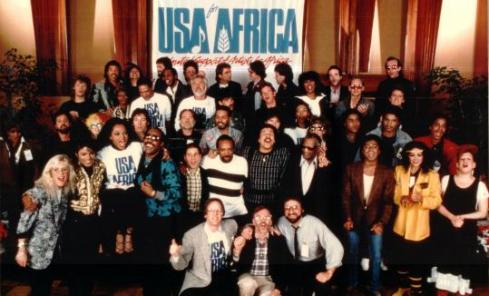
We are the World – 1985 – written mainly by Michael Jackson in collaboration with Lionel Richie and produced by Quincy Jones, this gem was performed by a multitude of famous musical talents in the supergroup USA for Africa. The album sold phenomenally well, raising millions of dollars for Ethiopian famine relief. However, critics of the effort point out that no one involved questioned the circumstances that led to famine nor any other means of preventing future famines.


Earth Song – 1996 – Another Michael Jackson production intended to inspire action, but this one is more likely to inspire aversion for the overly dramatic way in which it’s presented and an instinct to look away from the video in disgust than to bring about any true changes from a general audience. The intention certainly seems noble, that of protecting Earth’s resources, to include rain forests and endangered animal species, but the final effect is melodramatic and whiny.


Love Song to the Earth – 2015 – This Sean Paul collaboration is another attempt at heightening awareness of environmental issues. Released to coincide with the UN climate conference in December, the intention is to create realistic limits on the impact of climate change. Like others on this list, the cause is worthy – particularly in light of the fact that the United States is now the world’s number one oil and natural gas producer, as well as its greediest fossil fuel consumer. However, unfortunately once again the song leans more toward showing off celebrity talents and appearance of goodwill than actual genuine charity.


One Way or Another (Teenage Kicks) – 2014 – This One Direction charity song was done for the organization Comic Relief, a UK based organization that seeks to end poverty throughout the world. The song was intended to garner support for Red Nose Day, an activity that aims to raise money through funny acts. The song and related live performances were a financial success for the charity, but there was once again some exploitation of poorer areas of Africa in order to simultaneously garner sympathy for the cause and publicity for the band.


People are People – 2004 – This Ru Paul remake of a former Depeche Mode song targets racism and inequality, in much the same way as Michael Jackson has often taken on this issue through his music over the decades. However, in the hands of the flamboyant Ru Paul, this comes off more as a blasting of those who don’t agree with his views of certain lifestyles rather than an anthem for acceptance and for racial and cultural equality.


Never Had A Dream Come True – 2000 – although written with lyrics detailing the aftermath of a relationship breakup, this single by S Club 7 was nonetheless chosen as an official theme song for the organization BBC Children in Need, garnering the band much fame and fortune along the way. A reunion is currently in the works, with the band once again touting their dedication to the organization that put them in the spotlight to begin with.


There’s no doubt that music moves the masses, and when done for the right cause and with the right dedication, can be enormously effective. However, when the musician or groups involved are remembered more for their personas than their causes, the music falls flat.


Reborn with Katie Grace Helow

20 Nov

katie grace helow.jpg

A few months ago, I had to interview prospective interns for a music development agency. I was forced to ask that horribly bland question, “What’s your favorite type of music?” and though I won’t say I’m surprised, I did get one answer more than any other: “Anything but country.” This is clearly a product of the direction that mainstream country has gone, but let’s be fair to alt-country and the underground musicians that keep alive the real art of the genre: country is not dead. Florida native Katie Grace Helow has created a dark and compelling alt-country record with emotional depth, proving not all country is bad.

Past Lives is Katie Grace Helow’s sophomore album, following a more acoustic effort, titled On Time & the Ocean. Her debut was gorgeous in its own right, but her new record has turned up the intensity in every way. The instrumentation is somber, yet powerful, creating the perfect tone for Helow’s commanding voice. The album is comprised of ballads that are world weary, inspired by real life experiences that Helow only felt comfortable sharing in song. The opening track, “Savior or Sin“ features the widest range of Helow’s vocals on the record, which admittedly never reaches any notable highs, but rather has a remarkable depth.This is Helow’s signature sound, one that sets her apart from whatever stereotypical female country singer that you may be thinking of. Though the vocals in “Left For Dead,” the following track, are subtler, they are still just as powerful. This actually could be said about most tracks on the album; her voice is simply impressive.

Helow hasn’t completely abandoned her acoustic sound, with some simpler tracks in the middle of the album. No matter what the backing instrumentation is, whether it be a full band or her singular guitar, Helow still manages to capture your full attention. And I also really appreciate an artist that doesn’t compromise with “radio length” tracks, four minutes and under. A long track is the hallmark of a talented songwriter, and Helow has this in spades. “Scorpion” is an enduring odyssey at seven minutes long, but it has some of the most soothing guitar work on the record. The same can be said of “Live Wire,” though the backing vocals are what haunt in that track. Helow’s good friend Zach Lever contributes to the harmonies throughout the album, and complements the rest of the record perfectly.

When analyzed, Past Lives has all the elements of a talented indie artist. Let’s not make assumptions just because it’s got the word country in it. 

Past Lives is out now. Find more info on Katie Grace Helow on her website, Facebook, Twitter, and Soundcloud.

You Said, Tumbler Premieres With Beautiful Psychedelic Tunes

5 Nov

Sounds reminiscent of the English countryside, Tumbler manages to carry an interesting sound overall. Comparable to James Taylor and the Beatles, Tumbler demonstrates a lightness in their sound and lyrics as well. The beautiful mentioning of memories, nature, and the feelings of what it means to be home is also interwoven throughout You Said. The track, Bueller, stands out with lyrical metaphors “pouring in on porcelain skin”, and mentioning talk about “lover’s frown’s” and the power of sunlight. The overall sound of Tumbler is a mixture of subtle eagerness and reflective coolness. With their full sound carrying the almost magical lyrics, Tumbler provides more than just sound to one’s ears, they give listener’s an experience of painted memories.

For more listening: