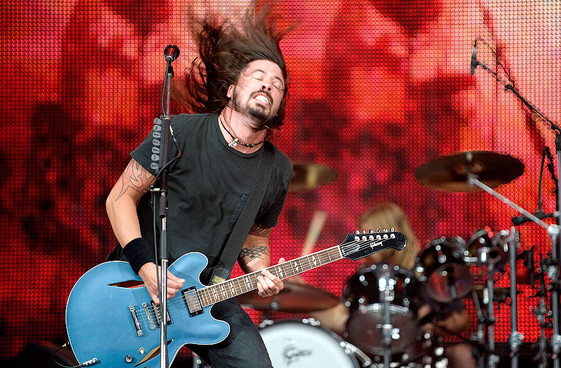
Napoleon takes on after Sufjan Stevens in his latest creative undertaking.
I recently discovered Napoleon, a musician who makes beats like a chilled, electro Ratatat. In other words, this is what the future sounded like in the ‘90s, with all the spacey clean synths. When looking further into Napoleon’s career and recent recordings I discovered that he had embarked upon a new and extensive project. Similar to the Sufjan Stevens’ 50 albums for 50 states hoax, Napoleon announced he would release one four-track EP each month this year. I think Sufjan’s major downfall was that he didn’t give himself a deadline, but Napoleon is cranking out the tunes like he means it. (I think Sufjan’s other downfall was that he never could have been able to write enough lyrics for the boring states like Kansas and Iowa.)
October is upon us, so the September EP, 9: A Golden Roadtrip, has just been released. Below, I’ve listed my favorite track from each month’s EP, starting with the most recent release, and will update for the future three EPs that are slated to be released in the next three months. Don’t give up now, Napoleon! You’ve come too far to stop now!
For more information on Napoleon, visit his website. (I included two tracks from February’s EP because somehow, in 28 days, Napoleon wrote five tracks, rather than his promised four. Madness.)
Please help me introduce new Music Court writer Zoë Brown! Zoë will cover new bands and other music-related topics. Here is a brief biography. For those who have already seen the blog this morning, you will notice that Zoë has already released her first post, which you can view by scrolling down on the main page.
Zoë is a south Florida native, but relocated to LA to follow her passion: being employed. Her love for indie music blossomed when she became a teenager. She attended the University of Miami, where she found her true calling: WVUM 90.5fm the Voice, UM’s very own college radio station. Named “Best College Station in the Nation” by mtvU, WVUM became her second home. Zoë spent more hours sifting through new music than studying for exams, and eventually served as Music Director, then General Manager, of the station. Her other hobbies include bowling, checking out new underground films, and watching Arrested Development re-runs.
Bowling, obscure films, and Arrested Development. She will fit right in!
IN OTHER NEWS:
You may have noticed the dearth of posts this summer. I apologize for that. I am embarking on a new stage in my occupation journey, and I am excited to report that I will begin as a 10th grade English teacher in a few days. I spent most of this summer preparing for the school year, and once the school year hits I will continue to be swarmed. I cannot wait. I’m fulfilling a dream. That being said, I will make sure to keep the Music Court updated with new music and engaging content. Other writers like Zoë will be a HUGE help. So, in celebration of school returning, here is a little Beach Boys for your Wednesday.
Happy Passover! I write this as my stomach prepares for a night of hedonistic gluttony. While one of the central tenets of Passover is the prohibition of leavened items, the food is still absolutely sumptuous. Passover is perhaps my favorite Jewish holiday. Like all holidays, it presents the opportunity to see family, but Passover has a unique component – the seder. The Passover seder encompasses the annual retelling of the Jews’ biblical exodus from Egyptian bondage, and, like most elements of any good religious story, there is a great deal of symbolism and purposeful repetition. I am partial to storytelling, and, for Jews, this is one of the most epic tales of survival, revenge, and escape. With the recent release of Noah, it will not be long before the tale of Moses is offered in IMAX 3D.
So, in celebration of the first night of Passover, I thought I’d be a bit creative with a post before I start noshing on matzoh and hard-boiled eggs. Perhaps the most crucial element of Passover is the seder plate, which features six items – variations of food, of course – that are all symbolic of an emotion felt by the enslaved Jews. I wonder what song might fit each item?
1.) Maror and Chazeret
Maror and Chazeret are bitter herbs. In the Ashkenazi tradition (Eastern European Jews), horseradish or lettuce is used. As one might guess, Maror and Chazeret are used to symbolize the bitterness and terror of slavery. Unfortunately, slavery persisted well beyond Egypt, and the work songs of African Americans in bondage demonstrated just how awful slavery was (and still is). “Trouble So Hard” by Vera Hall is an excellent example of a bluesy work song from the early 20th century, which represented the troubles of African Americans during slavery.
2.) Charoset
Charoset is a sweet mixture of nuts, apples, cinnamon, and red wine, which represents the mortar that Jews used to build houses in Egypt. While the sweetness seems slightly paradoxical, it tastes a whole lot better than mortar! What best represents the dirty work of construction? How about a little late Rolling Stones?
3.) Karpas
Karpas, traditionally parsley or celery, is dipped in salt water to represent the tears of Jewish slaves in Egypt. Get the sense this is not the most optimistic holiday in the world? Crying. I don’t need any more of an excuse to use Roy Orbison’s operatic voice for the purpose of this post! The end of this song is one of the greatest vocal climaxes in any song ever – just saying!
4.) Z’roa
Sacrifice. The Z’roa is a roasted lamb or goat shank bone that represents the traditional Pesach sacrifice. It is not eaten. It is just on the plate to represent the sacrifice. A song to represent animal sacrifice? Elton John – “Sacrifice”? No. This is tough, and the food is calling my name. We go with Evanescence.
5.) Beitzah
The Beitzah also represents sacrifice (the festival sacrifice), but it has come to also represent mourning, as eggs are traditionally the first things served to mourners after a funeral. Let’s go with the latter option for our song. Unfortunately, mourning is an inevitable human emotion and thus several songs are written about the subject. Eric Clapton just happens to have one of the most heart-wrenching of the bunch.
Gosh, perhaps we shouldn’t say HAPPY Passover. Well, in the story the Jews escaped slavery! Jews have a history of powerful persistence, and no matter the adversity (and it continues to exist), Jews continue to persevere, and this holiday is an example of this. Enjoy the festivities if you celebrate!
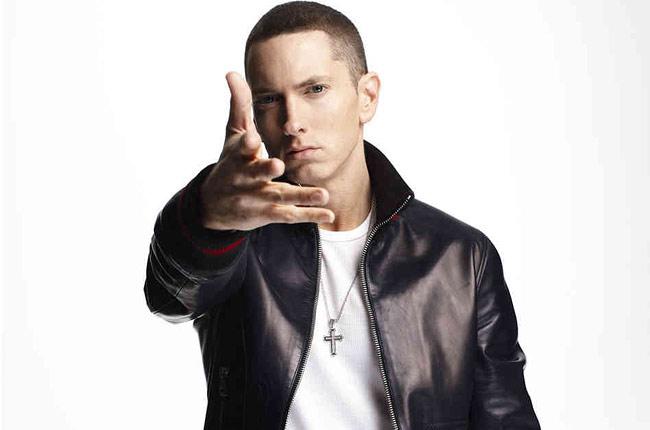
In this column, we continue looking at established artists by going through their career, album by album. Last time it was Foo Fighters. Today it’s the turn of one of the most widely sold and critically acclaimed artists of all time – Marshall Mathers, better known as Slim Shady or Eminem.
Note – due to space, I’m sticking to his ‘official’ studio albums and missing out his demo album, Infinity, as well as side projects like 8 Mile and Bad Meets Evil. If you’d rather read more about more obscure records next time, let me know in the comments.
Debate has raged for years over Eminem (real name Marshall Mathers): was he successful mainly because he was white? The answer’s yes – but not for the reason you think. His skin colour locked him out of the profitable gangsta rap market, and rapping about crime or drug dealing would have caused many listeners to accuse him of being inauthentic. He couldn’t even drop the ‘n word’ which most rappers throw around like sweets. Instead, he was forced to invent new ways to shock and outrage middle America. Enter Slim Shady.
The twisted alter ego of his stage name Eminem, Slim Shady said and did everything controversial you ever thought about. He baited politicians, outraged parents, made kids laugh and brought in a whole new demographic to rap music. Marshall Mathers also had another trick up his sleeve so not to alienate more hardcore listeners: his ferocious wordplay and rhyming. Casually dropping multi-syllable rhymes into the middle of lines were nothing to him. When his music first came out, they began describing him as one of the greatest white rappers ever. They quickly dropped the ‘white’.
The Slim Shady LP (1999) – The Blueprint
The story behind Eminem’s first album reads like a movie script: an unknown Detroit rapper gets his break by getting producer Dr Dre to hear his tape, and in a matter of months becomes a superstar. However if the Slim Shady LP is any genre, it’s a horror. While playing Slim Shady, Eminem wasn’t afraid to get cynical, provocative and very, very violent. It’s difficult to know what are scarier – the over-the-top gruesome fantasies, or vivid descriptions of being down and out. Nowhere is his dark persona better show than on Guilty Conscience, where Eminem and Dre trade verses as a devil and angel respectively. In the final verse, Em manages to provoke Dre – the former bad boy of rap – into losing his cool, effectively passing the torch onto his protégée.
The Marshall Mathers LP (2000) – The Masterpiece
This is without a doubt his darkest album. With a front cover of him huddled near the fireplace of his abandoned home, it dealt with subjects like his many family problems, drug use and his ‘corruption’ of teenage youth. He was accused of homophobia and misogyny, and did little to convince people otherwise. Even on his poppier tracks, he set out to offend as many celebrities as possible for the enjoyment of his listeners. However, he proved impossible to pin down. Whenever critics were prepare to write him off after his harrowing song about murdering his wife, he would release something like Stan, a touching and tragic tale of a deranged fan. His incredible wordplay and rhyming abilities were almost a footnote after his song topics. Nevertheless, it remains the best album of his career.
The Eminem Show (2002) – The Political One
After the madness of his last album, Eminem decided he had some growing up to do. That’s not to say it had no sense of humour – far from it – but Eminem was keener than ever to satirise the world at large. He was always a joker, and like Batman’s nemesis, he was skilled at holding up a mirror to society and saying: “You think I’m crazy? You made me this way!” There were still zany moments like Without Me, but the tone on a whole was more mature. He even confronted his troubled relationship with his mother and how rap music can save troubled kids. For most fans, it’s his most personal and powerful album, even if a few weaker songs kept it off the top spot.
Encore (2004) – The Disappointment
Perhaps based on expectations, Encore received rave reviews as usual when it was released, yet listening to it today, it’s hard not to wonder what went wrong. The highlights were his reflective songs – Like Toy Soldiers and Mockingbird – and his anti-Bush rant also deserves a few listens, but everything else verges on terrible. His lead singles still had a juvenile sense of humour but no meaning or purpose. His usually dexterous, quick-witting flow sounded stumbling and amateurish. Most of this was down to his increasing pill addiction which meant he was barely getting two hours sleep a night. If it had been a true encore, it would have been a terrible way to end his career.
Relapse (2009) – The Pretend Comeback
Eminem may have never been subtle, but it was a little on-the-nose to call a record Relapse while as in rehab. Thematically, he resurrected his Slim Shady character and tried to imitate the darker content that had launched his career. However, most songs sounded insincere compared to the passion of his earlier work. Many fans also complained about his constant use of accents. Eminem would later say the last two albums didn’t count as ‘Encore I was on drugs, Relapse I was flushing ‘em out.’ Either way, a slight improvement was good enough for fans after a long break from music.
Recovery (2010) – The Real Comeback
His true resurrection came in 2010 when, finally clean, he set out to work out what a ‘grown up’ Eminem album would sound like. The violent skits and songs poking fun at pop culture were gone – in their place were inspirational songs with positive messages. Both Not Afraid and Won’t Back Down were well received and showed how Eminem had changed his outlook. The lyrics were much tighter, although his duet with Rhianna showed he could still put himself in a dark place when needed. It was more earnest than his earlier work, and he still had the technical skills and wordplay to deliver his message well.
The Marshall Mathers LP 2 (2013) – The Legacy
Sequels usually suggest creative bankruptcy. Nevertheless, with some of biggest producers in music (including Dr Dre and Rick Rubin) behind him, Eminem could hardly fail. He managed to create an organic-feeling continuation of his most acclaimed song, Stan. He also produced some of the fastest, most intricate rapping of his career in Rap God. At one point, he was rapping an astonishing 10 syllables per second – not good for casual listeners, but music to the ears of his core audience. After seven albums and 16 years, he had reached the point where he could legitimately call himself a Rap God.
This is going to be a new regular feature I’ll be trying out, looking at veteran bands through their albums. Any feedback – positive or negative – would be appreciated! I’ll leave you to your reading now.
Q. What was the last thing the drummer said before he got fired?
A. “Hey guys, let’s try these songs I wrote!”
Drummers have a reputation as being the least appreciated members of a band. Their job isn’t as glamorous as the singer or as awe inspiring as the guitarist. Even their own fans often don’t know their names. They’re the butt of countless jokes – for example, John Lennon was once asked whether Ringo was the best drummer in the world. John replied he wasn’t even the best drummer in the Beatles.
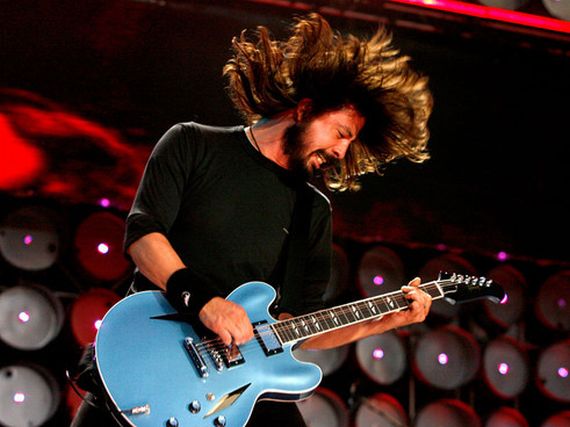
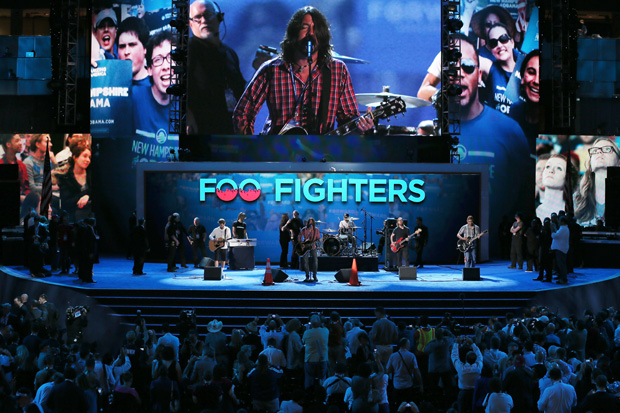
However, if there’s one drummer who can be said to have made it big, it’s Dave Grohl. He went from playing in Kurt Cobain’s shadow to the driving force of one of the biggest bands in the world, the Foo Fighters. For nearly 20 years now, they’ve represented alternative rock on the world stage. Their winning combination of quiet, melodic verses followed by thrashing choruses owes a fair bit to Nirvana, but they’ve matured over the years and showed they can deliver a range of different styles.
Foo Fighters (1995) – The Solo One
Dave Grohl had spent his time in Nirvana (working on their classic Nevermind and In Utero albums) in awe of Kurt Cobain. He had recorded some demos in his own time, but after the singer’s tragic death, he decided to take the plunge and record an entire album. Foo Fighters was basically a one-man band at this point; Grohl did all vocals, guitar, bass and drums himself. Although it was only meant to be an experiment, it quickly attracted interest. Songs like ‘This is a Call’ showed Grohl already had a good idea what the band would be about. It was cleaner than Nirvana’s grunge, and more willing to embrace rousing, upbeat choruses. The only part that marks it out as from their early career is the nonsense lyrics. With this success under his belt, Grohl quickly assembled a band to play live and set about recording a follow-up.
The Colour and the Shape (1997) – The One Everyone’s Heard
The Colour and the Shape was almost an embarrassment of riches as far as singles went. It includes Monkey Wrench, My Hero and Everlong, all of which went on to become instantly-recognisable rock anthems. It resisted the temptation to mine the profitable garage-rock genre and created hard yet melodic rock. The lyrics were more focused too, based around Grohl’s recent divorce. “And I wonder, when I sing along with you, if anything will ever be this real forever; if anything could ever be this good again,” he sings on Everlong, longing for something even as it slips away. It wasn’t just the singles that were hits though; delve deeper into it and songs like February Stars and Walking after You show the band’s more tender side. It’s truly one of the most influential albums in modern rock, and one that you’ll never be afraid to stick in the CD player at parties.
There Is Nothing Left to Lose (1999) – The One That’s More of the Same
For most albums, ‘more of the same’ would be an insult, but effectively making The Colour and the Shape Part II is no mean feat. After leaving their label, the band retired to Grohl’s house in Virginia and simply recorded whenever they felt like it. Without studio pressure, they were free to strip songs down even more, giving it a looser, poppier feel.The track list contains gems like Learn to Fly and Generator. It was also their most consistent effort, and the first one that sounds like a cohesive album.
One by One – (2002) – The One that Nearly Wasn’t
Soon after finishing the touring, the band went back to the studio. They nearly finished an album but discarded it instead, and went on side-projects. (Grohl toured with Queens of the Stone Age, which is probably the coolest thing anyone’s ever done to get away from work.) They returned reinvigorated and recorded their darkest, yet most polished album yet. Grohl was still improving as a song writer, and the constantly shifting roster band members led to a constant infusion of new ideas. Strangely, the album is best known for Times Like These, a wistful, emotionally honest pop song with killer riffs, a big departure from the rest of the album.
In Your Honour (2005) – The Schizophrenic One
What do you do when you run out of ways to reconcile two conflicting parts of something? The answer, if you’re Dave Grohl, is to separate them and push them both to the extreme. Like oil and water, In Your Honour separated the band’s garage rock side and its softer acoustic one onto different sides of a double album. The trouble was their music was made by contrasting the two, keeping the listener off-guard. (Just listen to Everlong for a perfect example.) The first disc managed to conjure up a few good melodies and channel their rage, but the second was extremely one-dimensional. If you don’t like Grohl crooning over an acoustic guitar, you might as well toss it away. The best song, Resolve, manages to marry both sides well. So full marks for an interesting concept, but being obliged to record ‘hard’ or ‘soft’ songs to fill out the track list doesn’t lead to the most inspired music.
Echoes, Silence, Patience & Grace (2007) – The One That Started Well…
After the last album’s experimental structure, the Foo Fighters wisely decided to reunite both halves of their musical repertoire, but something was still missing. The first couple of songs are as lively as ever, particularly the slow build up to screaming on both the Pretender and Let it Die. However, after the halfway mark (or track five if you want to be picky), the usual precision and passion takes a nose dive. It’s hard to pinpoint what’s missing as none of the songs besides a sense of enjoying themselves. The only actually bad song is Home, a song so cold and detatched, the lyrics could have been written by a computer.It won a Grammy just because it was the Foo Fighters, but you’ll be hard pressed to listen to it all the way through.
Wasting Light (2011) – The Comeback One
With the longest gap yet between, many Foo Fighters fans began questioning themselves. Is this the end? Do we even want them to continue? Is Nirvana relevant anymore? However, the only question the band asked themselves was Do we care what anyone thinks? Concluding the answer was no, they recruited producer Butch Vig of Nevermind fame and Nirvana’s old guitarist, Krist Novoselic, then proceeded to not give a fuck and have as much fun as they could in the studio. It was rawer, heavier, and wilder than anything they’d done before. It was deliberately recorded with older equipment in garages and computer-free studios, then tested on crackly speakers. Some fans complained they had pushed the heavy sound too far; stadium audiences disagree as soon as Walk or Rope came on.
TBC (2014) – The Next One
All we know about the next album so far is that they are well into recording it and that Grohl has said it’s different to anything the band’s done before. Butch Vig is rumoured to be back, suggesting it will be another heavy album. By this stage, the band can’t have much left to prove. Grohl has come from being ‘the second drummer in Nirvana’ to one of the most respected names in rock with a world-class band at his back. Whatever direction they choose, it’ll be because they want to make the best album possible rather than chasing sales, and that’s an exciting position to be in.