Archive | Musical Interludes (Melodic thoughts from the Jester) RSS feed for this section

I’m Not Joking – Kongos To Storm U.S. Charts with Release

11 Jul

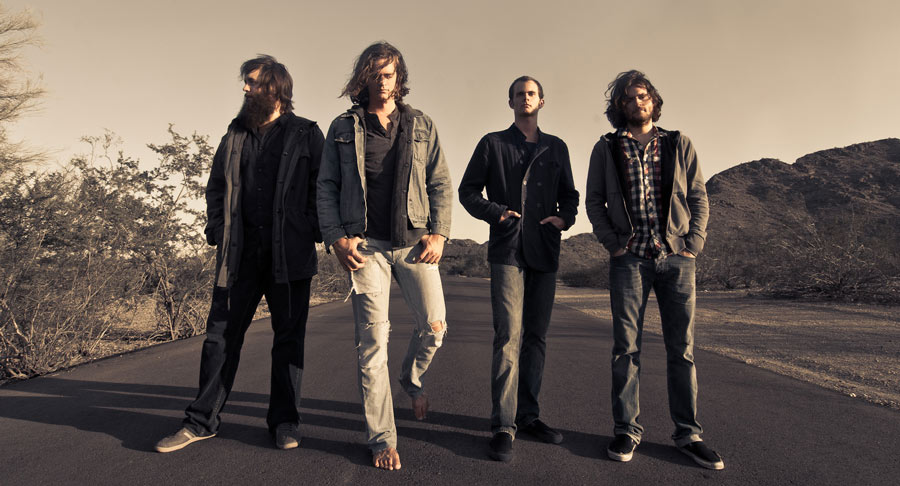
Kongos – In classic shoeless Beatles fashion

Let this be a propitious post, because I am about to make a claim. It is difficult to predict what will stick with listeners and what will not. Today, though, I present to you a band that with their new release Lunatic on July 24 will break the uncertainty of success like it is weak glass. Listen up, because Kongos may be finding a cozy spot on the Fall charts.

While Kongos is based in Arizona, the band, which is made up of four brothers, grew up in London and South Africa. If you recognize the last name, you are not going crazy. The father of the four musicians is South African rocker John Kongos whose 1971 hit single “He’s Gonna Step on You Again” had the whole world moving to the drum beat.

There it is. Kongos’ boys (Johnny, Jesse, Dylan and Danny) grew up in music because of their father and are now proving that the apple truly doesn’t fall far from the tree. The brothers have established their own rock act that blends African beats, Eastern European influences, and pure unbridled driving rock. The eye-opening combination is so refreshingly different it is difficult not to get excited about the band of brothers. For a lover of music, it is so intriguing to come across an act that is creating music dissimilar to anything currently being released…and, most importantly, is doing it exceptionally well.

While the band is currently based in the dry heat of Arizona, they have been mainly heralded in their former hot home of South Africa, where their debut release in 2007 found a single in the top 10 of the Tuks FM Top 30, a South African rock chart. That is not to say that the band lacked success in Arizona. It was named the Best Rock Band of Phoenix by the Phoenix New Times a few years back. After partnering with their father to form Tokoloshe Records in 2010, the band started releasing singles that appear on Lunatic. Their first single “I’m Only Joking” hit number one on all three Tuks charts, and several songs from the rest of the album started receiving tremendous airplay in South Africa. It received such play that when the band toured South Africa they encountered sold out venues wherever they went. Like I said above, July 24 is the US/World release.

BUT…The Music Court has some previews from the new album. Be ahead of the swarm with this sneak peek, and, in true hipster fashion, know about Kongos before all those tuneless regular Joes. 🙂

“I’m Only Joking” is the first major single from the new album, and it will surely be the first to stick to the charts like honey. Take a listen while we go through all the positives of this hard-hitting, lustful, manly, burly, genre-splicing, rocker. Enough adjectives for you? The rising drum beat in the introduction gives off an immediate Muse feel (think “Uprising”), but instead of moving into the realm of Muse’s symphonic/alternative rock, Kongos enters into sinister darkness. While Muse plays to the arena, Kongos plays to the underground. The verse is carried by a story-telling voice placed on top of an accordion. It is almost burlesque in a sense, so odd and different that the listener is left in a theater of red and black wondering what they are about to travel into. The chorus takes the verse up a level, while the constant beat remains. It is certainly infectious and will stay in your head. At the end of the chorus (around 1:00), the instruments drop and the vocals echo and then follow a baleful, even pernicious, note progression that can best be described as unreal. I have become quite obsessed with the drum beat and the almost disjointed instrumentation at around 2:10. By the way, they are chanting “Wadu-aidu-wadaidu,” in a cult-like fashion, and I have no clue what it means (I thought originally it was why do I do what I do). The full chorus at the end boils the song over. It is an impressive piece and will hit the charts like a bat out of hell.  
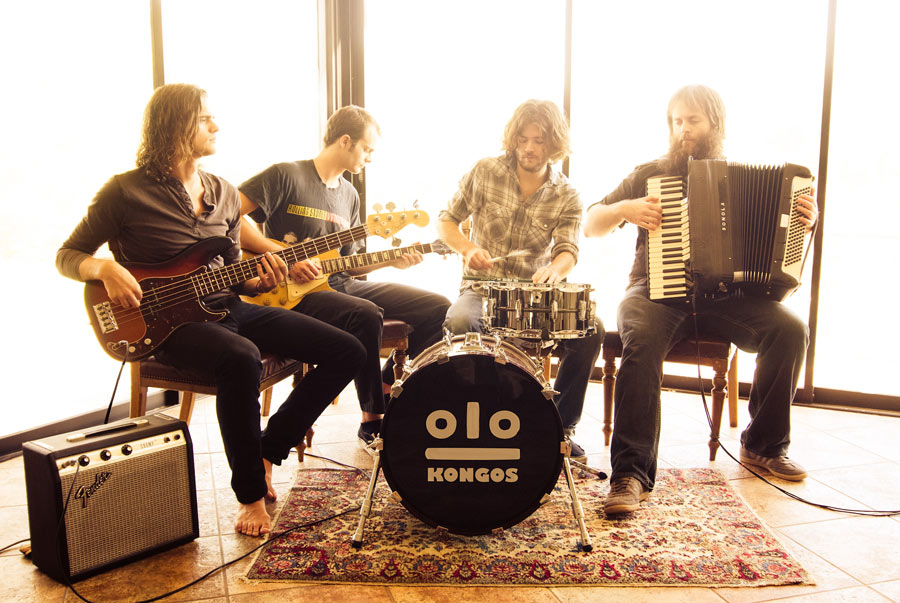
Kongos

Next up for you I have a song entitled “Come With Me Now,” which does an excellent job accentuating the accordion more (it sets the beat). Take a listen.

The beat itself certainly hints at African influences. The song then shifts into a head-bopping rock hit with a catchy repetition of the first line, yelled melodiously by the chorus of brothers. I think one of the great elements of this song is the clear connection that the band has. You can almost tell they are brothers. All instruments (including voices) are coordinated in an almost innate sense. Not to mention, this song features a portion at 1:30 that completely transforms the piece. It is Keane-like, very British piano rock. The song then falls back into the rhythm and even adds a Western-like guitar riff before the Balkan accordion comes back. The amount of influences this band pours into their songs is remarkable.

The last track I want to expose to you is slower and more intimate. “This Time I Won’t Forget” is a mid-album slow-down piece that displays the curiosity and orchestral diversity of the band. The rhythm is worldly in its spaciousness. The song is open in a Fleet Foxes sort of way, but it is a bit louder and more diverse.

Do you ever have that initial moment with an album where you realize you like all of the songs? Well, Kongos has given that to me. Like what you hear? Check out the bands website and connect with them on Facebook and Twitter.
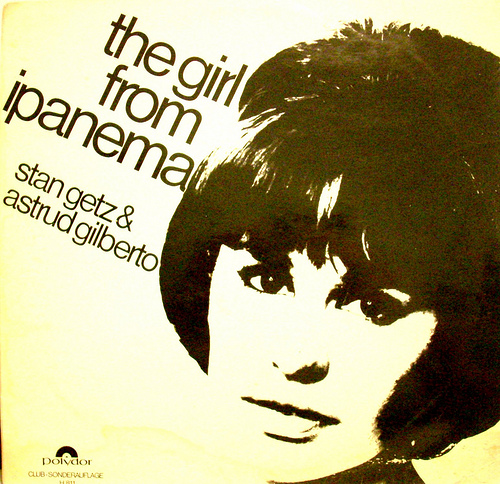
50 Years Ago The Girl from Ipanema Went Walking

10 Jul

I read a great article earlier today from the Wall Street Journal profiling the odd journey of the mega Brazilian bossa nova hit “Garota de Ipanema.” Read it here. The song celebrates its 50th anniversary this year, even though the tremendously popular English version (the one everyone knows) was actually released in 1964. It has taken an almost mythical path garnering a boat-load of covers and an eternal spot atop the list of elevator music. The story of the “Girl from Ipanema” is almost as classic as the song itself.

There is a girl from Ipanema. Well, there are several girls from Ipanema, a Brazilian neighborhood south of Rio de Janeiro. But there was a chica who inspired the writers of this ode to the pretty girl unaware of the frenzy her appearance causes. Her name is Helô Pinheiro and at the time of the song’s creation she was a 17-year-old girl living on Montenegro Street. In the winter of 1962, composer Antônio Carlos Jobim and poet Vinícius de Moraes watched the tall, beautiful girl pass by the bar and were struck. As the article suggests, the two were stuck on a number for a musical they were writing. Helô acted as their muse.

The story doesn’t end there. The song was recorded in 1962 by Pery Ribeiro and, after hearing it, U.S. music publisher Lou Levy requested an English version of the song. American lyricist Norman Gimbel (wrote the lyrics of “Killing me Softly” and wrote “Sway” which is based on “Quien Sera”) was tasked with completing the American version. The question of who would sing it arose pretty quickly. The answer? Well, the only one of the Brazilians who could speak English well. Astrud Gilberto, guitarist João Gilberto’s wife. A major reason why the song became popular, in my opinion, is because of the innocent, soft, and accented singing of Gilberto, who had never sung professionally prior to the song’s release. The nervous delivery and subtle mispronunciation of some words did not detract from the song, they benefitted it.

So let’s all celebrate one of the most known bossa nova hits ever.

Third Stop – Berlin and Potsdam – A Photo Journal

5 Jul

Dig in

When we arrived in Berlin for our bittersweet four-day European excursion finale, Rebecca and I had one initial coordinated thought. “Wow, that was easy.” Our first impression of the capital of Germany was formed in Tegel Airport after our mini-flight from Paris touched down. I call it a mini-flight because we spent only a little more than an hour in the plane. That’s how I like my flights. Take off, peanuts and diet coke, land. After we walked from the airplane to the luggage retrieval area, relieved at the sight of mid-afternoon clear, rainless skies, we were shocked to see our two bags pop out of the tenebrous cavern that is the luggage carousel first. That’s right, the first two bags! “German efficiency,” I declared like an idiotic American. We then rolled our bags to the waiting area where we were met by Rebecca’s cousin’s husband. We stayed with them during our sojourn.

So here we are. We have explored the jubilee of London, the delectable awe of Paris, and now Berlin. When Rebecca and I were planning this trip, I was most unsure of Berlin. I misjudged the city, the people, the food, the atmosphere…just about the everything. I misjudged this all because I didn’t know what to expect. On our third night in the city, we were dinner guests at Rebecca’s cousin’s apartment (we stayed next to their apartment at her cousin’s art studio – packed with poetry and classic music, much to my delight). Her cousin’s husband is an excellent chef (used to do it for a living) and he made this extraordinary meal that included juicy white asparagus (the seasonal vegetable at the time). I also had around 10 glasses of sweet wine…okay Matt, stick to the point. At the dinner was a New Yorker who had just recently moved to Berlin and we got to discussing American tourism, because, as Americans, we are required to discuss the land of the free in other countries. To be fair, this was the only mention of America during our stay in Berlin. And, if it wasn’t for some rude, misinformed, bloviating fools on our English-speaking tour of Versailles, we would have avoided any of that junk on our trip…Rebecca and I were forced to ignore those individuals. The new Berlin resident mentioned that not many American tourists come to Berlin, besides from those that just want to get in on the underground party scene.

But, why? Why do American tourists frequent Paris, London, Italy, Spain, and even Prague (the study abroad paradise), but not Berlin? In my opinion, it is a mixture of ignorance and generalities. I mentioned above that Berlin was bittersweet for Rebecca and I. We are Jewish. Berlin’s recent history is noxious. Perhaps one of the worst incidences of Western genocide and mind-blowing conformity occurred on the streets we walked. And then, after losing the war, the city was split in half, and a wall was constructed by Soviet-controlled East Germany to entrap their civilians. You all know the history. The history before the wall and the two monumental wars is widely unknown, though. After the 30-years-war in the 17th century, the Great Elector, Frederick William, promoted religious tolerance and helped populate the city of Berlin. The city became a bustling center of immigrants and tolerance. For almost a 150 years, the kingdom of Prussia reigned through the industrial revolution and the creation of several palaces eventually ending in the unification of Germany in 1871.

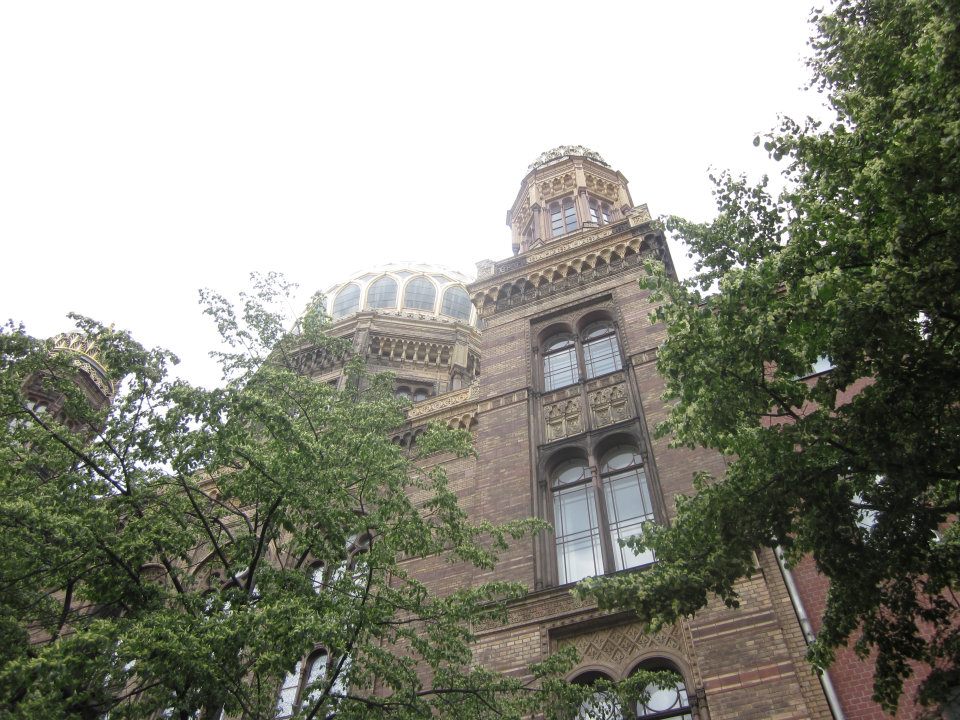
That’s the end of the history lesson. What I’m trying to say is that there is much to see in Berlin, and, for some time, it was one of the few places where Jews found safe haven. And then the unthinkable happened. The city may never be able to shake the scars. And, as people who had relatives affected by the Holocaust, it was a little difficult walking through the city, especially in the old Jewish quarter with the newly repaired 19th century New Synagogue. All you have to do is look down. Thanks to a creative project of which Rebecca’s cousin told us about, there are gold markings on the ground outside apartments and homes where Jews were deported during World War II. The names of where they were deported are familiar. Auschwitz, Treblinka, Buchenwald, every mention like a dagger. Was it difficult walking the streets of the city and not getting a little emotional? Yes. But even with that all in mind, I felt less like a tourist in Berlin than in London and Paris, and as Rebecca and I shared seats with Germans on the S-Bahn and U-Bahn, I felt comfortable and accepted.

The Neue Synagogue – Built 1859–1866 as the main synagogue of the Berlin Jewish community

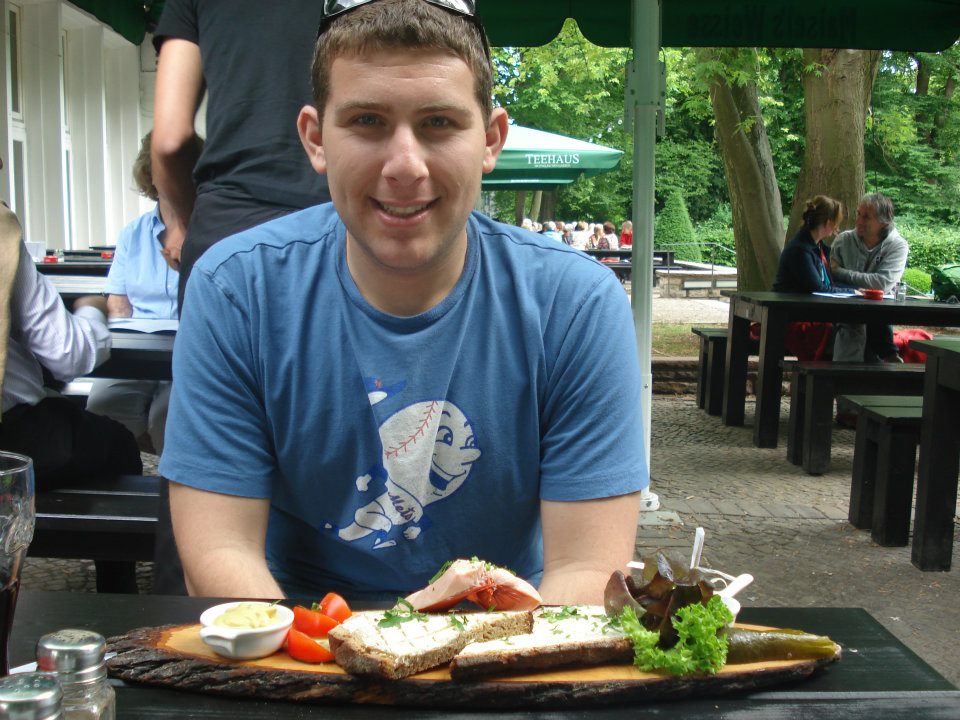
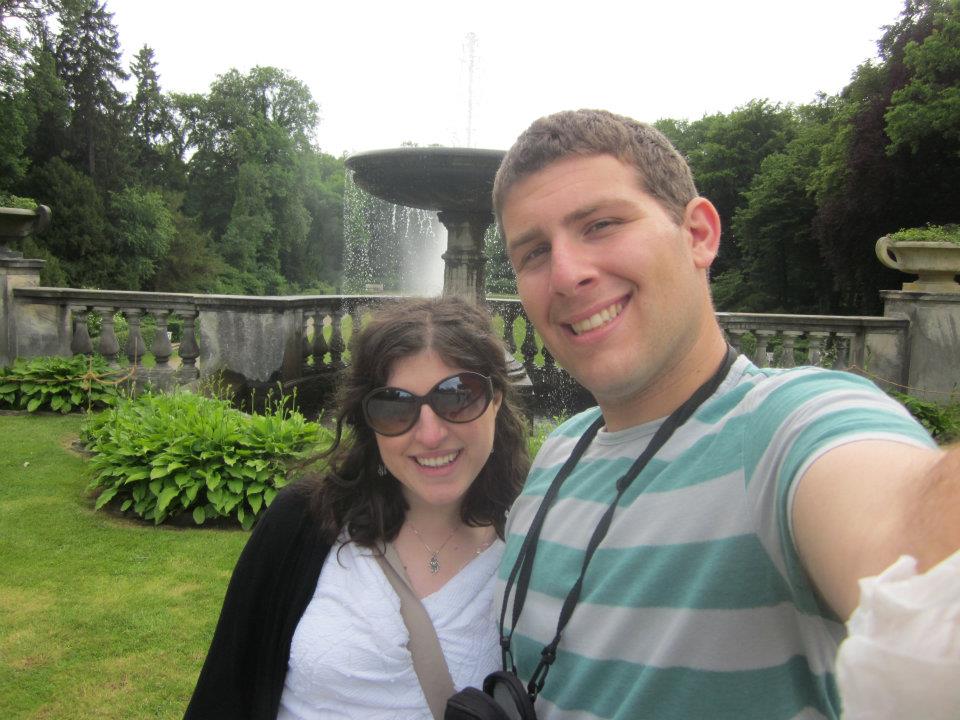
Rebecca’s cousin quickly pointed out something about Berlin when we first arrived. The city is very green. It is full of sprouting forests, good for relaxing walks and picnics, and city residents take advantage of the greenery by tucking themselves away in biergartens, where I sampled the local Weizenbier and a soft bretzel (I bet you can guess what that is) on our first night. The largest urban garden in Berlin is the Tiergarten, which at 520 acres is the second largest urban park in Germany (it’s dwarfed by Munich’s 1,030-acre Englischer Garten). We explored the Tiergarten on our second day in Berlin and before taking the U-Bahn to the old Jewish quarter, we had our first traditional German meal at the Teehaus in the park. That is me at the beginning of this piece smirking at my pork sausage meal. It was scrumptious. The bread was thick and hearty and the creamy mustard (that I continued to have in Berlin) was the best mustard I have ever had.

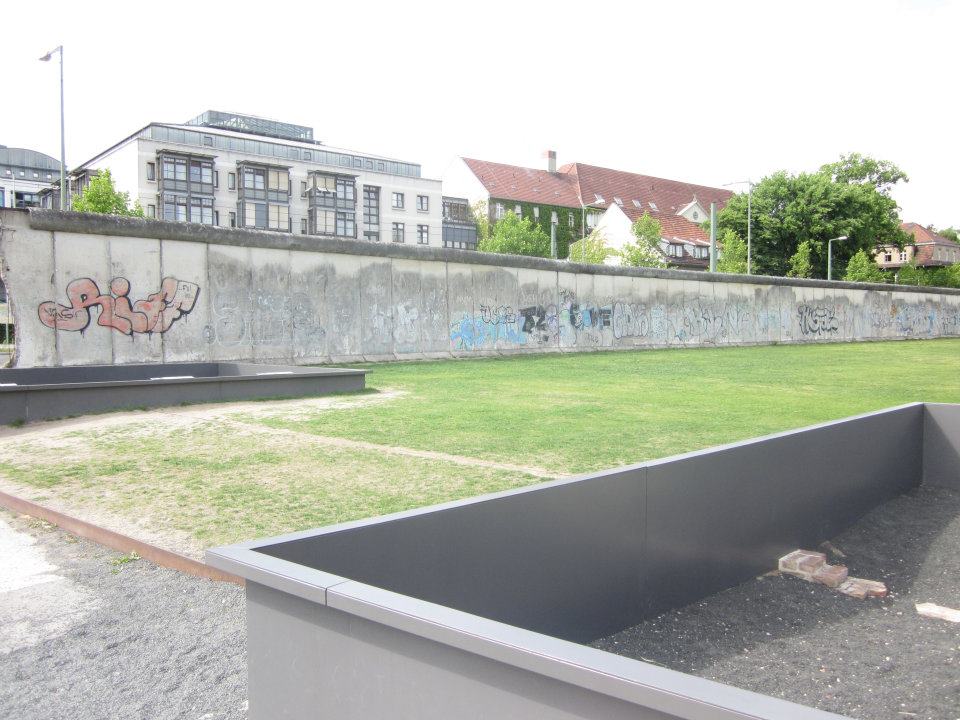
The Berlin Documentation Center – at Bernauer Strasse 111

Later in the day we went north to the Berlin Documentation Center which, as you see, still has a large piece of the wall standing. It also has a thought-provoking, somber memorial for individuals who lost their lives attempted to escape East Berlin. It’s almost impossible to imagine an entire city split in half, and I must admit even through my best attempts to envision the scene I could not.

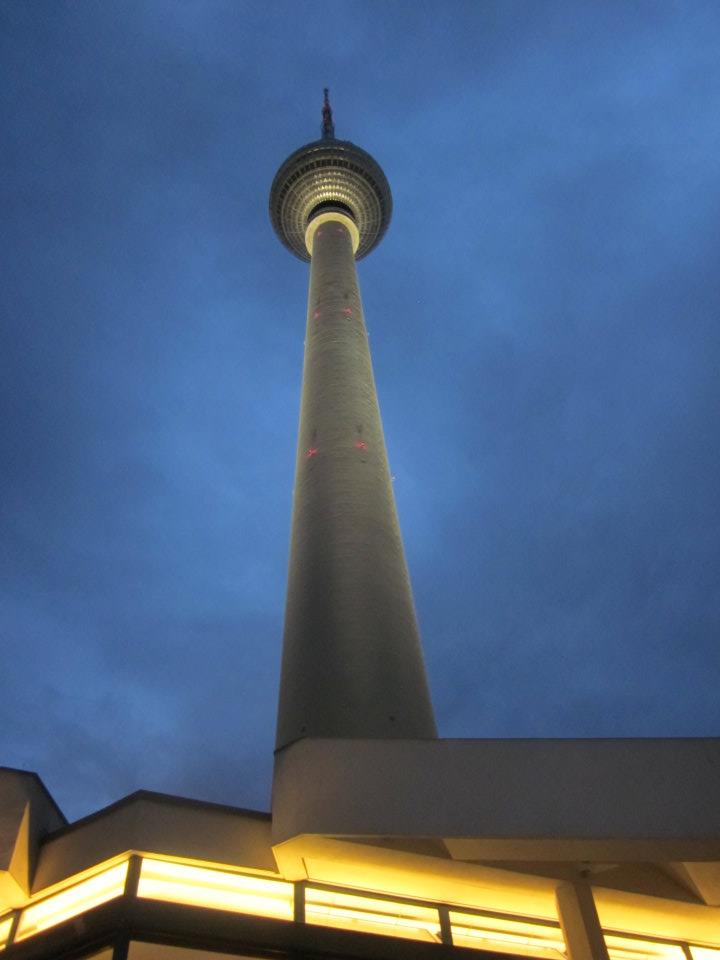
The Fernsehturm, or TV Tower, was built between 1965 and 1969. It is the tallest structure in Germany and was built in East Germany.

This is one of my favorite images from our trip. Why? I think it looks like an alien spaceship is about to take off from the top of the building. I can assure you, though, the top does not feature spaceship controls, unless they are hidden in the kitchen. That’s right, the top of the TV Tower is a restaurant, and because of our wonderful hosts, Rebecca and I sampled the food high up in the sky. The restaurant rotates slowly (no, it is not the drinks) and gives diners a magical view of the city of Berlin at night.

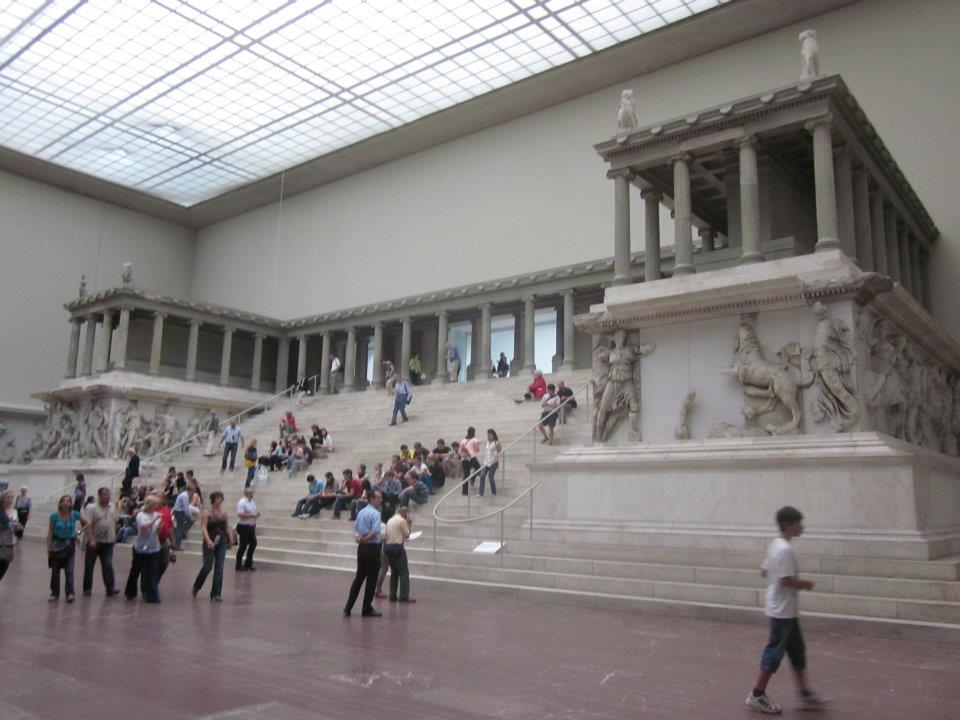
The Pergamon Altar in Berlin’s Pergamon Museum

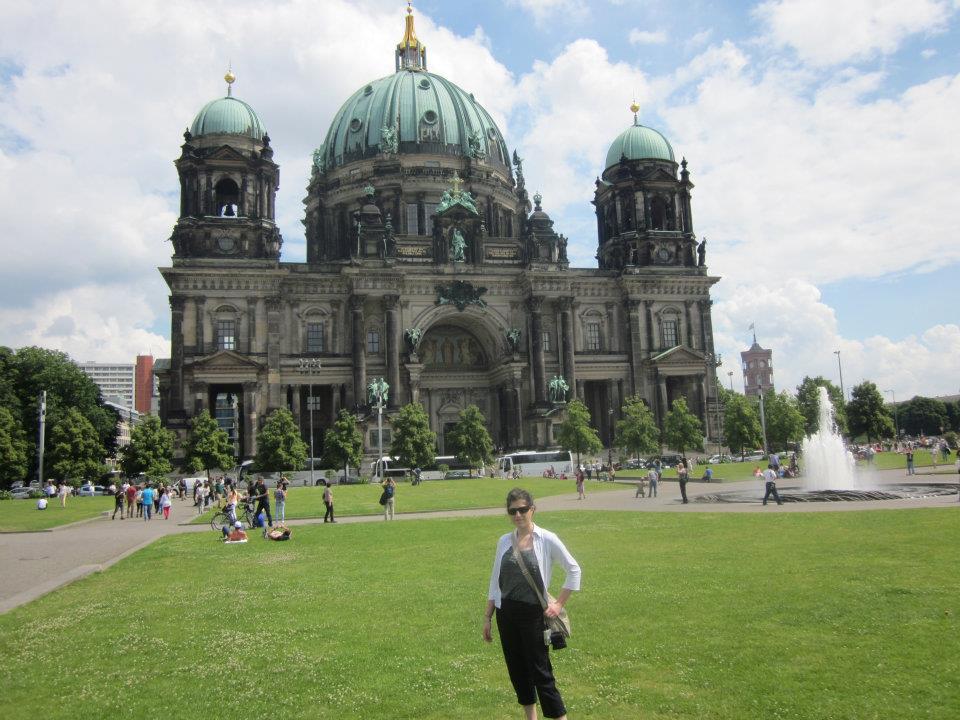
After visiting around 100 museums (give or take a few) in London and Paris, we only visited three in Berlin. Rebecca and I are museum nerds. We love institutes of independent learning. We love walking slowly through exhibits and enjoying what they have to offer. We had our fill on this trip. The other two museums we visited were the Neue Synagogue museum and the Jewish Museum (where we spent around three or four hours…seriously!) What you are seeing above is a shot of the restored Pergamon Altar, a monumental structure built in the first half of the 2nd century BCE by King Eumenes II in the Greek city of Pergamon (present-day Turkey). It is a spectacular structure to observe and is quite fascinating. The prime real estate for museums in Berlin is Museum Island, the literal northern half of an island on the river Spree that features five museums (Pergamon, Altes, Neues, Alte Nationalgalerie, and Bode). Across from the Altes Museum is the Berlin Cathedral which dwarfs Rebecca in this photo.

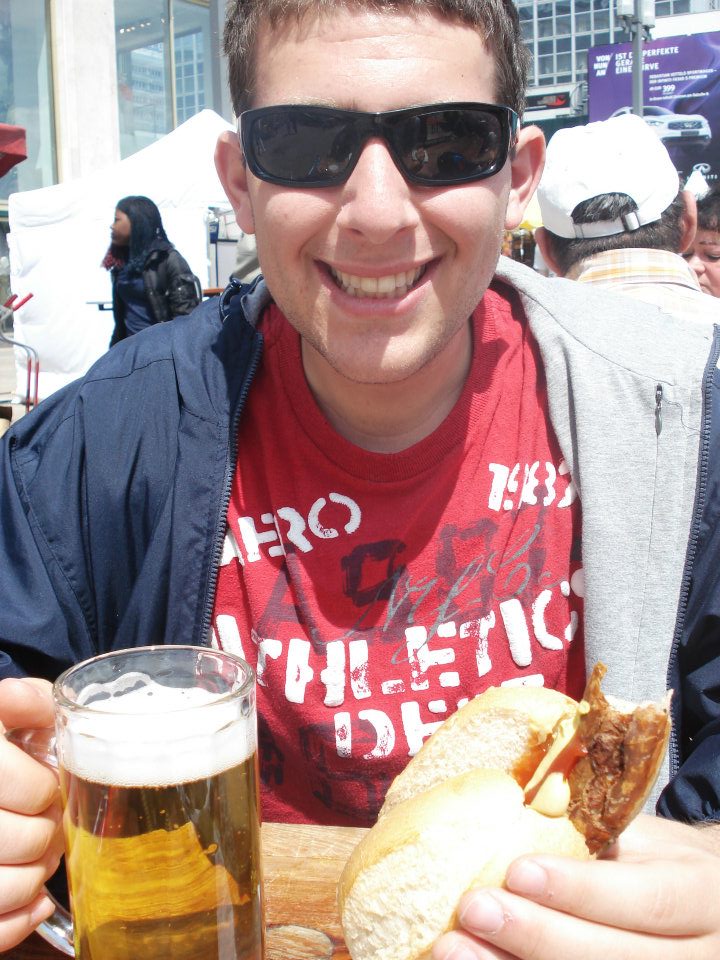
Sometimes, after doing a lot of travelling and exploring, you need to take a break. Rebecca and I rested our sore legs at a diverse market in Alexanderplatz which is to the east of the Brandenburg Gate and the Tiergarten (if you want a marker). The market (spanned a couple of weeks I believe or just one week) featured several vendors including Ethiopian food and craft stands. There was also a vegan sausage stand that Rebecca (as a Vegetarian) made sure to sample. I spent five euros on a bratwurst and a pilsener. Look at my face.

 It will go down (with fish and chips) as one of the greatest lunches I have ever had. It was a warm day, and a nice cold glass of beer with my condiment smothered meat-treat put me on a cloud above cloud nine.

On our last day in Berlin, Rebecca and I took the S-Bahn to Potsdam (around a 30-minute train ride), and if you read this and are inspired to take a trip to Berlin I must stress that you go to Potsdam. Rebecca’s cousin suggested we check it out and thank goodness for his suggestion. The city is rich with history (where the Potsdam Conference with the big three took place), and features some beautiful Prussian palaces. Beautiful is the word of Potsdam folks. I must have said it around 30 times during our mini bus-tour around the city.

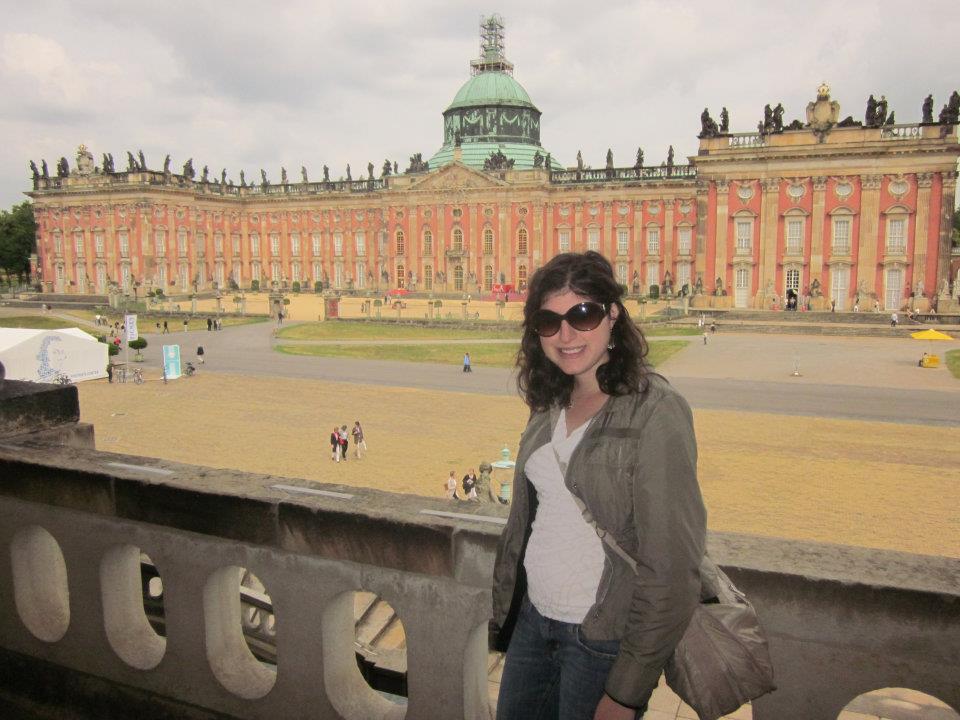
The New Palace in Potsdam – Construction started in 1763 after the Seven Year’s War under Frederick the Great

I photoshopped Rebecca into this picture when I got home. Just kidding. No, that’s real. It doesn’t look real. Heck, the castle looks plastic. But, no, that is just one of the magnificent castles that you will see when you visit Potsdam. Because you are now going to go, right?

Well, that’s it. A trip that opened our eyes to new cultures, foods, and history. Next stop, South America?

UPDATE: Jacob Miller and East Side Drag

2 Jul

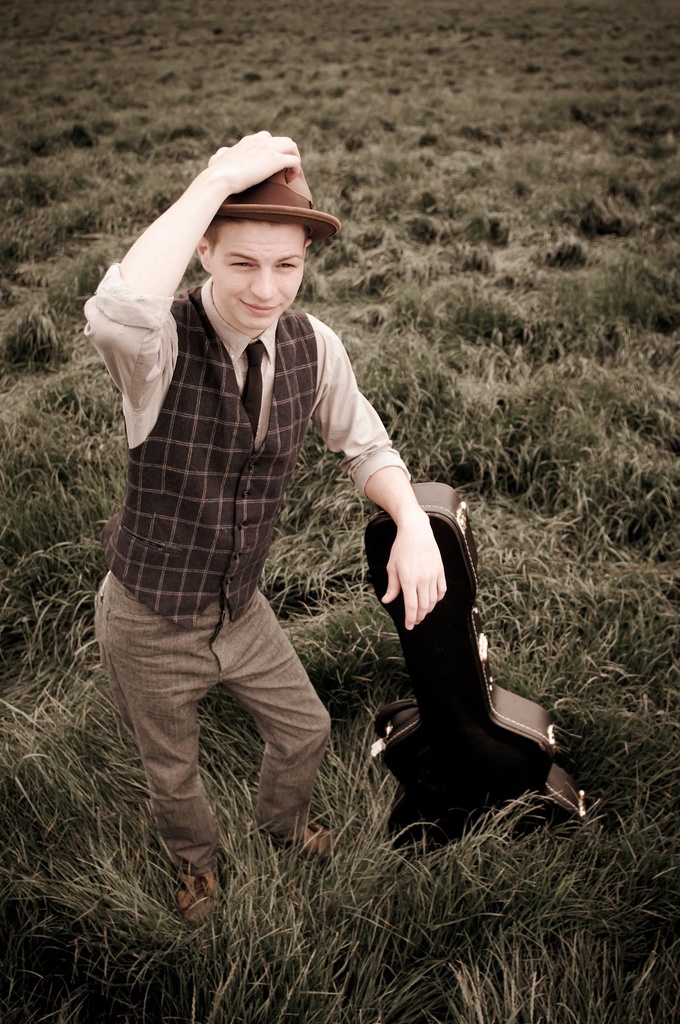
Jacob Miller – Busking in the Bluegrass

You may remember Jacob Miller from a post I did in October about his Sept. 2011 release Blue Ridge Ramble. You can read it here. Ah, yes, Jacob Miller, he is that awesome bluegrass throwback with the warm voice and plucked guitar that makes you want to sit on your porch on a warm summer day with a nice cold beer and listen as the music mixes with the soughing winds and constant crickets. Yeah, well, thanks for doing my job for me. I guess I’ll just pack up my keys and come back tomorrow!

Jacob Miller, now a 22-year-old country-blues-ragtime-folk singer/songwriter/guitarist based in Portland, OR, is currently busking his way through the Northwestern United States. Back on June 22, he checked in with me to alert me of his peripatetic ways and send me the link to his new eight-track album, East Side Drag, which he released with his four-person band, The Bridge City Crooners. Here is what he wrote 10 days ago:

“Right now I’m in Wisconsin, and leave tomorrow for Minneapolis. There for two days, Sunday we leave for Montana, then north to Alaska. Should be a good trek. I’m looking forward to it, and looking forward to playing a lot along the way.”

Miller is a true musicians’ musician. If I don’t accomplish anything else with this update (which will take a glimpse at a few tracks from his album in just a moment), I hope that you take that message with you. He plays music because he loves music. Miller has the voice and skill to create a unique brand of Indie/Folk that could become widespread in this climate. But that would still require him to conform to a different style of playing, and Miller is not giving up his style. Miller, much in the vein of The Wiyos, the Carolina Chocolate Drops, and the late Rory Gallagher, is keeping Bluegrass music in our ears. While Miller’s first release that I reviewed focused more on independent blues, East Side Drag is an ode to fast-paced, harmonica-driven bluegrass style. And, take it from me, if you are into this type of music you will enjoy it a lot. Wait, you don’t have to take it from me, you can just listen for yourself.

East Side Drag

I actually had an issue picking three songs to profile from the album. I wanted to choose more like all of them, but I limited myself to three, starting with the title track from the album, “East Side Drag.” The first 10 seconds of the song set the mood of the album exceptionally well. Maybe it’s the kazoo. A kazoo, a scraped washboard, a bluesy guitar riff and harmonica- tell me you are not feeling like you are outside with this true jug band. There is just something about this feel-good music that sponsors thoughts of relaxing by a lake down South. Miller carries the blues riff over the fast-paced bluegrass rhythm smoothly and if you are not tapping your feet right now there must be something wrong with you! Kudos to Ben Bailey – Washboard/hollerin’ and Kyle Neumann – Harmonica for creating all those fancy noises making you tap your feet.

Jacob Miller’s cover of “Hesitation Blues,” – traditional blues song special to me because the 60’s psych/folk band the Holy Modal Rounders did a cover where they mentioned the word psychedelic (psychodelic) for the first time in a song – is intimate and smooth. I use the word smooth to describe Miller’s music a lot, and the reason I do this is because it seems effortless (which it probably is). Miller sings the song with a fun, nasally croon that echoes the intention of the song’s original authors more than 100 years ago. The lyrics are malleable and the piece is perfectly constructed for others to manipulate. Miller’s cover is one of the better versions I have heard.

I want to include this last song, “Take it Back” for a few reasons. First, it features the vocals of Joy Pearson who does a wonderful job pairing with Miller. It was also recorded on June 5th, the day before Miller and Ben Bailey hit the rails. It’s a fun piece, bluesy and quick. Pearson has a quiver in her voice that I love and her brief solo at the end is impressive. Like any good blue song, it comes and it goes, and like that Miller hit the rails to play it again somewhere else. Keep doing what you are doing and doing it well!

Second Stop – Paris

26 Jun

Conductor Andre Previn recorded this version of George Gershwin’s famous “An American in Paris” during his tenure as principal conductor for the London Symphony Orchestra. So as you take this photographic journey with me from the first stop on our June European excursion, London, through the chunnel, to our next stop, Paris, I thought it was fitting to include this recording. Feel free to listen to the piece and read the post at the same time, even though if you do that you will most likely not pay much attention to these words. The piece demands that much attention. Hello! Do you hear me? Damn, already lost you all. Quick, Matt, think of something…uhh…pretty picture of food.

Yeah, that got your attention, didn’t it?

I think I am going to create a song called “Breakfast in Paris,” but instead of typical instruments the composition will be composed solely of many different people saying mmmm and salivating. I can say that for all the food in Paris. And you do not need to visit an expensive restaurant to experience fine eating. Rebecca and I stopped into a small cafe and picked out a sandwich and pastry from under the glass. The entire meal cost us less than 10 euros, and I would be lying if I didn’t tell you that on my first bite of the pastry I didn’t lust for around 50 more.

Like in London, Rebecca and I eagerly searched for unique restaurants and snacks. We had our best meal of the trip at a restaurant we stumbled into on a tiny side street that we could not find again (we tried). I had true French onion soup and a well-prepared piece of fish. For dessert we shared Chocolate Fondant and Creme Brulee. We failed in our attempt to make each bite of the meal take years of joy to complete.

Couscous restaurants are very popular in Paris and we made sure to get a large heaping of the semolina dish with soft vegetables, hot pepper sauce, and dried fruit. We snacked the following day on a chocolate-covered waffle that melted in our mouth (and on Rebecca’s bag…a casualty of war) and proved even better than the chocolate, almond, banana crepe we shared in front of Notre Dame on our first day in the city.

And, of course, the breakfast. Every morning we woke up to hot croissant, mini baguettes, and thick toast, that we dipped in butter, creamy cheese, and fruity spreads. We then worked off breakfast, much to the chagrin of our feet and legs, by walking the true walking city of Paris and making good use of the four-day museum pass we acquired prior to the trip. On to the ultimate museum, the Louvre.

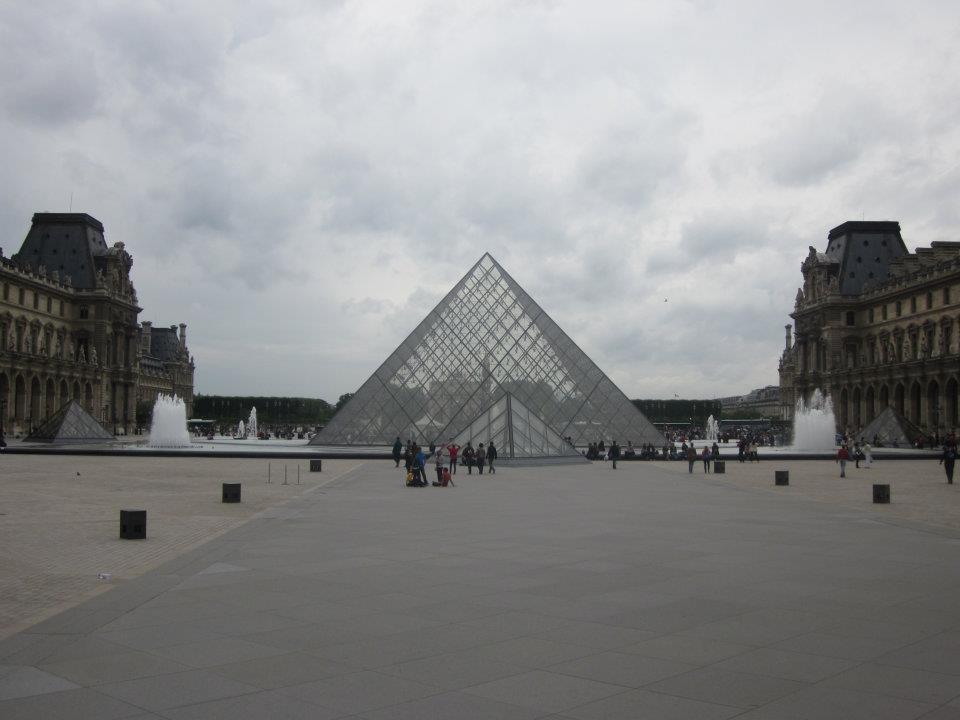
Thanks Dan Brown…Now everyone thinks the Holy Grail is in there.

The first thing you notice about the Louvre (no matter what side you approach it from) is that it is gigantic. The Musee du Louvre is the site of a 12th century fortress sanctioned by King Philip Augustus. It became a large royal residence in the 16th century and evolved from there, eventually becoming an art gallery at the hand of Louis XV in the 18th century. It grew from there and in the 1980s Egyptian aliens visited Paris and constructed the pyramid entrance to the museum. Oh, it wasn’t aliens? Never mind. The gigantic museum of 380,000 objects and 35,000 works, is, of course, most known for the 30×21-inch Mona Lisa, Leonardo da Vinci’s masterpiece that draws a constant swarm of visitors.

It is easy to get lost in the museum. Rebecca and I marked off what we wanted to see prior to exploring and attempted to tackle it all. I’d say we were succesful. I was probably most impressed by the museum’s extensive selection of Egyptian antiquities which includes the around 4,500-year-old Seated Scribe sculpture, a beautifully intricate piece.

While the Louvre may have been the biggest stop on our museum tour of Paris, it was certainly not our only educational experience. We spent hours in other museums, including the Orsay, Rodin, Orangerie, and several more. The collection of impressionist art at the Orsay and Orangerie was stunning. We became immersed in the world of Monet, Manet, Gauguin, Renoir, and more. If you are a fan of impressionism and haven’t visited Paris…visit Paris. Oh, and get the museum pass. You are going to be going to a whole bunch of museums.

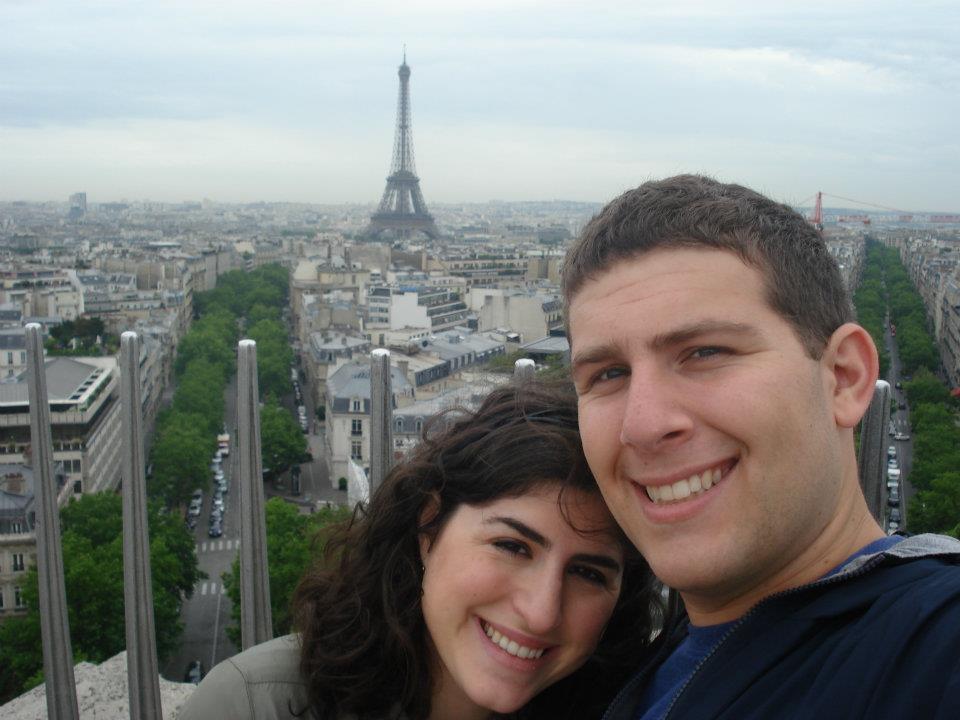
On the Arc De Triomphe – The Second Best View in Paris

Perhaps my favorite part of Paris was what I will label the intellectuality of the city. It was very…European. Cafes line seemingly every street on long avenues. People are always sitting, enjoying a drink and a snack, and watching the people walk by the cafe.  Walking down the seine at dawn or dusk with views of the Notre Dame at your back and the scent of baking pastries and coffee in the air, it’s tough not to feel inspired. I immediately understood why many great philosophers and writers chose Paris as a backdrop to their creative works.

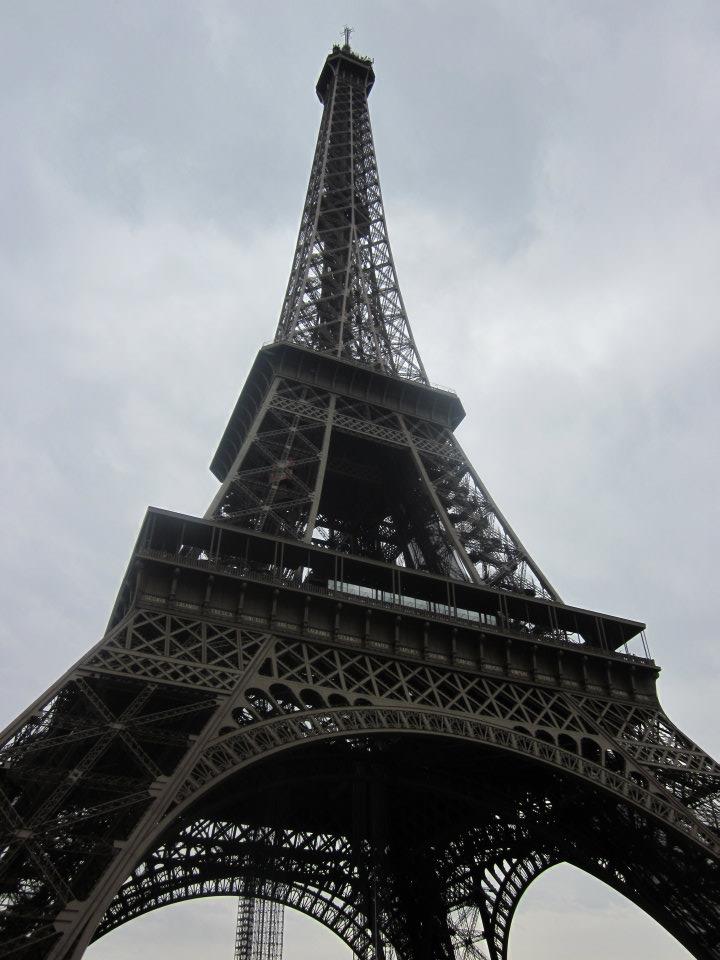
The picture above is of Rebecca and I on top of the Arc De Triomphe which is located at the end of the famous (and expensive) Champs Elysees. The view was extraordinary, but second best to the view we had on top of that structure off in the distance. You know, this one:

Yeah, this one

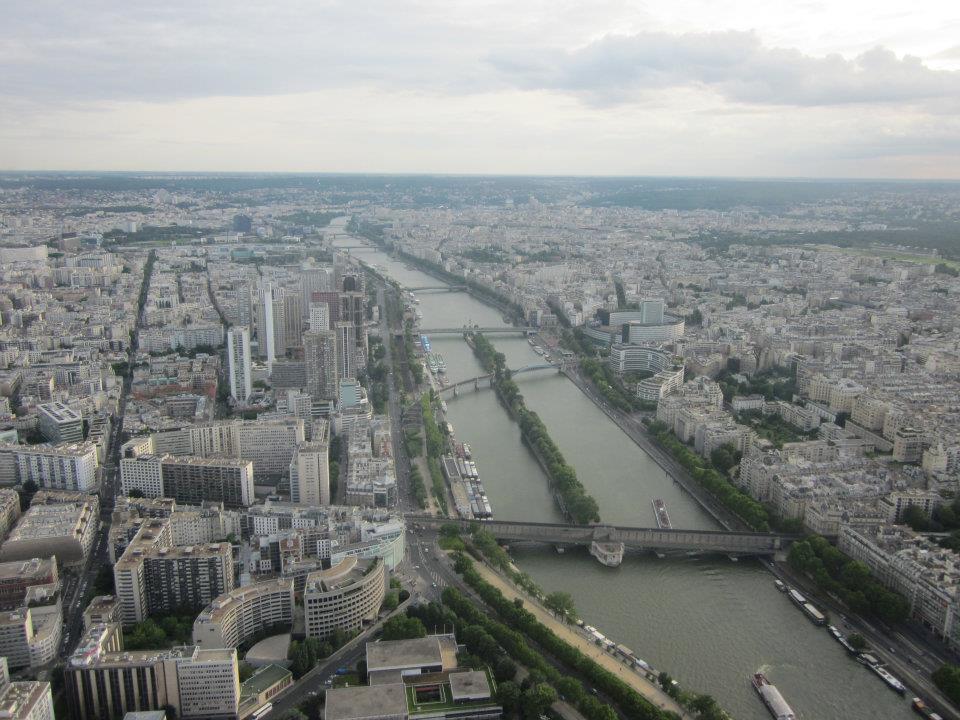
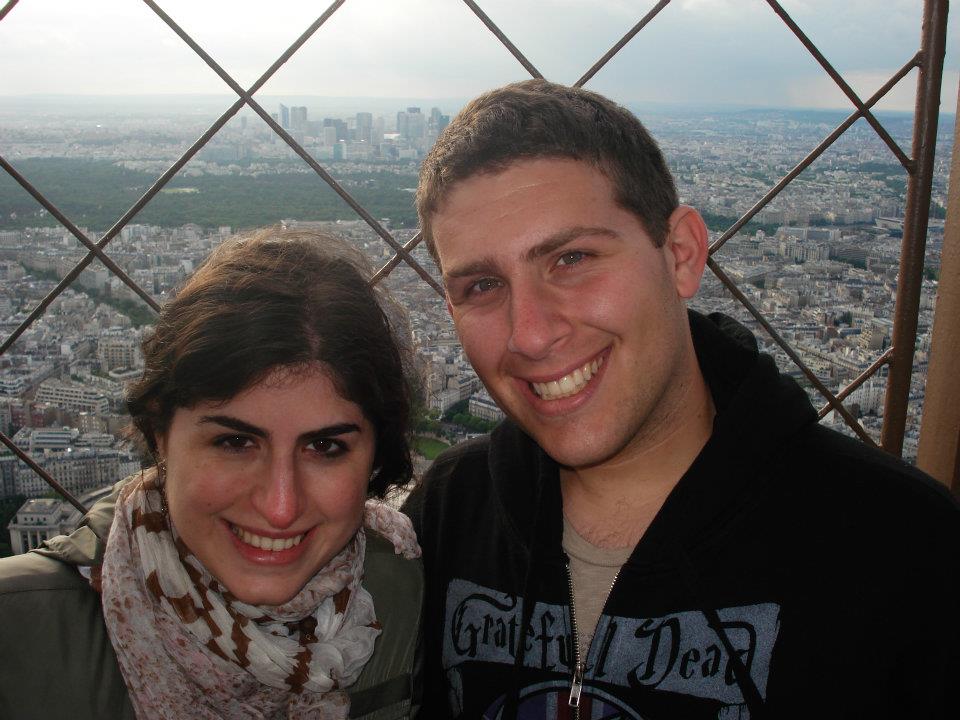
A lot of other people had the same idea. One of the elevators leading up to the elevator that brings you up to the top of the tower was broken for the entirety of our stay in Paris. You’d think that would be something that would be fixed immediately considering that the Eiffel Tower is one of the most visited attractions in the world, but, you’d clearly think wrong because it remained broken. On our last day in Paris, Rebecca and I sucked it up and waited around three hours to get to the top of the tower, and, wow, it was totally worth it, and, we had our best photo taken during the trip up at the top.

This One

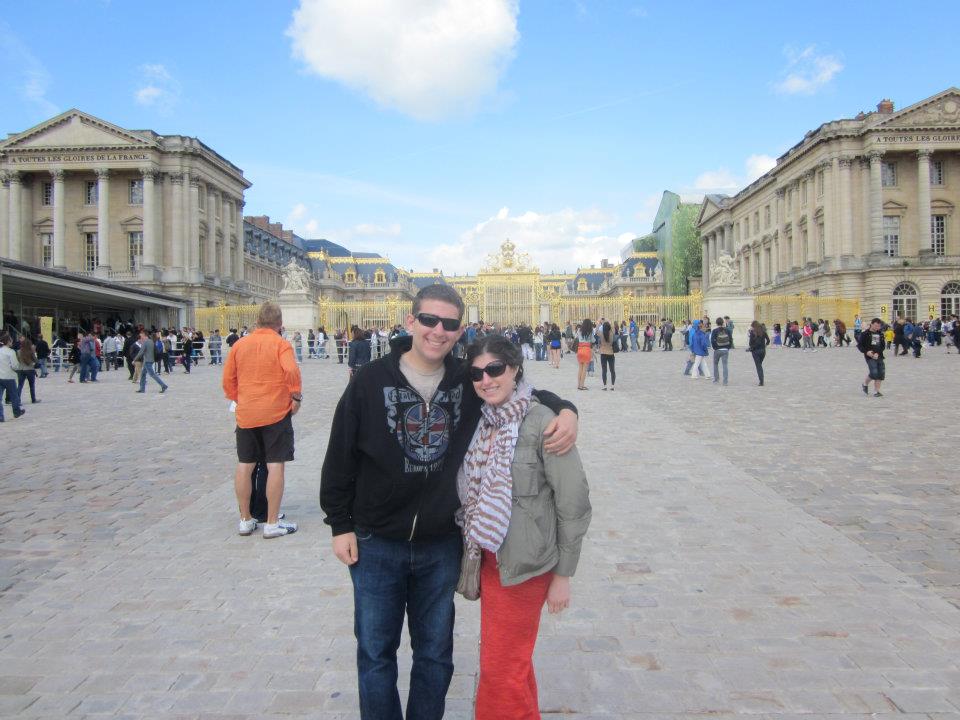
Now I cannot forget two things. We visited the palace of Versailles while we were in the area and it is an awe-inspiring structure not only because of its grand beauty, but also because of the events that took place inside the palace. It’s also difficult to move when you are there because you meet a bad combination of issues…small passageways and oodles of tourists, more than we saw at any point of our trip. The place is still something out of a Disney movie – just look at the gold gates.

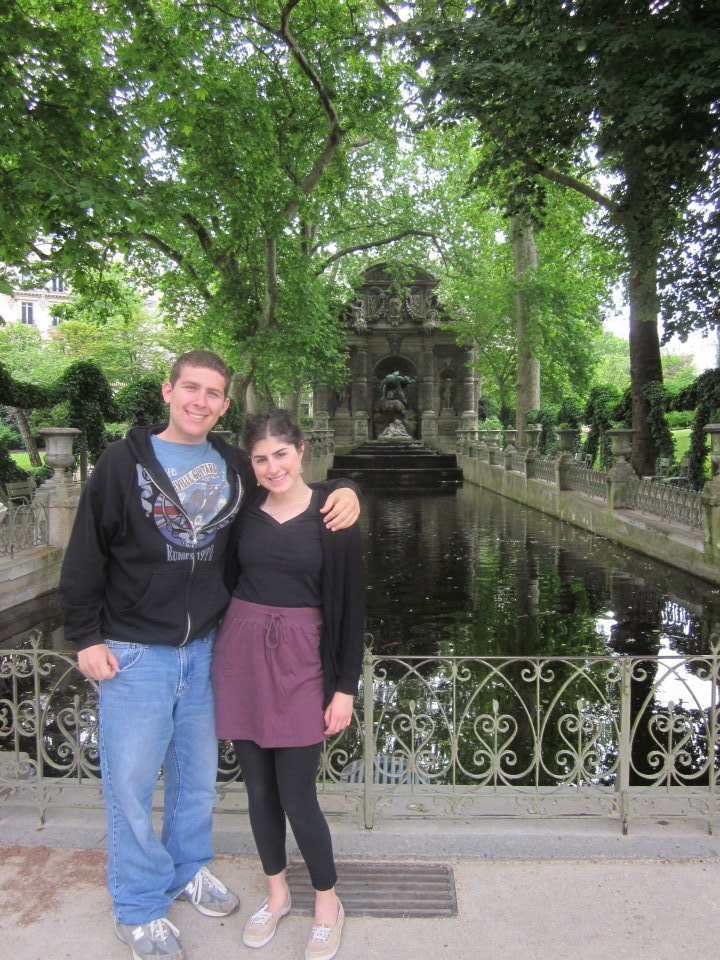
On the morning of our flight to Berlin (make sure to stay tuned for the third installment of these special posts), we walked over to the second largest public park in Paris, the jardin du luxembourg, which features a palace and the famous Medici Fountain built by the widow of Henry IV, Marie de Medici in 1630, which you can see in the final picture below. It is difficult to conclude this section on Paris because there is not conclusion strong enough. Hopefully, we will make our way back there some day because there is still so much to see. For now, I will just leave it off with an until then.