

Many Matches in the Matchbox

4 Sep

It’s often shocking how often you find yourself unknowingly enjoying a modern incarnation of a song that has its roots embedded in the past. Covers are great, but they spawn histories that are often forgotten. The Blues Evolution is The Music Court’s attempt to combine two engaging topics, music and history, and share tales of popular blues songs that were first recorded before the first rock n’ roll song was ever created.

Today’s song of choice is “Matchbox,” a blues song born in the 1920s and covered 30 years later by Carl Perkins (and later the Beatles). It is also a great example of musical telephone, where Perkins was forced to guess on the lyric of the decade-old blues song, thus creating an entirely new song that simply held the original’s foundation. So, if you will oblige, let’s take a trip down the long stretch of road that is blues history.
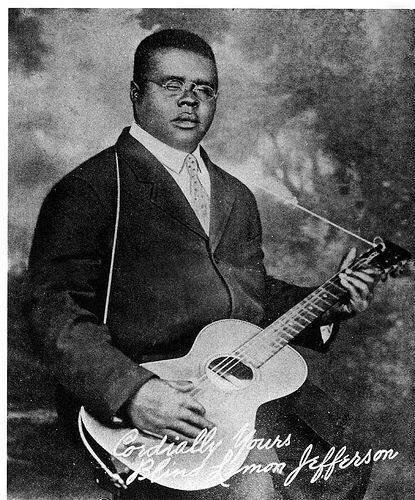
Blind Lemon Jefferson

It all begins with Blind Lemon Jefferson. Well, kind of. Blind Lemon was just one of the many ultra-talented blind blues musicians who inspired the eventual creation of rock n’ roll, but he developed “Matchbox” because he was inspired by a lyric in a Ma Rainey song. Blind Lemon, who has been called the Father of Texas Blues, was inspired by Ma Rainey – “The Mother of the Blues.” The blues ancestry works much like mythology, it seems. Blind Lemon and Ma Rainey inspired Robert Johnson, Howlin’ Wolf, and many, many others.

In Ma Rainey’s 1924 record “Lost Wandering Blues,” she sings, “Lord, I’m standing here wondering, Will a matchbox hold my clothes. I’ve got a sun to beat, I’ll be farther down the road.” In a pre-sampling example of sampling, Blind Lemon took that lyric and wrote, “I’m sittin’ here wonderin’ would a matchbox hold my clothes.
I ain’t got so many matches but I got so far to go.” Quite similar, indeed. Blind Lemon’s version of the lyric became more popular, but credit must be given to Ma Rainey as well.

There is Blind Lemon’s high croon and traditional Texas acoustic blues guitar. Gosh, pre-rock n’ roll blues is just awesome, isn’t it? This song was recorded several more times through the 30s and 40s but to no true popularity, though it was through one of these covers that the song was reintroduced to the public.

Thirty years later, Carl Perkins’ father suggested he cover the song in a December, 1956 recording session. Perkins’ father, Buck, was a student of old country music, and several country musicians covered the Blind Lemon song in the 1930s and 40s. He only remembered a few lines of the song. Carl decided to try his luck, and the session pianist, Jerry Lee Lewis (not a bad session pianist!), played a boogie rhythm on the piano. Perkins transformed the song into fast-paced rockabilly…with completely different lyrics.

The line that Blind Lemon adopted from Ma Rainey is still there. It is the only similarity that remains. The song, which Blind Lemon made about a mean woman, became a about a poor boy a long way from home. Here is Carl Perkins performing the song with Johnny Cash and Eric Clapton because we can!

The Beatles, who were inspired by Perkins, had received a request to record a Perkins song, and in 1964 they recorded the song with Perkins himself standing by. Yes, he was invited to the session, and did jam with the band (just not on the track). Ringo was tasked with the vocal responsibilities, and he sang the song while playing his drum set.

From the mother to the father to Mr. Blue Suede Shoes to the greatest band of the 20th century. And to think, I’m sittin’ here wondering if a matchbox will hold my clothes.

The Mountain Goats Talk Growing Up in “Cry for Judas”

29 Aug

Transcendental Youth

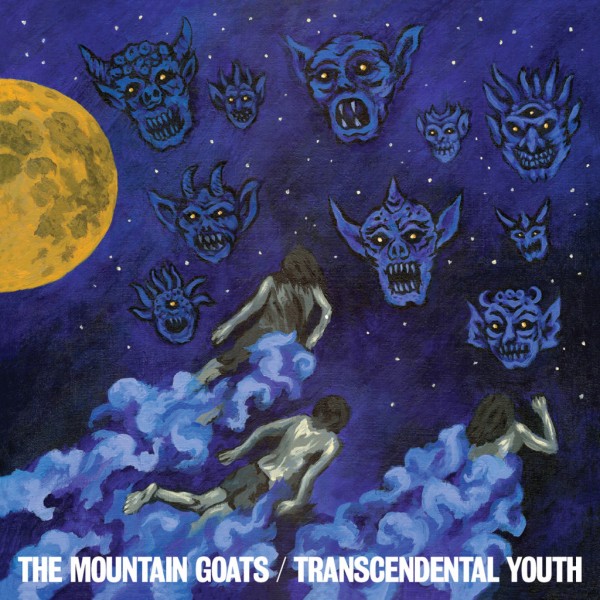
John Darnielle and his band of Mountain Goats will release their 14th studio album, Transcendental Youth, on October 2. I know I mentioned this before on the Music Court, but I feel like I have a duty to mention it again. The album is sure to be awesome – like all of Darnielle releases – and it would surely be a shame if you missed out.

As a commenter on Darnielle’s tunes said recently, “nobody is better than Darnielle at writing such happy songs about utter hopelessness.” I agree and disagree. You see, this comment is true a lot of the time. Heck, if there is any hope in “No Children,” well, I haven’t found it yet. Still looking, though! But in Transcendental Youth, at least in the first song released from the album, there is a subtle hint of growth under the lyric. Darnielle paints a messy portrait of an adolescent teen struggling with growing up in the society he is surrounded by, a candid autobiographical depiction of Darnielle. And, to assist in my description of the song, here is a segment from The Mountain Goats’ website about the song – in Darnielle’s words.

“Cry for Judas,” it is about survival but that’s kind of an oversimplification, it’s also about building a vehicle from the defeated pieces of the thing you survived and piloting that vehicle through the cosmos, it’s kind of complicated but people who know what I’m talking about will kind of intuitively get the idea and the rest of you will I hope be able to get a sense of it through the song.

When people talk about surviving adolescence, they are not joking. There is innate passion, awkwardness, struggle, all inherent in the process of growing. And in the end you are you, and you survived as you. Time to pilot the vehicle. The lyric repeats the couplet (Long black night, morning frost, I’m still here, but all is lost). The important part is our protagonist is still there. It was a long black night, but despite the feeling that all is lost I can’t help but thinking that the character is just growing up. Look at the album title.

The Mountain Goats are also growing, somehow still maturing and falling into new sounds. The horns give the acoustic guitar a full sound, and then there is the bass guitar which provides an almost funky rhythm. The song itself is excellent. But, I mean, I wasn’t expecting any different.

The Dream World of Fleeting Circus

27 Aug

*Note: This week marks the end of the final Bands of Summer segment. I hope you enjoyed the new bands introduced on the blog. Artist profiles of new bands will still be presented on the blog once a week. Stay tuned for exciting new posts in the future. Two more maintenance items. If you are a writer who likes music, I want you…to write for the Music Court. Interested? E-mail musiccourt@gmail.com with your name and information, and tell me what is your favorite band/artist and why? Also, are you a band interested in being featured on the Music Court? E-mail musiccourt@gmail.com with some information on the band, links to audio, and pictures.

Fleeting Circus

Fleeting Circus may have an ephemeral name, but the Brazilian rock band certainly has an opportunity to be around for a while. The four-piece act has not only already taken their sounds to a literal circus – the Unicirco Rock Show which pairs music and acrobats – but also they have released their first EP,  Dream World Of Magic, which is a collection of harder traditional rock and intriguing Muse-like tracks that combine a taste of early 70s progressive rock and modern alternative.

It is best to just jump right into the music. “Life Between Two Paper Sheets” is a track off of the new EP, and its tenebrous opening leads to a Pink Floyd-like vocal symphony that follows the distortion in the background. It’s a foreboding introduction, one that latches onto the listener and forces them to keep listening. Taynã Frota’s vocals are crafty and malleable. He glides through the song with efficiency, his pipes engrossing. And then the house comes down. At around 1:35, the rest of the band (Rod Seven – Guitar, Danny Seven – Drums, Felipe Vianna – Bass) appear in full force, like a cavalry entering the pernicious underworld where the song is staged. The consistency of the instruments is precise.

“Hurricane” is immediately different from the first track. It is also almost double the length. D. Seven and Vianna set the pace, with Vianna laying down a beauty of a bass riff. The rhythm stays fresh below Frota, and R. Seven introduces a small riff. The vocal harmony around a quarter of the way into the track adds to the piece, both voices absolutely capable. The song rises, leaving Frota to carry some powerful vocals at the end, after R. Seven absolutely kills a distorted solo that is almost celestial. A great representative of a promising first release from Fleeting Circus.

Check out the band’s Facebook, Twitter, and Website

Climbing Mt. Everest Cale

24 Aug

Everest Cale

Sometimes a band is just meant to be. Everest Cale is one of those bands. Composed of a group of college friends from South Carolina who journeyed north to the Big Apple, Everest Cale came together because of persistence and the joint desire to produce good music. The friends, Brett Treacy (vocals, guitar), Jeremy Kolmin (guitar) and Aaron Nystrup (bass), added drummer Nate Becker and keyboardist/vocalist  Ryan Roets, to round out the rock quintet. Since 2010, Everest Cale has played clean blues-inspired rock with 70’s inspired edginess and noticeable modern sentiments. On Sept. 4, they release their first EP Beast, and in anticipation of the release let’s take a listen to the band’s self-titled single.

The song begin’s with a softly-plucked guitar backing Treacy’s vocals. Treacy’s vocal has an intriguing quality to it. It is noticeably powerful, but it maintains a tenderness that is refreshing. It is recognizable, but original to Treacy. The progression of the song is smooth. One of the most attractive aspects of Everest Cale is that they play a refreshing blend of music that is skillful, organized, and precise. As the band demonstrates with the feedback and rock breakdown at the end of the song, they certainly know how to let loose and “rock out,” but they do that in a mature, unphased way. They are in charge of their music, and that is something that makes for an enjoyable listen.

Everest Cale plays their release show at Rockwood Music Hall, Stage 2 (New York) on Sept. 1. I am eager to listen to the rest of the EP.

You can keep track of the band by visiting their website and following them on Facebook and Twitter

Quintessentially Quintus

22 Aug

Quintus

In a way it is rather fitting that Quintus is named, well, Quintus. For all of you up on your Latin, Quintus means fifth. It took five years of recordings and the near death of the band before Quintus was able to piece together their first full-length compilation and follow-up to their 2006 EP The Shape We’re In. Was it worth the wait? Absolutely.

Back in 2006, Levon Helm produced Quintus’ EP The Shape We’re In and called the band one of his favorite new acts. The upbeat, country/folk album recorded in Levon Helm’s Woodstock barn, was never officially released because of a dispute with Downtown Records, the band’s label at the time, which was a shame because the album deserved to garner more ears than it did. Helm lauded the band’s maturity, and that attribute is evident in the tracks, all neatly developed, catchy, and exciting. The fire should have been warmed on Quintus, but it wasn’t.

Fast forward some years later, and I am writing to introduce the aptly titled Start All Over Again, which I hope is the beginning of a long career for the talented band led by producer, vocalist, and multi-instrumentalist Reuben Chess. The 11-track album does not have a dud, which is difficult enough to accomplish. Every song has its own flavor, some touching on the Country elements of their first release and others toying with a folk-inspired poppy Indie rock that combines horns and acoustic instrumentation with old-fashioned rock n’ roll beats. They are a throwback making modern music. There is an inherent contradiction in that statement, but I don’t hear it.

“Just the Same”  is a good example of what I just mentioned. The song’s sprightly rhythm combines with Chess record piano (what a coincidence – much in the vein of Lafayette Leake) and even a taste of Travelling Wilburys. Chess even adds in Buddy Holly’s trademark late 50s stutter. The horns are added delicately and fall behind a harmony straight out of the 90s. The song is such a wacky combination of elements, and it works exceptionally well. Credit to Mike Riddleberger – drums, percussion, vocals, David Dawda – bass, acoustic guitar, ukelele, banjo, piano, vocals, and Dan Kreiger – keys for their tremendous work in this excellent song that is a great expression of the band’s talent.

“To The Fillmore East” immediately follows “Just the Same” on the album. Chess begins the song with a moaning harmonica that leads into his powerful croon over a crafty acoustic guitar that follows the vocal to a tee. The song collides at close to the one minute mark and the full ensemble introduces itself. Quintus’ harmony is strong throughout the album, but this song features it specifically well. The song even takes on a pre-Magical Mystery Tour Beatles feel or, better yet, a California Beach Boys feel. The breakdown at 1:40 is wonderfully original. The song is a tremendous joy to listen to, even featuring an untampered electric solo and a cajun-saturated vocal echo, finishing with a fluffy harmonica and whistle.

Levon Helm was right. Quintus is a special band. It’s time for them to get the notoriety they surely deserve. So, go on, tell your friends.

The album can be purchased at the band’s Bandcamp and you can catch them on Facebook or Twitter