Planting the Seeds: The story of Sky Saxon and the Seeds

11 Oct

The Seeds

The Seeds is a band that teeters on the line between obscure and known. I’m not sure where to place them myself. While I do think it is safe to say that many have not heard of this garage rock pioneer, the band may be a little too known to be classified in this obscure category. I’m arguing pedantic semantics with myself. The reason I want to include The Seeds in this Tuesday’s “Obscure Classic Rock” is because I featured David Peel and the Lower East Side Band last week. As you may remember (and if you don’t click here to view last week’s post), I labeled Peel as an inspirational pre-Punk force. The Seeds, with their blend of angsty garage rock and bouncy beats, do fit the description of a band that planted the seeds for Punk rock. Pun very much intended. So for the second week in a row we focus on a pre-Punk performer, but this time we enter into an earlier realm of mid-60s rock n’ roll.

When you explore the premiere early roots of Punk rock bands like the Kinks, the Who, and the Small Faces are mentioned. These are bands that started developing the fast-paced, strained pop sound that Punk became known for in the 70s with the Sex Pistols and the Ramones. The Kingsmen’s version of “Louie, Louie” (1963) is aptly cited as the first proclamation of Punk. The song even sparked an ill-informed FBI investigation over the non-existent obscenities that are not in the song. When I look at the early stages of Punk music, though, I quickly look at the impact of Mick Jagger. His carefree, over-sexualized, Elvis-on-acid-inspired on-stage pelvic movements clearly inspired performers like Iggy Pop and a little-known singer named Richard Marsh, better known as Sky Saxon of The Seeds.
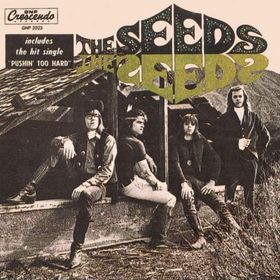
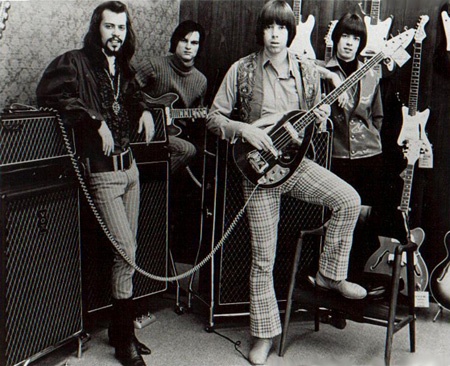
To some, Sky Saxon is a cheap Mick Jagger impressionist, but I think he something much more than this. Saxon formed the Seeds with keyboardist Daryl Hooper, guitarists Jan Savage and Jeremy Levine (who left the band because of personal reasons shortly after the first recording session) and drummer Rick Andridge. Sky is credited as the bassist and in one of the videos below he is playing an egg-shaped fire-red bass guitar, but he did not play bass during recording sessions. Instead, Hooper, much-like Ray Manzarek did with the Doors, played a keyboard bass.

The band released their first single “Can’t Seem to Make you Mine” in 1965 and it became a regional hit. The band, even though remaining most popular in southern California, reached the top 40 with their 1966 song “Pushin’ Too Hard.” After this release, they hit moderate success with a few other singles, but their popularity slid and by the end of the 60s the band was transformed with new members into Sly Saxon and the Seeds and then broke up in the early 70s. We are going to look at the band’s top two singles in this post. Both of these songs can be found on the Seeds’ eponymous debut album released in April of 1966. The album has aged well and it is now looked at as early Punk inspiration and proof that Punk existed before the 70s.

Simple repetitive melody, possessed vocal (Sky seems drugged), neat and concise keyboard solo. It’s pop. I’m not sure if we can hear Punk in this early release (even though Sky Saxon just looks and sounds ahead of his time.) The song is not grungy, but instead pretty organized and easy. It is like cool and collected garage rock mixed with sunny California pop. Keep this sound in mind and let’s move ahead a year.

What a change. Throaty-punky vocal. The guitar has the traditional 60’s twang. The keyboard is one of the most understated and interesting parts of the song. It fits, but it doesn’t fit. I can’t seem to place that quiet, even subtle sound. The tune, which clearly provides a great example of fuzzy and raw garage rock, has a rhythm that resembles Punk. I hear Protopunk in this release.

Sky Saxon’s future would involve joining a religious group in California called YaHoWha for many years. The band reunited in 1989 to headline “The Summer of Love” tour (which also included Arthur Lee and Love). In 2003, Saxon and Savage toured with other members, but Savage had to depart midway through the resulting tour. Saxon continued performing, recording and writing up to his passing on June 25, 2009.

If you click on Sky Saxon’s name above you will be linked to his official website. A tribute album featuring covers of Saxon’s songs by performers like Iggy Pop, The Bangles, The Chocolate Watchband, Strawberry Alarm Clock, The Electric Prunes, will be released soon (perhaps by the end of the year) so definitely keep tabs on what will most definitely be a must listen when released.

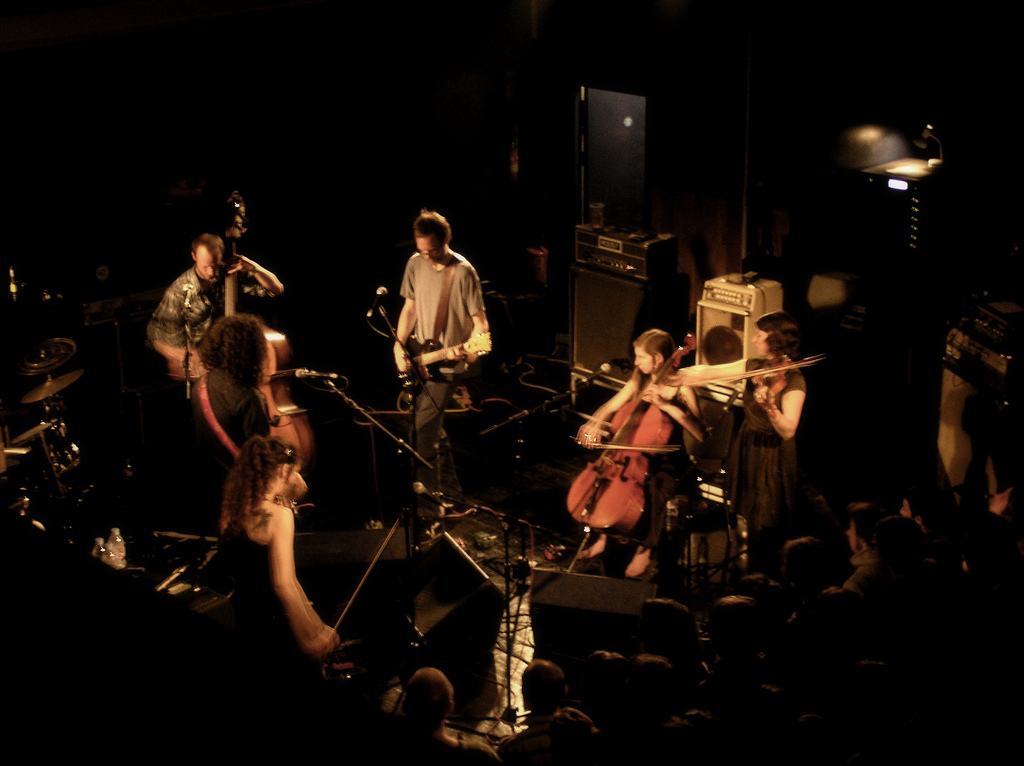
An Ode to A Dreamer

10 Oct

This post isn’t really going to be music related but it is something I want to get off my chest.

I’m going to confess something.  I’ve never owned a Macintosh, a Mac Pro desktop, or the slim and elegant Macbook Air. I’ve not even owned the powerful Macbook Pro.  I’ve never owned a Shuffle or an iTouch, not even an iPhone numbered one thru 4s.  In 21 years the only reason why I can’t say I’ve never owned an apple product is the iPod that I’m currently listening to, which by now is from the technological Stone Age (it doesn’t even have a touch screen!).  But sitting here, writing on a machine that I bought in lieu of Mr. Jobs’ lineup of a Mac laptop, he still has done me a great service that I can only repay by sharing.

I’m not here to tell you the impact that Steve Jobs had on the computer industry or that his dream of a personal computer is a major reason I, as a young kid, had a personal computer in my house.  Someone would have eventually gotten the idea, hell someone probably even had the idea before Mr. Jobs, but it was Apple at the forefront of the computer revolution that allows me to write this sitting at my desk in my home.  You don’t need me to say that Jobs’ impact as head of Apple revolutionized cell communications with the iPhone and that his iPad tablet is changing the way companies can do business and students such as myself can take notes, share them and stay wired to the rest of the world with a tablet.   I wanted to toot his horn just in case you weren’t sure how important he was and still is, not just in the world of computers, but also in that everlasting quest for technological perfection. As Jobs’ life and work become his legacy, I wanted to share what Jobs’ conquests meant to me: that the dreamers haven’t quite lost yet.

Apple wasn’t started by a man with a fancy college degree, but a college dropout who audited classes while sleeping on friends’ floors and returning cans for money.  Jobs’ aspiration wasn’t to be a businessman and Apple wasn’t created simply to make money.  The company’s modest beginnings in a garage so sharply contrast with its current success and this paints such a strong rag to riches dream that it’s founding mission sometimes gets obscured. This, though, is what resonates with me the most.

It gets hard nowadays to recognize that not everything Jobs touched turned to gold and that many of his works were financial failures.  It took a legend to remind me of something that I had long forgotten, that the path to success does not start with a college degree, nor end with the lack of one, but dreaming and that success itself is not defined by financial reward, but by making your fantasy reality.  Despite the stress in academia to stay grounded and to be realistic, Jobs reminded me that being grounded is just a state of mind and that unrealistic dreams are only those you don’t have the passion to see through to completion.  The grind of everyday life made me forget that I must limit the size of my dreams only to the limit of my personal ambition, that the path I choose must be my own and that success will come regardless of how others measure my success but I won’t forget ever again.

A Silver Mt. Zion – *

9 Oct

So last weekend on Friday I was in the city (NYC). After eating lunch I decided to go and check out the protests on Wall Street. As I neared, the first thing I noticed was an extremely congested block of people being rallied by the police. I sort skirted in and around, dodging police and staying clear of most of the protesters. A parade of them marched along the outline of liberty square, chanting something along the lines of “Down with the Wall”. In the middle of the square, tarp and make-shift mattresses made the place into a sort of campsite for those “occupying” Wall Street. The “campers” were kids just hanging out trying to be rebellious, while the protesters marching around and yelling were just strange characters trying to be noticed. I didn’t go to the event trying to be inspired or anything, but honestly I was a lot more disappointed than I thought I was going to be. This protest was way unorganized. The towers surrounding it weren’t going anywhere and were full of laughing brokers.

This protest is still growing impressively all over the country and it has even entered foreign countries as well. Even if it is unorganized, they are at least showing others that there are those who are standing up. Honestly, a protest on Washington would make a lot more sense, but regardless something is brooding on the horizon.

There was a group of people playing drums on the street in a very tribal fashion. This will never start a revolution. Tribal drum music is exactly opposite of what will garner the attention of the American populace and it is quite honestly counter-productive. What is needed is some real revolutionary music, like the kind that made the American Revolution successful. We need some post-rock.

A Silver Mt. Zion is a Canadian band (slightly ironic) goes by multiple names and originated as a solo-project by a guitarist from Godspeed You! Black Emperor. The band plays a brand of post-rock deeply rooted in strong political motifs. Their debut album, *He Has Left Us Alone but Shafts of Light Sometimes Grace the Corner of Our Rooms…, aside from being quite lengthy in title, is almost purely instrumental. It engenders the sort of feelings in people which would make those smug towers shake in fear.

“Sit in the middle of three galloping dogs” opens with scratchy radio transmissions. The message is that a revolution is imminent. “Let us not sleep as do others, underline it, but let us watch. We are to be watchmen of this empire. And to be sober, be serious…” The transmission fades and a drum beat takes over, beckoning the violins to begin their epic wails. Their sound melts over itself as the beat coolly keeps it under control.
At about three minutes the drummer goes all out, picking up the tempo and the ante. The violins respond with a beautifully reverberating stutter and a guitar in the background shreds away furiously. This song is immensely powerful yet beautiful.

“Blown-out joy from Heaven’s Mercied hole” is like the actual sound of a revolution happening. A stand-up bass accompanied by lyrics sets the mood amazingly. “Don’t tell me that I am free, cause I have not been well…. lately”. The instrumentation is almost jazz-like in sound, yet a very sad form of bluesy-jazz. The 9 minute piece winds to and fro, but never really builds, just maintains a steady atmosphere of depression. The vocals at the very end create a perfect cap on the piece, making it whole in every regard.

“13 Angels Standing Guard ‘Round the Side of your Bed” is probably one of the most beautiful pieces you will ever hear. Less revolutionary and more just downright eye-openingly sad, this seven minute piece starts with the gentle meows of angels. A harp like instrument strums humble notes and again the violins sneak their way in playing a melancholy tune. Towards the end of the song even more angels call out, now with shriller yet ominously more powerful voices. This song is actually supposed to be about black bloc protests, where everyone wears black, covering their faces and appearing as one big ‘black bloc’.

If someone took a large pair of speakers to the protest and played this album from start to finish, glorious things would happen. First and foremost I predict that a silence would sweep over anyone who heard it. That silence would spread to anyone listening and the impression made would only be more silence. From silence emerge words. And hopefully those words can be those of reason.

-oko

P.S. Revolution is coming. Be prepared.

&)

What is the Catchiest Song Ever?

7 Oct

Get it out of my head!

Have you ever asked a friend to hit you over the head with a hammer so the particular song that has been stuck in your head for the last week can finally be removed? By way of concussion, naturally. Then your friend laughs and goes no, I know a better way, and he/she starts to sing another catchy song thereby getting that song stuck in your head for the next week. Electric Light Orchestra describes the phenomenon I am speaking of in the title of their hit song “Can’t Get you Out of My Head.” Seriously, right now I am listening to “Band on the Run” and that incredible guitar riff will now be stuck in my head for the rest of my Friday. Perhaps the Beatles were really talking about getting a song stuck out of their heads when they wrote about Maxwell’s silver hammer.

Some songs are damn catchy and when you listen to them they stick to you like a bug trap. But what makes a song catchy? Recently, York University music scientists released a study that investigated the psychological catchiness of the most glue-like songs. They found that higher male voices that emit vocal energy, phrase length and pitch complexity all contribute to a song’s ultimate catchiness. Using their findings, the scientists released their top 10 list of most catchy songs ever. Here is what it looks like:

  1. “We are the Champions”, Queen (1977)
  2. “Y.M.C.A”, The Village People (1978)
  3. “Fat Lip”, Sum 41 (2001)
  4. “The Final Countdown”, Europe (1986)
  5. “Monster”, The Automatic (2006)
  6. “Ruby”, The Kaiser Chiefs (2007)
  7. “I’m Always Here”, Jimi Jamison (1996)
  8. “Brown Eyed Girl”, Van Morrison (1967)
  9. “Teenage Dirtbag”, Wheatus (2000)
  10. “Livin’ on a Prayer”, Bon Jovi (1986)

It’s the final countdown, da da da da, da da da da da, da da da da da, da da da da da da da, doo doo doo – wait – sorry – I forgot I was posting.

What do you think of this list? Is “We are the Champions” the most catchy song ever. It is a burst of vocal, tribal energy and, yeah, it’s exceptionally catchy. But what about the other songs? Hmm…I think I can think of better ones. So I want to investigate. It’s poll time. I need all of you this time. Let’s figure this out. Is “We are the Champions” the most catchy song ever, or is there another song that has you? I am going to include my list of top catchy songs in the poll below and feel free to choose other and vote for another song if you disagree.

I refuse to RickRoll you. I was thinking about it, but then I decided to do something even more cruel. I’m going to post all of the songs for your listening pleasure. Happy voting!

A Reaction to Steve Jobs’ Death

6 Oct

My initial reaction to the news of Steve Jobs‘ death was my typical reaction when I hear that a well-known celebrity/icon has passed away. I watched as Anderson Cooper interviewed tech junkies, newsmen, and CEOs of other companies. I listened to them swoon over the man that was Steve Jobs. I, myself, said that the news was terrible, talked to my father about the death sentence that is pancreatic cancer (seriously, if there were any doubts, Steve Jobs died from it – Steve ‘I Molded Your Life” Jobs), and then moved on to my dinner of avocado and ricotta soft tacos (which were excellent). My family reflected briefly on how we must all not sweat the small stuff and realize that, in the end, the only thing one truly has is their body and health. And then we ate dinner and stored the thought of death back into the locked, fire-proof safe in our minds.

This morning I had a moment to reflect on the passing of Jobs. The tremendous outpouring of grief on social networking sites was astounding. I have actually never seen such a universal mourning in the recent modern age. Facebook and Twitter exploded with messages of “rest in peace” and small anecdotes of how Jobs’ inventions impacted their lives. It was just one man’s death, though, and I initially thought that such a reaction was weird, perhaps slightly misguided. It was almost too uniform, too trendy. But then I realized that in this odd way the reaction to Jobs’ death was caused by the man himself. Steve Jobs and Steve Wozniak’s Apple circuit board pretty much sponsored the rapid development of the personal computer. Jobs’ intuition could be looked at as a reason for why I am typing these words on a keyboard today. Jobs helped turn science fiction into reality.

Think about the last fifteen years. I am 22 years old. I remember fooling around with simplistic games on my bulky Apple computer in the 90s. The computer evolved and flourished and new features were added. It became a true constant in our lives. People had such a personal reaction to the news of Jobs’ death because personalized computer technology is so important to the masses. We, as humans, need interaction and connection, and while it does seem that people trap themselves into a closed, cold world when using these products, these high-tech phones and music storage devices do connect people to their loves and interests. So, in a sense, when the CEO of Apple passed away last night, people held a momentary personal funeral for a person who helped make their expansive technological world possible.

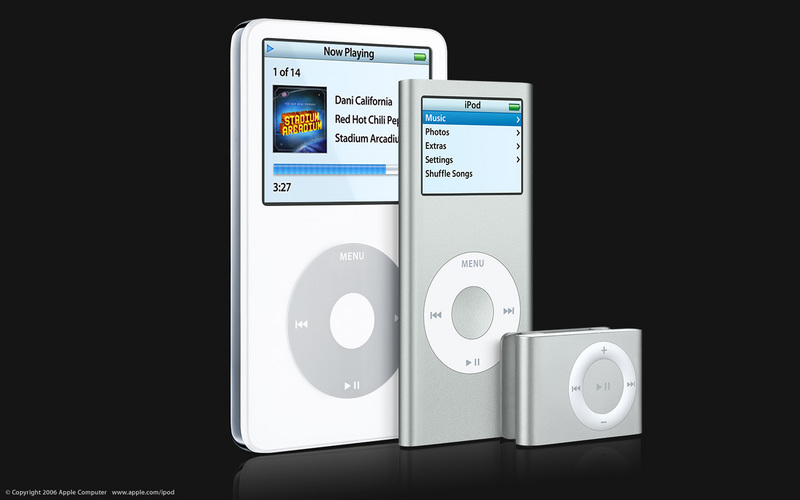
The iPod has revolutionized music. It was the next step in the evolution of listening to music. We can now carry gigabytes of music with us in little pocket devices for personal enjoyment whenever, wherever. Such an ability was a dream only relatively a few years ago. This remarkeable transformation was heralded by Jobs and Apple. I have become so accustomed to my loaded iPod that I often forget about those times with my skipping walkman in the backseat of my family’s old SUVs. Seriously, do you remember when the songs would skip when you hit a bump on the highway?

Today, as I pump my iPod during my noontime city walk, I will think of the advancements sponsored by Jobs and quietly thank him for improving technology for such a wide range of individuals. I am sure many people are doing the same today.